
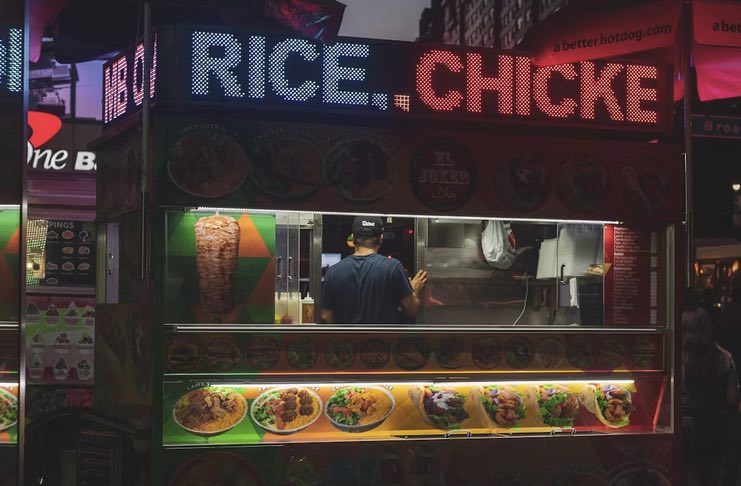
Running a successful food truck in New York City already puts you ahead of most. You’ve validated a concept, built a loyal following, and mastered the logistics of service inside a few hundred square feet on wheels. Now the question isn’t whether you can run a food business — it’s whether you’re ready to run a fundamentally different one.
The leap from food truck to brick-and-mortar is one of the most consequential decisions an NYC food entrepreneur can make. Across every borough, operators who started with a truck window and a cult following now run full restaurants with dining rooms, liquor licenses, and a staff roster that actually needs a posted schedule. But the transition is rarely as clean from the inside as it looks from the outside, and the operators who go in underprepared tend to find that out fast.
Our Experience
We’ve watched this play out up close across Queens and Brooklyn, talking with vendors at street fairs in Jackson Heights and late-night truck spots in Bushwick who had made the jump and were willing to speak honestly about it. The ones who thrived all said the same thing: they treated the truck as a proof-of-concept phase, not a destination. Birria-Landia is the case study everyone in NYC street food cites right now — a birria truck that started in Jackson Heights in 2019 and eventually expanded to a permanent location inside the Tangram mall in Flushing, without losing the cult energy that built the brand in the first place.
Watch this video to get a glimpse:
Knowing When You’re Actually Ready
There’s a version of this decision made on excitement, and a version made on data. The second one tends to work out better.
The honest signals that you’re ready have less to do with ambition and more to do with what’s already happening at your truck. Are you consistently selling out before the end of service? Are customers asking where they can find you on days you’re not running? Is your operation profitable enough that you’ve paid yourself a real wage and still have capital left over? If the answers are yes, you’ve validated something most restaurant concepts never get to prove before committing to a lease.
The harder question is whether your concept translates to a seated dining experience — or whether it needs to. Some of the most successful food truck-to-restaurant transitions in New York have worked precisely because operators understood what they were and weren’t changing. The food stays. The following follows. But the business model shifts dramatically, and being honest about that early saves you from making decisions that look bold on paper and painful in practice.
Our Experience
We spoke with a Korean BBQ truck operator who had been running lunch service in Midtown for three years before signing his first lease. He told us the signal wasn’t a revenue threshold — it was when he caught himself turning away catering requests because the truck couldn’t handle the volume. Korilla BBQ went through the same inflection point before opening in the East Village; its founder has been public about the fact that customer demand was already there long before the lease was signed. Waiting for that proof, rather than acting on instinct alone, is what separates the transitions that work from the ones that don’t.
Watch this video to get a glimpse of Korilla BBQ’s brick and mortar:
Finding the Right Space in NYC’s Unforgiving Real Estate Market
Commercial real estate in New York City operates by its own rules, and those rules are rarely written in your favor as an incoming tenant. Before you get excited about a space, you need to understand exactly what you’re signing — and what it will cost before you serve your first plate.
Understanding What’s Actually in the Lease
Most restaurant leases in New York are structured as triple-net agreements, meaning you’re responsible not just for base rent but also for your share of property taxes, building insurance, and maintenance costs. Many spaces require significant buildout, and landlords in a competitive market often don’t offer meaningful tenant improvement allowances. Legal review of any commercial lease is not optional — it’s table stakes. Clauses related to permitted use, personal guarantees, assignment rights, and co-tenancy can make or break your long-term viability in a given space.
Term length matters, too. A ten-year lease in the wrong neighborhood, or with a rent escalation clause you didn’t fully understand, has ended strong concepts before they had a chance to build any momentum. Push for a reasonable initial term with renewal options built in, and have your attorney identify anywhere the language puts you at unusual risk.
The Location vs. Affordability Trade-Off
One of the most common mistakes first-time brick-and-mortar operators make is chasing foot traffic at a rent they can’t sustain. Prime street-level retail in Manhattan can run $150 to $400 per square foot annually — and higher in neighborhoods like the West Village or Nolita. Outer borough locations in areas like Astoria, Bushwick, or the South Bronx often offer significantly more favorable terms while still drawing dedicated, spending customers. If you’ve already built a following that travels to your truck, there’s a real argument for choosing affordability over prestige, particularly in year one when you’re still establishing operational rhythms.
Our Experience
A Venezuelan arepa vendor we spoke with in Jackson Heights spent nearly eight months looking at spaces in Manhattan before signing a lease in Astoria instead — cutting her projected rent by roughly 40% while still pulling her existing truck customer base across the bridge. That outer-borough pivot is a pattern we’ve seen work repeatedly; the operators who insisted on prime Manhattan real estate in year one were almost uniformly the ones who struggled hardest to survive year two.
The Equipment Overhaul That Changes Your Kitchen
If there’s one place food truck operators consistently underestimate the cost of going permanent, it’s the kitchen. What works in 200 square feet on wheels doesn’t scale to a full-service line. Making the transition also means a significant upgrade in restaurant equipment — from compact truck-sized appliances to full commercial-grade setups built for high-volume service.
A food truck might run a single six-burner range, a compact fryer, and a reach-in refrigerator. A brick-and-mortar kitchen built to handle consistent covers during a dinner rush needs walk-in coolers and freezers, a commercial hood system with fire suppression, multiple cooking stations, a high-capacity dishwasher, and the ventilation infrastructure to support all of it. These aren’t decisions you make incrementally — they’re build-out decisions that determine your long-term capacity and compliance. Work with a kitchen design professional early in the planning process, before you’ve committed to a floor plan.
Budget beyond the equipment itself. Hood system permits from the NYC Department of Buildings, fire suppression certification, and Health Department inspections all carry real costs and real timelines. The city’s restaurant permit process is thorough, and kitchens that aren’t built to code at the start create expensive problems the moment an inspector walks through the door.
Our Experience
We visited a Colombian empanada vendor a few weeks after she opened her Ridgewood storefront and she walked us through the kitchen with the kind of candor you only hear after the worst of the buildout stress is over. The hood system alone ran significantly over her original budget, and the Health Department inspection required two additional rounds of plumbing corrections before she could open. She had accounted for equipment costs but not for the permit timeline — and that gap pushed her opening back by nearly six weeks.
Staffing Up When You’re Used to Doing It All
On a food truck, you and two other people probably handled everything — prep, service, cash, and every problem that came up between open and close. A brick-and-mortar restaurant in New York requires an entirely different kind of organizational structure, and building it is one of the areas where truck operators most often struggle.
For a small to mid-sized NYC restaurant, you’re looking at front-of-house staff — servers, a host, a bartender if you’re licensed — alongside a kitchen team that includes at least a line cook and a prep cook, and ideally someone capable of running operations when you’re not physically present. That last point is critical. One of the most common failure patterns in early-stage restaurants is an owner who never builds the internal structure to let the business function without them. You are no longer just a cook. You are running a company, and the sooner your systems reflect that, the better your operation will be. Read this LinkedIn post to learn more.
What NYC Labor Law Requires You to Know
New York has some of the most employee-protective labor laws in the country. Before you hire your first employee, understand what you’re walking into:
- NYC’s minimum wage currently exceeds both state and federal minimums, with separate tipped employee rates that require careful calculation
- Fair Workweek laws require covered food service employers to post schedules at least 72 hours in advance and pay premiums for last-minute changes
- Paid sick leave requirements apply from the moment you have employees on payroll
- Workers’ compensation and unemployment insurance are mandatory from day one, with no grace period
A restaurant-focused payroll service or employment attorney is worth the investment well before opening day. Getting this wrong in the first months creates penalties and compliance liability that can shadow your business for years.
Our Experience
A taco truck operator we’ve followed for years — someone who ran a tight two-person crew out of Corona with zero scheduling drama — told us the staffing piece was the single hardest adjustment after going permanent. He hired five people for opening week and lost three within the first month. The Fair Workweek posting requirement caught him off guard in week two, and the compliance penalty that followed wiped out nearly his entire first week of profit. He got it sorted, but he told us he wished someone had handed him a labor law checklist before he ever signed the lease.
Scaling Your Operations Without Losing What Made You
Your food truck built its reputation on consistency. People came back because they knew exactly what they were getting. That consistency becomes significantly harder to maintain at scale, and protecting it is one of the most underestimated operational challenges in the transition.
Menu engineering matters more in a permanent location than it ever did on the truck. On the truck, a tight menu was a practical necessity. In a restaurant, that same discipline is a strategic advantage. Operators who try to expand their offerings on opening day dramatically often dilute both quality and operational efficiency at the worst possible moment. Start with what you know, build the systems to execute it consistently at volume, and expand only when your kitchen team and supply chain can support it without compromising what’s already working.
Your supplier relationships will also need to evolve. What worked as a truck operator — weekly market runs, small-batch orders, opportunistic sourcing — won’t hold up when you’re running full service five or six nights a week. Establishing direct accounts with distributors, locking in consistent pricing through contracts where possible, and tracking food cost with genuine discipline are non-negotiable steps in the first few months. The margin math in a restaurant is unforgiving, and it doesn’t reward improvisation the way a truck might.
Our Experience
Calexico is a good example of how to handle this right. The brothers behind that operation — originally a cart on Prince and Wooster — kept the menu deliberately tight when they opened their first storefront, and it paid off. We talked to a vendor at the Union Square Greenmarket who made the same call after going permanent in the Bronx: he dropped two items from his truck menu that he couldn’t execute consistently at restaurant volume, and he credits that decision with keeping his food cost under control in the first six months.
Watch this video to get a glimpse of Calexico:
Should You Keep the Truck Running?
This is a question every food truck operator faces when they open a permanent location, and there is no single right answer. Running both simultaneously gives you two revenue streams and keeps your brand visible across the city. It also means splitting your attention, your staff, and your operational focus at exactly the moment when your restaurant needs everything you’ve got.
Most operators who’ve managed both successfully either staged the transition — running the truck at reduced frequency while the restaurant found its service rhythm — or had a team capable enough to run the truck independently. Trying to operate both at full capacity from day one usually results in both suffering. Make the decision based on your actual staffing situation, not on what you’d like your staffing situation to be.
Our Experience
Birria-Landia kept its trucks running after opening the Flushing location — but the brothers had built a fleet and a management team before they did it, not after. A dumpling vendor we spoke with in Flushing tried the opposite approach: she kept her Queens truck at full schedule while opening her first storefront in Brooklyn simultaneously, and within three months had to pull the truck entirely just to keep the restaurant staffed. The lesson wasn’t that you can’t do both — it’s that the truck has to be able to run without you before the restaurant opens, not eventually.
The Mindset Shift Is the Hardest Part
Nobody who has made this transition successfully did it without changing how they think about their own role. On a truck, your value is in executing — you’re in the middle of every service, solving problems in real time, visible to customers every single day. In a restaurant, your value increasingly comes from the systems you build, the people you hire and develop, and the decisions you make before service starts rather than during it.
The NYC food truck operators who succeed in brick-and-mortar tend to share one quality: they’re willing to step back from the line and work on the business. That’s not easy for someone who built their reputation with their hands. But the operators who stay in the weeds indefinitely hit a ceiling fast — one that limits both growth and quality of life. The restaurant can be a stronger, more sustainable version of the truck. It just has to be built like a restaurant from the very start.
Further Reading: NYC Street Food Guides
- Jackson Heights Himalayan Street Food Guide — Momos, laphing, and the full Tibetan-Nepali-Bhutanese crawl along Roosevelt Avenue
- NYC Halal Cart Guide — The definitive breakdown of the city’s halal cart corridors, sauce science, and 20-cart vendor matrix
- NYC Street Taco Guide — Birria, al pastor, suadero, and the taco truck scene from Corona to Red Hook to Midtown
- NYC Chinatown Dumpling Guide — Soup dumplings, pan-fried pork, and the full xiao long bao vs. potsticker debate settled on Mosco Street
- Red Hook Food Vendors Guide — Pupusas, huaraches, tamales, and the masa continuum at the Red Hook Ball Fields
- NYC Empanadas & Arepas Guide — Colombian empanadas, Venezuelan arepas, and the full Jackson Heights street food crawl
- South Asian Street Food Styles NYC Guide — Chaat, pani puri, kati rolls, and the full South Asian street food landscape across Queens and the Bronx
- About the Author
- Latest Posts

Anthony McGovern is an NYC-based food writer and culinary explorer dedicated to mapping the city’s rich, diverse street food landscape. From tracing the deep immigration histories behind Chinatown’s dumpling shops to hunting down the best late-night taco trucks on Roosevelt Avenue, Anthony focuses on the stories, people, and generations-old traditions that define New York’s food scene