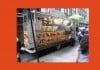


The dumpling counter at Tasty Dumpling on Mulberry Street opens at ten in the morning and by noon the pan-fried pork orders have gone through three full batches. Five dumplings for a dollar and a quarter. The woman behind the counter has been folding the same pleated crescent for fifteen years. This is not a restaurant experience. This is not something you find on a prix fixe menu or in a review written by someone who ate there once on assignment. This is a street food economy — a parallel food system operating inside a neighborhood that the rest of the city has always undercounted and underread. Later on, you can check out the history of dumplings in NYC Chinatown, our Jackson Heights Himalayan Street Food Guide, our NYC Halal Cart Guide, and our field guide to Chinatown dumpling styles!
Dumpling wrapper hydration isn’t the only NYC street food science worth geeking out over. The batter taxonomy behind Flushing’s Korean corn dogs, yeasted dough versus rice flour versus potato-crusted, runs on a surprisingly similar set of principles, covered in our NYC Korean Street Food Guide.
Chinatown dumplings occupy a fundamentally different category from the restaurant dumplings most New Yorkers know. The difference is not merely quality — it is structural. Street-level and counter-service Chinatown dumpling vendors operate on a fresh-daily model that few restaurants can match at any price point. Wrappers are hand-rolled or passed through a narrow-gauge roller the same morning they are filled. Fillings are mixed in the back kitchen before the vendor opens, not portioned from a refrigerated sheet pan that has been sitting since Tuesday. The hand-pleated crimp on a Fujianese boiled dumpling at Shu Jiao Fu Zhou creates a specific fold density that traps filling moisture differently than a machine-pressed seal. These are not aesthetic distinctions. They determine texture, juice retention, and thermal behavior during cooking.
The Chinatown dumpling landscape is also not a monolith. Three distinct regional traditions operate within a roughly ten-block radius in lower Manhattan, each with its own wrapper chemistry, filling logic, and cooking method. The Cantonese dim sum tradition — the founding food culture of New York’s first Chinatown — produces har gow and siu mai through steam, favoring rice-starch wrappers that turn translucent under heat. The Fujianese wave that reshaped Chinatown through the 1980s and 1990s brought boiled wheat dumplings served in peanut-sesame or clear broth. The Shanghainese influence introduced xiao long bao to the neighborhood’s repertoire — a soup dumpling with a technical construction unlike anything else in the canon. Understanding which tradition you’re eating from is the baseline for eating here intelligently.
The Map: All 14 Vendors Plotted
All vendors plotted — tap any pin for address, hours, and must-order item.
The Dumpling Taxonomy: Five Styles, Three Traditions
For the deeper technical breakdown of each style — wrapper thickness measurements, regional variant maps, and the full filling-to-wrapper ratio data — see the Field Guide to Chinatown Dumpling Styles. What follows is the working knowledge you need to navigate the vendor matrix and make informed orders at each stop.
Guotie (Potsticker / Pan-Fried Dumpling)
The workhorse of the Chinatown counter. Guotie uses an all-purpose wheat flour wrapper — higher gluten development than dim sum wrappers — that can withstand the two-stage steam-fry cooking sequence. The dumpling is placed flat-side down in a lightly oiled cast iron or carbon steel pan, browned on the base through the Maillard reaction until a golden crust forms (typically 2–3 minutes at high heat), then a small volume of water or starch slurry is added and the pan is immediately covered. The steam cooks the filling from above while the base continues to caramelize. The result is a wrapper with two distinct textures: chewy-translucent on the curved top, crisp and lacquered on the flat base. The Chinatown standard — pork and chive — is built around the sulfur compounds in Chinese chive (garlic chive, not Western chive) that amplify the umami of fatty ground pork. Best local representative: Fried Dumpling, 106 Mosco St.
Xiao Long Bao (Soup Dumpling / XLB)
The most technically demanding dumpling in this guide, and the one most often misunderstood by visitors. The broth inside a xiao long bao is not added as liquid. It is introduced as a solid aspic — collagen extracted by long-simmering pork skin, feet, and knuckles, then chilled until it sets into a firm gel. The aspic is diced and folded into the raw filling mixture. During steaming, the collagen matrix breaks down at approximately 70°C, releasing the broth that pools in the dumpling’s base. A correctly constructed XLB wrapper is rolled thin enough (roughly 1mm at the body, thicker at the pleated crown) to transmit steam efficiently without rupturing under broth pressure. The minimum acceptable pleat count is 18 — higher fold density creates a tighter seal at the crown. Eat XLB in a single bite from a spoon; breaking the wrapper to sip the broth first is a reasonable alternative for the uninitiated but loses the temperature integration of broth, filling, and wrapper arriving simultaneously. Best local representative: Deluxe Green Bo, 66 Bayard St; Shanghai 21, 21 Mott St.
Watch this video to learn more:
Har Gow (Steamed Shrimp Dumpling)
The canonical Cantonese dim sum dumpling is the benchmark by which any dim sum kitchen is judged. Har gow wrappers are made from wheat starch — not all-purpose flour — combined with a small quantity of tapioca starch for elasticity. Wheat starch is the residual starch after gluten proteins are washed out of wheat flour; it contains no gluten and develops no chew under cooking. What it does under steam is become translucent, creating the pale, slightly luminous wrapper that distinguishes har gow from any other dumpling style. The filling is shrimp-primary (70–80% whole shrimp pieces, not a paste), with bamboo shoot for textural contrast and a light seasoning of sesame oil, white pepper, and a small quantity of pork fat to bind. The shrimp must retain a firm, snapping texture — overcooking produces a cottony result that indicates either inferior shrimp or excessive cook time. Best local representative: Nom Wah Tea Parlor, 13 Doyers St.
Siu Mai (Open-Top Steamed Dumpling)
Siu mai is the open-crown dim sum dumpling — a gathered cylinder of thin wheat wrapper filled with pork and shrimp, steamed without a sealed top. The open construction means the filling is fully exposed during cooking and must have sufficient fat content and binding (usually egg white and cornstarch slurry) to hold its dome shape without spreading. The traditional garnish — a single orange dot of fish roe or carrot — is not decorative. It signals the filling composition: fish roe indicates a more refined version with higher shrimp content; carrot indicates a pork-forward filling. In a working Chinatown operation, siu mai are produced in quantity and are less variable in quality than XLB, making them a reliable high-volume order. Best local representative: Nom Wah Tea Parlor, 13 Doyers St.
Watch this video to learn more:
Wonton (Boiled / Soup)
The Cantonese wonton is a minimal construction: a thin, square egg-wheat wrapper folded around a small quantity of whole shrimp and pork filling, boiled and served in a clear broth or — in the Chinatown style increasingly influenced by Fujianese preparation — in chili oil. The Fujianese version (most accessible at White Bear in Flushing, less common in Manhattan Chinatown) uses a more intensely seasoned filling and a chili oil application that coats the wonton skin after boiling, adding fat and heat in a way that transforms the dish. The wrapper in a well-made wonton is thin enough to transmit the broth temperature almost immediately — wontons that feel like they have a wall between filling and broth indicate wrappers that are too thick or have been sitting in liquid too long before service. Best local representative: Shu Jiao Fu Zhou, 295 Grand St (boiled variant); White Bear, Flushing (chili oil variant).
Vendor Matrix: All 14 Vendors
| Vendor | Address | Style | Price (approx.) | Payment | Hours |
|---|---|---|---|---|---|
| Fried Dumpling | 106 Mosco St | Pan-fried pork & chive | $3 / 5pc | Cash only | 7:30am–8pm |
| Tasty Dumpling | 42 Mulberry St | Pan-fried pork | $1.25 / 5pc | Cash only | 10am–9pm |
| Jin Mei Dumpling | 8 Pell St | Pan-fried + bao | $3–5 | Cash only | 9am–8pm |
| Shu Jiao Fu Zhou | 295 Grand St | Boiled Fujianese | $7–10 | Cash only | 11am–9pm |
| Deluxe Green Bo | 66 Bayard St | XLB (soup dumplings) | $7–9 | Cash only | 11:30am–10pm |
| Shanghai 21 | 21 Mott St | XLB (soup dumplings) | $8–10 | Cash + card | 11:30am–10pm |
| Nom Wah Tea Parlor | 13 Doyers St | Cantonese dim sum | $12–18 | Cash + card | 10:30am–10pm |
| King Dumpling | 61 Hester St | Pan-fried pork & chive | $ | Cash only | Mon–Sat 10am–7pm |
| Mei Lai Wah Bakery | 64 Bayard St | BBQ pork buns | $ | Cash only | 8am–7pm |
| Wah Fung Fast Food | 79 Chrystie St | Roast pork buns | $ | Cash only | 7am–6pm (sells out by noon) |
| North Dumpling | 103 Essex St | Pan-fried potstickers | $ | Cash only | 10am–8pm |
| Tianjin Dumpling House | 41-28 Main St, Flushing | Jiaozi | $ | Cash only | 10am–9pm |
| White Bear | 135-02 Roosevelt Ave, Flushing | Wontons in chili oil | $ | Cash only | 11am–8pm |
| Tasty Hand-Pulled Noodle | Chinatown, Manhattan | Pan-fried + noodle | $ | Cash only | 11am–9pm |
The Crawl Route: 7 Stops, One Neighborhood
The route below is designed as a single-session crawl completed in approximately 3–4 hours, moving from the high-volume pan-fried counter stops in the western blocks east toward Grand Street’s Fujianese corridor, then doubling back through Bayard Street to the XLB operations and the Nom Wah anchor on Doyers. The ordering logic matters: start with pan-fried and boiled to build a baseline before eating XLB, which requires an empty enough stomach to give proper attention to the broth.
- Stop 1 — Fried Dumpling (106 Mosco St): Open at 7:30am, which makes it the right start if you’re doing an early crawl. Order the pan-fried pork and chive. The crust develops particularly well here — the oil temperature is calibrated for a longer Maillard window that produces a deeper brown than most competitors.
- Stop 2 — Tasty Dumpling (42 Mulberry St): Five pan-fried pork for $1.25. This is the price-per-unit benchmark for all of Chinatown. Order one portion. The wrapper is thicker than Fried Dumpling’s — slightly more chew, less crust transparency. A direct comparison is instructive.
- Stop 3 — Jin Mei Dumpling (8 Pell St): Pell Street is one of the oldest streets in Chinatown, and Jin Mei has been operating here long enough to have a rhythm. Get the pan-fried and one bao to assess their steamed wrapper work before moving to more complex styles. Watch this reel to get a glimpse:
- Stop 4 — Shu Jiao Fu Zhou (295 Grand St): The Fujianese boiled dumpling stop. Order the boiled pork and chive in peanut-sesame sauce (see the Sauce section below for application notes). This is the stylistic pivot of the crawl — after three pan-fried stops, the broth-based Fujianese preparation reads as a complete reset.
- Stop 5 — Deluxe Green Bo (66 Bayard St): First XLB stop. Order one basket of 8. Eat immediately from the steamer. Test the aspic set by gently pressing one dumpling with your spoon — the resistance should feel liquid-filled, not collapsed. Watch this reel:
- Stop 6 — Shanghai 21 (21 Mott St): Second XLB stop for direct comparison. Shanghai 21’s wrapper is marginally thicker than Green Bo’s; the broth is slightly sweeter. Neither is objectively better — the comparison is the point.
- Stop 7 — Nom Wah Tea Parlor (13 Doyers St): The crawl anchor. Nom Wah has been operating on Doyers Street since 1920 — it is not merely the oldest dim sum restaurant in New York, it is one of the oldest continuously operating food businesses in lower Manhattan. Order har gow and siu mai. The Cantonese dim sum tradition closes the loop on everything the crawl has covered. Watch this video to get a glimpse:
Download the Full Crawl Itinerary →
Sauce & Condiment Protocol
The condiment table at a Chinatown dumpling counter is not an afterthought. The sauce application is part of the dish’s construction, and the ratios matter.
Soy-Vinegar Base
The standard dipping sauce for pan-fried and boiled dumplings is a mix of soy sauce and Chinkiang black vinegar (镇江香醋) — a rice-and-wheat vinegar with a molasses-adjacent depth that ordinary rice vinegar cannot replicate. The working ratio is 2 parts soy to 1 part Chinkiang, though some preparations invert this for boiled dumplings where a more acidic profile cuts through the peanut sauce. The acidity does two things: it provides brightness that fat suppresses in the filling, and it begins a mild denaturing of the wrapper surface that softens the chew slightly after dipping — relevant for thicker-wrapper guotie.
Chili Oil Application
Chili oil at a Chinatown dumpling counter is typically a lard- or neutral-oil-based preparation with dried chili flakes and sometimes Sichuan peppercorn (which introduces a numbing, citrus-forward topical effect distinct from heat). Apply chili oil after dipping in the soy-vinegar base, not before — the vinegar layer provides an acid barrier that moderates the fat absorption into the wrapper. The standard application is a single drag through the chili oil pool with the dumpling on the spoon, not a full submersion. For XLB, add chili oil to the spoon after placing the dumpling — applying it directly before eating preserves the broth temperature longer.
XLB Ginger Protocol
Thinly sliced raw ginger served alongside XLB is not garnish. The gingerol compounds in raw ginger act as a digestive counterpoint to the collagen-rich aspic broth and fatty pork filling — a combination that, in quantity, creates a significant glycemic and digestive load. Eat a strip of ginger between dumplings, not after each one. The ginger also functions as a palate reset between the steamed wrapper, aspic broth, and chili oil layers of a multi-basket order. Watch this video to learn more:
Fujianese Peanut-Sesame Sauce
The Fujianese boiled dumpling sauce at Shu Jiao Fu Zhou and similar operations is a peanut paste base thinned with sesame oil and a small quantity of dumpling cooking water — the starchy poaching liquid acts as an emulsifier that keeps the sauce fluid without breaking. Black vinegar is added for acid balance; the ratio here runs closer to 1:1 with soy because the peanut fat already provides a suppressing layer. Do not mix the sauce into the dumplings before eating; ladle it over in stages so the boiled wrappers do not over-absorb the sauce and collapse their structure.
The Regional Split: Cantonese, Fujianese, Shanghainese
The full immigration and culinary history is documented in depth in the History of NYC Chinatown Dumplings. The operational summary below is what you need to navigate the neighborhood intelligently.
The Cantonese Foundation
The first sustained Chinese community in New York — concentrated in the blocks around Mott, Pell, and Doyers by the 1870s — was overwhelmingly Cantonese, drawn primarily from Guangdong Province. Cantonese food culture established the neighborhood’s first commercial kitchens, its tea houses, and the dim sum tradition that still anchors the western end of Chinatown today. Har gow and siu mai are Cantonese constructions. The rice-starch wrapper technology that produces translucent dim sum skins is a Guangdong regional technique. Nom Wah on Doyers Street — open since 1920 — represents the unbroken thread of this founding tradition within a neighborhood that has been remade multiple times around it. Understanding the Cantonese layer is understanding the baseline from which everything else in Chinatown deviates.
The Jackson Heights corridor tells a parallel story in a different idiom — the momo tradition documented in the Jackson Heights Himalayan Street Food Guide represents another South and East Asian dumpling lineage that evolved independently and arrived in Queens through entirely different migration channels, yet occupies the same structural role: a hand-formed, filling-in-wrapper street food that anchors a working-class immigrant food economy. The dumpling form recurs across culinary traditions because its logic is efficient and portable.
The same filled-dough logic plays out across NYC’s Latin street food scene — our NYC Empanadas & Arepas Guide covers the Colombian cornmeal empanada and Venezuelan arepa traditions that bring the same concept to Jackson Heights and Astoria.
The Fujianese Transformation
The Fujianese migration wave that accelerated through the 1980s and peaked in the 1990s — driven by Fujian Province’s proximity to Taiwan shipping routes and the smuggling networks that moved undocumented workers into New York — fundamentally changed the eastern half of Chinatown. The blocks east of the Bowery, particularly around East Broadway, Eldridge, and Grand Street, became a Fujianese commercial district overlaid on the existing Cantonese geography. Fujianese food is not Cantonese food. The flavor profiles run more aggressive — stronger aromatics, heavier garlic and scallion application, a preference for boiled and broth-based preparations over steamed. Shu Jiao Fu Zhou’s boiled dumplings represent this tradition at its most accessible: wheat wrapper, pork-and-chive filling, served in peanut-sesame broth that has no Cantonese antecedent.
This pattern — an established working-class immigrant food economy being reshaped by a subsequent wave of immigrants with different regional origins — mirrors what happened in the halal cart economy documented in the NYC Halal Cart Guide. The Fujianese and the Yemeni and the Pakistani cart operators of the 1990s were doing parallel things in parallel neighborhoods: building food-access infrastructure for recently arrived communities that had neither the capital for restaurants nor the English-language proficiency for mainstream employment. The counter-service dumpling and the halal rice platter are twin expressions of the same economic logic.
The Shanghainese XLB Influence
Xiao long bao is not native to Manhattan Chinatown — it arrived as the neighborhood’s demographic profile shifted again in the 2000s and 2010s, with Shanghainese and broader Jiangnan-region Chinese immigrants establishing operations in the Mott Street corridor. The XLB vendors in Chinatown today — Deluxe Green Bo, Shanghai 21 — represent a third culinary layer operating inside the same ten-block geography as the Cantonese dim sum tradition and the Fujianese counter-service operations. That three regionally distinct dumpling traditions can coexist at street-food prices within a single neighborhood is not incidental. It is what Chinatown is: a living record of successive immigration waves, each one leaving a food infrastructure that persists after the community that built it has partially dispersed to the outer boroughs and beyond.
The downtown street food corridor extends south from the NYC Street Taco Guide‘s Tribeca and Lower East Side truck territory into Chinatown proper. The vendors are different, the traditions are different, but the street-food economics are continuous: high volume, low margin, cash-based, fresh-daily, operating in spaces that restaurants cannot afford and tourist operations choose not to enter.
Keep walking south and the same economics hold in the Financial District. About 15 minutes from Mott Street, the fava bean falafel cart at Zuccotti Park has fed Wall Street lunch lines with Egyptian ta’ameya since the 1990s: made from scratch every morning, cash only, and gone when the batch runs out. It’s a natural savory finale if your Chinatown crawl ends before lunch.
Timing & Logistics
Weekday mornings between 10 am and noon represent the best operational window for this crawl. Batch sizes are largest early in the day — vendors produce their first run of dumplings for the morning rush and do not reduce production until early afternoon. Lines at the highest-volume stops (Tasty Dumpling, Fried Dumpling) run under five minutes before noon on weekdays; weekend afternoons can push wait times to 20–30 minutes at the same counters.
XLB timing requires specific attention. The aspic mixture for xiao long bao is prepared in limited quantities — once the pre-made aspic supply is exhausted, the vendor cannot produce more XLB until the next production cycle. At Deluxe Green Bo and Shanghai 21, arriving after 2pm on a weekend carries a meaningful risk of a reduced XLB menu or a wait while a new batch is assembled. Arrive when they open at 11:30am for the most reliable XLB access.
Wah Fung Fast Food on Chrystie Street — roast pork buns, cash only, open 7am — operates on a sell-out model. They are reliably out of roast pork buns by noon, often earlier on weekends. If Wah Fung is on your list, it anchors your start time.
King Dumpling on Hester Street is closed Sundays — plan accordingly if building a weekend itinerary. North Dumpling on Essex Street operates on a shorter window than its posted hours suggest during slow periods; a weekday visit is more reliable.
Frequently Asked Questions
What is the best dumpling in NYC Chinatown?
There is no single best — the answer depends on style. For pan-fried potstickers at volume prices, Tasty Dumpling on Mulberry Street is the benchmark. For xiao long bao with a properly formed aspic gel, Deluxe Green Bo on Bayard Street or Shanghai 21 on Mott Street. For Fujianese boiled dumplings in peanut-sesame broth, Shu Jiao Fu Zhou on Grand Street is the essential stop. A complete Chinatown dumpling crawl should include at least one vendor from each regional tradition.
What is the difference between xiao long bao and a regular dumpling?
Xiao long bao is a soup dumpling — the liquid inside forms when a solid aspic made from pork skin collagen melts during steaming. Standard dumplings (jiaozi, guotie) have no aspic; the filling is raw ground meat and aromatics. XLB also uses a thinner, unleavened wrapper that must be pleated with enough folds to contain pressurized broth without rupturing. The technical difficulty is substantially higher, which is why XLB are priced and treated differently from standard pan-fried or boiled dumplings.
Are Chinatown dumplings cash only?
The majority of street-level and counter-service dumpling vendors in Chinatown are cash only — particularly the high-volume, low-price operations like Fried Dumpling, Tasty Dumpling, and King Dumpling. Sit-down operations like Nom Wah Tea Parlor and Shanghai 21 accept cards. Bring at least $30 in small bills before entering Chinatown for a crawl.
What is the best time to visit Chinatown for dumplings?
Weekday mornings between 10am and noon offer the shortest lines, freshest batches, and the best chance of catching sell-out items like roast pork buns at Wah Fung. Weekend afternoons (especially Saturday noon–3pm) see the heaviest traffic — waits at popular stops can reach 20–30 minutes. If your priority is XLB, arrive when XLB-specialist vendors open at 11:30am before the aspic supply gets stretched.
How much does a Chinatown dumpling crawl cost?
A full 7-stop crawl following this guide runs $35–$55 per person, depending on how many orders you take at each stop. The first three stops (Fried Dumpling, Tasty Dumpling, Jin Mei) can be completed for under $15 total. XLB stops and the Nom Wah dim sum anchor bring the per-person cost up. The printable itinerary linked above includes a per-stop budget breakdown.
NYC Chinatown Dumpling Guide — Asset Network
All resources in this entity stack:
- 📄 Printable Crawl Itinerary (Google Doc)
- 🗺️ Interactive Vendor Map (Google My Map)
- 🌐 Authority Mirror (Google Site)
- 📖 The History of NYC Chinatown Dumplings
- 🥟 Field Guide to Chinatown Dumpling Styles
- Red Hook Food Vendors Guide
Related NYSF Street Food Guides:
- Jackson Heights Himalayan Street Food Guide
- NYC Halal Cart Guide
- NYC Street Taco Guide
- NYC Falafel & Shawarma Guide
Browse all Chinese street food coverage → | Browse all food cart coverage →