

LAST UPDATED: SEPTEMBER 2026
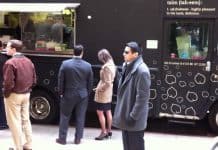
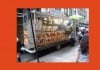
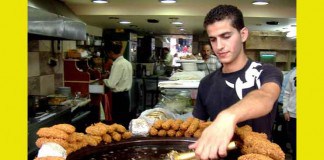
One summer day in 1985, a reporter watched an Israeli immigrant called Moshe hook a stainless-steel falafel cart to a faded orange 1977 Chevy station wagon, then pull up at Sixth Avenue and West 46th Street. The cart had cost $2,000 to build and required three hours of cleaning every night. Moshe told the reporter he hoped to own a restaurant someday.
Forty-one years on, Moshe’s Falafel has two Midtown trucks and an Upper West Side storefront. But that one corner is only a small piece of a much bigger NYC food story: one that begins in Manhattan’s Little Syria during the 1890s, passes through Mamoun’s Falafel on MacDougal Street in 1971, then reaches the Egyptian carts of the Financial District and the counters of Astoria’s Little Egypt. In all our years covering NYC street food, we have noticed that almost no one tells this story in the right order. So, here it is.
KEY TAKEAWAY
Falafel and shawarma did not arrive in New York in one big wave. Syrian and Lebanese grocers came first in the 1890s; Mamoun’s opened the city’s first falafel shop in 1971; Israeli and Egyptian vendors brought falafel to Midtown and downtown carts in the 1980s and 1990s; then Egyptian, Palestinian and Lebanese families turned Astoria and Bay Ridge into NYC’s shawarma capitals. Every wave brought its own recipe, which is why the city still has five distinct falafel styles today.
What Is the History of Falafel and Shawarma in New York City?
The history of falafel and shawarma in New York City is a 130-year immigration story: from Manhattan’s Little Syria in the 1890s to Atlantic Avenue, Greenwich Village counters in the 1970s, Midtown and downtown carts in the 1980s and 1990s, and finally Astoria and Bay Ridge. Falafel, a fried patty made from soaked, ground chickpeas or fava beans, first arrived as a sandwich. Shawarma, meat roasted on a vertical spit, became a street-food staple later as spit equipment spread through the city’s Arab neighbourhoods.
The important thing to remember is that “falafel” has never meant one fixed recipe. Syrian cooks brought cumin-and-coriander chickpea falafel. Egyptian vendors brought fava-bean ta’ameya. Israeli vendors introduced a green, herb-heavy chickpea version. Palestinian cooks arrived with oblong patties. You can still eat every one of them within a single subway ride, and our NYC Falafel & Shawarma Guide shows you exactly where to find them today.
| Year | Milestone | Where |
|---|---|---|
| 1880s to 1890s | Syrian and Lebanese immigrants settle Little Syria; Sahadi’s founded | Washington St, Lower Manhattan |
| 1948 | Sahadi’s opens on Atlantic Avenue | Brooklyn Heights |
| 1971 | Mamoun’s Falafel opens, falafel sells for 75 cents | 119 MacDougal St |
| 1981 | Moshe’s Falafel cart starts on W 46th St | Midtown |
| 1987 | Kabab Cafe, the first Egyptian-owned spot on Steinway | Astoria |
| 1992 | Rainbow Falafel opens off Union Square | 26 E 17th St |
| By 1996 | Sam’s Falafel serves Egyptian fava falafel downtown | Liberty St & Broadway |
| 2002 | King of Falafel & Shawarma cart opens April 18 | Broadway & 30th St, Astoria |
| 2005 | Taïm opens with green falafel and sabich | 222 Waverly Pl |
| 2010 | King of Falafel wins the Vendy Cup and People’s Choice | Vendy Awards |
| 2018 | Al-Aqsa brings Palestinian shawarma to 5th Ave | Bay Ridge |
| 2024 | King of Falafel expands to Illinois | Chicago Ridge |
Where Did Falafel Come From Before It Reached New York?
Falafel’s exact birthplace is still uncertain, but the most widely told version traces it to Egypt, where fava bean ta’ameya became a filling meatless staple before chickpea falafel spread through the Levant, including Syria, Lebanon and Palestine. One popular account credits Egyptian Coptic Christians, who needed a satisfying meat substitute during Lenten fasting. What is beyond doubt is that, by the 20th century, falafel had become street food throughout the eastern Mediterranean.
That regional divide—fava in Egypt, chickpeas in the Levant—is the central fact behind NYC falafel. Both beans are soaked raw and ground before frying, never cooked in advance. That is why a properly made patty needs no flour to hold together and forms a crisp Maillard crust while staying steamy inside. The immigrants who brought falafel to New York brought their home region’s bean choice with them.
Shawarma’s family tree is easier to trace. Its vertical rotisserie is commonly linked to 19th-century Ottoman Turkey, the same turning-spit technology behind Turkish döner kebab and Greek gyro. Arab cooks adapted it with their own marinades, garlic sauces and flatbreads, while “shawarma” comes from the Turkish word for turning.
You can often tell where an NYC falafel vendor’s family comes from simply by looking at the colour inside the patty.
When Did Arab Food First Arrive in New York City?
Arab food first came to New York City in the 1880s and 1890s, when Syrian and Lebanese immigrants established Little Syria along Washington Street in Lower Manhattan. The neighbourhood was filled with grocers, bakeries and “Holy Land goods” shops, largely serving a Christian Levantine community.
The clearest surviving link to that era is Sahadi’s. Lebanese immigrant Abrahim Sahadi opened A. Sahadi and Company on Washington Street in the 1890s. His family moved the business to Atlantic Avenue in Brooklyn in the 1940s and opened the current shop there in 1948. The James Beard Foundation named it an America’s Classic in 2017. When Little Syria was cleared for mid-20th-century construction, Atlantic Avenue—and later Bay Ridge—took over its role as the centre of Arab New York.
Falafel was not yet New York street food in this period. Grocers supplied the ingredients, families cooked the dish at home, and it remained largely within the community. That began to change in 1971.
Who Opened New York’s First Falafel Shop?
Mamoun Chater, a Damascus-born Syrian immigrant, opened Mamoun’s Falafel at 119 MacDougal Street in Greenwich Village in 1971. It is widely recognised as New York City’s oldest falafel restaurant. On opening day, a falafel sandwich cost just 75 cents.
Chater left Damascus as a young man, met his wife Maria in Madrid, then came to New York looking for work. He rented an apartment in the Village and leased a tiny empty MacDougal storefront. The timing could not have been better: the Village was packed with artists, musicians and students looking for something cheap and different, as well as Israelis and Arabs looking for a taste of home. Mamoun’s served them all and still does, staying open late for post-bar crowds. Its St. Marks Place location moved into a larger space and began accepting cards in 2016, as Time Out New York reported. NYSF still tells every first-time visitor to start here.
OUR EXPERIENCE
Mamoun’s remains the Syrian-style falafel benchmark for us: small, dense patties; cumin leading the flavour; a deeply browned shell; and tahini thin enough to seep into the pita. The standing-room-only counter is exactly the point.
Take it to the MacDougal sidewalk. That is how people have been eating it for 55 years.
How Did Falafel Become a Midtown Street Cart Food?
Falafel became Midtown street-cart food in the early 1980s, when Israeli immigrant Moshe began selling it from a cart at West 46th Street and Sixth Avenue in 1981. Office workers wanted a quick, affordable meatless lunch, and a mobile fryer could provide it in minutes.
Moshe was born in Kibbutz Galuyot, Israel, to a family with roots in Aleppo, giving his Israeli-style falafel a Syrian-Jewish lineage. When The Christian Science Monitor profiled Midtown vendors in 1985, it found hundreds of carts operating on nearly every corner from 34th to 57th Streets along Fifth and Sixth Avenues. Moshe explained the informal rule protecting his spot: a seniority-based gentleman’s agreement in which nearby vendors would chase away anyone trying to claim his corner. It is the same unofficial system NYSF has tracked across the cart economy that halal vendors later built on the same avenues.
- The cart: $2,000 to build, stainless steel, towed daily.
- The labor: three hours of cleaning every night.
- The product: four falafel balls in pita with lettuce, tomato and dressing.
- The outcome: by 2026, two kosher trucks in Midtown and a storefront at 142 W 83rd St.
Why Does Lower Manhattan Eat Egyptian Fava Bean Falafel?
Lower Manhattan eats Egyptian fava bean falafel because Egyptian immigrant Sam Emad was selling ta’ameya at Liberty Street and Broadway by the mid-1990s. His Zuccotti Park cart became the Financial District’s defining falafel stop. It remains the only major NYC falafel vendor centred on fava beans.
Sam and his brother Yasser make everything from scratch, beginning at 5am. They once operated a restaurant, but sold it in 2008 and chose to focus on the cart; that cart helped put their children through engineering and public-health degrees. The lunchtime queue became well-known enough for downtown writers to call it a “falafel war” between Sam’s and a rival Liberty Plaza cart. In 2026, expect a sandwich to cost about $7 and a platter around $10, cash only.
Sam’s arrived during the same period Egyptian-owned carts were transforming Midtown. The chicken-over-rice platter at 53rd and Sixth emerged from that Egyptian wave too, which is why falafel and halal carts share the same pavements but not the same recipes.
How Did Astoria Become Little Egypt and the Home of the King of Falafel?
Astoria became Little Egypt from the 1970s through the 1990s as Egyptian, Moroccan, Tunisian, Yemeni and Lebanese families established themselves along Steinway Street between 28th Avenue and Astoria Boulevard. In 2002, Palestinian immigrant Freddy Zeideia opened the King of Falafel & Shawarma cart a few blocks away. The area has appeared in print as “Little Egypt” since at least 1998. Watch this video to get a glimpse:
Kabab Cafe opened in 1987 as the strip’s first Egyptian-owned business, followed by hookah cafes, bakeries and shawarma counters. As Queens Post noted in its 2025 Little Egypt guide, many of these family businesses have been there for decades. NewYorkStreetFood.com sees the strip as the Queens anchor of this entire story.
Freddy Zeideia was born in Ramallah in 1966, came to the US at 15 and settled in Woodside. On April 18, 2002, he set up at Broadway and 30th Street with chickpea-only Palestinian falafel shaped into oblong patties. A Vendy finalist in 2007 and 2009, he won both the Vendy Cup and People’s Choice Award in 2010. He added a Midtown cart at 53rd and Park in 2012, opened the 30-15 Broadway storefront in January 2016, then brought the brand to Illinois in 2024, as Eater Chicago reported.
OUR EXPERIENCE
We have followed Freddy since the cart days, including our featured vendor profile of the King of Falafel. When we first reviewed the Broadway and 30th cart, both Vendy trophies were on display and the line moved in under 10 minutes.
He told us he opened because the city did not have many places serving real falafel and shawarma at the time. Twenty-four years later, NYC has plenty, and he is one big reason it does.
The Vendy Cup did not make King of Falafel great. It simply let the rest of New York catch up with what Astoria already knew in 2002.
When Did Shawarma Become NYC Street Food?
Shawarma became widespread NYC street food from the 1990s onward, as Arab counters in Astoria, Bay Ridge and Atlantic Avenue installed vertical spits and carts began adding shawarma to their falafel menus. Because it required more equipment than falafel, it developed first in storefronts before reaching trucks and carts.
Bay Ridge became Brooklyn’s shawarma capital. Lebanese counter Karam on 4th Avenue built its name around chicken shawarma with toum, a whipped garlic emulsion; a sandwich from its Midtown outpost appeared on New York magazine’s 2010 list of the 101 best sandwiches. Palestinian families followed along 5th Avenue. Mahmoud Kasim, from Jerusalem’s Old City, opened Al-Aqsa in 2018, while Ayat has grown into a Michelin Guide-listed name with several Brooklyn locations.
Meanwhile, Manhattan kept being reshaped by the Israeli wave. Einat Admony opened Taïm on Waverly Place in 2005 with three falafel colours and a sabich sandwich. In 2008, The New York Times named its green falafel one of the city’s best new sandwiches. The Infatuation still calls it a legendary West Village falafel spot, and NYSF agrees: it is where New York learned what amba is. Watch this video to get a glimpse:
| Immigration Wave | Style It Brought | Neighborhood | Taste It Today |
|---|---|---|---|
| Syrian / Lebanese | Chickpea falafel, cumin and coriander | Village, Atlantic Ave | Mamoun’s, Rainbow, Sahadi’s |
| Israeli | Green herb falafel, sabich | Midtown, West Village | Moshe’s, Taïm |
| Egyptian | Fava bean ta’ameya | FiDi, Little Egypt | Sam’s, Levant |
| Palestinian | Oblong falafel, laffa shawarma | Astoria, Bay Ridge | King of Falafel, Al-Aqsa, Ayat |
| Lebanese (Bay Ridge) | Shawarma with toum | Bay Ridge | Karam |
To compare these five traditions as they taste today—bean by bean, bread by bread and sauce by sauce—read our field guide to falafel and shawarma styles in NYC, which picks up exactly where this history leaves off.
What Do Most Histories of NYC Falafel Get Wrong?
Most histories of NYC falafel get one major thing wrong: they describe it as a single food that arrived with the halal-cart boom. In reality, it came in five separate waves and was here about two decades before the chicken-over-rice cart took off. Mamoun’s was serving 75-cent falafel in 1971; the Midtown halal platter rose around 1990.
- Wrong: falafel is halal cart food. Right: Syrian, Israeli and Egyptian specialists arrived first, while most halal carts treat it as a reheated side.
- Wrong: all falafel is the same. Right: fava versus chickpea marks a regional tradition, not a chef’s random preference.
- Wrong: this is a Manhattan story. Right: Astoria and Bay Ridge now hold the deepest roots.
Travel adverts sell NYC falafel as a trendy Mediterranean bowl. The real story is a $2,000 cart pulled by a station wagon to West 46th Street in 1981.
KNOW WHAT TO ORDER BEFORE YOU REACH THE WINDOW
From Sam’s ta’ameya to Taïm’s sabich, these pocket cards tell you the one dish worth getting at every vendor in this story.
Best For Who? Where to Taste Each Chapter of This History
History fans should begin at Mamoun’s and Sahadi’s; Queens explorers should make for King of Falafel and Steinway Street; downtown workers should go straight to Sam’s. You will find every stop on our printable falafel and shawarma crawl itinerary and the interactive vendor map.
| Reader | Worth the Trip? | Historic Stop |
|---|---|---|
| Tourist | Yes | Mamoun’s (1971) |
| Local | Yes | King of Falafel (2002) |
| Foodie | Yes | Sam’s for fava ta’ameya |
| Budget eater | Yes | Sam’s (~$7, cash) |
| Group | Depends | Sahadi’s, then Atlantic Ave counters |
| Solo | Yes | Moshe’s truck, W 46th St (1981) |
Frequently Asked Questions About the History of Falafel and Shawarma in NYC
When did falafel come to New York City?
Falafel became New York restaurant food in 1971, when Mamoun’s Falafel opened on MacDougal Street. It became cart food in 1981, when Moshe’s Falafel began serving at West 46th Street and Sixth Avenue. Syrian and Lebanese families had already been cooking it at home since the 1890s.
What was the first falafel restaurant in NYC?
Mamoun’s Falafel, founded in 1971 at 119 MacDougal Street by Damascus-born Mamoun Chater, is widely considered New York City’s first and oldest falafel restaurant. A sandwich was 75 cents when the shop opened.
Where did falafel originate?
Falafel’s exact origin is unknown. The most common theory traces it to Egypt, where fava-bean ta’ameya became a meatless staple—possibly among Coptic Christians during Lent—before chickpea versions spread through Syria, Lebanon and Palestine.
Why is Astoria called Little Egypt?
Astoria’s Steinway Street, between 28th Avenue and Astoria Boulevard, is called Little Egypt because Egyptian and other Arab families opened shops, cafes and restaurants there from the 1970s to the 1990s. Kabab Cafe, opened in 1987, was the strip’s first Egyptian-owned business.
Who is the King of Falafel?
The King of Falafel is Fares “Freddy” Zeideia, a Palestinian-American born in Ramallah. He opened his Astoria cart at Broadway and 30th Street on April 18, 2002, won the 2010 Vendy Cup and opened his 30-15 Broadway storefront in 2016.
Where did shawarma come from?
Shawarma comes from the vertical rotisserie commonly traced to 19th-century Ottoman Turkey, the same technology used for döner kebab and gyro. Arab cooks adapted it with their own marinades and garlic sauces, and its name comes from the Turkish word for turning.
FROM THE NYSF DESK
“Every falafel style in New York is a family record. The fava at Liberty Street is Egyptian, the green herbs on Waverly Place are Israeli, the oblong patties on Broadway in Astoria are Palestinian. The city never blended them, and that is its greatest food history lesson.”
“Falafel was New York street food 20 years before chicken over rice. The halal cart gets the headlines, but the fryer got here first.”
NewYorkStreetFood.com
- About the Author
- Latest Posts

Haley Chung is a writer and food enthusiast based in New York City, covering the city’s most exciting dining scenes for New York Street Food. Whether it’s a hidden noodle bar in Williamsburg or a standout Indian kitchen in Greenwich Village, Haley brings a genuine love of good food — and great service — to everything she writes.