
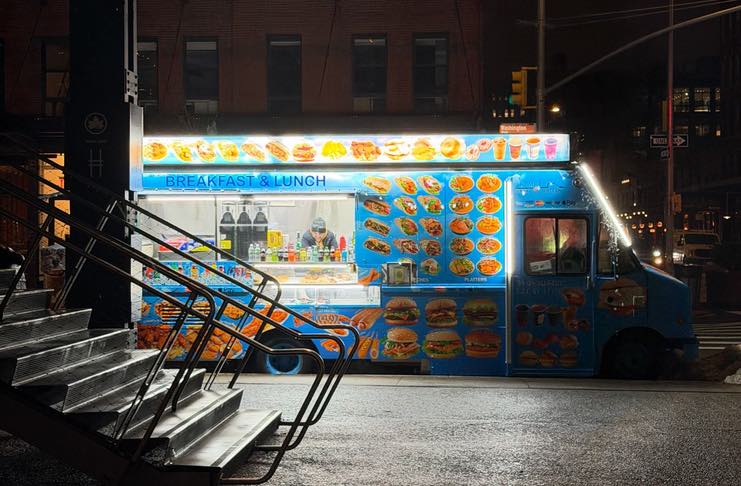
Walking along a busy Manhattan intersection during lunchtime, the vibe of the street market economy is palpable. Business workers, vacationers, and local residents form a line waiting for their favorite foods, lured by the smell of sizzling meat and seasoning. Owning a food truck means achieving the American Dream for many people – the opportunity to create a unique food menu and market their brand on the street. However, behind the glamorized facade hides a harsh reality of hard physical and economic labor. The street is not an easy place to make a living, and the very first strategic step should be made even before reaching the curb: to lease or buy a food truck.
The selected option will influence all future business processes, cash flow, and define how a person will maneuver through the highly regulated mobile food industry. To do that correctly, future vendors need to understand both the financial trade-offs and the regulatory landscape of New York City’s mobile food industry.
The Heavy Weight of Municipal Regulations
Before examining vehicle listings or signing rental agreements, prospective operators must understand that New York City does not treat food trucks like standard commercial vehicles. Operating legally requires navigating a dual-credential system administered by separate municipal entities. First, an individual needs a Mobile Food Vending License, issued by the Department of Consumer and Worker Protection (DCWP) after completing an eight-hour Food Protection Course at the NYC Health Academy. This certification involves a fifty-three-dollar course fee and a fifty-dollar license fee. However, holding an individual license only grants the legal right to work on a food truck, not to own or operate the vehicle itself.
For the vehicle itself, a business must secure a Mobile Food Vending Permit from the NYC Department of Health and Mental Hygiene (DOHMH). Historically, obtaining this permit has been the single largest hurdle in the street food business. For decades, a strict permit cap created a notorious black market where permits originally costing two hundred dollars were illegally leased for up to $25,000 for a two-year term, a persistent challenge detailed in the retrospective on the history of halal carts in NYC. While Local Law 18 of 2021 introduced “Supervisory Licenses” to address this underground market by bundling a permit with the license, waiting lists remain highly congested. Fortunately, starting July 1, 2026, the city will issue 2,200 supervisory licenses per year for five years, with waiting lists having reopened in April 2026 for disabled individuals and military veterans. Because legal operation is impossible without both credentials, reviewing the NYC Health Department Mobile Food Vendors page is mandatory before committing capital to a truck. Furthermore, applicants must obtain an official clearance letter from the Office of Administrative Trials and Hearings (OATH) certifying no outstanding environmental or sanitation fines before a permit can be processed or renewed.
The Commissary Kitchen Obligation
Another structural reality that first-time operators often overlook is the commissary requirement under New York State Sanitary Code 14-4. All food truck operators are required by law to run from the licensed commissary. The local health regulations forbid parking the truck in a residential driveway, prepping ingredients in a home kitchen, or cleaning commercial utensils in unlicensed premises. Each night, the truck needs to be parked overnight in a licensed commissary where wastewater discharge, fresh water supply, and proper sanitation take place. The usual cost of leasing a commissary space in NYC would vary between $1,200 and $2,500 per month. For projection planning purposes, a review of the basics of starting a street food business becomes essential.
Leasing a Food Truck: The Lower-Commitment Test Drive
For startups with limited capital or an entrepreneur testing a culinary concept, leasing a food truck represents a practical pathway. The primary benefit is a lower financial barrier to entry, requiring only a security deposit and the first and last month’s rent. This keeps upfront acquisition costs in a manageable $5,000 to $10,000 range, preserving working capital for inventory and permitting fees. Additionally, many leases transfer the burden of mechanical repairs to the leasing company, protecting the business from sudden bills. However, monthly lease payments—averaging $2,000 to $5,000 in NYC—will quickly surpass purchase costs over time. More importantly, leasing companies restrict customization, forbidding structural modifications to the vehicle.
Watch this video for some more useful tips:
Buying a Food Truck: Equity, Customization, and Ownership
For brands committed to a multi-year plan, purchasing a food truck is generally the superior financial strategy. Full ownership means absolute control in terms of creativity and operations. The interiors can be designed for optimal efficiency in the kitchen, equipment can be installed on a permanent basis, and the truck can be wrapped in customized vinyl without needing approval from a leasing company. This operational freedom gives the entrepreneur enough flexibility to develop a unique identity and change their menu according to the trends in the market. Also, with the purchase of a truck, the business can develop its own equity.
Watch this video for some tips:
The primary trade-off of purchasing is the substantial initial capital outlay. A used food truck in decent mechanical condition costs between $40,000 and $90,000, while a new, custom-built mobile kitchen can range from $100,000 to over $200,000. If a business lacks that capital, equipment financing or commercial loans must be secured. When comparing these routes, operators must weigh immediate cash flow against the value of asset ownership. Before signing any contracts, it is essential to run the numbers on monthly lease payments versus a traditional loan to evaluate how different interest rates and amortization terms will impact the monthly operating budget. If projected loan payments are comparable to average monthly lease rates, the long-term equity benefits of purchasing almost always outweigh the low-commitment allure of renting.
The Hidden Cost Environment of New York City
Whether leasing or buying, several regional hidden costs unique to the New York market can quickly drain a business bank account. Chief among these is commercial vehicle and general liability insurance. As a result of high traffic congestion in the area, insuring a commercial food truck in NYC will cost from $4,000 to $7,000 per year. Workers’ compensation insurance becomes a necessary part of the process the minute an employee is hired. Another important issue that should be taken into consideration when setting up the LLC in New York is that there is a necessity to publish the fact of forming the company in two local papers for six weeks in a row, which will cost $1,200-$1,800 in counties like New York or Kings.
A Strategic Summary for Street Food Operators
Ultimately, the choice between leasing and buying comes down to capital access, menu complexity, and risk tolerance. Leasing is an ideal tool for proof-of-concept testing or startups looking to preserve working capital. It allows operators to test the waters on the streets of New York without the anchor of a six-figure commercial loan. Conversely, if building a legacy brand with specialized layout needs, buying is the path to true independence. In this way, the proprietors obtain freedom of customization, business equity, and total control of their own culinary future. No matter what the chosen route, careful research, proper budgeting, and extensive preparation will be necessary in order to survive and thrive in the crazy, exciting world of New York street food.
- About the Author
- Latest Posts

Grant Polachek is Head of Branding at Squadhelp.com (now Atom.com), a three-time Inc. 5000 company and the world’s leading crowdsource naming platform. With over one million names reviewed and a curated marketplace of the web’s best available brand names, Squadhelp has helped businesses of all sizes find their perfect identity — from early-stage startups to global giants like Nestlé, Dell, Hilton, Pepsi, and AutoNation.