

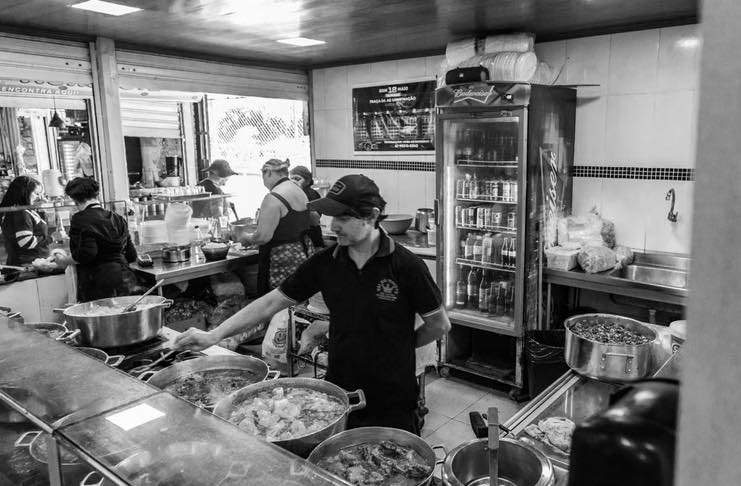
Most small food businesses hit a point where demand starts outpacing what the kitchen can handle. Orders pile up, the team scrambles, and what once felt like a smooth operation starts to creak. But growth doesn’t have to break things. You can prepare for increased production in a structured way that keeps product quality intact, your team from burning out, and your compliance record clean. Businesses that scale thoughtfully tend to hold onto the quality that made them successful; those that rush the process often find themselves backtracking after expensive mistakes. This article, as part of our small food business tips, walks through the main areas to address before production volume climbs – your equipment and space setup, food safety systems, and cost management – and each one deserves honest evaluation before you commit to growth, not after.
Scaling Your Production Space and Equipment
Before you double your output, you need to know exactly what your current setup can and can’t handle. The Central States Industrial (CSI) Store, for example, stocks sanitary fittings, pumps, valves, and process components across five US distribution centers, which gives you a practical reference for sourcing food-grade parts as your facility grows. Most small producers underestimate how hard their existing equipment is already working.
You might be running a mixer twelve hours a day when the manufacturer’s recommendation is eight. And a piece of equipment pushed past its intended capacity doesn’t just wear out faster – it introduces inconsistency into your product, which is far harder to explain to a retail buyer than a delayed shipment. Mapping your current capacity honestly – down to specific equipment, specific bottlenecks, specific square footage- is the first real step toward an expansion that doesn’t collapse under its own weight. Watch this video for some more useful insights and tips:
Identifying Where Your Bottlenecks Actually Are
A bottleneck isn’t always where you think it is. Many small food producers assume their constraint is oven space or mixing capacity, when the actual slowdown happens somewhere in portioning, labeling, or cooling.
Before spending money on new equipment, spend a few hours walking your process from raw ingredient to finished packaged unit. Time each step. Write down where product sits waiting to move forward, because that waiting is your bottleneck, and once you find it, you can deal with it directly. Sometimes the fix is a new piece of equipment; sometimes it’s a workflow change that costs nothing.
If the bottleneck genuinely is a machine, spec the replacement for where you want to be in two to three years, not just for today’s order volume. Buying equipment sized for current demand means you’ll replace it again sooner than your budget wants.
Food-Grade Equipment Standards You Can’t Skip
Not every piece of equipment is appropriate for food production at commercial scale. As you add capacity, the materials your equipment is made from matter as much as its output rate. Stainless steel contact surfaces, sanitary fittings, and cleanable designs aren’t optional, they’re the baseline for facilities that need to pass third-party audits or satisfy retail buyer requirements.
The gap between equipment built to 3-A sanitary standards and a standard commercial unit becomes very visible when a food safety inspector walks through. So make a list of every piece of equipment that touches your product directly, and verify it meets the standards relevant to your product category. If you’re producing dairy, beverages, or cooked proteins, the bar is higher than it is for ambient shelf-stable goods. Talk to your local state department of agriculture or your co-packer’s quality team if you aren’t sure what standard applies. Watch this video to learn more:
Building a Food Safety System That Scales With You
A food safety plan written for a twenty-unit-per-day operation breaks down fast when you hit two hundred. Procedures that worked informally with two people in the kitchen won’t survive a team of twelve without documented systems. Before you scale, your food safety infrastructure – your HACCP plan, sanitation schedules, allergen controls, and supplier verification records – needs to be written down, trained to staff, and actually followed.
Here’s the thing: many small food businesses run on institutional knowledge held by one or two people, and that’s a serious risk when new employees come on board. A new hire can’t follow a procedure that only exists in someone’s memory. The time to document your food safety systems is before growth forces the issue, not during a recall investigation or a failed audit.
Building a HACCP Plan That Holds Up
A Hazard Analysis and Critical Control Points (HACCP) plan is the foundation of food safety documentation for any serious producer. If you don’t have one yet, start with a hazard analysis of your specific process, biological, chemical, and physical hazards at each step. Identify where those hazards could enter your product and what control limits would catch or prevent them.
For most small food businesses, the control points that matter most are temperature (cooking and cooling), allergen separation, and sanitation between production runs. Define your monitoring procedures, your corrective actions when something falls out of range, and your recordkeeping system. The recordkeeping piece is what most small producers skip; it’s also exactly what a regulatory inspector will ask to see first. Your HACCP plan doesn’t need to be fifty pages long, but it does need to be complete, current, and something your team actually uses.
Supplier Verification and Ingredient Traceability
As production volume increases, so does your exposure to ingredient quality issues upstream. A supplier that delivers acceptable quality at small volumes may have inconsistency problems you never noticed before, low volume masked them. Before you scale, build a supplier verification program: review your main suppliers’ food safety certifications, set incoming ingredient specifications, and do periodic checks against those specs.
Traceability matters just as much. You need to trace any ingredient lot forward to finished product and backward to the supplier within hours, not days. Honestly, many small food businesses don’t realize how important lot tracking is until they’re staring down a potential recall. Set up a simple lot coding system for ingredients and finished goods now, while the operation is still manageable enough to implement it cleanly. Retrofitting traceability onto a large-scale operation is a much bigger headache than building it in from the start.
Managing Costs and Cash Flow as Output Grows
Increased production volume doesn’t automatically translate to better margins. The period right before and right after a scale-up tends to be financially stressful, because costs rise immediately while revenue catches up more slowly. Raw materials, labor hours, packaging, and facility overhead all climb before your new sales volume has had time to generate the cash to cover them.
Prepare for this gap by building a realistic cash flow forecast that accounts for the lag between spending on increased capacity and collecting on the orders that capacity serves. Talk to your suppliers early about volume discounts, many ingredient suppliers offer tiered pricing that meaningfully changes your cost of goods at higher purchase levels. But don’t overlook labor. Scaling from four employees to eight brings payroll taxes, benefits, and scheduling complexity that aren’t visible in a simple per-unit cost calculation; model it out before you commit.
Conclusion
Scaling a small food business takes more than buying bigger equipment. You need an honest picture of your current capacity, a food safety system that can grow with your team, and a cash flow plan that accounts for the gap between spending and collecting. Businesses that scale without preparing their documentation, equipment standards, and supplier relationships tend to discover the gaps at the worst possible moment, during an audit, a rush order, or a product quality complaint. Start with the areas where your operation is already showing strain, address those first, and build outward from there. Growth is manageable when the groundwork is laid before the orders arrive.