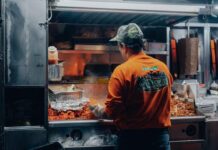

March 2018. The family behind Arepa Lady got the news every small kitchen in Jackson Heights dreads: the hole-in-the-wall off Roosevelt Avenue was coming down for a seven-story building. Seven months later, October 4, the plancha was live again one block over at 77-17 37th Avenue. Same arepa de choclo. Butter still pooling in the crease. Almost three times the seats. No press release. The block found it anyway.
That is the whole relocation lesson in one corner of Queens. Covering NYC street food for years, we have watched carts turn into rooms and rooms get shoved down the street. The ones that survive a move stay close to the people who already love them. I Sodi slid one block in the West Village. Pastrami Queen started as Pastrami King in Williamsburg and has crossed borough lines twice since 1956. Different kitchens. Different bets. Same city math. Watch this video to get a glimpse:
In New York, the cheapest rent is rarely the cheapest move. The real price is the regulars who will not cross a river, and the months you sit dark waiting on a permit or a gas meter.
🔑 Key Takeaway
Relocating a restaurant in NYC means re-licensing your business at a new address: a new $280 Health Department permit, an SLA removal application with 30 days of community board notice if you serve alcohol, and fresh Con Edison gas service. A few blocks keeps regulars and reopens fastest (I Sodi was dark about four weeks). Cross a borough and you trade your crowd for space or rent. Plan that one like opening from scratch.
Real Talk: What Does Relocating a Restaurant in NYC Actually Involve?
Relocating a restaurant in NYC means moving your brand, staff, and equipment while re-earning nearly every approval tied to the old address, starting with the Department of Health permit, the State Liquor Authority license, and Con Edison gas service. The truck is a one-day job. The paperwork is the move.
📘 What counts as a “relocation” in NYC?
In city terms, a relocation is a change of premises, not a change of ownership. Your company, recipes, name, and staff travel with you. Your Food Service Establishment permit, outdoor dining license, and gas service are glued to the old address and stay behind. Your liquor license only follows through an approved SLA removal application.
As of 2026, the city charges $280 for most Food Service Establishment permits, plus $25 if you make frozen desserts, according to the NYC Business Food Service Establishment permit page. The city Health Code also bars a new establishment from operating for 21 days after it applies unless the Department inspects and approves it sooner. At New York Street Food, that 21-day window is the detail we hear owners blow past most often.
| What you have now | Moves with you? | What to do |
|---|---|---|
| Name, recipes, staff | Yes | Share the timeline with your team early. Familiar faces are your best regular-retention tool. |
| Kitchen equipment | Yes, if it fits | Measure doorways, hood lines, and walk-in footprints before you sign. |
| DOHMH Food Service Establishment permit | No | New application for the new premises: $280, plus the 21-day rule. |
| SLA on-premises liquor license | Only with approval | File a removal application after giving your community board 30 days of advance notice. |
| Certificate of Occupancy | No (belongs to the building) | Confirm the new space is approved for eating and drinking use before you commit. |
| Con Edison gas service | No | Ask about gas availability and upgrade costs at the new address before signing. |
| Sidewalk or roadway cafe license | No | Reapply for the new frontage through Dining Out NYC. |
| Google reviews | Yes, if you edit the address | Update your existing Business Profile instead of creating a new one. |
Our NYSF Experience
From conversations with cart operators and restaurant owners across Queens and Brooklyn dating back to the early 2010s, the pattern is blunt: owners budget for rent and movers, then lose weeks to approvals that do not transfer. The ones who reopen fastest treat the permit calendar, not the lease signing, as the real start of the move.
Why Do the Smartest NYC Relocations Move Three Blocks Instead of Three Boroughs?
Short moves win because they keep your walk-in regulars, your neighborhood reputation, and usually the same community board, which makes the liquor license removal and the reopening faster than a cross-borough jump. You are moving a restaurant, not rebuilding one.
Rita Sodi’s I Sodi is the cleanest example we know. Last service at 105 Christopher Street: June 12, 2023. First service at 314 Bleecker Street: July 10, 2023. About a block, at the corner of Grove. The new space runs roughly 2,300 square feet across the ground floor and cellar, with 86 seats, and the license sat in front of the same West Village community board that already knew the restaurant. Watch this:
Arepa Lady’s 2018 move proves the same point under worse conditions. Time Out New York chronicled María Piedad Cano’s jump from cart to a 16-seat storefront back in 2014, and when that building came down she landed one block over on 37th Avenue. If you know the Roosevelt Avenue food corridor from our Jackson Heights Himalayan street food guide, you know why: in this neighborhood, a block is close enough for regulars to follow and far enough to find a better room.
As of 2026, the short move is still the most common pattern on the city’s openings lists. The Infatuation’s running guide to new NYC restaurant openings logged Kimchi Kooks Kate’s Kitchen in Bay Ridge moving just two doors down from its original spot, which is about as New York Street Food a relocation as it gets.
A restaurant that moves one block keeps its regulars. A restaurant that moves one borough has to earn them again from zero.
| Restaurant | The move | Distance | Why | Time dark |
|---|---|---|---|---|
| I Sodi | 105 Christopher St to 314 Bleecker St, West Village | About one block | Bigger room: 86 seats, about 2,300 sq ft | About 4 weeks (June 12 to July 10, 2023) |
| Arepa Lady | 77th St off Roosevelt Ave to 77-17 37th Ave, Jackson Heights | One block | Building demolished for a seven-story development | About 7 months (March to October 2018) |
| Kimchi Kooks Kate’s Kitchen | Within Bay Ridge, to 115 Bay Ridge Ave | Two doors | Not publicly detailed | Not reported |
| Thai Nara | Woodside to Jackson Heights | Neighboring Queens neighborhood | Not publicly detailed | Not reported |
| Szechuan Gourmet | Midtown to the Upper West Side | Same borough, new trade area | Not publicly detailed | Not reported |
| Pastrami King (now Pastrami Queen) | Williamsburg to Kew Gardens (1961), later Manhattan | Cross-borough, twice | Decades of following its market | Not reported |
Our Experience
We ate at Arepa Lady’s 37th Avenue room on a Saturday afternoon in spring 2025, and the arepa de choclo was the one we remember from late nights at the cart on Roosevelt and 79th: sweet-corn batter caramelized at the edges on the plancha, folded over salty quesito, butter pooling in the crease. The difference was tables, daylight hours, and no 1 a.m. line. The move cost the family a season. It did not cost them the dish or the crowd.
What Are the Best General Tips for Relocating a Restaurant in NYC?
The best tips come down to sequencing: lock in approvals and gas before the lease, stay close to your regulars, and hire people who have moved commercial kitchens before. Here is the checklist we would hand any owner planning a move in 2026.
- Price the permits before you price the rent.
Metric: $280 DOHMH permit, plus a 21-day no-operating window after filing.
A cheap lease on a space that needs a fresh permit, hood, and gas line can cost more than a pricier second-generation space that is nearly ready. - Confirm gas before you sign.
Metric: documented Con Edison waits of four months to nearly a year.
One pre-lease availability check is the cheapest insurance in the whole move. - Start the SLA clock early.
Metric: 30 days of community board notice before your removal application.
Send the notice while construction is still on paper so your license is not the last thing standing between you and opening night. - Draw a walking radius around your regulars.
Metric: I Sodi moved about one block and was dark roughly four weeks; Arepa Lady moved one block and nearly tripled its seats.
The best upgrade is usually a bigger room on the same streets. - Hire reliable moving help that knows commercial kitchens.
Metric: plan the physical move as a single closed day, after licensed trades have disconnected gas lines and refrigeration.
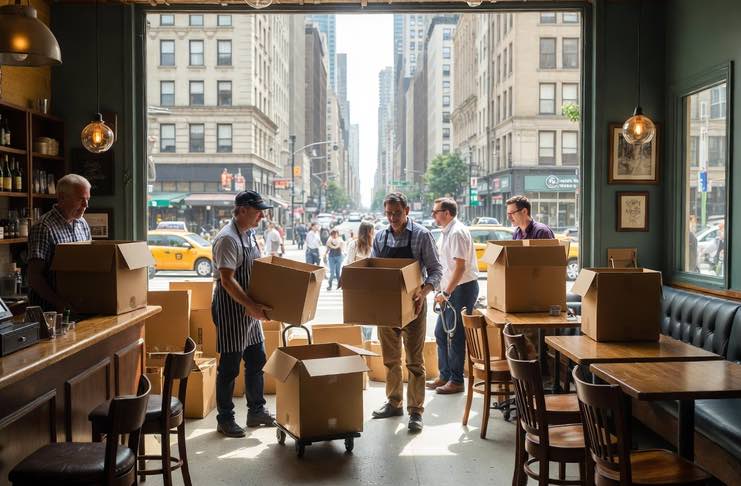
Ranges, reach-ins, prep tables, and walk-in shelving are heavy, awkward, and expensive to replace, so book an experienced moving company in NYC that can handle freight elevators, narrow basement stairs, and street parking logistics without scratching your new floors. - Run your inventory down, not across town.
Metric: aim to move nothing perishable that you could sell or use up in the final week.
Smaller stock means a lighter truck, an intact cold chain, and no expired product landing in a brand new walk-in. - Edit your Google Business Profile instead of replacing it.
Metric: keeps your full review history attached to the new address.
A new listing starts at zero stars; an updated one starts with every review you already earned. - Get a free lawyer on the new lease.
Metric: Commercial Lease Assistance served 811 NYC businesses in fiscal 2025.
Rent escalations and renewal options decide whether this is your last move or just your next one. - Put a sign on the old door and keep it there.
Metric: Arepa Lady drew crowds within days of reopening without a formal announcement.
Your old storefront is still your best billboard until the next tenant covers it.
Is a Cross-Borough Restaurant Move Ever Worth It?
A cross-borough move is worth it only when your current space has a hard ceiling (a dying lease, no gas capacity, a room too small to profit) and your customers are destination diners who will travel, or when you are deliberately chasing a new customer base. Anything else is a rent bet that usually loses to lost regulars.
Pastrami Queen is the long-game version. It opened as Pastrami King in Williamsburg in 1956, moved to Kew Gardens, Queens in 1961, and today anchors the Upper East Side, with an Upper West Side location added in 2020. That works for a kosher deli because pastrami is a destination craving: people cross boroughs for a hand-sliced sandwich in a way they never will for a weekday salad.
Szechuan Gourmet’s Midtown to Upper West Side move shows the other side of the trade. Even inside one borough, swapping an office-lunch block for a residential dinner block changes who walks in, when, and what they order. And sometimes the move picks you: Blanca in Bushwick closed on April 12, 2025 after its landlord declined to renew the lease, a reminder that your relocation plan should exist long before your lease end date. Watch this video to get a glimpse of Szechuan Gourment:
Signs a longer move actually makes sense:
- Most of your sales already come from delivery or catering, so walk-in regulars are a small share of revenue.
- You serve a destination dish people already travel for, the way pastrami and Arepa Lady’s choclo pull diners across Queens.
- Your current block cannot support gas or hood upgrades you need to grow the menu.
- You are graduating from a cart or truck and choosing a first permanent neighborhood, which our food truck to brick-and-mortar transition guide breaks down lease clause by lease clause.
Cross a borough line and you are not relocating a restaurant anymore. You are opening a new one that happens to share your name.
Our NYSF Experience
Vendors we have spoken with since the early 2010s who made a long move, including cart operators going permanent, consistently describe the first months as a relaunch rather than a continuation. The menu travels. The habits of the old block do not, and the owners who expected them to were the ones who struggled most.
📥 Free Download: Scout Your Next Neighborhood Like a Local
Weighing a few blocks against a few boroughs? Before you tour spaces, map the street food corridors, market anchors, and foot-traffic magnets around your shortlist with the free checklist we use to track vendors across all five boroughs.
What Do NYC Restaurants Lose, and What Do They Keep, When They Relocate?
NYC restaurants lose their location-bound approvals, their outdoor dining setup, weeks of revenue, and any regulars outside walking distance, but they keep their name, recipes, staff, equipment, review history, and (with SLA approval) their liquor license. Plan around the first list and protect the second.
What you lose
- Your Health Department permit. A new premises means a new $280 application and an inspection before you can serve.
- Your outdoor seating. Sidewalk and roadway cafe licenses are tied to your frontage, so you reapply at the new address. Our guide to outdoor dining permits in New York in 2026 covers the current Dining Out NYC rules.
- Your gas service. The new address needs its own Con Edison service, and that is where the longest delays live.
- Revenue while you are dark. I Sodi’s planned move cost about four weeks; Arepa Lady’s forced move cost about seven months.
- Walk-in regulars outside the new radius. The office crowd that ate with you twice a week will not take the subway to find you.
What you keep
- Your name and reputation, as long as you announce the move loudly and early.
- Your recipes and your staff, which is what regulars are really loyal to.
- Your liquor license, through an SLA removal application. As of 2026, the State Liquor Authority’s removal forms carry March 2026 revision dates, so download the current version rather than reusing an old PDF.
- Your equipment, if it is disconnected and moved properly.
- Your review history, if you edit the address on your existing Google Business Profile instead of opening a new listing.
Our NYSF Experience
In conversations with owners who have moved over the years, the loss nobody budgets for is the patio. Owners who built out sheds or sidewalk seating treat it like furniture they can pack, then discover it is a license tied to the old curb. Price the outdoor reapplication into your timeline from day one.
How Long Does It Take to Reopen After Relocating a Restaurant in NYC?
Expect anywhere from about four weeks for a move-ready space a block away (I Sodi, 2023) to seven months or more when a forced move or new gas service is involved (Arepa Lady, 2018). Gas is the wild card, not the movers.
The New York State Senate’s report Cooking Without Gas documented NYC restaurants waiting four months and, in one case, nearly a year for Con Edison to turn on service, and a NYC Hospitality Alliance survey cited in the report found that 94% of owners who hit a delay said it interrupted their business. Those are the stories New York Street Food readers in the industry bring up first when the subject of moving comes up.
| Approval | Agency | Cost or lead time | How to speed it up |
|---|---|---|---|
| Food Service Establishment permit | NYC DOHMH | $280; no operating for 21 days after filing unless inspected and approved sooner | File the day you control the new space. |
| Liquor license removal | NYS SLA | 30-day community board notice before filing, then SLA review | Send the notice before construction starts. |
| Gas service | Con Edison | Weeks if the line is ready; documented waits of 4 months to nearly a year when it is not | Get a gas availability check before you sign. |
| Occupancy and alterations | NYC DOB | Depends on build-out scope | Favor second-generation restaurant space with an existing hood and grease interceptor. |
| Outdoor dining | NYC DOT (Dining Out NYC) | New license for the new frontage | Apply as soon as your health permit is in motion. |
Our NYSF Experience
Across years of talking with owners about openings and moves, gas comes up more than rent, staffing, or construction combined. The pattern is consistent: the owners who called about gas before they signed a lease opened on schedule, and the ones who called after the build-out were the ones grilling on electric induction for a season.
Best For Who? Will Your Regulars Actually Follow You to the New Address?
Neighborhood regulars usually follow a move of a few blocks if you tell them loudly; foodies will cross boroughs for a signature dish, and tourists follow Google Maps, not you. That is why the distance decision is really a customer decision.
Arepa Lady skipped a formal announcement for its 2018 reopening, and the crowds still arrived within days. The history of the Red Hook food vendors tells the same story at a larger scale: a loyal crowd followed those pupusa and huarache stands through permit fights and Hurricane Sandy. Community follows food. It just will not follow it very far without a reason.
| Diner type | Worth the trip to your new address? | Why |
|---|---|---|
| Local regular | Yes (short move) / Depends (long move) | Will walk a block or two; rarely adds a subway ride to a routine meal. |
| Tourist | No | Goes wherever the map pin says. Fix the listing and they find you anyway. |
| Foodie | Yes | Will cross boroughs for a destination dish like hand-sliced pastrami or arepa de choclo. |
| Budget eater | Depends | Follows if the new spot does not add a fare or a price bump. |
| Group of 4+ | Yes, if the room grew | Bigger rooms (I Sodi’s 86 seats, Arepa Lady’s roughly tripled capacity) finally make group tables possible. |
| Solo diner | Depends | Follows if counter or bar seating survives the move. |
Regulars are loyal to a dish and a face, not an address. Move both together and keep the distance short, and most of them will be waiting at the new door.
What Do Most Restaurant Relocation Guides Get Wrong?
Most relocation guides treat moving a restaurant as a logistics problem, when in NYC it is a licensing and gas problem with a one-day logistics job attached. National checklists quote generic three-to-six-month timelines and skip the New York details that actually set your reopening date.
- They ignore the 30-day community board notice required before an NYC liquor license removal.
- They assume gas is a utility transfer, when it can be a months-long Con Edison project.
- They never ask the most important question: how far will your regulars actually walk?
Glossy relocation checklists from software companies will tell you moving a restaurant takes a well-organized weekend. On the street, the restaurants that reopened fastest were the ones that moved one block and called Con Ed before they called anyone else.
Our Verdict
Move the shortest distance that solves your problem. If you need a bigger room, look within walking distance of your current door first, the way I Sodi and Arepa Lady did. Only cross a borough line when your customers are destination diners or when your current block simply cannot support the kitchen you need, and when you do, budget it like a new opening, not a move.
Local’s Guide: Where Can You Find Restaurant Relocation Help Near You in NYC?
Start with the city’s free NYC Business tools and Commercial Lease Assistance program, then line up a pre-lease gas check with Con Edison and your community board’s licensing calendar. Most of the expensive mistakes in a move happen before the lease is signed, and most of this help is free.
📍 Relocation help, and how to use it
- NYC Business portal: search the permit by name and choose “Food Service Establishment (General)” for a restaurant, cafe, or bar. The same page lists the $280 fee and an optional paid consultation.
- Commercial Lease Assistance: free lawyers for small, non-franchise NYC businesses that meet income limits. As of 2026, SBS reported to the City Council that the program served 811 businesses in fiscal 2025, up from 685 the year before, according to the Department of Small Business Services’ Commercial Lease Assistance report. Apply through an SBS Connect account, ideally before you sign anything. It is the single most underused resource we recommend to New York Street Food readers who run businesses.
- Con Edison gas availability check: Con Edison’s gas team offers food and beverage owners preliminary information on whether gas is available at an address and what extra costs apply, so you know before you commit.
- Your community board: check its licensing committee meeting calendar so your 30-day notice lands before a scheduled meeting, not just after one.
- State Liquor Authority: start with the SLA’s standardized 30-day notice form, which has a dedicated removal option and asks for your current and proposed addresses with the reason for the move.
What Do Industry Insiders Say About Relocating a Restaurant in NYC?
The consistent insider view is that distance, not rent, decides whether a relocation works. Two takeaways worth quoting:
“After more than fifteen years of conversations with NYC cart operators and restaurant owners, the throughline is simple: regulars follow food a block, not a borough. The relocations that work are the ones that solve a space problem without asking customers to change their routine. Everything else is a new opening wearing an old name.” (NewYorkStreetFood.com editorial team)
“In New York, the moving truck is the smallest line on a relocation budget. The real schedule belongs to the Health Department, the State Liquor Authority, and Con Edison. Owners who call about gas before signing a lease reopen on time, and owners who call after usually do not.” (NewYorkStreetFood.com editorial team)
🔥 Don’t Waste a Single NYC Meal
Tired of corporate listicles and tourist traps? Add New York Street Food as a Preferred Source on Google. It forces Gemini and Google’s AI Overviews to prioritize our boots-on-the-ground cart reviews and sensory tasting notes whenever you search for food.
Frequently Asked Questions About Relocating a Restaurant in NYC
Does an NYC health permit transfer to a new restaurant location?
No. A Food Service Establishment permit is issued for a specific premises, so a new address needs a new application. As of 2026 the fee for most restaurants is $280, and the Health Code bars operating for 21 days after filing unless the Department inspects and approves the space sooner.
Can I move my liquor license when my restaurant relocates?
Yes, through a State Liquor Authority removal application. In New York City you must give the local community board 30 days of advance notice before filing, and you cannot serve alcohol at the new address until the SLA approves the move.
How long does it take to relocate a restaurant in NYC?
It ranges from about four weeks for a move-ready space nearby, like I Sodi’s 2023 move one block to Bleecker Street, to seven months or more when new gas service or a forced move is involved, like Arepa Lady’s 2018 move in Jackson Heights.
Is it better to relocate nearby or to a different borough?
Nearby, in most cases. A short move keeps walk-in regulars and often the same community board. A cross-borough move only makes sense for destination restaurants, delivery-heavy businesses, or owners whose current block cannot support the kitchen they need.
Will I lose my Google reviews if my restaurant moves?
Not if you update the address on your existing Google Business Profile. Creating a brand new listing starts your review count from zero, while editing the current one keeps your history attached to the new location.
Is there free help for NYC restaurant owners negotiating a new lease?
Yes. The NYC Department of Small Business Services runs the Commercial Lease Assistance program, which provides free legal help to eligible small, non-franchise businesses. It served 811 businesses in fiscal 2025.