
Last Updated: July 2026
A scotch bonnet pepper sitting whole in a pot of jerk marinade is doing something completely different from one that’s been split open. That single detail, whether the pepper’s skin is intact, is the difference between a jerk chicken that makes you sweat and one that just tastes like heat with nothing underneath it. Most menus won’t tell you which technique a vendor is using. This guide will.
Key Takeaway
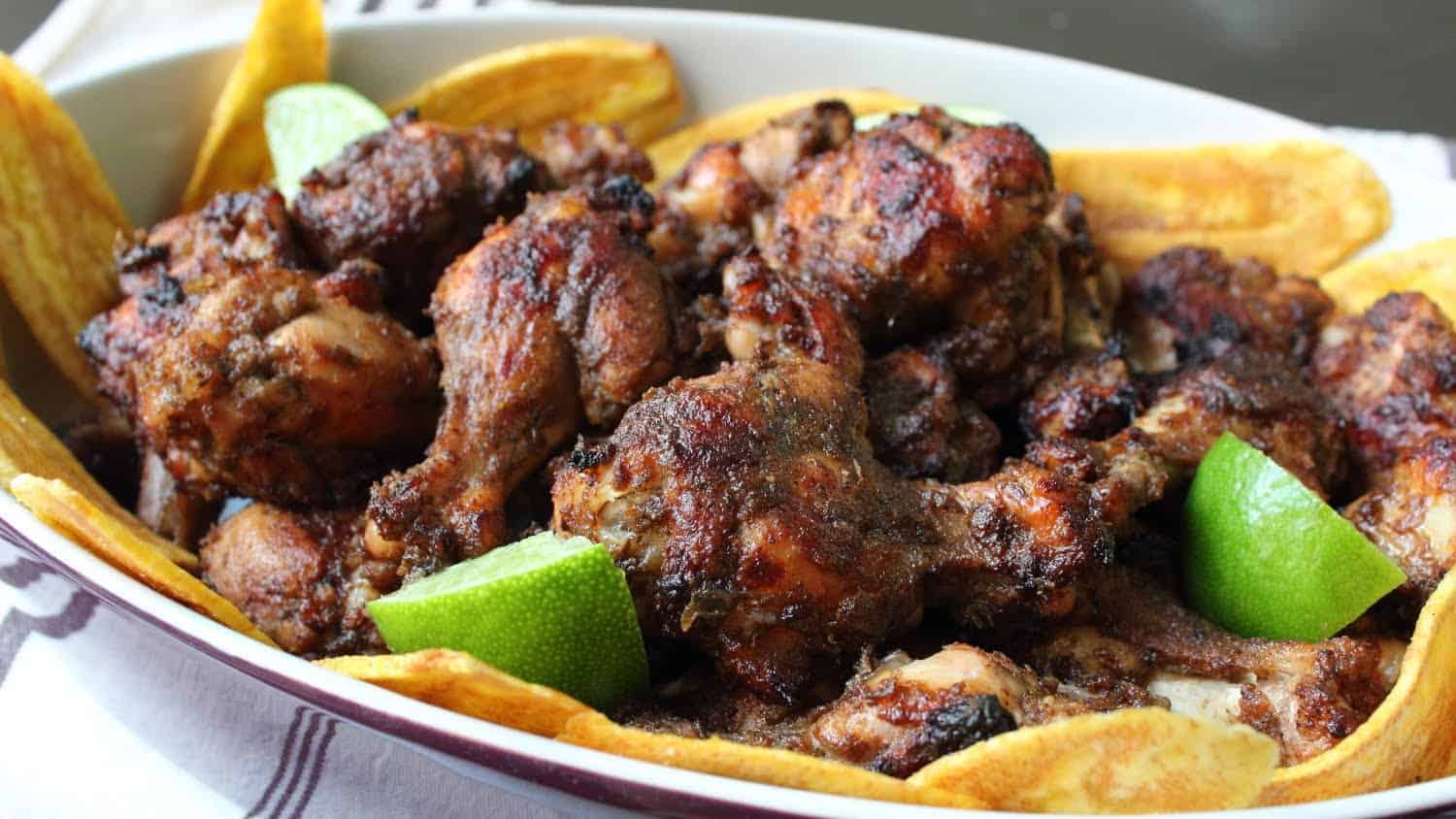
Four dishes define Caribbean street food in Brooklyn: jerk chicken (100,000 to 350,000 Scoville units of scotch bonnet heat, ideally smoked over pimento wood), doubles (curried channa in fried bara, an Indo-Trinidadian dish), roti (a wrapped or torn flatbread built around the same curry base), and patties (a flaky, turmeric-colored hand pie). Each has a distinct technique, and knowing it changes how you order.
A scotch bonnet pepper is roughly 40 to 140 times hotter than a jalapeño, and most people ordering jerk chicken in this city have never actually tasted one whole. That’s not a criticism, it’s just a fact about how heat gets managed in professional Caribbean kitchens, and understanding it will change how you read a jerk pit’s smoke.
What Actually Makes Jerk “Jerk,” Beyond Just Being Spicy?
Jerk is defined by three specific elements working together: scotch bonnet heat, allspice (pimento) as the aromatic backbone, and traditionally, smoke from pimento wood itself. Remove any one of the three and you have a spicy grilled chicken, not jerk. The technique traces back to Taino cooking methods later adapted by Maroons, communities of self-liberated enslaved Africans in Jamaica’s mountains, who combined indigenous open-fire cooking with African smoking traditions.
Watch this reel to get a glimpse:
The heat math, for reference:
- Jalapeño: 2,500 to 8,000 Scoville Heat Units (SHU)
- Habanero: 100,000 to 350,000 SHU
- Scotch bonnet: 100,000 to 350,000 SHU, same range as habanero, but with a sweeter, fruitier flavor profile rather than a purely citrus one
Vendors control that heat with a specific technique: floating a whole, unpunctured scotch bonnet in a marinade or stew releases fruity aromatics without the full capsaicin payload, since the pod stays sealed. Splitting or blending the pepper releases everything. If your jerk chicken has real heat that builds slowly rather than hits immediately, the kitchen is likely blending the pepper directly into the marinade rather than using it whole.
Our Experience
At Peppa’s Jerk Chicken on Flatbush Avenue in June 2026, the heat built for a good thirty seconds after the first bite before really landing, which tracks with a blended marinade rather than a whole-pod infusion. It’s the kind of detail you only notice once you know to look for it.
What’s Actually Inside a Doubles Order?
A proper doubles order is built from three components layered in a specific way: two pieces of bara (fried, turmeric-tinted flatbread, which is what gives doubles its golden color), a channa filling of curried chickpeas cooked down until saucy rather than dry, and a topping combination of tamarind, kuchela (a pickled mango condiment), and pepper sauce. The ratio matters. Channa that’s too dry won’t soak into the bara correctly, and channa that’s too wet will make the whole thing fall apart before you finish it.
| Component | What It Should Be | Common Mistake |
|---|---|---|
| Bara | Soft with slight chew, golden from turmeric | Too stiff, too greasy, or fried too dark |
| Channa | Tender, saucy, well-seasoned with geera (cumin) and curry | Dry, underseasoned, or watery |
| Toppings | Tamarind, kuchela, pepper sauce, layered thin | Over-sauced, masking the channa entirely |
This is the same channa-and-fried-bread architecture that traces back to Indian indentured laborers in Trinidad and to dishes like chole bhature in North India. If you want the full migration story behind that, it’s covered in our History of Caribbean Street Food in NYC, and the South Asian side of that same lineage lives in our South Asian Street Food Styles NYC Guide.
Roti or Buss-Up-Shut: What’s the Actual Difference?
Standard roti is wrapped fully around the curry filling, sealed like a burrito, and eaten by hand. Buss-up-shut roti (from “busted-up shirt,” a reference to its torn, shredded appearance) is never wrapped. Instead, the flatbread is shredded into pieces after cooking and served alongside the curry for dipping, closer to naan-and-curry than a wrap. Both use the same dhalpuri or paratha-style dough, but the eating mechanics are completely different, and ordering “roti” without specifying which style you want can get you either one depending on the shop.
Watch this:
What Most Food Guides Get Wrong
Most coverage treats “roti” as a single dish, the way a first-time visitor might order a burrito without knowing there’s a taco option. In practice, asking specifically for buss-up-shut versus a standard wrapped roti at a place like Ali’s Trinidad Roti Shop on Fulton Street gets you a fundamentally different eating experience, not just a different shape.
Why Are Jamaican Patties That Specific Golden-Yellow Color?
The color comes from turmeric and, in many recipes, curry powder worked directly into the pastry dough, not from an egg wash or food coloring. The technique creates a shell that’s flaky like an American pie crust but with a savory, slightly earthy flavor baked into the pastry itself before any filling goes in, which is the main thing separating a patty from a plain empanada.
| Style | Shell | Filling Base |
|---|---|---|
| Jamaican Patty | Turmeric pastry, flaky | Seasoned ground beef, chicken, or vegetables |
| Mexican Empanada | Plain or egg-washed pastry | Varies widely by region |
Which Style Should You Actually Order First?
Order the patty if you want a low-commitment introduction, the doubles if you want the most historically layered dish on this list, and jerk chicken if you have thirty minutes and want the full sensory experience, smoke included. There’s no wrong entry point, but each one teaches you something different about how this cuisine actually works.
Know Exactly What to Order Before You Get There
We built pocket-sized ordering cards for every dish covered in this guide, jerk heat levels included.
For the vendor-by-vendor map of exactly where to try each of these styles, see our NYC Caribbean Street Food Guide, the printable crawl itinerary, or the interactive vendor map. For the origin story behind these dishes, read the history of Caribbean street food in NYC.
Frequently Asked Questions
How hot is a scotch bonnet pepper compared to a jalapeño?
A scotch bonnet measures 100,000 to 350,000 Scoville Heat Units, roughly 13 to 140 times hotter than a jalapeño’s 2,500 to 8,000 SHU range.
What’s the difference between roti and buss-up-shut?
Standard roti is wrapped fully around the curry filling. Buss-up-shut is torn into pieces after cooking and served alongside the curry for dipping instead.
Why are Jamaican patties yellow?
The color comes from turmeric and curry powder worked into the pastry dough itself, not from an egg wash.
What is channa in doubles?
Channa is curried chickpeas, cooked down until saucy, and it’s the primary filling sandwiched between the two pieces of bara that give doubles its name.
Does real jerk chicken need pimento wood?
Traditionally yes, though pimento wood exports from Jamaica have historically been restricted, so many vendors outside Jamaica substitute other dense hardwoods for the smoking step while keeping the scotch bonnet and allspice marinade authentic.
“The difference between good Caribbean street food and great Caribbean street food usually comes down to one technique choice most customers never notice, whether that pepper went in whole or blended.” — NewYorkStreetFood.com
- About the Author
- Latest Posts

Tiara Budd Ramos is a New York-based communications and DEI professional with a sharp eye for the city’s best meals and an Instagram feed to prove it. She has spent her career working across advertising, digital strategy, and communications, and is currently a Senior Program Manager of Employee Experiences at Lyft, where she focuses on building inclusive, engaging programs for a global workforce. A proud Hampton University graduate with a degree in Public Relations and Spanish, Tiara sits on the board of NAMIC (the National Association for Multi-ethnicity in Communications) and is a member of She Runs It and The Advertising Club of New York, where she was selected as a 2020 imPART Fellow. When she’s not advocating for more inclusive workplaces, she’s exploring New York’s neighborhoods one restaurant at a time — hunting for great food, great reads, and her next adventure across the country.