

It’s a Saturday afternoon on 37th Avenue in Jackson Heights. You’re standing at a cart with no English signage, holding a hollow semolina shell loaded with potato and chickpea. The vendor dunks it in tamarind water and hands it to you. You eat it in one bite. The shell shatters. The water explodes. You immediately need another one. This is fuchka — Bangladeshi street food that didn’t exist in New York before 2018 and now has four competing carts operating on the same block. This is what South Asian street food looks like in New York in 2026.
Every food publication in the city covers South Asian food through the lens of sit-down restaurants: the butter chicken at Indian Accent, the tasting menus in Curry Hill, the fine dining scene. Nobody covers the carts, the counters, the sidewalk vendors, the food hall stalls that have been feeding the South Asian community in Jackson Heights and Murray Hill for decades. That’s the NYSF lane. We eat at street level, and on that level, this is one of the richest food stories in the entire city.
NYSF Key Takeaway
The best South Asian street food in NYC is in Jackson Heights, not Curry Hill. Curry Hill has restaurants. Jackson Heights has carts, counters, and a whole cluster of fuchka vendors operating for a community that’s been eating this food since childhood. The 74th Street chaat strip is the starting point for any serious crawl. Biryani Cart on 46th and 6th has been the Midtown anchor since 2004. And Thiru Kumar’s dosa cart in Washington Square Park is one of the most important street food operations in the history of this city. This guide covers all of it.
THE NYC SOUTH ASIAN STREET FOOD MAP
15 verified South Asian street food vendors across Jackson Heights, Curry Hill, Greenwich Village, and Midtown. Pins verified for operating status as of June 2026.
WHAT IS SOUTH ASIAN STREET FOOD IN NYC?
South Asian street food in NYC isn’t one thing. It’s the overlap of at least four distinct national traditions — Indian, Bangladeshi, Pakistani, Sri Lankan — each with their own snack culture, their own foundational dishes, and their own communities in New York. What unites them is the philosophy: bold flavors, fast service, low prices, and food that’s been honed over centuries of feeding people on the street.
In New York, these traditions concentrate geographically. Jackson Heights in Queens is the primary South Asian corridor, built by waves of immigration following the 1965 Immigration and Nationality Act. Curry Hill on Manhattan’s 28th Street corridor is the secondary hub, historically restaurant-focused but increasingly home to counter-service and street-level operations. Midtown has Biryani Cart and the Mysttik Masaala food hall stalls. Greenwich Village has Thiru Kumar’s dosa cart. The coverage is city-wide.
In our years covering NYC street food, the Jackson Heights South Asian corridor has been the most consistently underreported food story in the city. The restaurants get occasional coverage. The carts, the fuchka vendors, the chaat counters that have no Yelp pages and no Instagram presence — those are the stories nobody tells. We’re telling them here.
The Jackson Heights South Asian corridor overlaps directly with the Himalayan vendors a few blocks over — see our Jackson Heights Himalayan Street Food Guide for momos, laphing, and Tibetan street food on the same streets.
THE CHAAT BREAKDOWN: WHAT YOU’RE ACTUALLY ORDERING
Chaat is the umbrella term for a category of South Asian street snacks defined by the interplay of crunchy, tangy, sweet, and spicy. The word comes from the Hindi verb “to lick” — because these are foods that make you lick your fingers and the container clean. Every South Asian street food vendor in NYC has at least two or three chaat variations on the menu. Here’s what they are.
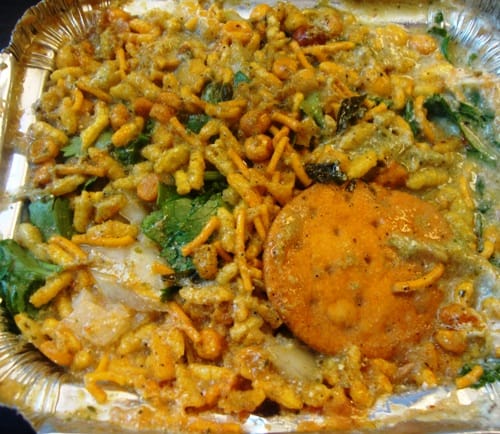
Pani Puri / Fuchka / Gol Gappa
The same dish across three names depending on regional origin: pani puri (Hindi/Mumbai), fuchka (Bangladeshi), gol gappa (North Indian). A hollow, crispy semolina shell — about the size of a golf ball — is filled with spiced potato and chickpea, then dunked in flavored tamarind water and handed to you. You eat it in one bite. The shell shatters. The water explodes. It’s one of the most immediate sensory experiences in street food. At the Jackson Heights fuchka cluster on 37th Avenue, a plate of seven costs $7.
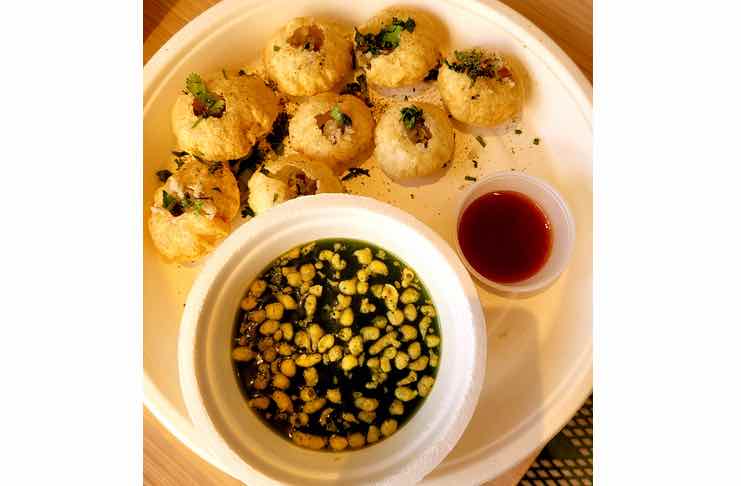
Papri Chaat
Crispy fried dough crackers (papri) layered with boiled potato, chickpea, yogurt, tamarind chutney, green chutney, and chaat masala. Sweet, tangy, savory, spicy, and crunchy all in the same bite. The benchmark version in Jackson Heights is at Bombay Chaat on the second floor of 73-19 37th Rd — Mumbai-style, $6, and the papri are housemade.
Bhel Puri
Puffed rice tossed with chopped onion, tomato, boiled potato, peanuts, sev (fine chickpea noodles), and both chutneys — tamarind and green. Lighter and drier than papri chaat. The textures range from the crispy sev to the soft puffed rice. A Mumbai beach food that migrated north and then west. Best version in NYC: the Jackson Heights chaat strip vendors on 74th St, where it’s assembled to order, $6.
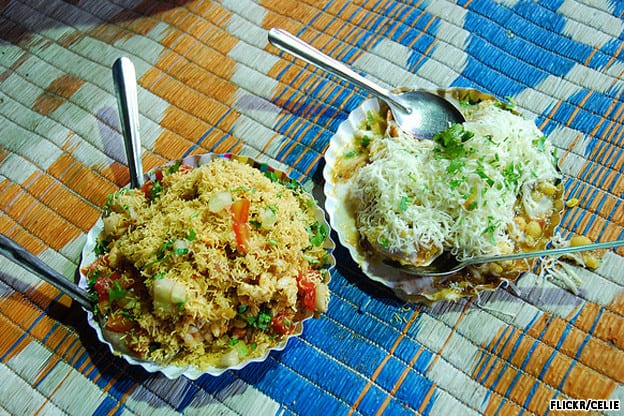
Dahi Puri
The cooling version of pani puri — hollow shells filled with potato and chickpea, topped with sweetened yogurt (dahi) and both chutneys rather than dunked in spiced water. The yogurt tempers the heat. A better entry point for chaat beginners than the full-spice pani puri.
OUR EXPERIENCE — Jackson Heights Chaat Crawl, May 2026
We hit three chaat vendors on the 74th St strip on a Saturday afternoon and ordered papri chaat at each. The differences were significant: one vendor used thicker, chewier papri with more tamarind; another went heavy on the yogurt; a third added sev generously for extra crunch. All three were under $8. All three were finished within four minutes. That’s chaat at its best — fast, cheap, and impossible to compare against any restaurant version. We then ordered fuchka at Tong on 37th Ave. Seven shells, $7. It was the best $7 we spent that weekend.
KATHI ROLLS: KOLKATA ON A FLATBREAD
The kathi roll originated in Kolkata in the early 20th century — a paratha (flaky layered flatbread) wrapped around seekh kebab for Calcutta businessmen who needed lunch they could eat walking. Today it’s one of the most adaptable formats in South Asian street food: the filling can be egg, chicken, minced beef, paneer, or any combination, always with onion, green chutney, and optional hot sauce.
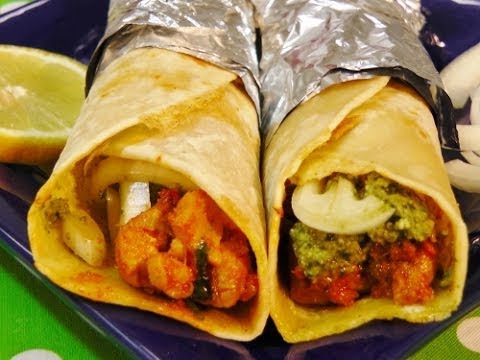
In NYC, the best street-level kathi roll is the beef bihari roll at Dera Restaurant in Jackson Heights — thinly pounded beef marinated in ginger-garlic paste and raw papaya (a natural tenderizer), char-cooked on a flat griddle, wrapped in a paratha with raw onion rings and green chutney. $13. The paratha is flaky and rich; the beef is tender from the papaya marinade and burnished from the griddle. The Maillard reaction on the beef exterior is doing real work here — it’s why the flavor is so much more complex than the ingredients suggest.
Mysttik Masaala at the Vanderbilt Market and their 152 W 52nd St location runs naan rolls — the same concept in a softer tandoor-baked flatbread. More accessible, slightly less traditional, still excellent.
THE DOSA: THIRU KUMAR AND THE WASHINGTON SQUARE INSTITUTION
A dosa is a fermented rice-and-lentil crepe, South Indian in origin, vegan and gluten-free by default. The batter ferments overnight — the lactic acid bacteria developing complex sourness that’s the dosa’s defining flavor note — and is then spread thin on a hot griddle, crisped until lacy at the edges and pliable at the center. The Masala Dosa is the version most people know: filled with spiced potato, folded into a cylinder, served with coconut chutney and sambar (lentil-vegetable broth).
Thiru Kumar has been making dosas at Washington Square Park since 2001. He’s a 2007 Vendy Award winner. He’s operated the same cart in the same spot for 25 years. His Pondicherry Dosa ($11) — with extra spiced coconut chutney and a more assertive sambar — is the benchmark. He operates Monday through Saturday, 11am to roughly 3pm, and sells out most days. Arrive by noon. The line at 12:30pm on a Thursday is not unusual.
Watch this video to learn more:
The sponsored travel guides will tell you to hunt for dosas in Jackson Heights or Flushing. The correct answer is Washington Square Park, south side, before 2:30pm on any weekday. Thiru Kumar’s cart is the only dedicated South Indian dosa operation at street level in Manhattan, and it’s been there longer than most of the restaurants that get written about every year.
JACKSON HEIGHTS: THE SOUTH ASIAN STREET FOOD CORRIDOR
Take the 7 train to 74th St-Broadway. Walk two minutes. You’re on one of the most diverse eating streets in the world. The Roosevelt Avenue corridor in Jackson Heights contains South Asian, Himalayan, Colombian, Ecuadorian, and Bangladeshi food operations within a single block radius — this is where our Jackson Heights Himalayan Street Food Guide and our South Asian guide physically overlap. Tibetan momo vendors and Bangladeshi fuchka carts share the same sidewalk real estate.
The South Asian street food zone breaks into two sub-areas: the 74th Street chaat strip (multiple cart vendors selling pani puri, bhel puri, papri chaat, and samosas from Roosevelt Ave south toward 37th Rd), and the 37th Avenue fuchka cluster (Tong, Fuska House, and Fuchka Garden — the Bangladeshi street food enclave that’s become one of the most specific food destinations in any borough).
A full meal in Jackson Heights — chaat at two vendors, a fuchka plate at Tong, a bihari roll at Dera — costs under $35 per person and takes about two hours. That’s the math. Budget $25-35 and arrive hungry.
VENDOR MATRIX: 15 SOUTH ASIAN STREET FOOD VENDORS
| Vendor | Neighborhood | Signature | Price | Cash/Card |
|---|---|---|---|---|
| Biryani Cart | Midtown (46th & 6th) | Chicken Biryani + Kathi Roll | $10-14 | Cash Only |
| NY Dosas (Thiru Kumar) | Greenwich Village (WSP) | Pondicherry Dosa | $9-12 | Cash Only |
| Mysttik Masaala | Midtown (Vanderbilt Market + 52nd St) | Banarasi Chaat + Naan Rolls | $10-16 | Card OK |
| Tong Fuchka Cart | Jackson Heights (37th Ave) | Fuchka (7 shells) | $7 | Cash |
| Fuchka Garden | Jackson Heights (37th Ave) | Fuchka + Malai Cha ($1) | $7-8 | Cash |
| 74th St Chaat Strip | Jackson Heights | Pani Puri, Bhel Puri, Papri Chaat | $4-8 | Cash |
| Dera Restaurant (Desi Counter) | Jackson Heights (73rd Rd) | Beef Bihari Roll + Gol Gappy | $8-14 | Card OK |
| Bombay Chaat | Jackson Heights (2nd Floor) | Papri Chaat + Bhel Puri | $6-9 | Cash |
| Hyderabadi Zaiqa | Murray Hill/Curry Hill | Hyderabadi Dum Biryani (15 varieties) | $16-22 | Card OK |
| Haandi (Curry Hill Counter) | Curry Hill (112 Lex) | Chapli Kebab + Pani Puri | $10-15 | Card OK |
| Spice Corner | Curry Hill (135 Lex) | Samosa ($2.50) + Indian Sweets | $2.50-6 | Cash Only |
| Chinese Mirch | Midtown (varies) | Chili Chicken (Indo-Chinese) | $10-14 | Card OK |
| Desi Food Truck | Midtown (varies) | Butter Chicken Naan Roll | $10-13 | Card OK |
| Queens Night Market | Corona (seasonal, Sat evenings) | Multi-vendor chaat + biryani | $5-12 | Mostly Card |
CURRY HILL: THE 28TH STREET CORRIDOR
Curry Hill is the nickname for the stretch of Lexington Avenue between roughly 26th and 30th Streets in Murray Hill, Manhattan — a dense concentration of Indian, Pakistani, and Bangladeshi restaurants, grocery stores, and spice shops that developed through the 1970s and 80s as the South Asian professional class settled in Midtown-adjacent neighborhoods.
Watch this video to get a glimpse:
The street food options here are counter-service rather than cart, but they operate at the same price point and informality. The three NYSF picks: Spice Corner for the cheapest reliable samosa in Manhattan ($2.50, cash window, no seating), Haandi for full counter-service Pakistani food including their excellent chapli kebab, and Hyderabadi Zaiqa — Michelin-featured since their 2025 Curry Hill expansion — for the best dum biryani in the city at street-level prices.
The Curry Hill corridor also overlaps with the NYC Halal Cart Guide’s Midtown coverage — many South Asian vendors here are halal-certified, and the food economies are deeply intertwined. A significant percentage of the South Asian community that built Curry Hill is Muslim, and the halal certification is as much a cultural marker as a dietary one.
HOW TO ORDER AT ANY SOUTH ASIAN STREET VENDOR
South Asian street food has its own ordering logic. A few things to know before you approach any cart:
- Pani puri / fuchka is interactive. The vendor loads each shell individually and hands it to you. You eat it immediately, in one bite. Don’t wait for the full plate — the shells go soggy.
- Spice is navigable. “Mild,” “medium,” and “spicy” are understood at every vendor. For chaat water: “more tangy” or “less tangy” communicates heat level effectively. At Thiru Kumar’s dosa cart, “mild” still has real flavor — it’s not bland.
- Cash is king on the street. Most Jackson Heights sidewalk vendors are cash-only. Carry $10-20 in small bills. ATMs are available on Roosevelt Ave near the 74th St station.
- Chaat is eaten on-site. There are no bags. There are no lids. The assembly — yogurt, chutneys, fresh garnish — doesn’t travel. Stand at the cart, eat, continue.
- Ask about the day’s specials. Vendors like Haandi and Hyderabadi Zaiqa rotate daily specials (halwa puri on weekends, for example). The best stuff isn’t always on the printed menu.
Spice Heat Reference
| Level | Profile | Example Dishes |
|---|---|---|
| 1 / Mild | Aromatic, no chili heat | Plain Dosa, Veg Biryani, Dahi Puri |
| 2 / Medium | Background warmth, buildable | Chicken Tikka Masala, Papri Chaat, Kathi Roll (no green chutney) |
| 3 / Hot | South Asian baseline — most chaat operates here | Chicken Vindaloo, Pani Puri with spiced water, Masala Dosa (full chutney) |
| 4 / Very Hot | Sustained chili heat | Chili Chicken (Indo-Chinese), Fuchka with extra tamarind water |
| 5 / Incendiary | Request carefully | Ask before ordering at any level-5 claim |
NYSF Crawl Itinerary
Ready to do the full crawl? The complete NYC South Asian Street Food: The NYSF Crawl Itinerary covers the 6-stop two-borough route, ordering protocol, timing notes, and the full vendor matrix in a printable format.
GO DEEPER: NYSF SOUTH ASIAN STREET FOOD POSTS
For the full story — where this food came from, how it got to New York, and what every dish on the menu actually is — read the two companion posts:
- The History of South Asian Street Food in NYC: From Jackson Heights to Curry Hill — How the 1965 Immigration Act opened the door, how Jackson Heights became the primary corridor in the 1970s-80s, and what the scene looks like in 2026.
- Chaat, Kathi Rolls, Dosas: A Field Guide to South Asian Street Food Styles in NYC — The technical companion. What every dish is, how it’s made, and what to order first at any South Asian street vendor in the city.
MORE NYSF STREET FOOD GUIDES
The South Asian corridor in Jackson Heights doesn’t operate in isolation. On the same stretch of Roosevelt Avenue, you’ll find Himalayan momo vendors, Colombian empanada stands, and halal carts that have been feeding the neighborhood for decades. The NYSF entity stack covers all of it:
- Jackson Heights Himalayan Street Food Guide — Momos, laphing, and Tibetan-Nepali street food on the same Roosevelt Ave corridor.
- NYC Halal Cart Guide — The full map of halal carts across five corridors, from Midtown’s 6th Ave to Jackson Heights to Astoria. Many South Asian vendors are halal-certified — this is where those food economies intersect.
- NYC Empanadas and Arepas Guide — Colombian and Venezuelan street food in Jackson Heights, operating on the same blocks as the South Asian vendors.
- NYC Street Taco Guide — The Mexican street taco corridor, including the Jackson Heights overlap where taco carts and chaat carts share the same sidewalk.
- NYC Chinatown Dumpling Guide — The cross-cultural parallel: samosas and kachori vs. dumplings and potstickers. Filled dough, different traditions, same logic.
- Red Hook Food Vendors Guide — The Brooklyn immigrant street food economy, a different borough but the same story.
FREQUENTLY ASKED QUESTIONS
Where is the best South Asian street food in NYC?
Jackson Heights in Queens. The 74th Street chaat strip and the fuchka cluster on 37th Avenue are the highest concentration of authentic South Asian street vendors in any borough. Take the 7 train to 74th St-Broadway. Arrive Saturday afternoon. Budget $25-35 and start at the chaat strip.
What is chaat?
Chaat is the category of South Asian street snacks defined by the interplay of crunchy, tangy, sweet, and spicy. The main styles in NYC: pani puri (hollow shells in tamarind water), bhel puri (puffed rice with chutneys), papri chaat (crispy crackers with yogurt and tamarind), and dahi puri (yogurt-filled version). Each costs $5-8 at street vendors.
What is a kathi roll and where can I get one in NYC?
A kathi roll is a Kolkata-origin flatbread wrap — paratha or roti filled with egg, chicken, minced beef, or paneer with onion and green chutney. The best version at street level in NYC is the beef bihari roll at Dera Restaurant in Jackson Heights ($13). Mysttik Masaala runs naan rolls at their Midtown food hall locations.
Where can I get a dosa in NYC?
NY Dosas in Washington Square Park, run by Thiru Kumar (the Dosa Man) since 2001. He operates Monday through Saturday, 11am until he sells out — usually around 3pm. The Pondicherry Dosa ($11) is the signature. Arrive by noon. This is the most important South Asian street food operation in Manhattan.
What is the best biryani in NYC at street level?
Biryani Cart at 46th St and 6th Ave — 2009 Vendy People’s Choice Award winner, operating since 2004. Chicken biryani with saffron-tinged rice and smoky marinated chicken, $12, cash only. For dum biryani (the slow-cooked, sealed-pot version), Hyderabadi Zaiqa on Lexington Avenue in Murray Hill is the Michelin-featured benchmark.
Is South Asian street food in NYC halal?
Most South Asian vendors in Jackson Heights and Curry Hill are halal-certified — reflecting the Muslim-majority South Asian communities that built these food economies. Dera Restaurant, Haandi, Hyderabadi Zaiqa, and Mysttik Masaala are all halal. NY Dosas is vegetarian and vegan only. Always ask if certification matters to you.