
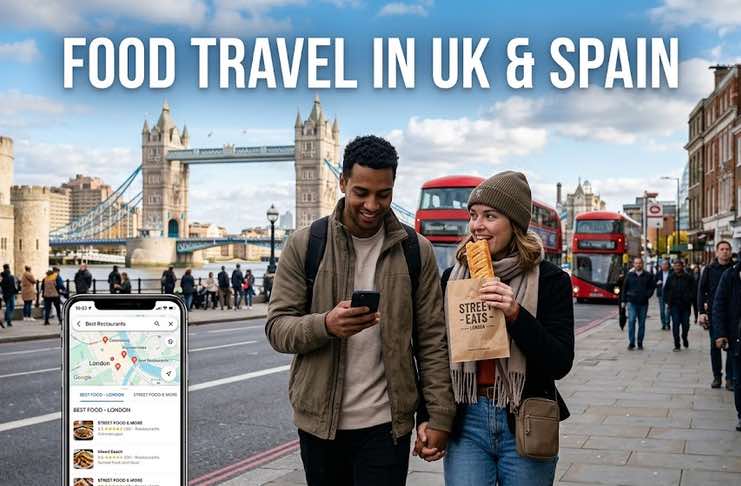
I’m going to be real with you: I got off the plane at JFK three days ago, my suitcase is still half-unpacked on the floor, and I have a block of Manchego in my carry-on that customs somehow let through. Twenty-two days across London and Spain — Borough Market, the pintxos bars of San Sebastián’s Parte Vieja, La Boqueria in Barcelona, the tapas taverns of Madrid — and my stomach, my camera roll, and my notebook are absolutely full.
This trip started as a “work research trip,” which is the thing food bloggers tell themselves so they can write off jamón ibérico. It ended as one of the most genuinely illuminating culinary experiences I’ve had outside of New York. And because I love you people, I am going to share every tip, mistake, and bite-sized piece of wisdom I hauled back across the Atlantic.
| 🗝 KEY TAKEAWAY
Spain and the UK are two of the top culinary destinations in Europe in 2026 — but they play by completely different food culture rules. Spain rewards spontaneity and locals’ schedules; the UK rewards planning and market timing. Master both rhythms, and you’ll eat like a local in both countries. |
📊 By the Numbers: Culinary Travel in 2026
| Stat | Figure | Source |
|---|---|---|
| Food influences travel decisions | 92% of American food travelers | Eating Europe, 2026 |
| Global culinary tourism market size (2026) | $1.23 Trillion | ResearchAndMarkets, Feb 2026 |
| Spain’s share of American food traveler preferences | 14.5% | Eating Europe Survey, 2026 |
| Culinary tourism market CAGR | 15.6% (2025–2026) | ResearchAndMarkets, 2026 |
🧳 Travel Tips We Learned the Hard WayBefore we get into the food — and trust me, we’re getting deep into the food — let’s talk logistics. Because I made some genuinely embarrassing rookie errors on this trip, and I would rather you don’t repeat them. 📱 Get an eSIM Before You BoardThis was the biggest “why didn’t I do this sooner” moment of the whole trip. I landed at Heathrow, turned on data roaming for exactly forty-five minutes while I figured out the Tube, and then got a carrier notification that I’d already burned through $30. Nightmare. A United Kingdom eSIM activated digitally via QR code before you even board is the move. Providers like Holafly and MobiMatter offer unlimited data plans starting around $3.70/day with 4G/5G speeds across major networks, including EE, O2, and Three. You keep your home number active for WhatsApp calls and just flip the eSIM on for data the second you land. Zero SIM-card-kiosk stress at Heathrow. Do this first. Seriously, before you pack. 💶 Carry Cash in Spain — More Than You ThinkMany of the best pintxos bars in San Sebastián’s Old Town are cash-only, especially during the midday and evening rush. I watched a heartbroken tourist get turned away at the counter of Bar Nestor because her card reader was having none of it. Carry at least €50 in small bills whenever you’re planning a pintxos crawl. 🕐 Spain Runs on a Completely Different ClockLunch before 2 pm? Nobody’s eating. Dinner before 9 pm? You’ll be alone in the restaurant. The Spanish schedule is non-negotiable: lunch from 2–4 pm, dinner from 9–11 pm. Fighting this will just leave you eating bad tourist food at off-hours. Go with it. Take a nap at 6 pm like a local. Your stomach will thank you. 🚇 Get an Oyster Card or Contactless Card for LondonThe Tube accepts contactless payment directly from your phone or card, and daily and weekly fare caps apply — meaning you can tap all day and you’ll never pay more than the daily cap fare. Don’t buy single-journey tickets. They’re significantly more expensive and completely avoidable. ☔ Dress in Layers for Both CountriesLondon is obviously gray and rainy — you already knew that. What surprised me was how dramatically temperatures swung in northern Spain, especially in San Sebastián and the Basque Country. A light rain jacket and a layer you can peel off mid-afternoon is non-negotiable for both legs of the trip. 📅 Book Popular London Restaurants at Least 3 Weeks OutLondon’s dining scene has gotten intensely competitive. I tried to walk into Sketch with no reservation, and the maitre d’ gave me the kind of look that I think might still be haunting me. For Michelin-starred spots or well-known market restaurants, book ahead — many take reservations 4–6 weeks in advance online. |
Is London Actually Worth It for a Food Trip in 2026?
Yes, emphatically — but only if you go where the city actually eats, not where it parks tourists. London’s food scene has undergone a genuine transformation over the last decade, and as of 2026, it stands as one of the most exciting multicultural food cities on the planet. The same TUI Musement Foodie Ranking that puts Rome and Bologna at the top of Europe also places London prominently for food tour searches.
My personal experience: I spent five days in London and ate badly exactly once, at a chain sandwich place near a tube station when I was desperate. Every other meal was a revelation. The key is understanding the geography of where London actually eats.
Watch this video to get a glimpse:
My Experience: Borough Market on a Tuesday Morning
Everyone tells you about Borough Market. What they don’t tell you is that weekends there are absolute chaos — beautiful, delicious chaos, but shoulder-to-shoulder crowds and vendors running out of their best stuff by noon. I went on a Tuesday morning and it was a completely different world. Borough Market is open Monday through Saturday, and the midweek morning sessions are when you can actually talk to the vendors, taste things at leisure, and make it to every stall you want.
The standout for me was Batera, the pintxos bar right inside the market run by the team behind MIMO cooking school. They make traditional Basque-style pintxos using British produce from fellow market traders — Scottish prawns with cider vinaigrette, marinated artichokes with Idiazabal pesto. It’s genuinely special, and it connects London’s food culture to Spain’s in a way that felt like a beautiful preview of the second leg of my trip.
Watch this video to get a glimpse of Borough Market:
| “Borough Market isn’t just a shopping destination — it’s a living, breathing argument that British ingredients are world-class when put in the right hands.” |
What’s the Best Street Food Neighborhood in London?
For sheer variety and authenticity, Brixton Market and Maltby Street Market beat almost everything else. Maltby Street (open weekends) is smaller and more focused than Borough — think natural wine bars, exceptional charcuterie, and a smoked fish vendor that I genuinely considered proposing to. Brixton Market and the Village pop-up area give you Caribbean jerk chicken, West African stews, Vietnamese banh mi, and Colombian empanadas within a two-minute walk of each other.
According to Lonely Planet’s London guide, Brixton Market has been one of the city’s most essential food stops for years, and the regeneration around the Village area has only added more variety to what was already a brilliant multicultural eating destination.
London Food Markets — Quick Comparison
| Market | Best For | Best Day / Time | Budget (per person) |
|---|---|---|---|
| Borough Market | Artisan produce, pintxos, gourmet street food | Tue–Thu, 9am–2pm | £15–£30 |
| Maltby Street Market | Natural wine, charcuterie, smoked fish | Sat–Sun, 9am–4pm | £12–£25 |
| Brixton Village | Global street food, Caribbean, West African | Fri–Sun, noon–9pm | £8–£18 |
| Brick Lane | South Asian, Bengali, bagels | Sun Market, 10am–5pm | £6–£15 |
| Kerb Camden Market | International street food, late-night bites | Thu–Sun, noon–8pm | £8–£20 |
According to Forbes Travel, London’s food scene is increasingly defined by its neighborhood diversity rather than its fine dining — a shift that makes it more accessible and honestly more interesting for food tourists who want to eat like a local.
What Should You Eat First in Barcelona?
Walk to La Boqueria on La Rambla, but don’t eat there — use it as a sensory orientation, then go three streets in any direction to actually eat. This sounds harsh, but it’s the most loving thing I can tell you about Barcelona’s most famous market. La Boqueria is a genuine culinary landmark and an incredible place to look at produce, Iberian ham, fresh seafood, and local cheeses. It is also, because of its fame, one of the most tourist-price-inflated spots in the city.
My strategy: spend 30 minutes wandering La Boqueria with your eyes and nose. Buy a piece of fruit or a small tapa to honor the tradition. Then walk to the El Born or Gràcia neighborhoods for the real Barcelona eating experience — neighborhood tapas bars where jamón croquetas cost €1.80 and a glass of house vermouth is €2.50.
Watch this epic food tour of Barcelona:
My Experience: Getting Lost in El Born After Midnight
The Maillard reaction that happens when a skilled Spanish cook hits fresh gambas on a scorching cast-iron is one of the most aromatic things on earth — the caramelization of the shrimp’s natural sugars, the char on the shell, the drizzle of olive oil hitting the heat. I found this at a nameless bar in El Born at 11:30 pm, surrounded by locals finishing their actual dinner service, and it cost me €6 for six gambas and a cold Estrella. It remains one of the best things I ate on the entire trip.
As The Guardian’s travel section notes, Barcelona’s eating culture rewards visitors who lean into late dinners and improvisational bar hopping rather than strictly planned restaurant reservations.
Is San Sebastián Worth the Detour From Barcelona?
San Sebastián — or Donostia, as it’s called in Basque — is without question the highest-concentration-of-excellent-food-per-square-mile destination I have ever visited, full stop. The city has more Michelin stars per capita than any other city in the world, but that’s almost beside the point because the street-level pintxos culture is where the real magic happens.
A pintxo (pronounced “peen-cho”) is the Basque Country’s answer to tapas — individual portions of whatever the bar’s chef has decided is brilliant that day, typically skewered with a toothpick atop a slice of bread and lined up along the bar counter. According to Eating Europe’s San Sebastián guide, the tradition traces back to at least the 1930s and has evolved from simple bread-and-anchovy combinations to genuinely chef-driven small bites that rival what you’d find in tasting menus elsewhere.
Watch this video to get a glimpse:
How Do You Do a Pintxos Crawl Without Embarrassing Yourself?
The protocol is simple once you know it: walk in, order a drink, eat what’s on the counter, pay before you leave, and move to the next bar. The old town (Parte Vieja) is about four blocks by six blocks and contains something like 40 pintxos bars in that footprint. Here’s a structured approach:
- Start at Bar Nestor on Calle Pescadería — get there before 1pm to catch their legendary tortilla de patatas before it sells out (they make exactly two per service).
- Try Bar Txepetxa for anchovy-based pintxos — their combinations like anchovy with sea urchin cream are genuinely outstanding.
- Warm pintxos made to order (like sirloin with foie) cost around €4–6 each; counter pintxos (already plated) run €2–3 each.
- Order a txakoli (local Basque white wine, poured from a height for aeration) or a cold Keler beer — both are the correct drink for pintxos.
- Don’t clean out your hunger at the first bar. Pace yourself across 5–6 stops.
- Thursday evening is “pintxo-pote” in some neighborhoods — a weekly tradition where pintxos are discounted, and locals come out in force. Join it.
| “In San Sebastián, you’re not just eating food — you’re participating in a living culinary institution that has shaped how the entire world thinks about Spanish gastronomy.” |
What Makes Madrid Different From Barcelona for Food?
Madrid is where Spanish cooking gets confident and unfussy — it’s about deep-rooted traditions like cocido madrileño (a slow-cooked chickpea and meat stew) and bocadillo de calamares (fried squid sandwich) rather than the architectural modernism of Catalan cuisine. The TUI Musement Foodie Ranking for 2026 places Madrid at #6 in Europe for food tour searches, citing its tapas culture around Puerta del Sol and the historic Mercado de San Miguel.
My single best meal in Madrid was at Sobrino de Botín, which has operated since 1725 and holds the Guinness World Record as the oldest restaurant on earth. Their roast suckling pig (cochinillo asado) is the dish that has been on the menu for three centuries for a reason — wood-fired, crackling skin, impossibly tender inside. Book ahead. It’s worth it.
Watch this video for a food tour of Madrid:
According to National Geographic Travel, Madrid’s food identity has historically been overshadowed by Barcelona in international food media, but as of 2025–2026, a new generation of chefs is making the capital the most exciting dining city in Spain.
Spain vs. UK: What’s the Real Difference for Food Travelers?
| Category | 🇬🇧 United Kingdom | 🇪🇸 Spain |
|---|---|---|
| Dining Hours | Lunch 12–2pm, dinner 6–9pm | Lunch 2–4pm, dinner 9–11pm |
| Tipping Culture | 10–12.5% expected in restaurants | Not required; rounding up is common |
| Payment | Contactless/card widely accepted | Cash essential in pintxos bars & markets |
| Best Street Food Format | Food markets, pop-up stalls | Tapas bars, pintxos bars |
| Avg. Spend (street food) | £8–£18 ($10–$23) per person | €6–€16 ($6.50–$17) per person |
| Reservations Needed? | Yes — book 3+ weeks ahead in London | Only for Michelin-starred spots |
| Culinary Identity | Multicultural, globally influenced | Regionally specific, tradition-led |
| Mobile Connectivity | eSIM strongly recommended (no EU roaming post-Brexit) | EU roaming may apply depending on your plan |
How Do You Plan a Spain + UK Culinary Trip Without Overcomplicating It?
The winning formula is London first (5–6 days), then fly to Bilbao or San Sebastián for 3 days, then Barcelona for 4 days, then Madrid for 3 days. This route follows culinary intensity from London’s global eclecticism into the precision of Basque Country cooking, then into Catalan modernism, then into Madrid’s classical Spanish heartland.
Here’s a practical planning checklist:
- Set up your eSIM before departure — install it the day before and activate it the moment you land at Heathrow or Gatwick.
- Book Borough Market visits for Tuesday–Thursday mornings (less crowded, vendors are fully stocked).
- Research which Spanish cities you’re visiting during local festival weeks — food experiences amplify significantly during events like La Semana Grande in San Sebastián (August).
- In Spain, download Google Maps offline for each city — data connectivity in rural areas between cities can be inconsistent.
- Book Michelin-starred restaurants in Spain 4–6 weeks in advance — San Sebastián’s starred restaurants are especially competitive.
- Spring (April–May) and fall (September–October) are the best seasons for culinary travel in Spain. TourRadar’s Spain culinary guide confirms these windows avoid peak tourist pricing and summer heat in inland cities.
| “Food is no longer an afterthought on a European trip — for 92% of American food travelers in 2026, it is the primary reason they chose the destination.”
— Eating Europe 2026 Food Travel Survey |
Frequently Asked Questions
What is the best food market to visit in London?
Borough Market in Southwark is the most celebrated, but visit Tuesday–Thursday mornings for the best experience without weekend crowds. Maltby Street Market (weekends) is a close second for specialty produce and natural wine.
What should I eat first in San Sebastián?
Head to Bar Nestor in the Parte Vieja before 1pm and order their tortilla de patatas — it’s legendary, they make exactly two per service, and they sell out fast. Follow it with a bar hop for anchovy pintxos and txakoli wine.
Do I need cash for food markets in Spain?
Yes — especially in San Sebastián’s Old Town pintxos bars, which are frequently cash-only. Carry at least €50 in small bills whenever you’re planning a food crawl.
What is the best way to stay connected in the UK without roaming charges?
Getting an eSIM before you fly is the most cost-effective option. Providers like Holafly, MobiMatter, and Airalo offer instant digital activation via QR code, with plans starting around $3.70/day for unlimited data on major UK networks.
Is La Boqueria in Barcelona worth visiting?
Yes — as a sensory experience, absolutely. Use it to orient yourself to Spanish ingredients and market culture. For eating at local prices, head to the El Born or Gràcia neighborhoods afterward, where the same quality costs significantly less.
When is the best time of year for a culinary trip to Spain?
Spring (April–May) and fall (September–October) are optimal — comfortable temperatures for walking food markets and outdoor dining, without the summer tourist surge and heat that makes inland cities like Madrid and Córdoba challenging.
- About the Author
- Latest Posts

Tiara Budd Ramos is a New York-based communications and DEI professional with a sharp eye for the city’s best meals and an Instagram feed to prove it. She has spent her career working across advertising, digital strategy, and communications, and is currently a Senior Program Manager of Employee Experiences at Lyft, where she focuses on building inclusive, engaging programs for a global workforce. A proud Hampton University graduate with a degree in Public Relations and Spanish, Tiara sits on the board of NAMIC (the National Association for Multi-ethnicity in Communications) and is a member of She Runs It and The Advertising Club of New York, where she was selected as a 2020 imPART Fellow. When she’s not advocating for more inclusive workplaces, she’s exploring New York’s neighborhoods one restaurant at a time — hunting for great food, great reads, and her next adventure across the country.