
Last Updated: July 2026
In 1936, in a small town called Fairfield in Princes Town, Trinidad, a vendor named Emamool Deen and his wife Rasulan started selling curried chickpeas wrapped in a single piece of fried bread. A customer asked for two pieces of bread instead of one. Ninety years later, that request is why a line forms outside A&A Bake and Double and Roti Shop on Fulton Street in Bedford-Stuyvesant every single weekend, four thousand miles and multiple generations removed from that first cart.
Key Takeaway
Brooklyn‘s Caribbean street food scene traces directly back to two 20th-century migrations: Indian indentured laborers brought to Trinidad starting in 1845, whose food became the foundation of doubles and roti, and the wave of Jamaican, Trinidadian, Haitian, and Guyanese immigrants who settled Central Brooklyn from the 1960s onward and built the Flatbush, Crown Heights, and Bed-Stuy corridors this guide covers.
Doubles is not a Caribbean dish with an Indian influence, it is an Indian dish that became Caribbean, and that distinction is the whole reason it belongs in the same conversation as a kati roll from Jackson Heights. Most food writing treats Caribbean cuisine and South Asian cuisine as separate lanes. On the ground in Brooklyn, at a doubles counter that traces its recipe back to 19th-century Bihar and Uttar Pradesh by way of Trinidad, that separation falls apart fast.
Watch this reel to get a glimpse:
Where Did Doubles Actually Come From?
Doubles came from Indian indentured laborers who arrived in Trinidad starting May 30, 1845, and continued arriving for over 70 years until the last ship, the Ganges, landed in 1917. Roughly 147,500 Indian immigrants were brought to Trinidad to work sugar plantations after slavery was abolished on the island in 1838, and they carried with them the culinary foundations of chole (curried chickpeas) and bhatura (fried bread), dishes that are still eaten across North India today.
The short version of how doubles got its name:
By 1936, vendor Emamool Deen and his wife Rasulan in Princes Town, Trinidad were selling curried channa on a single bara. A customer asked for two pieces of bara instead of one. The name stuck, and doubles as we know it was born, an Indo-Trinidadian dish through and through, built from the same channa and curry traditions that show up in kati rolls, chaat, and dozens of other dishes across South Asian street food.
That lineage is exactly why the doubles counter on Fulton Street and the chaat stand in Jackson Heights are, historically speaking, closer relatives than most people realize. If you want the fuller South Asian side of that story, our South Asian Street Food Styles NYC Guide covers the kati roll and chaat traditions that share this same Indo-diaspora root system, just filtered through a different colonial migration route a century apart.
How Did Central Brooklyn Become “Little Caribbean”?
Central Brooklyn became Little Caribbean through decades of West Indian immigration concentrated along Flatbush, Nostrand, Church, and Utica Avenues starting in the mid-20th century, a settlement pattern large and dense enough that the neighborhood carries an official Little Caribbean designation today. Jamaican, Trinidadian, Haitian, Guyanese, and other Caribbean communities arrived in waves, often replacing earlier Jewish and Italian populations in the same brownstone blocks, and brought their food culture with them into storefronts that are, in some cases, still run by the same families two generations later.
Our Experience
Walking Nostrand Avenue in June 2026, the layering is obvious in real time: a Jamaican bakery, a Trinidadian roti shop, and a Guyanese soup spot sit within three storefronts of each other, something you will not find replicated with this density anywhere else in the five boroughs. The neighborhood earned its Little Caribbean designation in 2017, not as a marketing exercise but as recognition of something that had already been true on the ground for decades.
What Is the West Indian American Day Parade, and Why Does It Matter to the Food Scene?
The West Indian American Day Parade is an annual Labor Day celebration on Eastern Parkway that draws between one and three million people and functions as the single largest public showcase of Caribbean food culture in the country. Its roots go back to the 1920s, when Trinidadian immigrant Jessie Waddell organized indoor Carnival-style celebrations in Harlem ballrooms because New York’s winters made outdoor celebration impossible during the traditional pre-Lent Carnival season.
Watch this video to get a glimpse of a few of our top favorite Caribbean street foods:
| Year | Milestone |
|---|---|
| 1920s | Indoor Carnival parties begin in Harlem ballrooms |
| 1947 | First outdoor parade held on Lenox Avenue, Harlem |
| 1964 | Harlem parade permit revoked after violence |
| 1969 | Carlos Lezama’s committee wins approval for Eastern Parkway, Brooklyn |
| 1967 | West Indian American Day Carnival Association (WIADCA) founded |
| Today | Route runs Utica Avenue to Grand Army Plaza, 1 to 3 million attendees |
As Time Out New York’s coverage of the parade notes, vendors line the entire Eastern Parkway route selling homestyle island food during the eight-hour event, a one-day concentration of Caribbean street food culture that dwarfs anything else in the city calendar. NewYorkStreetFood.com treats this as the unofficial capstone event of the Caribbean food year, and it’s the reason the seasonal timing note in our NYC Caribbean Street Food Guide flags Labor Day weekend as a completely different experience from the rest of the year.
How Did A&A Bake and Double Become a James Beard Honoree?
A&A Bake and Double and Roti Shop earned a James Beard America’s Classics award in 2019 by doing one thing consistently since it opened on Nostrand Avenue in 2002: selling doubles the traditional way, without chasing trends or expanding the menu into unrecognizable territory. A James Beard award did not change the price of a double at A&A, and that is precisely the point. The shop later relocated to its current Fulton Street location, about a block and a half from its original spot, without losing the regulars who’d followed it for years.
What Most Food Guides Get Wrong
Coverage of A&A’s James Beard win often treats it as a discovery story, as if the award is what made the doubles good. The Infatuation’s own reporting on the shop gets closer to the truth, describing it as one of the most iconic Caribbean eateries in the city with a line usually out the door long before any award was involved. The award recognized something the neighborhood already knew.
Why Do Jerk, Roti, and Patties Coexist on the Same Three Blocks?
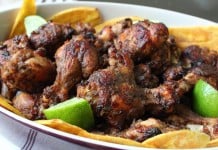
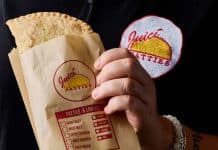
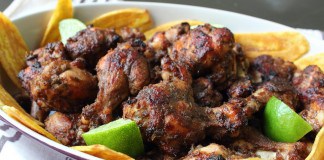
Jerk, roti, and patties coexist on the same blocks because Central Brooklyn’s Caribbean population was never made up of a single national group, and each dish arrived with a different island’s diaspora. Jerk is a Jamaican cooking method built on scotch bonnet peppers, allspice, and pimento wood smoke. Patties are Jamaica’s answer to the empanada, likely shaped by both African and colonial British hand-pie traditions. Roti and doubles are Indo-Trinidadian, carrying that 1845-to-1936 lineage described above.
When Jamaican and Trinidadian communities settled the same few square miles of Flatbush and Crown Heights starting in the 1960s and 70s, their food traditions didn’t merge, they stayed distinct and simply became neighbors, which is exactly why a 2026 crawl down Flatbush Avenue can hit a Jamaican patty bakery and a Trinidadian roti shop four blocks apart without either one being a fusion concept.
Planning a Visit Around a Line-Worthy Spot?
A&A’s line is real and predictable. We built a timing grid so you don’t have to guess.
Is This History Actually Relevant to What You Order Today?
Yes, directly. Knowing that doubles is Indo-Trinidadian changes how you eat it, since it explains why the toppings (tamarind, kuchela, pepper sauce) are built around a curry base rather than a Jamaican jerk profile. Knowing that A&A survived a relocation without losing its identity explains why the current Fulton Street line is full of longtime regulars, not just recent discoverers. History here isn’t trivia, it’s operating instructions.
For the dish-by-dish breakdown of what to actually order once you understand where it came from, see our Field Guide to Caribbean Street Food Styles in NYC, or start with the full NYC Caribbean Street Food Guide and vendor map.
Frequently Asked Questions
Who invented doubles?
Emamool Deen and his wife Rasulan, in Princes Town, Trinidad, around 1936. The dish grew out of the food traditions Indian indentured laborers brought to Trinidad starting in 1845.
When did Little Caribbean become an official NYC neighborhood?
2017, through the efforts of cultural organization I AM CARIBBEING, though the community itself had been established for decades before the formal designation.
When did the West Indian Day Parade move to Brooklyn?
1969, after the original Harlem parade’s permit was revoked in 1964. The West Indian American Day Carnival Association, founded in 1967, has organized it on Eastern Parkway ever since.
Why are doubles connected to South Asian food?
Doubles descends directly from dishes like chole bhature, brought to Trinidad by Indian indentured laborers in the 19th century. It’s an Indian dish that evolved into a distinctly Trinidadian one, not a separate cuisine that happens to share ingredients.
When did A&A Bake and Double win its James Beard award?
2019, in the America’s Classics category, recognizing the Bed-Stuy shop’s decades of consistency since opening in 2002.
“Doubles didn’t travel from Trinidad to Brooklyn, it traveled from Bihar to Trinidad to Brooklyn, and every stop on that route is still visible on a Fulton Street counter if you know what you’re looking at.” — NewYorkStreetFood.com