

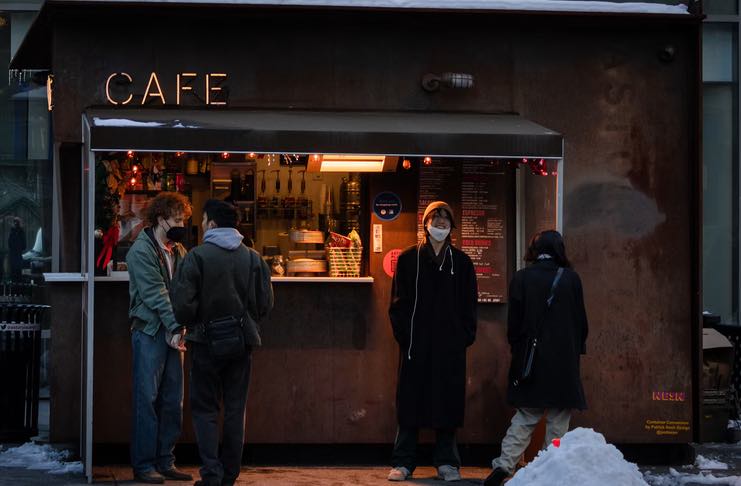
Too basic? Maybe. A café has a stockroom. You’ve got the space under the counter and whatever still fits in the van at 5:45 a.m. In this post, as part of our food business tips – we’ll discuss this hot topic in a lot of detail…
If you’ve just started and need some more basic tips on starting your coffee cart – watch this video:
Start with two hot sizes
For most carts that’s 12 oz and 16 oz. Regular latte or drip goes in the 12. The 16 is the large, and on a lot of menus it quietly pays the rent because a couple extra ounces of milk cost less than what you charge for the upgrade.
Then there’s the 8 oz. People get weirdly intense about it. Selling a ton of cortados or flat whites, or hot chocolate for kids on the school run? Add it. Otherwise leave it alone. Every size you stock is another stack of cups, another row of lids, another thing that runs out right when the 8:15 wave hits.
Keep a clipboard by the register the first two weeks and tally every drink by size. It’s boring. It’s also the only way your next order isn’t based on a hunch. Watch this video by Green Joe Coffee Truck for more tips:
REAL PEOPLE TALKING
Over on r/coffeeshopowners, operators are actively arguing about dropping from three hot sizes down to two. One owner said their numbers would actually support cutting the 12 oz; another pointed out that for specialty drinks the smaller cups make more sense and the “large” isn’t always the volume winner. A separate thread in r/cafe shows shops running everything from 8/12/16 to 12/16/20 depending on whether they’re mostly doing cortados or big milky drinks. The consensus is the same: track the real sales instead of guessing. Read it on Reddit
Your cup is the sign that walks away
A cart doesn’t get a storefront. People pass you in a few seconds. The only thing that follows them down the block is the cup in their hand. That makes the cup the cheapest advertising you’ll ever buy.
So a lot of cart owners skip the plain-cup-plus-sticker phase and go straight to custom printed coffee cups. Anyone who’s slapped stickers on during a rush knows why. It’s slow, they go on crooked, and the first time a cup sweats they start peeling. Print the name, the handle, and a QR code to the menu right on the cup and nobody on the crew has to think about it again.
Printing used to mean huge minimums from overseas. That’s changed. Some US printers now take small runs. At US Paper Cups the minimum is 10 cases per size and orders ship three to four weeks after you approve the proof, so a new cart can print just its two main sizes and see how it goes. Plan around that lead time. Order printed cups before you launch, not the week you run out of plain ones.
REAL PEOPLE TALKING
In r/barista, managers talk about wanting custom double-wall cups for branding but getting hit with high minimums (one person recalled needing around 20 cases). Others said full custom prints get expensive fast, so they fall back on stamped sleeves or big stickers as a cheaper way to put the name on the cup without committing to a massive print run. The small operators keep looking for low-MOQ options that don’t take two months to arrive. Read it on Reddit
One lid for both sizes
Lids cause more trouble on a cart than cups do. A lid that doesn’t snap tight means coffee on someone’s sleeve, and that customer probably isn’t coming back.
So ask one question before you order anything: which of these sizes take the same lid? What matters is the rim diameter, and in a lot of cup lines the 12 and the 16 happen to match. When they do, one box of lids covers both sizes. Less to store, and nobody grabs the wrong lid with a line out the door.
Then get samples of that exact cup and that exact lid, together, and abuse them a little. Pour in your hottest drink. Snap the lid on. Tip it sideways. Set it in a cup holder and take a lap around the block. A combo that leaks on your test drive is going to leak on a customer.
And keep spare lids. Lids get dropped, crushed, or grabbed two at a time. Running out of lids while you still have cups is a mistake every new cart owner makes once.
REAL PEOPLE TALKING
In a thread about slim takeaway cups, one commenter pointed out that some suppliers offer “universal” lids so the small, medium, and large all share the same lid. They called it convenient specifically because you don’t have to keep separate lid stacks for every size. Other posts from baristas complain about the opposite problem: wrong lids, lids that won’t snap, or running out mid-rush and having to improvise. Matching rim sizes is the fix people keep recommending. Read it on Reddit
Single wall with a sleeve, or double wall?
A hot 16 oz in a single wall cup gets uncomfortable to hold. You can fix that two ways.
A single wall cup plus a cardboard sleeve is the cheaper option per cup. But it’s one more item to store and one more step for whoever’s making drinks.
Double wall cups have the insulation built right in. No sleeve. They also feel more solid in your hand, and if that cup is basically your sign, that’s not nothing. You’ll usually pay more per cup, though, and a stack of them eats more shelf space.
On a busy cart, a lot of owners find that skipping the sleeve step is worth it, at least for the large size.
REAL PEOPLE TALKING
r/Coffee has a whole thread of people annoyed at shops that double-cup drinks because the single wall gets too hot. Several commenters said they specifically ask for the double cup or prefer places that use better insulation so they don’t have to. On the shop side, baristas in the custom cup thread said they were switching to double wall specifically to eliminate the sleeve step and the extra inventory. The trade-off of more space and higher cost comes up repeatedly. Read it on Reddit
Iced drinks need their own cup
Selling iced coffee or cold brew? Then you need actual cold cups. A hot cup isn’t built for twenty minutes of condensation dripping down its side. One cold size is plenty to open with, and 16 oz is the usual pick. Match it with a lid, and decide early whether your crowd wants a straw slot or a sip lid.
Summer will tell you fast whether one cold size is enough.
REAL PEOPLE TALKING
In the same r/coffeeshopowners size discussion, operators listed separate cold cup setups (16/20/24 or similar) and noted that the larger iced sizes often outsell the hot ones on warm days. Multiple people said they started with one or two cold sizes and adjusted once they saw the actual volume. Nobody recommended trying to force iced drinks into hot cups. Read it on Reddit
Leave the foam at home
In New York this isn’t a choice. The city banned single-use foam food service items, cups included, starting January 1, 2019. The Department of Sanitation guidance covers food service businesses and mobile food commissaries, and the NYC 311 page specifically lists food carts and vending trucks among the businesses that have to comply. Fines start at $150 for a first offense after the warning period. New York State followed with its own ban on foam disposable food service containers on January 1, 2022; the state’s Department of Environmental Conservation lists mobile food service establishments and pushcarts as covered.
So paper it is. If you buy cheap generic cups online, check that they aren’t foam before they show up at your commissary.
Official guidance:
- NYC DSNY foam ban page
- NYC 311 foam ban article
- Mayor’s announcement of the ban
- NYS DEC polystyrene foam ban page
REAL PEOPLE TALKING
When the ban hit, r/newyorkcity and r/nyc threads filled with people noticing the switch on the street. Commenters said their usual halal cart had moved from foam to aluminum trays or plastic containers, while others reported some places still using up old stock during the warning period. Multiple posts specifically asked whether food trucks and carts were covered; the answer in the comments was yes. Read it on Reddit
How much to order the first time
There’s no magic number, but here’s a way to work it out:
Estimate how many drinks you expect to sell on a normal day. Multiply that by the number of days until you can get more cups in, including the time it takes to print and ship. Then add a cushion for a busy week and spoiled stock.
For printed cups, the three to four week lead time is the part people forget. Your first reorder should go in well before you hit your last case, not when you’re down to one.
REAL PEOPLE TALKING
In r/coffeeshopowners threads about sourcing cups, small operators keep running into the same issues: custom prints have long lead times (one person said two months from Alibaba), plain cups are cheaper in bulk but still require planning, and running low mid-week forces expensive last-minute buys. Several mentioned ordering extra buffer stock specifically because replenishment isn’t instant. Read it on Reddit
The short list
To open with, most carts need:
- 12 oz and 16 oz hot cups, printed with your name if you can swing it
- One lid that fits both, plus spares
- Sleeves, if you’re using single wall cups for the large
- One cold cup size and its lid, if you sell iced drinks
- Zero foam
Start there. Watch what sells for a few weeks. Then add the 8 oz, the second cold size, or the seasonal cup once you’ve got the numbers to back it up.
- About the Author
- Latest Posts

Emma Wrayne Rudy is an NYC-based food writer and storyteller dedicated to uncovering the city’s best hidden gems. Her passion for the culinary world sparked at age 17 in Los Angeles, where she spent her days exploring neighborhood eateries and documenting her dining experiences. Now immersed in New York City’s endless food scene, Emma shines a spotlight on the diverse, affordable, and underrepresented culinary cultures that define the five boroughs—from historic food carts and mobile trucks to beloved “mom-and-pop” storefronts.







, and print your name on the cup so it does the advertising for you.)