

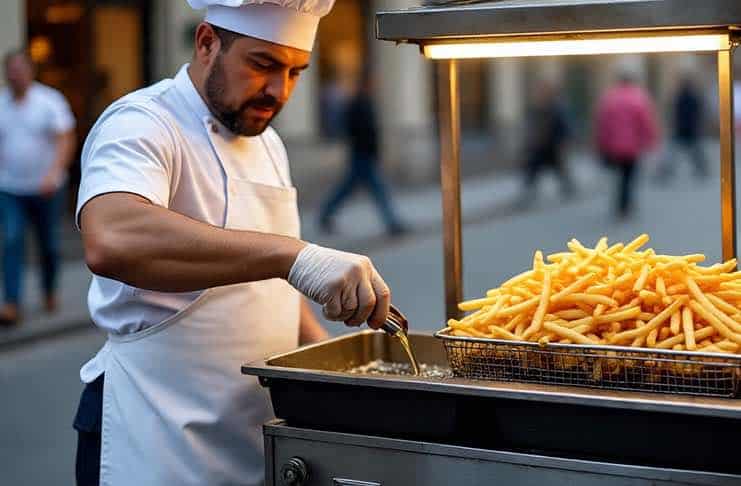
Running a food joint in New York City means juggling crazy costs while trying to keep flavors on point. Oil is one of those sneaky expenses that adds up faster than a lunchtime line at a Midtown halal cart. Over the years covering street eats for NYSF, I’ve seen firsthand how vendors make little tweaks that save money, keep food tasting amazing, and yes—make the oil last longer. In this post, as part of our food business tips, we’ll explore some of the most useful fryer tweaks that will instantly lower your oil consumption.
These aren’t just kitchen hacks; they’re survival tricks. And trust me, the folks frying up chicken tenders in Queens or empanadas in the Bronx know how to get longer-lasting fry oil without sacrificing flavor. Here’s what I’ve picked up from watching them work the fryers.
1. Set Oil Levels to the Correct Line
One vendor in Chinatown once joked to me: “Too much oil is like too many taxis—chaos.” He wasn’t kidding. I watched him top off his fryer to the exact fill line every morning, never more, never less. That simple move meant his oil heated faster, cooked more evenly, and didn’t splatter all over the place.
When I compared that to another vendor who routinely “overfilled” to cook more wings at once, the difference was obvious. The overfilled fryer ran hotter, smoked earlier, and the oil turned dark by mid-shift. The guy sticking to the fill line? His batches looked golden and crisp until closing time.
2. Filter Your Oil Often
On a cold winter night in Astoria, I stood by a cart where the vendor had a little DIY filtration setup—a strainer, a bucket, and a lot of patience. Every couple of hours, he’d pour his oil through, fishing out crumbs and charred bits.
The results were clear: his fries stayed light and crunchy even at midnight. Contrast that with another late-night spot I hit in the East Village, where the oil smelled like burnt pizza crust by 9 p.m. Filtering may not be glamorous, but customers notice when food doesn’t taste like yesterday’s scraps.
Watch this video to learn more:
3. Keep Fryer Temperatures Just Right
Here’s where the science gets delicious. I’ve watched vendors babysit their thermostats like they were watching a Yankees score. One kebab stand on 6th Ave had it down to an art—keeping temps steady around 350°F. Every skewer came out sizzling but not greasy.
Another cart? Their fryer ran too hot, and by 3 p.m. the oil was smoking like a subway vent. The food looked over-browned, almost bitter. Vendors who respect that 325°F–375°F sweet spot get food that tastes crisp instead of scorched—and their oil doesn’t quit before the day’s over.
4. Skim Out Food Debris Regularly
This one’s so simple but so overlooked. I once watched a Queens street fair vendor pull out a little mesh skimmer between every batch of samosas. Tiny burnt crumbs didn’t stand a chance. His oil stayed golden well into the night, and customers lined up because the food never got that “old fryer” taste.
At another joint, no skimmer in sight—just layer after layer of floating crumbs. By evening, the oil was thick and brown, and the food had a bitter edge. Skimming may look like busywork, but it’s the secret to keeping oil (and flavor) alive longer.
5. Clean Fryers Before Adding New Oil
This one I learned the hard way—by biting into a funnel cake that tasted like last week’s fish fry. Some vendors skip the full clean and just dump fresh oil on top of old crud. You can taste it instantly.
The smart operators, though, scrub down their fryers before the next batch of oil goes in. I’ve seen them wipe, rinse, and dry meticulously, even at 2 a.m. when the last drunk customer has gone home. The difference is huge—fresh oil stays fresh, and the food doesn’t carry yesterday’s mistakes.
Why These Tricks Matter on the Streets
Street vendors don’t have the luxury of wasting oil. Every gallon counts. The ones who respect their fryers end up with lower costs, better-tasting food, and happier customers who keep coming back.
And here’s the kicker: better oil management isn’t just good for business. It’s better for the planet. Less wasted oil means fewer disposal headaches—and some vendors even make side money selling used oil for recycling.
After years of taste-testing across the five boroughs, I can say this: the crunchiest fries, the crispiest chicken, and the lightest tempura all come from vendors who treat their oil like gold. They train their staff, watch the temps, skim religiously, and clean like pros.
So the next time you bite into perfectly fried street food, remember—behind that golden crust is a vendor who knows the art of oil management.
FAQ: Fry Oil Questions From the Streets
Q: How often should street vendors change their fry oil?
From what I’ve seen, the best vendors don’t stick to a strict calendar—they change oil when it looks, smells, or tastes off. Some stretch it a few days with good filtering, while busy spots may swap it daily. The real key is how well they maintain it.
Q: Can filtering really make oil last longer?
Absolutely. I’ve watched vendors keep oil golden for days just by filtering out crumbs every few hours. Without filtering, the same oil can go bad in one busy shift.
Q: What’s the biggest mistake vendors make with fry oil?
Two things: overheating it and skipping the cleanup. Once oil burns, it’s game over. And dumping new oil into a dirty fryer is like pouring fresh coffee into an old, unwashed mug—it ruins the flavor right away.
Q: Does better oil management actually change the taste?
Yes—big time. Food fried in clean, well-kept oil is lighter, crisper, and never carries that “old fryer” funk. Customers may not know why, but they can taste the difference.
Q: Do these tips apply to home cooking too?
For sure. Even if you’re just making fries in your apartment kitchen, the same rules apply: don’t overfill, watch the heat, skim the crumbs, and start with a clean pan. Your oil (and your taste buds) will thank you.

Fallon Chan is a food and lifestyle photographer and blogger.