
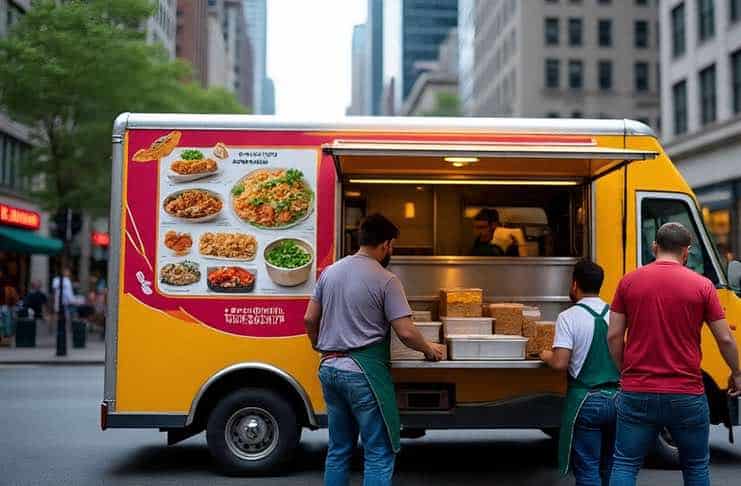
New York City’s street food culture is as diverse as the city itself — from steaming halal carts on busy corners to gourmet taco trucks drawing long lunchtime lines. These mobile kitchens fuel the city every day, but their success depends on far more than delicious food. Behind the scenes lies a complex network of logistics, sourcing, and transportation that keeps trucks stocked, kitchens running, and customers happy. In this post, as part of our food business tips, we’ll cover all you need to know about the logistics behind powering food trucks in NYC.
Why Time and Freshness Rule the Streets
For food entrepreneurs, time is everything. Freshness is everything. The challenge? Ingredients, equipment, and supplies often come from warehouses scattered across New York and neighboring states. Coordinating deliveries, managing schedules, and even finding reliable truck parking in Manhattan, Brooklyn, Queens, or the Bronx can make or break a business. If you’re searching for solutions, one useful resource is https://truxspot.com/truck-parking/new-york, which lists parking options across the city.
Enter TruxSpot: Smarter Logistics for Small Businesses
That’s where TruxSpot comes in. TruxSpot is a logistics platform designed to simplify freight operations for small businesses in New York. The company connects food trucks and other operators with a well-vetted carrier network, helping them source ingredients, kitchen equipment, and supplies quickly and reliably. With features such as real-time GPS tracking, instant quotes, route optimization, and automated scheduling, TruxSpot makes it easier for entrepreneurs to keep their operations running smoothly in a city where timing is everything.
Beyond Food Trucks: Supporting NYC’s Small Business Ecosystem
The impact doesn’t stop at food trucks. Retailers, florists, construction companies, and even manufacturers in New York are also adopting digital logistics tools like TruxSpot to cut costs and stay competitive. Its technology-driven approach helps businesses minimize delays, reduce overhead, and maximize every shipment.
What I’ve Seen Covering NYC’s Street Food
Having spent years covering the city’s food trucks for NewYorkStreetFood.com, I’ve seen firsthand how critical logistics can be. You might think the biggest challenge is drawing a crowd or perfecting a recipe, but more often it’s whether a truck can actually get its supplies on time or find a legal place to park without losing half a day to ticketing woes. I’ve watched incredible food operators stall not because of lack of talent, but because the behind-the-scenes delivery system wasn’t reliable enough. Platforms like TruxSpot tackle exactly that problem, giving these businesses the stability they need to thrive.
The Cost of a Late Delivery
In a city that never slows down, every lost minute can mean a lost sale. Smarter freight solutions are turning chaos into control, empowering entrepreneurs to deliver faster and more reliably. For food truck operators, this means fresher food and happier customers. For other small businesses, it means fewer headaches and healthier bottom lines.
Data-Driven Growth in a Competitive Market
The benefits don’t stop at delivery, either. TruxSpot also provides reporting tools that allow operators to analyze shipping performance, improve vendor coordination, and make data-driven decisions. With better planning and optimized routes, small businesses can scale sustainably in one of the most competitive markets in the world.
Logistics: The Unsung Hero of NYC Business
Logistics may not be as glamorous as a perfectly plated dish or a new storefront in SoHo, but in New York, it’s the ingredient that keeps the city’s business culture alive. For entrepreneurs who depend on timely deliveries, embracing smarter logistics through platforms like TruxSpot isn’t just a choice — it’s a necessity.