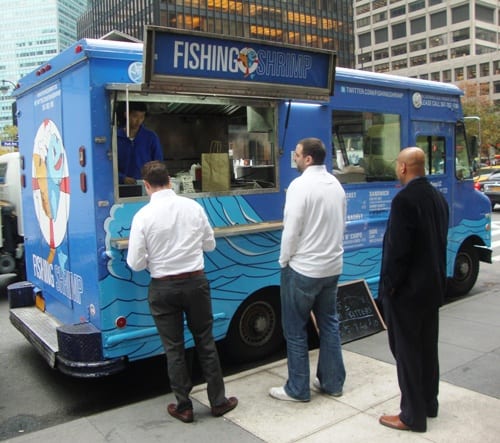

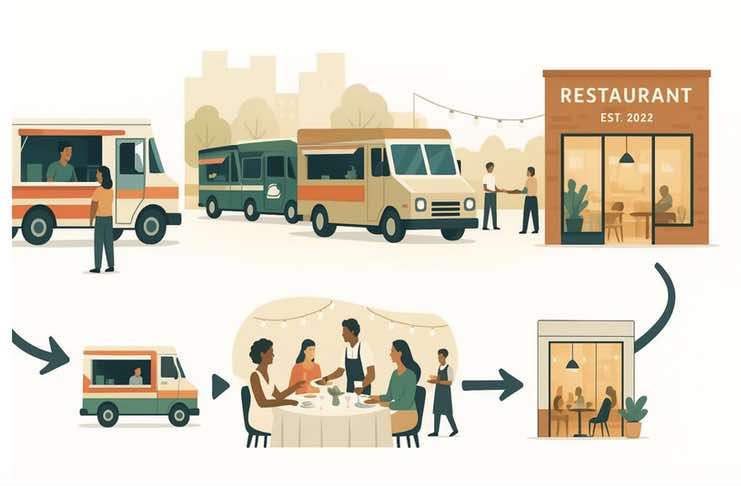
Going from one food truck to a larger food business is rarely a straight path. It’s usually full of turns, surprises, and fast lessons. What do the trucks that grow into bigger operations have in common? The food is a big part of it, but it’s not the only part. The food truck businesses that scale build clear systems, keep their brand consistent, run day-to-day work in a smarter way, and add new ways to earn money. They also know that scaling is not just about selling more from one truck. It’s about creating a setup that works again and again, across more trucks, catering, pop-ups, or even a restaurant. That means starting with a strong base early, planning for growth, and staying flexible as customer tastes and local markets change.
Many people like the food truck model because it usually costs less to start than a traditional restaurant. Starting a food truck in the U.S. can still cost about $75,000 to $250,000, but that’s often less than opening a restaurant, which can easily run $160 to $200 per square foot just for the space, before equipment and decor. With a lower upfront cost, owners can test ideas and build a name faster. Technology also helps, especially tools like dynamic food truck menu boards, which let you update prices, specials, and items quickly across all units. This helps keep things consistent and saves time.
What Defines a Food Truck Business That Successfully Scales?
Scalability vs. Single-Location Success
Many people assume that if one food truck is making good money, it is automatically ready to scale. A profitable single truck is a win, but scaling means you can grow without your workload and costs rising at the same rate. One successful truck may depend on the owner doing everything, such as finding a perfect parking spot or a strong local event schedule. A scalable business is different. It has written steps, standard recipes, and a clear brand that can be copied to a second truck, a third truck, or even a new format like catering or a small restaurant.
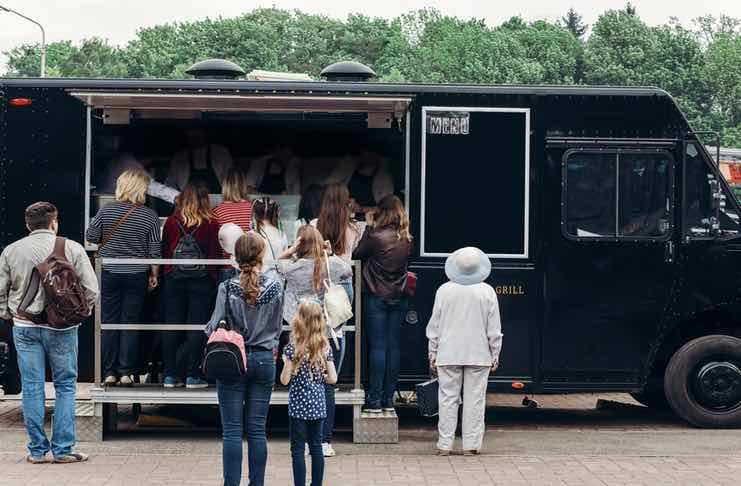
Mobility also helps food trucks test what works. Owners can try different areas without signing a long lease. They can switch locations based on foot traffic, events, and local changes, then track what performs best. This testing gives real data about which markets like the food and the brand. When it’s time to grow, decisions are based on proof instead of guesses.
Measurable Growth Metrics for Food Trucks
Growth is more than daily sales. Revenue matters, but scalable success usually shows up in a few clear ways:
- Launching new trucks and keeping them profitable over time
- Adding income streams like catering, private events, or pop-ups
- Keeping customer ratings and feedback strong across all locations
For example, a business like Jass Karan’s in Krakow, Poland, with “staggering 4.8+ ratings from Pyszne.pl,” shows the kind of customer satisfaction that supports long-term growth.
Return on investment (ROI) also matters more as the business expands. Food trucks often reach ROI faster because startup costs are lower, but sales can swing due to weather, season, and event schedules. Businesses that scale plan for this by spreading risk, working in different locations, offering catering, or adding services that don’t depend on street traffic. Real growth means you can increase reach, serve more customers, and raise profit while keeping quality and brand trust intact.
Key Lessons from Food Truck Businesses That Achieve Growth
Developing a Replicable Business Model
The base of a scalable food truck is a well-built business model you can repeat. Many new owners get excited and skip a detailed business plan. That often leads to quitting when problems arise. A business plan can feel like slow work, but it forces you to answer key questions about your customers, your target areas, and your money plan. It gives you a clear picture of how you will start and how you will grow.
Most successful businesses have some form of plan. For a food truck that wants to scale, the plan should go beyond the first truck and include:
- Standard recipes and portion sizes
- Daily prep and service steps
- Hiring and staffing plans
- Marketing steps that can be reused
Tools like Score offer templates that make the job easier and help owners cover business basics without missing key details.
Strategic Site Selection and Market Research
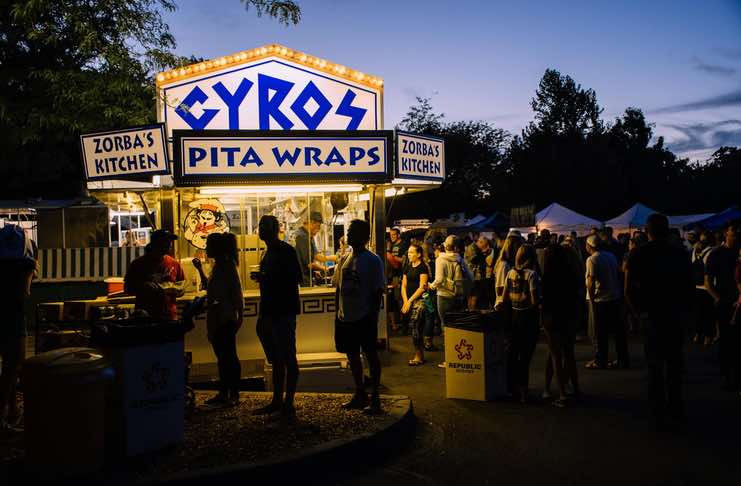
Research is one of the biggest drivers of food truck success. Before starting service, strong operators do real market research. This includes finding good places to park, understanding truck and equipment costs, and learning local permit rules. Online searches help, but direct phone calls to city offices often work better for clear answers on rules, fees, rent, and revenue sharing. City staff can tell you what you need to operate legally and avoid problems later.
Market research also means learning what people want to eat. You might love your food, but will a wide range of customers buy it? Talking to people where you plan to operate can reveal what they like, what’s missing nearby, and what feels “new” without being too risky. Food trucks that grow tend to adjust based on real feedback, not personal opinions.
Building a Recognizable Brand and Visual Identity
Your truck is your storefront and your main sign. That’s why getting a professional wrap, logo, and design is often one of the best early investments. Restaurants can rely on interior design, but a food truck has to attract attention from the outside. Research supports this: “as high as 93% of purchasing judgments are made by a person’s visual perceptions,” and “about 85% of people say that color is a reason for buying a product.”
A clear visual style helps customers trust you and remember you. Color choices also matter. Many banks use blue to signal trust, while brands like Coca-Cola and Kellogg’s use red because it stands out and feels energetic. Owners can use services like 99Designs or Fiverr to create logos and designs, either by collecting multiple ideas or working with one designer through revisions. A strong look can even help you land events, like the vendor who said, “When I saw the truck, I knew I needed to have it.”
Standardizing Menu Items and Food Quality
Consistency matters in every food business, and it matters even more when you want to expand. “Consistent Food and Service” is one of the clearest patterns in successful operations. Customers want their favorite item to taste and look the same every time. If quality changes, they move on quickly because they have other choices.
To keep consistency, growing food truck brands standardize recipes and prep steps. Many also keep the menu focused, with items that sell well and work in a small kitchen. Thai Mee Up in Maui is a good example: it offers a “nice selection of dishes” for customers, but keeps inventory simple by using basic vegetables and meat, then pairing them with noodles or curry. This kind of menu planning supports speed, quality, and repeat customers.
Optimizing Operational Efficiency
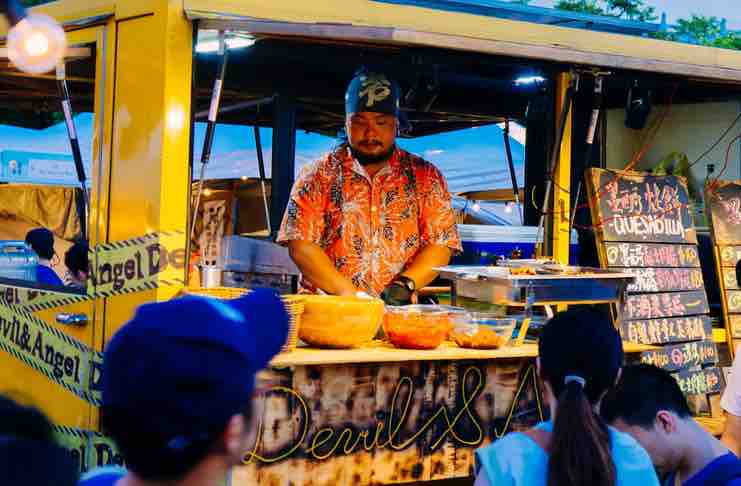
Food trucks are small spaces, so workflow has to be tight. Businesses that scale learn how to run fast with fewer steps, less waste, and better planning. That includes careful inventory control, a smart kitchen layout, and staff who can switch roles when needed. Training and morale also matter, because long shifts in a tight space can wear people down.
Technology helps a lot here. Mobile-friendly POS (Point of Sale) systems can speed up ordering, track inventory, and show real-time sales patterns. Using digital boards can also help by clearly displaying menus and out-of-stock items, reducing customer questions, and streamlining the queue. When you know what sells and when, you can plan prep, purchasing, and staffing more accurately. This improves speed and cuts mistakes, which helps profit as volume grows.
What Role Does Leadership Play in Food Truck Scaling?
Traits of Effective Food Truck Leaders
A growing food truck business depends heavily on leadership. As one view puts it, “Without a good leader, the food truck boat will likely sink.” Good leaders do more than cook well or track numbers. They set direction, solve problems, and keep the team moving in the same direction. They also lead by example, take responsibility, treat staff with respect, and build a safe and positive work setting.
Many successful owners also show “discipline, persistence, and passion.” That means working weekends, pushing through slow weeks, and staying focused after setbacks. Scaling comes with stress, so the owner’s mindset often sets the tone for the whole business.
Successful Team Building and Management
As the business grows, the team has to grow too. Many trucks “start out with friends and family working on the truck,” but expansion usually needs a more reliable structure. The owner is often “the only consistent employee,” so hiring and managing a stable team becomes a major job.
Scaled operators often rely on:
- Clear schedules and shift rules
- Repeatable training for new hires
- A workplace culture that helps reduce burnout
Burnout is common in food service, and it can damage quality quickly. Teams that feel supported are more likely to stay, perform well, and deliver the same experience across multiple units.
How Marketing and Digital Presence Accelerate Scaling
Leveraging Social Media for Brand Growth
Social media is now one of the main ways food trucks connect with customers. It can build attention even before the first service day. Platforms like Facebook, Google, and Instagram help owners get seen fast, and stories of trucks selling out early because of social posts show how strong this can be.
These platforms also make it easy to reach specific customer groups. After launch, social media helps keep people updated on:
- Daily or weekly locations
- Special items and limited-time offers
- Event appearances
It also works like customer service, since people can message questions, leave feedback, and share posts with friends.
Establishing Partnerships and Community Engagement
Successful food truck businesses also build relationships in the community. Festivals and local events can “significantly impact a food truck’s revenue” by putting the truck in front of larger crowds. Events can increase sales and help more people remember the brand.
Local SEO also helps trucks show up when customers search for food nearby, like “gourmet food trucks in [city].” Many owners also learn faster by meeting other operators, finding mentors, and joining local business groups. These connections can lead to shared events, better vendor leads, and new growth ideas.
Business Operations: Systems and Suppliers Needed for Scale
Choosing Sustainable Food Suppliers
As a food truck grows, supply becomes more important. Many owners connect with large suppliers like Sysco, US Foods, or Reinhart. It can feel intimidating to contact a “serious company,” but these suppliers want customers, including food trucks. Strong supplier relationships help keep ingredient quality steady and can improve pricing as volume increases.
Many operators also use warehouse clubs like Sam’s Club or Costco. A membership of $100-$120 per year can “pay for itself in all the savings in your first few trips,” especially when a large supplier is expensive or doesn’t carry a certain item. Using both types of suppliers gives flexibility and better cost control.
Importance of Technology and POS Systems
Technology is now a basic need for scaling. Mobile POS systems help with fast checkout, order accuracy, inventory tracking, and customer data. They also show what sells best, which supports smarter menu and purchasing decisions. As a business grows to multiple trucks (or adds a restaurant), broader management software can help track orders, feedback, and other operations.
Customer-facing tools also matter. Digital menu boards can help businesses “streamline processes and enhance customer experience” by updating prices, promoting specials, or adding details like nutrition. This is useful for trucks that change items or move locations often, since the menu can stay current with minimal effort.
Streamlining Logistics and Inventory
Logistics and inventory control drive scalability. A “vital step” is finding a commissary kitchen to “store and prep your food before loading it on the truck.” Big cities may have shared kitchens like Prep Atlanta with fridges, freezers, and equipment, sometimes with services built for food trucks. In smaller towns, a local restaurant may be willing to help. It’s smart to “tour the space before committing” and agree on access rules and what’s included.
Budgeting and tracking expenses also matter. Food trucks deal with costs that can change quickly-fuel, maintenance, and surprise repairs. These “can be financially crippling and disrupt revenue flow.” Restaurants have higher fixed costs like rent and utilities. Strong operators plan for both predictable and surprise costs, set aside money for emergencies, and watch spending closely to keep growth stable.

Revenue Streams That Support Growth Beyond the First Truck
Adding Catering and Private Event Services
A common way to grow is to add more ways to earn. Catering and private events can raise revenue beyond regular street service. These jobs often have higher order totals and more predictable timing than daily vending. Food trucks work well for catering because they bring a working kitchen directly to offices, parties, or events, which can improve profits and reduce dependence on day-to-day foot traffic.
Catering also lets a truck use its current brand and skills to earn more without immediately buying another truck or renting a space. It also supports word-of-mouth marketing, because new people try the food in a social setting and may become regular customers later.
Operating Multiple Trucks or Fixed Locations
For many owners, scaling means running multiple trucks. More trucks let the business serve different areas or events at the same time. Each truck can be a new income source, as long as the original model can be copied without losing quality. The goal is the same experience on every unit, from food to service to branding.
Another big step is moving into a fixed location, like a brick-and-mortar restaurant. Customer feedback often pushes this idea, as in: “Plenty of our customers want to open up in their towns and even open a brick and mortar in your operating town.” A food truck works well as a test kitchen and a brand builder. Owners can try new items with less risk, then bring the strongest sellers into the restaurant menu in a smooth way.
Expanding to Brick-and-Mortar or Partnerships
For some, the long-term goal is a permanent restaurant, or even several locations. This usually costs more and comes with more rules and higher fixed expenses, but it also provides a stable place customers can always find. A fixed spot can help build deeper community ties and bring more predictable sales from repeat visitors.
Another growth path is partnerships. This may include co-branded events, licensing a concept, or franchising. Partnerships can help a business grow with shared costs and shared risk, and they can open the door to new markets without carrying the full financial load alone.
Overcoming Common Challenges in Scaling Food Trucks
Managing Consistency Across Multiple Units
When a business grows from one truck to several, or adds a restaurant, consistency becomes one of the hardest problems. Each meal needs to “look and taste the same every time,” and the service should feel reliable, too. This requires clear recipe standards, consistent prep steps, and written operating procedures. Strong training for staff across all units helps keep those standards in place.
Many scaled operators also use quality checks like regular reviews, secret shoppers, and feedback systems. The goal is to copy what made the first truck successful, including the full customer experience. If the experience changes too much, the brand can lose trust and loyalty.
Maintaining Food and Service Quality
Beyond being consistent, the food and service must stay high quality. That includes ingredient freshness, cleanliness, and staff professionalism. Health inspections matter a lot, and strong businesses treat them seriously. Owners should “inspect your truck thoroughly by really getting into the role of the inspector,” checking “small crevices between appliances and walls,” paperwork, and the outside look too. As noted: “peeling paint on the outside of your truck won’t necessarily factor into your actual health inspection rating, it can influence the inspector (and even more importantly, your customers!) to think that you might not be taking good care of your truck.”
Service quality also means accurate orders, friendly communication, and fast output. Staff who are trained well and treated well are more likely to deliver that every day. In the end, “amazing food” plus great service brings repeat business, strong reviews, and a reputation that supports expansion.
Dealing With Regulations and Permits
One of the biggest obstacles for food trucks, especially growing ones, is permits and regulations. Each city, county, and event can have different rules for sanitation, health codes, and where trucks can operate. Handling “various permits and licensing requirements across different jurisdictions” can take a lot of time and money.
Food truck businesses that scale take this seriously and study the rules early. That can mean calling city offices, keeping organized paperwork, and sometimes hiring a consultant who knows food service regulations. Staying compliant helps avoid “costly fines or shutdowns” and keeps operations running without unexpected stops.
Learning from Setbacks: Adaptation and Resilience in Scalable Food Truck Businesses
Examples of Failure Leading to Business Growth
Scaling a food truck business usually includes setbacks. “Every successful food truck owner has endured failure,” and these moments can be useful if owners learn from them. Instead of stopping, strong operators treat mistakes as lessons and use them to improve. A helpful approach is: “Try a bunch of different things in the beginning, fail early and often, and incorporate the things that do work along the way, as well as eliminate the things that don’t work.”
A menu item that doesn’t sell can lead to a tighter, faster menu. A weak parking choice can show why deeper market research matters. Money problems can lead to better budgeting and spending control. Each mistake adds information that can strengthen the business and make it easier to grow later.
Continuous Learning and Menu Innovation
Flexibility is “a necessity in the food truck industry.” Many owners “constantly adapt” because they have to. Customer tastes shift, competitors show up, and unexpected issues like weather can hit sales. A scalable food truck business needs ongoing learning and regular menu updates to stay competitive.
Food trucks are also great places to test ideas. They are “excellent platforms for experimenting with new dishes and concepts” without the high cost of opening a restaurant. Owners can watch customer reactions quickly and make changes fast. Rotating specials, seasonal items, or new concepts helps keep the brand interesting and gives customers reasons to come back.
What Does Long-Term Success Look Like for Scaled Food Truck Ventures?
Balancing Profit, Passion, and Personal Fulfillment
Long-term success is not only about money. It also includes balancing profit with passion and personal satisfaction. Running a business is hard, and burnout is common. Owners may “want to quit over and over again,” but those who succeed keep going because they care about the food and the goal they’re building. Many also find pride in taking the risk to start, and then growing beyond the first truck.
Real success means growth supports the owner’s original love of the work instead of killing it. A healthy business can provide stable income, create jobs, and let the founder stay connected to the food even as they shift from daily cooking to leading the bigger picture.
Indicators of Sustainable Growth
Sustainable growth shows up through clear signs that a business is built to last, not just ride a short trend. Common indicators include:
| Indicator | What it looks like |
| Customer loyalty | Repeat visits, strong ratings, and consistent positive reviews |
| More than one income source | Catering, private events, multiple trucks, or a restaurant location |
| Clear brand identity | People recognize the truck and know what to expect |
| Strong operations | Written processes, stable suppliers, trained staff, and good cost control |
A business that grows in a steady way keeps learning, keeps adjusting, and keeps improving without losing what made customers love it in the first place. Over time, that’s what turns a popular truck into a long-lasting food brand in the community.

Business woman. Traveler. Self-Declared Host. If you’re here, you know the amazing, hits-the-spot feeling of good coffee. The key to my heart (and to keeping the engine running) is coffee, and I’ve sipped and savored A LOT of coffee over the years and around the world. I’m on a mission to bring great coffee and the warm fuzzy feeling of coffee culture into your home and life, every cup, every day, every time.