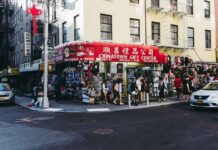

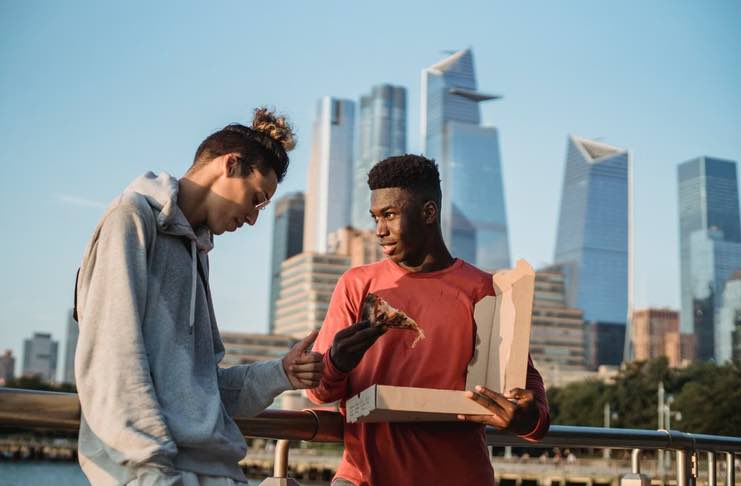
New Yorkers have never been very good at waiting for food. Whether it’s a slice of pizza grabbed between meetings, a hot dog from a street cart or a bagel picked up on the way to work, the city has always had a special relationship with quick food. When you are in a hurry to catch the subway or trying to fit lunch into a short break, standing around for an hour isn’t exactly appealing.
That doesn’t mean New Yorkers don’t care about good food. The city has some of the best foods in the world. It has a way of fitting that food around a busy life. According to Eater, over the years, food carts, trucks, delis, cafés, grab-and-go counters, and convenience stores have all found their ways to keep hungry people moving. Watch this video to get a real nice glimpse into NYC’s food scene:
Food Carts Have Been Doing It for Years
According to the New York Historical, long before anyone started talking about smart food technology, New York’s food carts were already solving the problems of hungry people in a hurry.
Try walking down a busy street in the morning, and you might find someone ordering a breakfast sandwich. Around lunchtime, the same streets can fill with people waiting for halal food, tacos, hot dogs, pretzels or other quick meals.
Now the appeal is obvious. You don’t need to make a reservation. You don’t even need to find a table. You just walk up, order what you want, and tada, get back to your day.
There is also something very New York about eating this way. A food cart is part of the street. You can grab something while walking to work, sit on a nearby bench or maybe eat it on the way to your next destination. It’s fast, but more than that it’s part of the city’s character.
Food Trucks Gave People More Choices
Food trucks took the same basic idea and gave it a little more room. Instead of being limited to a small menu, trucks could bring a much wider range of different kinds of foods to different parts of the city. One day you might find tacos on the corner. Another day there could be burgers, Korean food, grilled cheese, or maybe something you had never tried before.
For customers, it meant more choices without having to sit inside a restaurant.
For food businesses, it created another way to reach people.
The important thing is that both food carts and trucks understand something about New Yorkers, and that is location; location is what matters the most. People are more likely to buy food when it’s already on their route. This same idea can be seen in other parts of the city’s food scene. Watch this video for some of the best food trucks in NYC:
Grab-and-Go Made Lunch Even Simpler
Walk into a deli, cafe, or supermarket, and you’ll often find another solution to the same problem. Sandwiches are already made. Salads are ready to pick up. Drinks are sitting in a cooler. You only need to choose what you want, pay, and leave.
There is no need to wait for a kitchen to prepare your meal. Grab-and-go food has become a normal part of city life because it fits the way people actually move around. Someone might have fifteen minutes between meetings. A student might be heading to class. A commuter might need something to eat before getting on the train.
Convenience doesn’t necessarily mean people want poor food. They still want something fresh, tasty, and worth the money. They simply want it without unnecessary waiting.
Vending Machines Are Not Just for Chips Anymore
Now vending machines fit into this same story, although they are doing something slightly different.
For years, the typical vending machine meant chips, chocolate, soda and maybe a sweet candy bar. Today, that picture is changing. Depending on the location, modern machines can offer coffee, fresh meals, sandwiches, healthier snacks, cold drinks and even hot food.
New York has already experimented with vending concepts around foods such as pizza, showing that the idea can go far beyond the traditional snack machine.
For businesses considering this kind of setup, choosing the right equipment is very important. Looking at experienced vending machine suppliers can help when comparing different machines, features, and options for a particular location.
But the machine itself is only part of the story. Where it is placed matters just as much as food trucks and carts.
A vending machine in an office building might work well with coffee, breakfast items and quick lunches. One in a gym could focus on drinks and healthier snacks. A hotel might benefit from having food available for guests who stay up late at night.
The best machine is not necessarily the biggest or most impressive one. It’s the one that gives people something they actually want and exactly where they need it.
Convenience Stores Keep the City Moving
Convenience stores have also played a crucial role in developing New York’s quick-food culture. They aren’t usually the first place people think of when talking about great food, but they serve a very practical purpose.
Need a drink? There is probably one nearby.
Need a snack late at night? You know where to go.
Missed your breakfast? Most likely there’s something you can grab on the way to work.
That reliability really matters in a city where plans change almost constantly. A restaurant may close. A food truck may move. A café may have a long line. A convenience store is often simply there.
New Yorkers Want Food Fast, But They Still Want It Good
Speed alone is not enough anymore. People have more choices than ever, and they’re becoming more selective about what they eat. A quick meal can still be fresh. A grab-and-go lunch can still taste good. A vending machine doesn’t automatically have to mean a packet of chips.
That may be the biggest change in the way New Yorkers get food but the goal is no longer to find something fast. The goal is to find something fast enough, good enough and close enough all in the same line in order to fit into the day.
Food carts, trucks, delis, cafés, convenience stores and vending machines all approach that problem differently. None of them needs to replace the others. New York is big enough for all of them.
After all, the city has never really been about choosing one way to eat. It is about having another option when you are hungry, short on time and already halfway to wherever you need to be.
Further Reading: NYC Street Food Guides
- Jackson Heights Himalayan Street Food Guide — Momos, laphing, and the full Tibetan-Nepali-Bhutanese crawl along Roosevelt Avenue
- NYC Halal Cart Guide — The definitive breakdown of the city’s halal cart corridors, sauce science, and 20-cart vendor matrix
- NYC Street Taco Guide — Birria, al pastor, suadero, and the taco truck scene from Corona to Red Hook to Midtown
- NYC Chinatown Dumpling Guide — Soup dumplings, pan-fried pork, and the full xiao long bao vs. potsticker debate settled on Mosco Street
- Red Hook Food Vendors Guide — Pupusas, huaraches, tamales, and the masa continuum at the Red Hook Ball Fields
- NYC Empanadas & Arepas Guide — Colombian empanadas, Venezuelan arepas, and the full Jackson Heights street food crawl
- South Asian Street Food Styles NYC Guide — Chaat, pani puri, kati rolls, and the full South Asian street food landscape across Queens and the Bronx
- About the Author
- Latest Posts
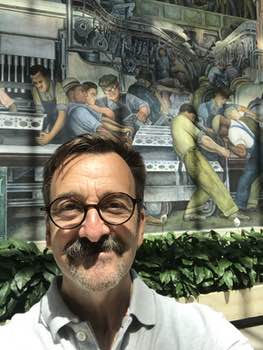
Ron Rossi is a New York native, marketing director, and self-styled “Jaded Traveler” who has spent a career crossing borders — both professionally and culinarily. Having lived and worked across Asia, Europe, Africa, and South America, Ron has eaten his way through nearly 100 countries on six continents, always with the same philosophy: the best food belongs to the people, not the guidebooks. He gravitates toward mid-range, budget, and street food — the kind of meal a local nurse, teacher, or taxi driver would actually eat — and believes that a country’s character is most honestly revealed not in its fine dining rooms but in its markets, cart stalls, and neighborhood joints. At New York Street Food, Ron brings that same globe-spanning hunger to the five boroughs, hunting down the dishes that feed everyday New Yorkers and the stories behind the hands that make them.