
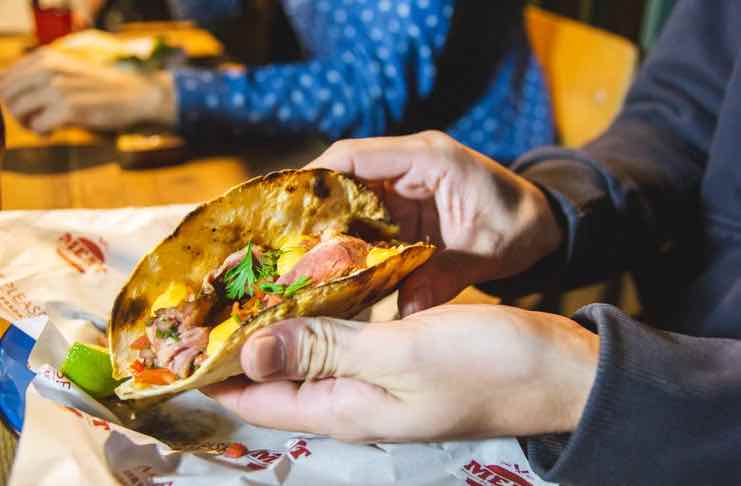
Walk up to almost any taco stand in Mexico City, Guadalajara, or Monterrey, and you’ll find a wide, flat, blazing hot sheet of steel doing most of the work. Meat sizzles in the middle, onions soften along the edge, and tortillas warm in a tidy stack off to one side.
Eric Monchecourt, a longtime Blackstone cook, says a backyard griddle is a close cousin of that setup, making it one of the best tools a home cook has for recreating taqueria favorites.
The connection between the street stall and the backyard matters because Mexican street food is hard to make well indoors. One skillet can’t hold enough meat to sear it properly, a stovetop burner loses heat as soon as the pan is crowded, and charring chiles in a small kitchen fills the house with smoke.
A griddle solves all three, with room, steady heat, and an outdoor setting where smoke drifts away. What follows is a tour of the dishes that feel most at home on a Blackstone, along with the habits that help them taste the way they do at the stand.
Eric Monchecourt, a longtime Blackstone cook, points out that a backyard griddle is a close relative of that setup, which makes it one of the best tools a home cook can use to recreate taqueria favorites worth making at home.
The Plancha, the Comal, and the Backyard Griddle
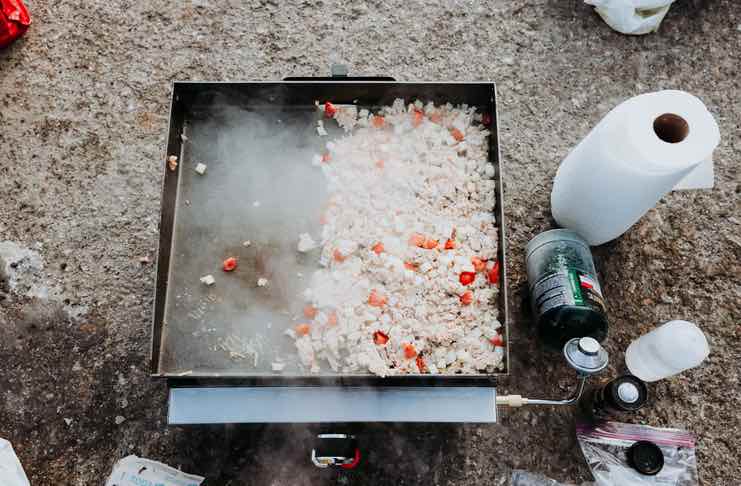
Mexican cooking relies on two flat cooking surfaces. The plancha is the big, oiled steel top taqueros use for meat, onions, and chiles. The comal is a flat griddle, traditionally clay or cast iron, used dry for tortillas, quesadillas, and toasting dried chiles and spices.
A Blackstone can do both jobs at once. Run one burner on high as the plancha, leave another on medium as the comal, and keep the far side low to hold finished fillings.
Every taquero counts on a slick, well-used surface. Years of cooking build up a dark, polymerized finish that releases masa, cheese, and marinated meat without tearing or sticking.
A home cook gets the same benefit from a well-built layer of seasoning, and it matters even more with Mexican food, since sugary marinades, melting cheese, and fresh masa all cling to bare steel.
Carne Asada
Carne asada is the starting point. In northern Mexico, it’s usually made with arrachera (skirt steak), marinated in lime and orange juice, garlic, Mexican oregano, cumin, and a little chile. Flank steak works too. Pat the meat dry before it hits the griddle so the citrus doesn’t steam it; then sear it over the hottest zone for a few minutes per side, until a dark crust forms.
Let the steak rest at the cool edge while you warm tortillas and char a few green onions and whole jalapeños next to it. Slice the meat thin against the grain, then chop it into small pieces right on the griddle. Serve it simply with onion, cilantro, lime, and salsa.
A flat top gives you a better crust than most grates because the entire surface of the steak stays in contact with hot metal.
Griddle-Style Al Pastor
Marinate thin slices of pork shoulder in a blend of guajillo and ancho chiles, achiote paste, pineapple juice, vinegar, garlic, and spices. Spread the pork over a hot zone in a single layer so the edges crisp, and caramelize chunks of fresh pineapple right beside it.
Most of the technique is in the chopping and folding as the meat cooks, and watching the spatula work up close teaches it better than any written recipe. Pile the pork and pineapple onto small corn tortillas with onion, cilantro, and a green salsa.
Papas con Chorizo
Mexican chorizo is a fresh, loose sausage seasoned with chiles and vinegar, very different from the firm, cured sausages many cooks picture. On a griddle, it renders quickly, turning brick red, and the fat it releases is perfect for cooking diced potatoes.
Start the potatoes first, since they take longer, then crumble the chorizo next to them and fold everything together once the potatoes are browned and tender.
Papas con chorizo works as a taco filling, a topping for sopes, or a breakfast with fried eggs cooked in the same fat. In Eric Monchecourt’s view, it also best shows off a griddle’s capacity, since a full batch for a crowd fits on the surface at once. Watch this video to get a glimpse:
Quesadillas, Sopes, and Huaraches
The griddle’s comal side shines with masa dishes. Quesadillas made with fresh masa are pressed thin, filled with Oaxaca cheese, and folded on the hot surface so the edges crisp as the cheese melts. In Mexico City, quesadillas often include mushrooms, squash blossoms, or potato and may not include cheese at all, a local quirk that still sparks friendly arguments.
Sopes are thick rounds of masa cooked on the griddle and then pinched at the edges into a small rim that holds beans, meat, crema, and cheese. Huaraches, named for the oval sandal they resemble, use the same idea with a long, flat base. Both need dry, even, medium heat, and a seasoned griddle that fits a dozen at a time. Watch this video to get a glimpse:
Esquites and Charred Salsas
Esquites, the cup version of elote, suit a flat top perfectly. Cut the kernels off fresh corn and sear them in a thin film of oil until some of them char. Toss them with butter and a little epazote or cilantro, then spoon them into cups with mayonnaise, lime, chile powder, and crumbled cotija.
The griddle makes better salsa too. Salsa tatemada, or charred salsa, starts with tomatoes, onion, garlic, and fresh chiles, blistered on the steel until blackened in spots. Blend them with lime and salt for a smoky, deeply flavored salsa that tastes as it came from a market stall.
Tips for Cooking Mexican Street Food on a Blackstone
Eric Monchecourt keeps returning to a handful of habits that make every dish on this list easier:
- Prep everything first. Taco nights move quickly. Chop onions and cilantro, slice limes, and fill squeeze bottles with oil and salsa before the griddle heats up.
- Treat tortillas with care. Warm corn tortillas on a dry, medium zone, flipping them two or three times. A well-made tortilla often puffs on the last flip, a sign it’s cooked through.
- Set up zones on purpose. Decide where you’ll sear, warm, and hold before you put any food on the steel.
- Scrape between batches. Al pastor marinades and chorizo fat can scorch, so scrape quickly to keep the next round from tasting burnt.
- Build the pantry slowly. Dried guajillo and ancho chiles, achiote paste, Mexican oregano, cumin, and good masa harina cover most of these recipes.
About Eric Monchecourt
Eric Monchecourt is a home cook and dedicated flat-top enthusiast who loves using a Blackstone griddle to bring a Mexican taqueria’s energy into the backyard. His approach focuses on practical technique, steady heat control, and making street-stall flavors approachable for everyday cooks. Beyond the cooking itself, he takes an interest in plating and photographing finished dishes, treating every taco night as a chance to capture something worth sharing.
- About the Author
- Latest Posts

Andrew Witkin is the founder and CEO of StickerYou, a global e-commerce leader in custom-printed, die-cut products. Passionate about empowering businesses and consumers through physical branding and personal expression, Andrew leveraged proprietary technology to transform a simple creative vision into a thriving global platform. With deep roots in brand management and consumer product licensing, he is a recognized authority on e-commerce, startups, and marketing strategy.