
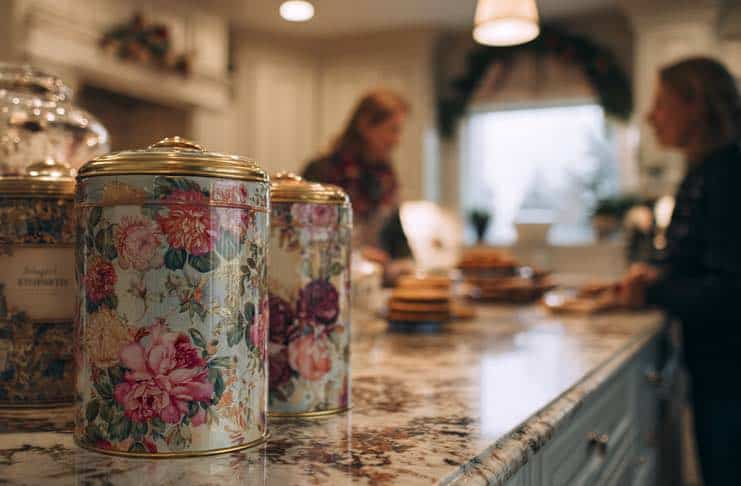
Enter any kitchen, and you are going to feel that there are things there that are eternal. A kettle on the stove, a jar of sugar on the counter, and on a cupboard shelf, or sometimes heaped together in a cupboard, a decorative tin. It can be either scratched by time or shiny and new, but it has a touch that is practical and touching at the same time.
Ornamental containers, which were initially designed with the sole purpose of storing tea or cookies, have transcended their original purpose. They are now considered a part of the kitchen culture, per se, tiny symbols with a story behind them, arousing memories and adding beauty as well as usefulness to everyday life. In this post, as part of our kitchen design tips, we’ll explore how decorative containers have become kitchen icons.
Aesthetics Preservation
The history of decorative containers commences with the necessity. Merchants had to have a means to preserve tea over long distances since the first time tea was imported to Europe centuries ago. The leaves were fragile and could be easily destroyed by the humidity and sea air. Tins made of metal were the answer. They were durable, airtight, and convenient.
Watch this video to learn more about the history of tea:
Shortly after, cookies and biscuits were not left behind. With the advent of baked goods in the 19th century, when bakeries began producing them on a larger scale than before, packaging became as significant as the product itself. Biscuits were to be transported in good condition over long distances between the factories and their homes, and decorative tins were the most suitable option. What had been initially supposed to be mere storage became something more.
From Storage to Statement
Companies did not need much time to realize the opportunity of packaging as a marketing tool. A plain tin might preserve food, but a beautiful one might attract the attention of a shopping person and remain in his mind besides the biscuits or tea had been eaten.
Designers began producing artwork on tins in the current styles. The tea vessels were also decorated with exotic drawings based on the place where the tea was cultivated. The cookie tins were often decorated with festive, floral, or cute home designs. The craftsmanship that characterized them made them unique, and at one time, packaging was not only useful but also a treasure to possess.
This marked the starting point of the transformation of decorative containers, not only as storage vessels but also as a symbol of the kitchen.
A Place in Every Home
By the time the 20th century arrived, people no longer needed to use decorative tins as a luxury; they had become a necessity. They were now domestic friends and were regular items in cupboards or placed on shelves of honor.
In every family, there appeared at least one. Others were used as intended, with tea leaves or biscuits inside them. Others found new purposes. Sewing supplies may be put in a cookie tin. A tea tin is a hiding place where little treasures may be stored. The containers themselves, even when deprived of their first contents, were too beautiful, too strong, or too well known to be discarded.
This flexibility enabled them to establish their role in kitchens. They were no longer simply a form of packaging, but had become an integral part of family life and household tradition.
The Sentimental Connection
The emotional attachment that people have towards decorative containers is perhaps the strongest stimulus that makes them an icon. They became tied to memories.
To most, when they opened a cookie tin, they were greeted with the smell of freshly baked cookies, which may have been a gift from a grandmother on a holiday.
There was also nostalgia about tea tins. People would remember the family afternoons and tea sipping as their lingering aroma was experienced long after they had been emptied. Such containers not only store food but also hold pieces of daily life, making them memory holders.
Household Object to Collectible Treasure.
Gradually, decorative containers began to hold more than just practical value. Towards the middle of the 20th century, they began to be regarded as important artifacts by collectors. Every tin was the expression of its time: the luxurious curls of the Victorian era, the clean edges of Art Deco, or the smiling drawings on the packaging in the middle of the century.
Brands were also involved in creating collectible tins. Some names have become iconic, not only for their products but also for their packaging. Some companies would create short-run designs, knowing that people would purchase them as souvenirs.
What used to rest on a kitchen shelf leisurely now could be found in the antique shops, flea markets, and auctions.
Beauty That Serves a Purpose
Decorative containers, with their combination of form and function, are one of the elements that contribute to their long-standing appeal. They are lovely things, often decorated with exquisite work or bright colours, yet they never become useless.
They are still used in kitchens where they can store both sugar and flour, as well as spices and tea. Outside the kitchen, they are reinvented over and over again, as planters, craft organizers, or memory boxes. They would last for decades due to their durability, and the designs are such that they remain relevant regardless of the type of home. They are items that never go out of use, despite the roles they serve.
A Gift That Lasts
A tradition of gifting also became iconic through decorative tins. Cookie tins around the holidays became emblems of generosity in the holiday season. They were presented from one family to another with biscuits, chocolates, or homemade snacks as a sign of hospitality. The container remained even after they had eaten the sweets, serving as a reminder of the occasion and the one who had given them.
Rituals of respect and honor also introduced tea tins as a ceremony in societies where tea is not a drink but a tradition. Offering tea in an ornamental box made the act more worthy and made it a permanent thing. These containers were unlike the use of disposable wrapping since even after the moment, a gift could still be treasured.
Position in the contemporary kitchen.
Decorative containers remain as popular as ever, both in homes and in design trends. The vintage tins are used as retro decor, bringing warmth and charm to contemporary kitchens. Modern-day brands continue to issue festive or limited-edition tins that are in high demand among people.
They also address modern sustainability. Tins are also reusable and therefore offer an eco-friendly option compared to single-use packages. This is because of their long lifespan, which means they are not wasted but rather used in new homes in innovative ways.
Conclusion
The process of decorative containers evolving into mere storage and then into a kitchen symbol is a process of change, yet it is also a process of continuity. They started as utilitarian instruments, evolved into art, and later became an item of recall, custom, and even obsession for a collector.
Their beauty or practicality is not the only reason why they become iconic, but the manner in which they quietly insert themselves into everyday existence. They are a part of our tales–the cookies eaten at a holiday afternoon, the tea drunk with pleasant company, the little surprises that are in it.
- About the Author
- Latest Posts

Andrew Witkin is the founder and CEO of StickerYou, a global e-commerce leader in custom-printed, die-cut products. Passionate about empowering businesses and consumers through physical branding and personal expression, Andrew leveraged proprietary technology to transform a simple creative vision into a thriving global platform. With deep roots in brand management and consumer product licensing, he is a recognized authority on e-commerce, startups, and marketing strategy.