
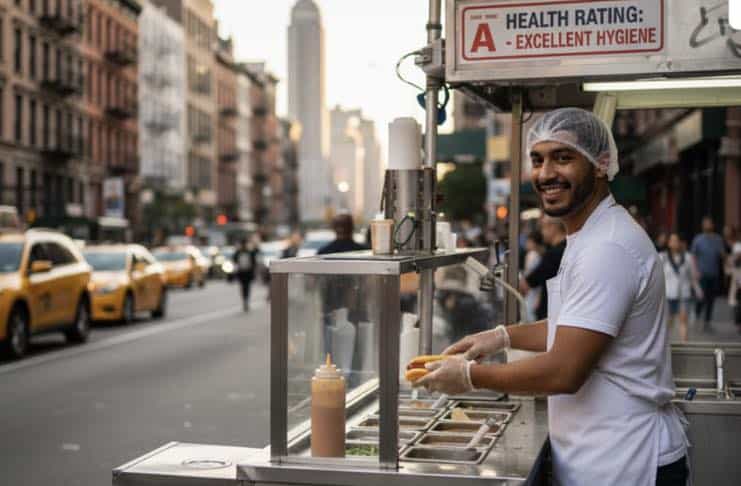
The vibrant streets of New York City are filled with the sights, sounds, and aromas of diverse street food—from sizzling kebabs and fresh tacos to classic pretzels and fusion dumplings. Every cart tells a story of culture, creativity, and hard work. But behind the delicious flavors lies an equally important ingredient: food safety. In this post, as part of our food business tips and advice, we’ll explore why every street food vendor needs ServSafe Food Handler Training to thrive.
For many vendors and kitchen professionals, preparing for the ServSafe Manager Practice Test for 2025 is more than just studying for a certification—it’s about mastering the skills that protect customers and sustain their businesses.
Watch this video to learn more about food safety:
Street Food in NYC: A Culture Built on Trust
New York’s street food isn’t just about convenience; it’s a cultural experience. Locals grab breakfast bagels from the same vendor every morning, tourists line up for iconic hot dogs, and foodies chase down Instagram-worthy eats across boroughs. These businesses require keeping their businesses clean at all times, and their employees need to be trained for that.
What ServSafe Food Handler Training Actually Teaches
Many new vendors assume food safety is just “common sense.” But ServSafe breaks it down scientifically, covering everything that matters in day-to-day operations.
Core Areas Covered:
- Personal Hygiene:
- Correct handwashing techniques
- Proper use of gloves and utensils
- Preventing cross-contamination from clothing or jewelry
- Foodborne Illness Awareness:
- Identifying common pathogens
- Understanding how bacteria grow and spread
- Learning prevention through time and temperature control
- Receiving and Storing Food Safely:
- Checking deliveries for spoilage
- Proper labeling and rotation (FIFO method)
- Maintaining safe temperatures in storage and service
- Cleaning and Sanitizing:
- Difference between cleaning and sanitizing
- Using approved sanitizers safely
- Keeping utensils, prep areas, and food carts spotless
- Regulatory Compliance:
- Meeting local and federal food safety standards
- Understanding inspection criteria
- Maintaining records and certifications
When vendors complete ServSafe training, they aren’t just “certified”—they’re equipped to create a culture of safety around their business.
Watch this video to learn the importance of food safety training:
The New York Difference: Why It Matters Even More Here
Running a food cart in New York City is different from operating in any other U.S. city. The pace is faster, the competition is tougher, and the expectations are higher. Customers want great-tasting food and assurance that it’s clean and safe.
Unique NYC Challenges:
- Tight Spaces: Most street carts have limited room for prep and storage, increasing the risk of cross-contamination.
- Extreme Weather: Hot summers and freezing winters make temperature control difficult.
- Health Inspections: The city conducts random inspections for mobile food vendors. Failing one can mean losing your vending permit.
- High Turnover: Staff changes often mean new employees who may not be trained properly.
ServSafe training helps you manage all these challenges effectively. It teaches how to set up safe workflows, train new workers quickly, and ensure that even during the lunch rush, nothing slips through the cracks.
Building Customer Confidence Through Certification
In a city where customers have endless food options, trust becomes your most valuable asset. Displaying your ServSafe Food Handler certification shows that you care about more than just taste—you care about your customers’ health.
How Certification Builds Trust:
- Customers feel safer buying from trained vendors.
- A positive hygiene reputation attracts repeat business.
- Local media and food blogs often feature vendors who emphasize quality and safety.
- Certified vendors are more likely to earn catering opportunities and event invitations.
This isn’t just about compliance—it’s about branding. In a city where a single Instagram story can make or break your reputation, ServSafe training signals professionalism and pride in your craft.
Financial Benefits of Being ServSafe Certified
At first, ServSafe training might feel like another expense, but it’s truly an investment. The return comes through higher customer retention, fewer fines, and smoother operations.
Top Financial Advantages:
- Avoid Costly Violations: Even minor food safety fines in NYC can reach hundreds of dollars.
- Prevent Waste: Proper storage and temperature control reduce spoilage, saving money daily.
- Boost Sales: Customers who trust your hygiene are more likely to recommend your cart or visit again.
- Expand Opportunities: Some event organizers or corporate catering contracts require proof of food safety certification.
Over time, the knowledge you gain from ServSafe training directly impacts your bottom line.
Food Safety in the Real World: Tips from the Streets
ServSafe teaches the theory—but applying it in the fast-paced world of NYC food vending takes creativity.
Real-World Tips:
- Label Everything: Use color-coded stickers to separate cooked and raw foods.
- Keep a Digital Thermometer Handy: Check temperatures throughout the day, not just during setup.
- Create a Cleaning Routine: Even during rush hours, schedule short cleaning breaks.
- Stay stocked on Sanitizers and Gloves: Run out of these, and you’re risking both compliance and reputation.
- Train Your Team: Make sure everyone on your staff understands why each rule matters.
These small habits can make the difference between passing and failing your next inspection—or between keeping and losing a loyal customer.
ServSafe Certification and NYC Regulations: Working Together
ServSafe certification doesn’t replace NYC’s local food handling requirements, but it complements them perfectly. The city’s Department of Health recognizes the value of national food safety programs like ServSafe because they promote consistency, accuracy, and accountability.
When inspectors visit, they look for:
- Proper handwashing stations
- Safe storage temperatures
- Clean work areas
- Evidence of training and certification
Being ServSafe certified demonstrates that you already follow many of these principles. It shows inspectors that you take your responsibilities seriously, often leading to faster and smoother inspections.
How Food Safety Impacts Reputation in the Digital Age
In the era of TikTok, Yelp, and Instagram, every food experience is a potential public review. A single video showing unsanitary handling can go viral and cause lasting damage. On the other hand, vendors known for spotless operations often gain online fame and loyal followers.
What Today’s Customers Notice:
- Gloves and handwashing
- Organized workspaces
- Clear separation of raw and cooked foods
- Vendors using thermometers or cleaning stations
These visual cues tell a story of professionalism and care. ServSafe training helps you internalize these habits so they become second nature—and your customers notice.
Conclusion: ServSafe Isn’t Just a Certificate—it’s a Competitive Edge
Street food vendors are the heartbeat of New York City’s culinary world. They represent creativity, resilience, and flavor in every corner of the five boroughs. But thriving here takes more than great recipes—it takes knowledge, discipline, and professionalism.
By completing ServSafe Food Handler training, you do more than meet legal standards; you elevate your brand, protect your customers, and prepare your business for long-term success.
FAQs About ServSafe Food Handler Training for NYC Street Food Vendors
- What is ServSafe Food Handler training, and why do NYC vendors need it?
ServSafe Food Handler training is a nationally recognised food safety program that teaches vendors how to prevent contamination, handle food correctly, and maintain hygiene standards. In New York City’s competitive street food scene, this certification isn’t just about compliance—it’s about protecting your customers, building trust, and proving you take your business seriously. - Is ServSafe Food Handler certification required for New York City street food vendors?
While NYC has its own Department of Health requirements, ServSafe certification complements local regulations perfectly. Many vendors use it to train staff and show inspectors that they follow proper safety practices. It’s not mandatory by law, but it gives you a professional edge and helps you pass health inspections with confidence. - How long does ServSafe Food Handler certification last?
The certification is valid for three years from the date of completion. However, it’s a good idea to refresh your knowledge regularly, especially since NYC health codes and inspection standards evolve over time. - How can ServSafe training help prevent health code violations?
ServSafe teaches key practices that directly align with NYC’s inspection checklist—like proper temperature control, cross-contamination prevention, and cleaning protocols. Certified vendors are less likely to face costly fines or permit suspensions, as they already follow industry best practices daily. - Can I take ServSafe Food Handler training online?
Yes, ServSafe offers a fully online course and exam option. Many NYC vendors find this convenient since they can study after work hours or during downtime. Once you pass the test, you can print your certificate immediately. - Does being ServSafe certified really attract more customers?
Absolutely. In New York’s fast-paced food scene, trust equals sales. Customers are more likely to return to—and recommend—vendors who visibly care about cleanliness and food safety. Displaying your ServSafe certificate builds confidence and helps your cart stand out among thousands of competitors. - How much does ServSafe Food Handler training cost?
The online course and exam usually cost around $15 to $20 USD, depending on the provider. It’s a small investment with a big payoff—reducing risks, increasing professionalism, and potentially improving your bottom line.
8. Can ServSafe certification help me expand my business?
Yes. Many event organisers, corporate catering services, and festivals in NYC require food vendors to show proof of food safety certification. Being ServSafe-certified opens doors to new opportunities beyond your daily vending route.
- About the Author
- Latest Posts

Andrew Witkin is the founder and CEO of StickerYou, a global e-commerce leader in custom-printed, die-cut products. Passionate about empowering businesses and consumers through physical branding and personal expression, Andrew leveraged proprietary technology to transform a simple creative vision into a thriving global platform. With deep roots in brand management and consumer product licensing, he is a recognized authority on e-commerce, startups, and marketing strategy.