

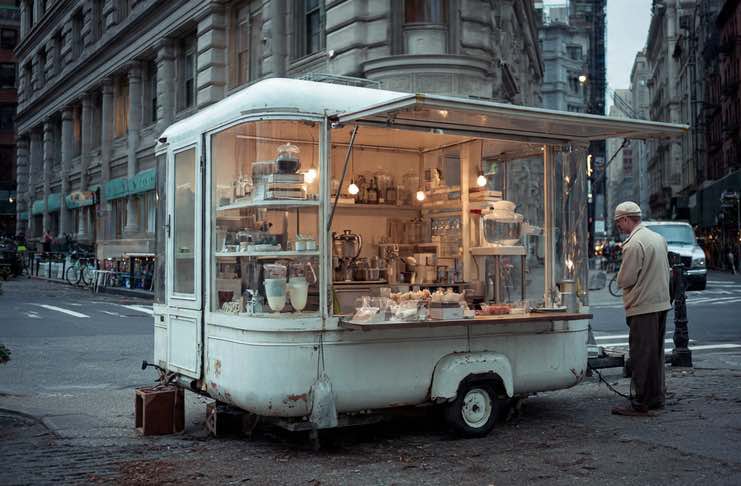
Mobile sellers, food cart vendors, and street vendors tend to have small, compact work areas with very limited space for the equipment they are using. Their carts need to be organized, safe, as well as easily maneuverable to provide an efficient work environment; however, their daily tools and supplies tend to pile up quickly. The majority of them will utilize storage solutions available outside of their work area to store any items that may be needed at any given time, but would take up too much room in their workspace if they were kept on the cart. In this post, as part of our food business hacks and tips, we’ll explore why many food vendors rely on outside space to keep their carts and food trucks running smoothly.
By maintaining only those items that are considered necessary on their carts at any given time, vendors can move faster, eliminate clutter from their workspaces, and reduce the amount of stress associated with keeping track of excessive tools. Ultimately, this creates a more streamlined working environment that allows vendors to maintain high levels of productivity during peak hours while also ensuring that their workplace is consistently clean and professional.
FAQ for Vendors Who Need Extra Space
Many mobile sellers search for question keywords when exploring ways to keep their carts organized and efficient. Because carts have limited room, vendors often run into challenges with crowding, storage, and daily preparation. For example, many of the food vendors we know in Bellport, NY, turn to smarter space solutions rather than paying for larger, more expensive work areas. If you’re a mobile food vendor or street seller operating in Bellport, one practical option is to look into self storage near Bellport as a flexible way to manage overflow without overcrowding your cart.
How can extra storage help my cart run better?
Additional storage allows you to keep only the essentials in your cart while placing overflow items somewhere safe and accessible. This reduces clutter and speeds up setup time.
What should I store off the cart to save space?
Most vendors store bulk ingredients, cleaning supplies, spare tools, packaging materials, and backup stock offsite. Keeping these off the cart leaves more room for daily essentials.
Why do vendors rely on outside space?
It helps maintain a clean, organized work area while preventing heavy loads and avoiding wear on the cart. It also supports faster restocking and a more professional appearance.
Watch this video for some tips on saving space in your food truck:
Fast Tips for Smoother Vendor Cart Operation
Vendors who succeed with limited space often build simple habits that keep their carts tidy and easy to manage. These small steps create a cleaner workflow and reduce stress during busy hours.
- Keep only essential items in the cart.
- Use labeled bins for daily tools.
- Store backup supplies offsite.
- Create a restocking routine.
- Clean and reset your cart every evening.
- Rotate inventory weekly to avoid buildup.
These habits help vendors stay organized and maintain a steady flow of service throughout the day.
Before you begin, check how much space your cart actually needs for daily operations. After you create your routine, refine it weekly to match your business pace.
Brief timeline:
Vendors usually start by removing non-essential items from the cart. Next, they group supplies into categories and store overflow off-site. As they refine their workflow, they assign fixed spots for tools and materials, making the cart easier to reset each day. Over time, this system keeps operations smooth and predictable.
Offsite Storage Benefits
Offsite storage gives vendors the freedom to keep their carts light, organized, and easy to manage. Since carts have limited room, holding every supply on-site can slow down daily operations and make the workspace feel crowded. Offsite storage provides a clean, secure place to keep surplus inventory, seasonal tools, or backup equipment without overwhelming the cart. This helps vendors restock quickly, maintain a more polished appearance, and reduce the physical strain of pushing or transporting heavy loads through busy areas.
How to Choose Useful Offsite Space
A helpful offsite location should be nearby, secure, and easy to access before and after business hours. Vendors benefit most when the space is organized and supports quick loading and unloading. Practical checklist: pick a location close to your daily route, label shelves or bins for fast retrieval, separate daily essentials from long-term supplies, keep a small inventory log, check stock levels weekly, and rotate items to prevent waste. These habits help maintain a smooth, dependable workflow.
View this post on Instagram
Why It Improves Efficiency
With fewer items to manage on the cart, vendors move faster, reset their workspace more easily, and maintain better control over their inventory.
Keeping Operations Smooth
Smooth operations depend on predictable routines, clear organization, and easy access to the right tools. When vendors avoid overcrowding their carts, they reduce mistakes, shorten prep time, and keep customers served without delays.
A Simple System That Works
One effective approach is to divide all supplies into two categories: daily-use essentials and support inventory. The essentials stay on the cart, while the support items stay offsite. This keeps the workspace clean and minimizes clutter.
A Practical Way Forward
By combining thoughtful cart organization with reliable offsite storage, vendors can work comfortably, move efficiently, and maintain consistent service throughout the day.
Stories From Real Vendors
The way a food vendor in New York City manages their daily operations has changed significantly since beginning to use an off-site storage solution. Prior to working with an off-site storage unit, the vendor filled their cart with many extra supplies, back-up ingredients, spare tools, and lots of bulky containers, all of which took time to set up each day; therefore, it decreased the vendor’s available working space while increasing the vendor’s stress level, especially during busy times. After securing a small off-site storage unit, the vendor was able to completely unload their cart of all non-essential items, which allowed them to immediately notice a much smoother workflow, cleaner surfaces, and much quicker restocking of products.
What Improved His Routine
Bulk ingredients, seasonal signage, back-up utensils, and other stockpiles were kept in the off-site space. Thus, he only had to take what he needed for his day with him when he loaded up his cart. Less weight made his workspace less cumbersome and much more user-friendly, and customers enjoyed the neater appearance of the work area. A basic system of labelling allowed him to quickly replenish his supplies without having to hunt through a mess for them. By implementing these changes, he was able to minimize his level of stress and maximize the amount of work he completed.
How His System Works
His method was simple, practical, and useful for any vendor.
Mini breakdown of steps: begin by removing all non-daily supplies from the cart, sort items into categories, place backup stock into labeled bins, choose an offsite space close to your route, create a restocking routine, keep fragile items in protective containers, maintain a weekly inventory list, and rotate supplies to prevent waste. These steps help control clutter and keep the cart running smoothly.
Final Thoughts
Using outside space allows vendors to keep their carts organized, comfortable, and easy to operate. When extra items are stored safely offsite, daily work becomes clearer and less stressful. By understanding why some vendors rely on outside space to keep their carts running smoothly, you can build a routine that supports speed, efficiency, and a more enjoyable working day.