

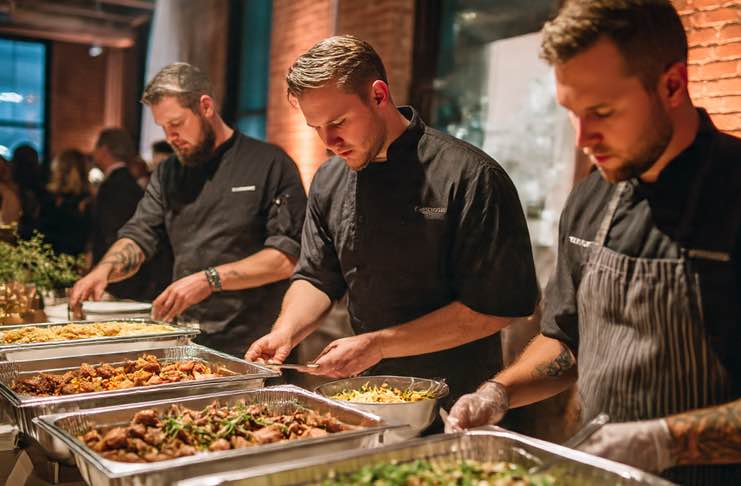
Running a profitable catering business in America is an art and a science. Especially in NYC.
It is about more than just preparing and serving great food. It is a culinary orchestra of people, processes, dishes, and logistics, and the performance should always be well-rehearsed.
Managing client expectations and keeping up with evolving food trends is one thing, but running a catering business depends on your ability to control multiple variables.
Below are five of the top tips for blending culinary passion with practical business insight to help you build a sustainable, customer-focused business that thrives in every season:
1. Perfect Signature Dishes
Your signature dishes are basically your culinary fingerprint – they are what make your catering business different (read better) than others.
The menu items and dishes that set your business apart and make your clients remember your name long after events will make or break your business. When you first start out, don’t be swayed into offering an extensive menu in an attempt to please everyone.
The most successful American catering businesses focus on mastering select dishes that define their brand’s style and identity. Start by identifying what makes your catering style unique and define your niche – after that, it’s all about crafting three or four signature dishes that embody that theme perfectly.
Our Experience
We were at a high-end corporate launch in Midtown last month, and the one thing everyone was talking about was the caterer’s miniature pastrami Reuben spring rolls. It’s proof that a truly unique signature bite is the quickest way to turn a new client into a lifetime fan—we’re still trying to figure out how they got the kraut so crispy.
2. Invest In Quality Equipment
For caterers, equipment is almost as vital as their chefs or their brand identity. From commercial ovens to transport vans, the right tools and equipment determine the quality of your food and the safety and efficiency of your operations.
Don’t overlook your cold beverage program—portable undercounter units keep bars and raw stations flowing without eating up truck space. For compact, high-output needs, consider ice makers for restaurants that fit beneath prep counters or back bars; look for models with 60–300 lb/day production, front ventilation for tight installs, and built-in storage so you’re never scrambling mid-service.
Choose brands and equipment that are known to withstand the heavy demands of a ruthless catering schedule. Look for items that can handle frequent use and be set up quickly.
Our Experience
At a massive street fair gig downtown, we watched a caterer nearly melt down because their portable fryer couldn’t hold temperature, completely ruining their mojo. Conversely, the successful pop-up next to them had a slick, heavy-duty induction setup that kept everything running like a well-oiled machine, no matter the volume.
3. Streamline Logistics
Logistics are the invisible engine that powers every flawless catering event.
You can make the best food in the industry, but if it doesn’t arrive on time, or your setup runs late, you can kiss future gigs goodbye. Streamline your logistics by designing a system where every detail operates like clockwork.
Here are some tips for renting refrigerated trucks so you can master cold chain compliance without breaking a sweat. For most caterers, cold chain items are part of the equation.
Transporting perishable items like seafood, dairy, and delicate desserts requires finesse – and a trusty rental. For many catering businesses, especially small to mid-sized ones, renting refrigerated vehicles is far more practical than buying them outright.
Our Experience
We’ve seen the chaos of a late delivery throw an entire Chelsea event into disarray, all because the transport wasn’t properly planned out. The best companies, though, like the team handling the Governor’s Island Festival, have the timing down to a science, with refrigerated trucks arriving precisely on time for immediate setup.
Watch this video to elarn more useful tips:
4. Build Strong Supplier Relationships
In the catering industry, your suppliers are the unseen backbone of your business.
From local farmers who supply your fresh produce to the rental partners for crockery and cutlery, your suppliers directly influence your ability to cater events.
Building strong, long-term relationships with your suppliers will give your business the strategic advantage it needs to make your catering business profitable.
Our Experience
The best meals we taste, from the smallest Bronx bodega to the fanciest Manhattan gala, always come down to the quality of the raw ingredients. We recently covered a farm-to-table caterer whose unique microgreens and heritage pork were directly sourced from a single Long Island farm, which gave their dishes a flavor edge no one else could touch.
5. Leverage Digital Marketing
The food service industry is a competitive landscape. Whether you’re an experienced caterer to the stars or just starting out at food festivals, your digital presence determines how clients discover, connect with, and evaluate your business.
Leverage digital marketing, starting with a strong website that showcases your menu, pricing options, testimonials, and professional gallery imagery.
Our Experience
Finding the next great caterer often starts with a single scroll, which is why a lackluster website is basically losing money in this industry. The businesses we’re most excited to feature always have professional, mouth-watering gallery photos and easily searchable menus that make booking them an instant click.
Final Bite
Follow these five tips above for an actionable strategy that balances creativity with organizational skills to deliver memorable experiences to your clients with flawless execution.
Frequently Asked Questions (FAQ)
What is the biggest mistake new NYC caterers make?
The biggest mistake is usually trying to offer too much variety too soon. New caterers should focus on perfecting 3-4 core signature items that they can execute flawlessly and efficiently at high volume. Trying to be all things to all people drains resources and sacrifices quality.
Is it better to buy or rent catering equipment when starting out?
Rent, hands down. Especially for expensive, specialized items like refrigerated trucks or high-capacity ovens. Renting allows you to scale your equipment needs based on the size of the event and significantly reduces initial capital investment and maintenance costs.
How important are testimonials in digital marketing for a catering business?
They’re crucial. Potential clients in NYC rely heavily on social proof. A strong portfolio of professional images and several excellent, specific testimonials are often the deciding factor in securing a booking over a competitor.