
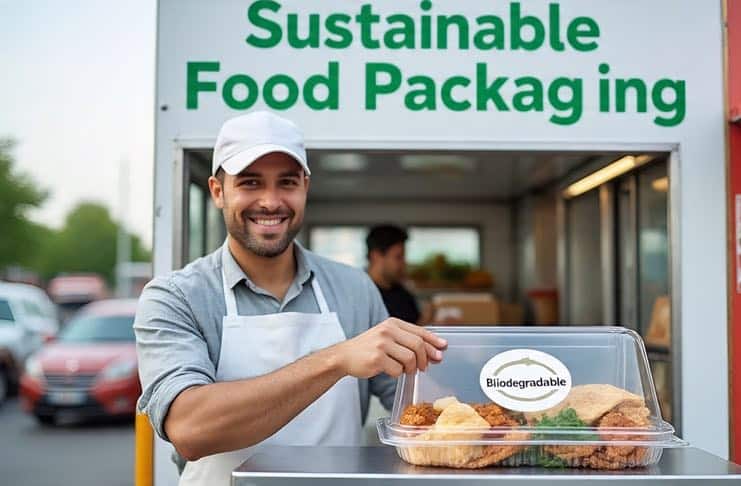
Sustainability is reshaping packaging design across the food industry. As a food blogger who’s been pounding the pavement in New York for a decade, I’ve seen firsthand how much pressure brands are under, not just from us consumers but also from new regulations. It’s not just about protecting the food anymore; it’s about protecting our planet too.
This article, as part of our food business tips, explores six trends that will shape the future of food packaging.
1. Biodegradable polymers
Biodegradable plastics made from plants are gaining traction. They break down under compost conditions within months. Some come from corn starch or sugarcane waste, and they reduce long-lasting landfill pollution. They also meet industrial composting standards worldwide. New regulations in Europe and North America are driving the adoption of these materials.
In addition, these materials still offer strong moisture and oxygen barriers. Performance now matches that of traditional polymers. Brands that use this kind of food packaging highlight these features on their labels, and adoption is growing fast among conscious consumers.
My experience
I remember stumbling upon a new food truck down in the Financial District a couple of years ago. They were serving up these incredible, juicy pork buns, and I noticed their takeout containers felt a little…different. Turns out, they were using compostable packaging made from corn starch. I asked the owner about it, and he just beamed, telling me how many customers thanked him specifically for choosing sustainable options. It definitely made a lasting impression, not just for the delicious food, but for their commitment to being green. It’s amazing to see businesses making these small but mighty changes that add up to a big difference.
2. Enhanced quality control
Technology now ensures food safety at every step. Vision systems scan packages on high-speed lines to detect shape, size, and color anomalies. Metal detectors sense ferrous and non-ferrous metals with precision.
Many brands integrate rejection systems in food processing to catch contaminants before they reach stores. These systems cut recall costs significantly. They also boost consumer confidence in brand quality. Integration is smooth thanks to modular designs. Additionally, data from inspections feeds analytics platforms for continuous improvement.
My experience
I once visited a local bakery that was expanding its packaged goods line. The owner, a meticulous baker, walked me through their new setup. They had just installed a system that would automatically reject any cookie packs that weren’t perfectly sealed. He proudly showed me how it caught even the smallest crimp in the packaging. “It’s like having an extra pair of eyes, only way faster,” he told me, explaining how it saved them from customer complaints and wasted product. Seeing that dedication to quality firsthand really builds trust, and it makes you appreciate the extra steps some places take.
3. Lightweight design
Reducing material weight cuts transport costs and emissions. Engineers design thinner films with stronger fibers. Advances now enable ultra-light pouches that resist tears. In addition, bag-in-box systems cut plastic use by almost half, and lightweight bottles use novel resins and ribbed shapes. Some designs employ lattice structures to maintain strength. These innovations support carbon footprint targets, and logistics overhead shrinks as a result.
My experience
I had a fascinating chat with the folks behind a popular cold-brew coffee brand that started as a small cart and now distributes widely. They showed me their new, super-thin plastic bottles and their biodegradable coffee cups. The owner explained that by just reducing the plastic thickness by a fraction, they were saving a massive amount on shipping over time. It was a classic example of how a tiny change in design can create a ripple effect, impacting not just their bottom line but also their environmental footprint. It really drove home the point that sometimes the simplest ideas have the biggest impact.
4. Smart packaging with IoT sensors
IoT sensors now track temperature and humidity inside packages. They send real-time data to cloud dashboards. Alerts notify operators of any anomalies during transit, which reduces spoilage and waste in cold chain logistics. Additionally, companies integrate sensors with QR codes for consumer transparency. Data analytics also helps to optimize shelf life predictions.
Future systems may use blockchain to verify storage conditions across the supply chain. Some solutions embed GPS sensors to track location. Pilot projects test sensor-enabled hotspots in remote areas.
My experience
I heard about a small, high-end cheese distributor that started using these sensors. Their products are incredibly delicate and need very specific temperatures. The owner told me a story about how a sensor alerted them to a minor refrigeration issue in a truck before the cheese was compromised. They were able to reroute the shipment and save a huge amount of product that would have otherwise gone to waste. It’s like having a superhero guarding your perishables – pretty amazing stuff for preventing those heartbreaking losses.
5. Refillable and reusable systems
Refillable containers are on the rise. Coffee, sauces, and beverages now come in returnable glass jars and bottles. Brands offer deposit refunds to encourage returns, and local drop-off points and automated kiosks simplify the process. This model cuts single-use plastic waste significantly. It also builds customer loyalty through repeat visits. Additionally, digital wallets track deposits and returns automatically. This trend builds circularity and community.
My experience
I remember seeing a little spice shop in the East Village that started offering a refill program for their jars. People absolutely loved it! Not only did they save a few bucks, but they felt good about not tossing another container. The owner told me it created this wonderful sense of community, with customers regularly popping in just to refill their favorite turmeric or smoked paprika. It’s a simple idea, but it really shows how much people want to reduce waste and how much closer it can bring a business and its customers.
6. Plant-based coatings
Natural coatings prolong shelf life by blocking moisture and oxygen. These come from chitosan, cellulose, or plant waxes. They are safe, edible, and applied via spraying or dipping. They replace synthetic varnishes that hinder recycling. Coatings maintain product visibility and texture. Additionally, they meet clean-label demands for simple ingredient lists. They also boost barrier properties on compostable packaging. This innovation extends freshness naturally.
My experience
I was at a specialty fruit stall in Chelsea Market recently, and the vendor was raving about how his avocados were staying perfectly ripe for longer. He mentioned they were using a new edible, plant-based coating. He said it was a game-changer for reducing spoilage and that customers were noticing the difference in freshness. It’s a subtle innovation, but when you think about the massive amount of food waste out there, even small solutions like this can have a huge impact. It’s impressive to see science and nature teaming up to keep our food fresher, longer.
Endnote
Packaging must evolve rapidly to meet strict sustainability goals. Brands should embrace these trends without delay. They will reduce waste, cut costs, and boost consumer trust. The future of food packaging is green, smart, and circular. Companies that adopt these practices will lead the market. Sustainability will remain central to packaging design and strategy.
- About the Author
- Latest Posts

Monti Lawson is a farmer, land steward, and community builder whose relationship with food goes all the way to the soil. The founder and lead land steward of Catalyst Collaborative Farm and site supervisor and farmer-in-residence at WILDSEED Community Farm & Healing Village in the Mid-Hudson Valley, Monti spent over a decade as a community gardener and urban farmer in New York City before putting down roots in upstate New York. Grounded in the principles of agroecology, his work centers justice and equity — reimagining food systems as pathways for healing and empowerment, not just sustenance. A graduate of Farm School NYC, he has welcomed hundreds of community members from NYC to the farm through camping weekends, community work days, and seasonal festivals. He is a member of Black Farmers United of New York State, the Northeast Farmers of Color Land Trust, and the NYS BIPOC Grower Support Network, and served as the inaugural USDA Farm Service Agency County Committee representative for Manhattan and Staten Island in 2023. At New York Street Food, Monti brings a grower’s perspective to the conversation about where food comes from, who tends it, and why that matters.