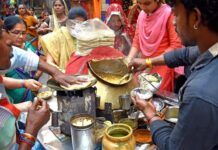


Stand in line for dumplings on Mott Street or a hot dog near Central Park, and you only see the final step. You hear the grill and watch your order land in a paper tray within a few minutes.
What you don’t see is the work that started hours, sometimes days, earlier. Ingredients have to be bought, moved, stored and prepped before a single customer shows up, and each of those steps follows rules that keep the food safe to eat.
The day often starts at a wholesale market
Much of the fresh food sold in New York passes through the Hunts Point Food Distribution Center in the Bronx. According to the New York State Comptroller, about 12 percent of all food in the city goes through the center, including around 45 percent of the fish and roughly a quarter of the produce. Independent restaurants make up nearly half of its customers. Smaller operators also buy from restaurant suppliers or specialty grocers, depending on what is on the menu.
Getting that food from the market to a kitchen is regulated too. Under the FDA’s sanitary transportation rule, shippers and carriers have to follow practices such as keeping food properly refrigerated and cleaning vehicles between loads. For a vendor picking up a few cases of chicken, the same logic applies on a smaller scale: cold food goes into a cooler, not the back seat on a hot afternoon. Watch this video to get a glimpse of one of NYC’s wholsale food markets:
Storing ingredients as the business grows
Storage becomes a bigger question once a business starts to grow. A food truck may turn into a catering company, or a small sauce maker may start supplying local stores, and buying flour or rice in small sacks stops being practical. Many suppliers then switch to big bags, also called bulk bags or FIBCs, which hold far more than a regular sack and can be fitted with an inner liner to keep out moisture and dirt. Fresh produce such as potatoes and onions needs a different approach, because it has to breathe during storage and transport, and NNZ supplies ventilated bulk bags with open areas that let air move through. Whatever the packaging, it is worth checking that the bag suits the product and meets the right food safety requirements.
Inside the storeroom, most operators work on a first in, first out basis. Older stock gets used before new deliveries, and containers are labeled with dates so nothing sits forgotten at the back of a shelf. Dry goods stay off the floor and away from cleaning supplies.
Prep happens at the commissary
In New York, a food cart is not a kitchen on its own. The NYC Health Department requires permitted carts and trucks to be cleaned and stored at an approved facility, usually a commissary or depot, and anyone working on a cart needs a mobile food vendor license and must pass a food protection course.
The commissary is where most of the prep work happens. Onions get sliced for hot dog carts, chicken is marinated for halal platters, sauces are cooked in large batches and dumpling fillings are mixed and folded by hand. Much of that work involves sharp knives in tight spaces, which is why knife safety for food truck operators deserves as much attention as the recipe itself. Watch this NYPost video to get a glimpse:
Good prep also follows the four steps to food safety promoted by the CDC: clean, separate, cook and chill. In practice, that means washing hands and surfaces often and using separate cutting boards for raw meat and vegetables.
Keeping food out of the danger zone
Temperature runs through every step. The USDA describes the range between 40°F and 140°F as the danger zone, where bacteria grow fastest and can double in number in as little as 20 minutes. Hot food should stay at or above 140°F and cold food at or below 40°F.
On a summer day in Midtown, that is harder than it sounds. Vendors rely on ice and insulated coolers for cold items and on steam tables for cooked food. A probe thermometer is the only reliable way to know what is happening inside a piece of chicken, and learning how to use a meat thermometer properly is one of the simplest habits a vendor can build.
From setup to the serving window
Before the first customer arrives, the cart is loaded with prepped ingredients and fresh water, then driven or towed to its spot. Most vendors cook in small batches during the lunch rush, so food stays fresh and nothing sits in the warmer for too long. Foil wraps and lidded containers hold heat and keep sauces from soaking through, which is why packaging affects the quality of NYC street food more than most customers realize.
Behind the scenes, good vendors also keep track of where their ingredients came from. The city requires food to come from approved sources, and records of suppliers and delivery dates make it far easier to act quickly if a product is ever pulled from the market. Larger operators often put a simple food recall response plan in writing so everyone on the team knows what to do.
So the next time a dumpling cart on Mott Street hands over your order in under a minute, remember that the speed was planned long before you joined the line. Sourcing, storage, prep and temperature control all happened out of sight, and they are the reason the food tastes right and is safe to eat.