
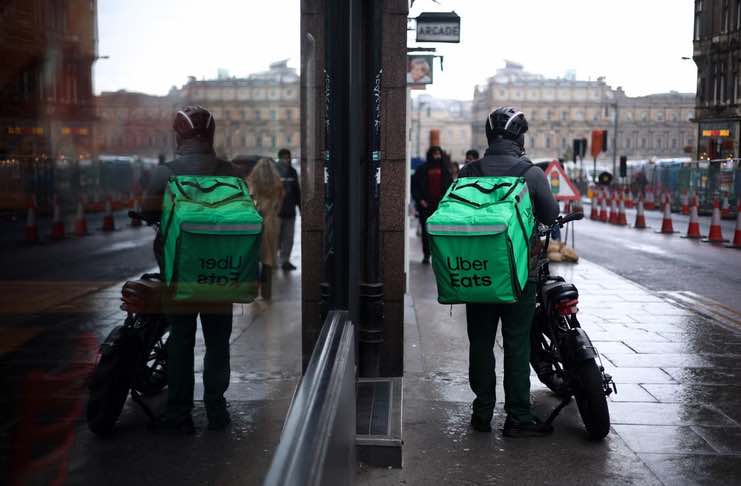
Food delivery runs on minutes, not hours. A ten-minute delay on one order can throw off the next five stops on a route. In a dense market like New York, that ripple effect eats into margins fast for restaurants and delivery operators.
Efficiency isn’t about rushing drivers. It’s about removing the friction that slows every step between the kitchen and the customer’s door.
Why Delivery Efficiency Actually Matters
Last-mile delivery is the most expensive part of the entire food supply chain. It now accounts for 53% of total shipping costs, up from 41% in 2018, according to Capgemini Research Institute and Insider Intelligence. That jump is driven by rising labor costs, fuel prices, and customer expectations around speed.
For a restaurant running its own delivery fleet, that means small inefficiencies compound quickly. A single missed turn or bad batch decision can cost more than the delivery fee covers.
Build Routes Before the Order Leaves the Kitchen
Route planning should happen before food hits the bag, not after a driver is already on the road. Static routes based on guesswork don’t hold up against real traffic, construction, or double-parked delivery trucks.
Dynamic routing tools recalculate in real time. They factor in traffic patterns, one-way streets, and delivery windows already promised to other customers. This is where good courier delivery software makes a measurable difference. It assigns orders based on driver location, vehicle capacity, and estimated prep time, not just proximity.
Use Batching Without Sacrificing Food Quality
Batching multiple orders into one trip cuts cost per delivery. It also introduces risk. Cold fries and soggy packaging kill repeat business faster than a slow delivery does.
Batching works when three conditions line up:
- Orders are heading in the same general direction
- Prep times are close enough that food doesn’t sit
- Packaging can hold heat and structure for the extra minutes in transit
If any one of those fails, split the batch. A slightly higher delivery cost beats a one-star review about cold food.
Fix the Handoff Between Kitchen and Driver
Most delays don’t happen on the road. They happen in the two or three minutes between an order being ready and a driver actually leaving with it.
Kitchens that stage orders by pickup time, rather than by order time, cut this dead time significantly. A driver arriving five minutes early to a kitchen that isn’t ready loses that time. A driver arriving five minutes late to food that’s been sitting loses food quality instead.
Digital pickup queues solve this. Drivers get a real-time status update instead of walking in and asking the counter what’s ready.
Track Delivery Windows, Not Just Delivery Times
A lot of operators measure average delivery time and stop there. That number hides more than it shows. A 30-minute average can still mean 20% of orders arrive late enough to trigger complaints.
Delivery windows matter more than averages. Track the percentage of orders delivered within the promised window, not just how long deliveries take on average. This single metric surfaces problems that averages smooth over, like a specific zone that consistently runs late or a time block where drivers are stretched too thin.
Watch this video for some more insights and tips:
Give Drivers Fewer Decisions to Make
Every decision a driver has to make on the fly adds seconds. Multiply that across a shift, and it adds up to real delay.
Clear, single-step navigation instructions beat general map apps for last-mile stops. Pre-loaded parking notes, building entry codes, and drop-off preferences remove guesswork. Drivers who don’t have to call the restaurant or the customer mid-route complete more deliveries per hour.
Measure What Actually Matters
Efficiency gains don’t stick unless someone tracks them. The operators who improve fastest watch a small set of numbers weekly:
- On-time delivery percentage
- Average prep-to-pickup time
- Deliveries completed per driver per hour
- Order accuracy after handoff
These four numbers tell you more than a dozen vanity metrics combined. They point directly to where the process breaks.
The Bottom Line
Delivery efficiency isn’t one big fix. It’s a series of small corrections: better routing, cleaner handoffs, smarter batching, and metrics that reflect what customers actually experience. Restaurants that treat delivery as a system, not an afterthought, keep food quality high and costs under control at the same time.
- About the Author
- Latest Posts

Monti Lawson is a farmer, land steward, and community builder whose relationship with food goes all the way to the soil. The founder and lead land steward of Catalyst Collaborative Farm and site supervisor and farmer-in-residence at WILDSEED Community Farm & Healing Village in the Mid-Hudson Valley, Monti spent over a decade as a community gardener and urban farmer in New York City before putting down roots in upstate New York. Grounded in the principles of agroecology, his work centers justice and equity — reimagining food systems as pathways for healing and empowerment, not just sustenance. A graduate of Farm School NYC, he has welcomed hundreds of community members from NYC to the farm through camping weekends, community work days, and seasonal festivals. He is a member of Black Farmers United of New York State, the Northeast Farmers of Color Land Trust, and the NYS BIPOC Grower Support Network, and served as the inaugural USDA Farm Service Agency County Committee representative for Manhattan and Staten Island in 2023. At New York Street Food, Monti brings a grower’s perspective to the conversation about where food comes from, who tends it, and why that matters.