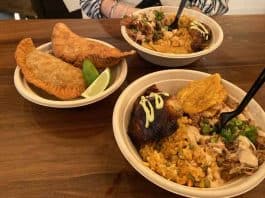

New York City has never been a place where people wait for perfect conditions. If you’re hungry, you eat. If you’re busy, you grab something on the go. If it’s midnight and you’re standing under the glow of a taco truck in Jackson Heights, you don’t overthink it, you order.
Street food is immediacy. It’s flavor without ceremony. It’s lunch in five minutes flat between meetings or a late-night bite after a long shift.
But as the city evolves, so do the people eating on its sidewalks. Today’s New Yorkers are more health-aware than ever. Many are managing dietary restrictions, tracking macros, watching sodium intake, or navigating chronic conditions. And yet, they’re still lining up at halal carts and dumpling windows.
The question isn’t whether street food fits into a structured diet. It’s how people make it work.
The Rise of Intentional Ordering
There was a time when street food meant indulgence, period. Lamb over rice with extra white sauce. A paper boat of loaded fries. A sugar-dusted funnel cake at a night market.
That indulgence hasn’t disappeared. But it now exists alongside awareness.
More customers are asking for sauce on the side and skipping the soda. Swapping fries for salad when the option exists. Vendors have noticed. Many carts now offer grilled chicken alongside fried options. Fresh vegetable toppings are more prominent. Portion customization is increasingly normal. Street food remains bold, but flexibility has entered the equation.
Watch this video of one of NYC’s most legendary street food offerings, grilled chicken (among others):
Vendors Are Adapting, Too
Street vendors operate in a competitive ecosystem. They respond quickly to demand. As more customers prioritize dietary preferences, gluten-free, low-carb, vegetarian, and reduced sugar, menus quietly evolve.
It’s subtle. A taco truck offering lettuce wraps. A juice stand adding unsweetened options. A halal cart willing to customize proportions.
Check out these lovely lettuce wraps:
The beauty of street food has always been its adaptability. Vendors cook inches away from their customers. Adjustments are conversational. There is room for modification. That immediacy makes it uniquely suited for special diets, if diners are willing to communicate.
Medical Support in a Fast-Moving Food Culture
In New York, meals are rarely solitary. Lunch is grabbed between meetings, dinner happens at a night market, and spontaneity is part of the city’s rhythm. But health goals don’t disappear just because the setting is casual.
For some New Yorkers managing weight or metabolic health, structure comes from beyond the plate. Telehealth platforms like https://tmates.com/ are reshaping access to personalized care by offering clinician-guided treatment and compounded medications without traditional waitlists or insurance barriers.
In a city built on momentum, that flexibility matters. Instead of avoiding street food culture altogether, individuals can align their medical support with real-world eating habits, from rushed lunches to shared late-night bites.
The result isn’t isolation from food culture. It’s participation with a plan.
Navigating Blood Sugar on the Sidewalk
For New Yorkers managing diabetes or blood sugar sensitivity, the stakes are higher. Carbohydrate-heavy street staples, rice platters, tortillas, and bao buns can spike glucose levels quickly.
Yet avoiding the entire scene isn’t the only solution.
Working with a nutritionist specializing in diabetes can help individuals understand how to balance macronutrients even in fast-paced environments. Pairing protein with carbohydrates, moderating portion sizes, and understanding glycemic load can turn a street meal from risky to manageable.
For example, choosing grilled meat over fried, asking for half rice and extra salad, or splitting a large portion with a friend are small adjustments that make a significant difference. Awareness, not elimination, becomes the strategy.
In a city where eating out is part of daily life, that nuance matters.
The Balance Between Flavor and Function
Street food’s power lies in its intensity, spice, salt, texture, and heat. That sensory punch is part of its identity. But balance is possible.
For someone managing blood sugar, adding extra vegetables to a rice bowl slows digestion. Choosing water over sweetened drinks reduces hidden sugars. Opting for smaller portions maintains the experience without overwhelming the body.
Even dessert isn’t off the table. It may simply mean sharing rather than solo ordering. New Yorkers are pragmatic. They understand trade-offs. The modern approach isn’t restriction; it’s calibration.
Education Meets Experience
One of the most important shifts in recent years is access to information. Nutritional awareness is no longer confined to textbooks or medical offices. People read labels. They understand ingredients. They track patterns.
It’s one thing to understand carb counts in theory; it’s another to apply that knowledge while standing at a Midtown food cart during lunch rush. But that’s where practice becomes empowerment.
Street food becomes less intimidating when you know how to assess it: What’s the protein source? How much added sugar? Can I adjust the portion? Is there fiber in this meal? Knowledge turns impulse into intention.
The New Street Food Mindset
New York’s food culture thrives because it evolves. The city absorbs trends, adapts quickly, and reflects its population’s changing values.
Wellness is now part of that culture. Not in a preachy way. Not in a juice-cleanse-on-every-corner way. But in a practical, lived-in way.
The same person who grabs a bacon, egg, and cheese at 8 a.m. might choose a salad-heavy bowl at 1 p.m. The diner who orders tacos at night might balance the next day differently. It’s fluid. Street food doesn’t demand perfection. It invites participation.
Making It Work
The myth is that special diets require isolation from spontaneous food culture. In reality, New Yorkers are proving otherwise. They ask questions. They customize orders. They consult professionals. They coordinate socially. They adjust portions.
And they keep showing up. Because the essence of New York street food isn’t excess. It’s access. It’s the ability to eat well, quickly, and on your own terms, even when those terms include managing health conditions.
Under the steam of a halal cart or the bright lights of a night market, there’s room for indulgence and intention to coexist. That’s the quiet evolution happening on the sidewalks of this city. And like everything else in New York, it works, because people make it work.

Anthony is a passionate food enthusiast living in the bustling food scene of New York City. With an insatiable curiosity for culinary exploration, he loves exploring the city’s diverse eateries, seeking out unique flavors and sharing his gastronomic adventures with fellow food lovers.