Image by lmamun4 on Freepik
New York City does not sleep. It simmers.
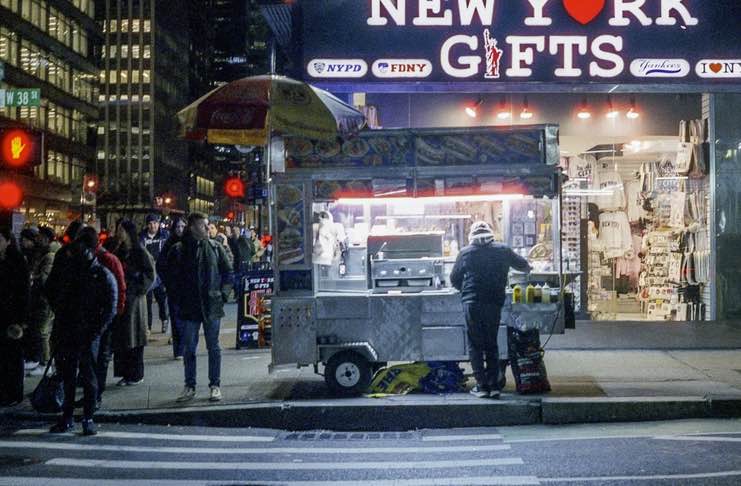
At 6:00 a.m., coffee carts hiss to life along Lexington Avenue. By noon, halal platters sizzle on Midtown corners. At midnight, taco trucks glow under fluorescent bulbs in Queens. And at 3:00 a.m., someone is still ordering dumplings from a window that has never truly closed.
The street food scene mirrors the city itself: fast, restless, relentless. But beneath the steam and stainless steel lies a quieter story, one about endurance, recovery, and the subtle wellness rituals that keep this ecosystem moving.
Because behind every perfectly charred skewer and expertly assembled gyro is someone who has been on their feet for hours.
The Energy Equation
Street food vendors operate on extreme schedules. Many begin prep before sunrise. Others close well after bars empty. Shifts stretch long. Weather shifts abruptly. Regulations, supply runs, and unpredictable foot traffic add layers of complexity.
Watch this video to get a glimpse of how street vendors operate:
Historically, the solution was simple: caffeine.
New York runs on coffee, and nowhere is that more visible than on its sidewalks. Espresso shots between lunch rushes. Paper cups refilled during prep breaks. Cold brew bottles tucked into coolers.
But in recent years, the conversation around energy has shifted. Instead of simply pushing through exhaustion, more hospitality workers, and increasingly, customers, are thinking about balance.
The question is no longer just “How do I stay awake?” but “How do I sustain this pace without burning out?”
Adaptogens Enter the Chat
Walk through certain food markets or specialty grocers in Brooklyn or the Lower East Side and you’ll see something new alongside cold brew cans and protein bars: adaptogenic blends.
Ingredients like L-theanine and ashwagandha, once confined to supplement shops, are now discussed casually among line cooks and food entrepreneurs. They’re added to matcha lattes, blended into smoothies, or taken before shifts that promise high stress.
The difference between calming focus and sedation matters when you’re managing a grill in 90-degree heat. That’s why discussions comparing L-theanine vs ashwagandha, such as those explored by Tabs, resonate in hospitality circles. One supports relaxed alertness; the other leans toward deeper stress modulation. For people working twelve-hour days, that nuance matters.
It’s not about trend-chasing. It’s about sustainability.
The Late-Night Consumer
Of course, it’s not just vendors navigating this pace. The customers who line up for birria tacos at 1:00 a.m. are often coming off their own long shifts, finance professionals, nurses, creatives, and rideshare drivers.
Street food satisfies something primal: immediate comfort. Spicy, salty, carb-forward relief from the day’s demands.
But as late-night dining culture evolves, so does what comes before and after it.
Some New Yorkers now think more intentionally about how they balance stimulation and rest. They’ll enjoy a lively dinner on the street, then shift gears once they get home, dimmer lighting, less screen time, and personal wind-down rituals that help signal the end of the night.
Street Food as Community Medicine
There is also something inherently restorative about the street food experience itself.
Waiting in line. Watching the choreography of a vendor assembling orders with speed and precision. The familiarity of a regular spot on the corner. The exchange of a few words, “extra sauce?”, that briefly punctuates the anonymity of city life.
Food has always been more than fuel here. It is punctuation in the rhythm of the day. And increasingly, the people behind the carts are as thoughtful about their own well-being as they are about flavor balance. Hydration matters. Breaks matter. Mental clarity matters.
It’s no coincidence that some vendors now stock herbal teas alongside energy drinks in their personal coolers.
Morning After, Morning Again
By dawn, the cycle resets. Bagel carts unfold. Coffee thermoses refill. Prep tables reappear as if they never left.
But the conversation around wellness continues quietly in the background. Fewer people are glorifying burnout. More are acknowledging limits. In a food culture once defined purely by hustle, there is a subtle but noticeable shift toward longevity.
It’s visible in menu evolution too. Alongside lamb over rice, you’ll now find green juices. Next to churros, maybe a fresh fruit cup. The city doesn’t abandon indulgence; it layers options. That layering reflects a broader mindset: intensity balanced with recovery.
The New Hustle
New York’s street food scene will never be slow. That’s not its character. The clang of spatulas and rush of lunch crowds are part of its identity.
But sustainability has entered the narrative. The modern hustle isn’t just about grinding harder; it’s about pacing smarter.
For some, that means exploring the differences between calming supplements before a shift. For others, it means creating a consistent nighttime routine after late service. For many, it means simply recognizing that high performance requires intentional rest.
The city still runs hot. The grills still flare. The lines still form. Yet behind the visible motion is an invisible recalibration.
Balance on the Sidewalk
Street food has always embodied immediacy. Quick bites. Quick exchanges. Quick fuel. Now, it also reflects something subtler: a generation learning how to endure without collapsing.
Whether through adaptogenic blends discussed by Tabs, structured wind-down routines, or simply more mindful pacing, New Yorkers are rewriting the script of what it means to thrive in a 24-hour city.
The sidewalk remains kinetic. The food remains bold. The hours remain long. But the people powering it are thinking more carefully about how to keep going, not just tonight, but next month, next year. And in a city that measures itself by stamina, that shift might be the most significant evolution of all.