

Last Updated: August 2026
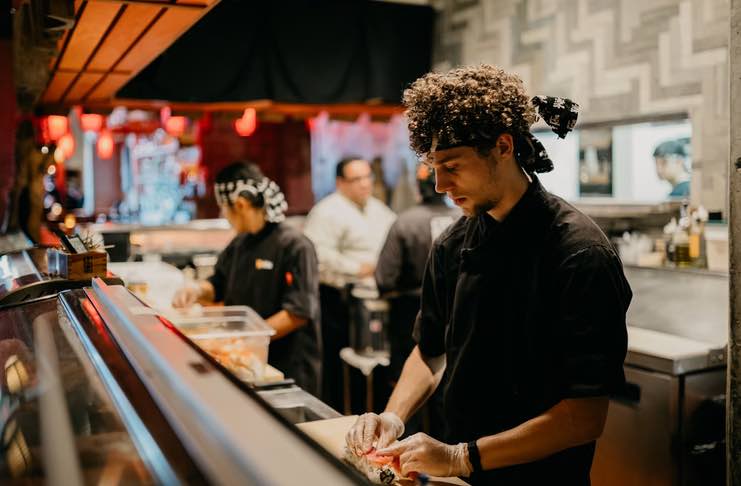
It is 9:40 pm on a Tuesday at a two AA Rosette restaurant off Fitzrovia, and the pass is quiet. Not slow-night quiet. Quiet the way a New York kitchen never is at 9:40 on a Tuesday, because in London the second seating hasn’t even sat down yet. A transplanted line cook from a Michelin-starred Flatiron kitchen stands there mid-service, checking his ticket rail twice because he can’t believe there are only four dockets on it.
Key Takeaway
NYC chefs moving to London don’t struggle with the cooking. They struggle with the pace, the formality of the brigade hierarchy, and a visa landscape that changed dramatically in July 2025, when chefs were removed from the UK’s Skilled Worker visa list entirely. Adjusting means slowing down service instincts built for a 200-cover Tuesday, relearning a more rigid chain of command, and mapping a realistic legal pathway before packing a single knife roll.
In our years covering NYC’s food scene, we’ve talked to enough line cooks, sous chefs, and kitchen managers who’ve made the jump across the Atlantic to know the culture shock is real, and it rarely shows up where people expect it to. It’s not the ingredients. It’s the rhythm.
What Actually Slows Down London Kitchens Compared to NYC?
London kitchens run on longer table turns, more formal service pacing, and a brigade structure that still leans on Escoffier’s original hierarchy more literally than most modern NYC kitchens do. Restaurants across the city, from Fitzrovia tasting-menu rooms to Borough Market gastropubs, build service around the assumption that a table will sit for two, sometimes three hours, not the 75-minute NYC-standard turn that keeps a Lower East Side kitchen’s ticket rail moving all night. Watch this video to get a glimpse of a Chef’s day at a London kitchen:
The brigade de cuisine system that still shapes British kitchens was formalized by Georges Auguste Escoffier at the Savoy Hotel in the 1890s, and its command structure (chef de cuisine, sous chef, chefs de partie, each locked to a specific station) is still taken more literally in London than in most NYC kitchens, where stations blur constantly out of staffing necessity. In a New York kitchen, the line between “your station” and “whatever’s on fire right now” barely exists. In a London brigade kitchen, that line is the whole point.
An NYC sous chef used to calling an audible mid-service (jumping onto garde manger because ticket times are climbing) will find that instinct reads as overstepping in a kitchen where the chef de partie owns that station, full stop, regardless of how backed up the pass looks.
What Does the Visa Reality Actually Look Like for NYC Chefs in 2026?
As of July 22, 2025, chefs are no longer eligible for the UK’s mainstream Skilled Worker visa route. The government raised the required skill threshold from RQF Level 3 (roughly A-level standard) to RQF Level 6 (degree level), and chefs, bakers, and pub managers were among the occupations dropped from the eligible list entirely, part of a wider removal of over 100 occupations from Skilled Worker eligibility.
Our Experience
We’ve spoken with NYC hospitality workers researching a London move since mid-2025, and the confusion is consistent: most assume the Skilled Worker visa still works for chefs the way it did pre-2025, because that was the standard advice for years. It isn’t anymore. As of this writing, the Migration Advisory Committee reviews the temporary shortage list on a rolling basis, and chefs are not currently on it.
The most Instagrammed career move in hospitality right now, quitting your NYC line to “stage in London,” is also the one nobody checks the paperwork on first, and that gap is where good chefs lose six months of planning.
London hospitality’s own labor numbers explain why this matters so much to operators: 63% of hospitality roles in London were held by non-UK employees as of 2024, the highest share of any sector-region pairing in the country. That dependency didn’t disappear when the visa rules tightened; it just got harder for individual chefs to navigate legally.
Real Talk: Where Does That Leave an NYC Chef Who Wants In?
- Map the visa landscape before the flight, not after. The Skilled Worker route closed for chefs in July 2025. The Youth Mobility Scheme remains open for eligible nationalities aged 18 to 35 and doesn’t require employer sponsorship, which makes it the more realistic near-term door for younger cooks.
- Know the full landscape of UK work visas, even the ones that don’t apply to you. The UK Seasonal Worker visa program covers an entirely different lane, horticulture and poultry production, not kitchen roles, and runs a capped annual quota. It’s not a chef pathway, but understanding exactly what it does and doesn’t cover is a fast way to learn how narrow and specific UK work-visa categories really are, which saves wasted research time on routes that were never going to apply.
- Slow your ticket-time instincts before you land, not during your first service. A three-hour table turn is not a slow night; it’s the room. Fighting that pace in your first week reads as impatience, not efficiency.
- Study the brigade chain of command like it’s a legal document. Station boundaries that flex constantly in NYC are rigid in a traditional London brigade. Learn who owns what before you touch someone else’s station, even to help.
- Build a stage network months in advance. Unpaid or low-paid trial shifts (stages) remain the most common way NYC cooks get a real read on a London kitchen before committing to relocate, and most placements happen through direct outreach and existing chef relationships, not job boards.
- Budget for a pay cut relative to the cost of living, not just the headline salary. Base salary, not tips or service charge, is what counts toward any visa salary threshold, and London rent eats a bigger share of a line cook’s paycheck than most NYC neighborhoods outside Manhattan’s most expensive corners.
Direct-Click Utility: NYSF Master Street Food Tracker Checklist
Planning any kind of career-driven food-industry move takes the same organizational muscle as tracking down the best vendors across five boroughs. Our NYSF Master Street Food Tracker Checklist is built for exactly that kind of methodical, borough-by-borough research, and the same framework works well for chefs mapping out kitchens, visa routes, and stage contacts before a big move.
Is London’s Kitchen Culture Actually Different, or Just Slower?
It’s both, and 2025 was the year the industry stopped pretending otherwise. Noma founder Rene Redzepi’s resignation, following reporting on decades of alleged abuse inside his Copenhagen kitchen, forced a public reckoning across European and British fine dining about when the traditional brigade’s command culture crosses into abuse, a conversation London kitchens are still actively having.
British food writers have long pointed to London’s own brigade lineage, from Marco Pierre White’s famously brutal Harveys kitchen to Gordon Ramsay’s television persona, as both the origin and the caricature of that intensity. An NYC chef expecting a gentler, slower London kitchen to also mean a gentler hierarchy is often wrong on the second half of that assumption, even as the industry works to reform it. Watch this video to get a glimpse:
While plenty of relocation guides will tell you London kitchens are simply “more relaxed” than New York, the honest version is that they’re more formal, not softer, and mistaking one for the other is how good NYC chefs end up blindsided in their first month.
Is This Worth It for a Chef Coordinating a Move With a Partner?
If you’re weighing this move alongside a partner’s career or a lease you’d have to break, the honest answer is: only if you’ve confirmed your visa route first. The Skilled Worker closure means a partner can’t lean on employer sponsorship the way couples planning a move in 2023 or 2024 could. The Youth Mobility Scheme, capped by age and nationality, is now the more realistic option for a lot of couples, which changes the whole timeline of the decision, not just the paperwork.
Our Verdict: What Most Relocation Guides Get Wrong
Our Verdict
Most guides written for chefs eyeing a London move treat this as a lifestyle story: slower pace, better markets, shorter shifts. The pace shift is real, but it’s downstream of two much bigger issues nobody puts in the headline: a visa system that closed the standard chef route in mid-2025, and a brigade hierarchy that’s more rigid than a New York kitchen even trains cooks to expect. Get those two things right first. The service pacing is the easy part to adjust to once you’re actually standing at the pass.
| NYC Habit | London Expectation |
|---|---|
| Jump stations mid-service when the pass backs up | Stay in your station; the chef de partie owns it |
| 75-90 minute table turns | Two to three hour table turns as the norm, not the exception |
| Skilled Worker visa as the default sponsorship path | Youth Mobility Scheme or employer-specific routes since July 2025 |
| Fluid, flat-ish informal chain of command under pressure | Formal brigade hierarchy, escalation goes through the sous chef |
| Reader Type | Worth It? | Why |
|---|---|---|
| Line cook, 22-30, no dependents | Yes | Likely Youth Mobility Scheme eligible; lowest-friction path right now |
| Sous chef planning a partner-coordinated move | Depends | Confirm both partners’ visa routes before committing to a lease or notice date |
| Executive chef expecting employer sponsorship | Depends | Sponsorship routes for chefs narrowed sharply after July 2025; verify with the specific employer first |
| Cook over 35 without an existing UK employer contact | No, not yet | Youth Mobility Scheme age cap applies; mainstream sponsorship route is currently closed for chefs |
What Should NYC Chefs Actually Do Before Booking the Flight?
Confirm your specific visa eligibility with a qualified immigration adviser before making any irreversible decisions, not after. That single step resolves most of the anxiety that otherwise gets projected onto the kitchen itself.
Beyond the paperwork, the adjustment that actually matters happens on the line. As we’ve noted in our own coverage of how immigrant labor built the backbone of NYC’s halal cart scene, the professionals who make an unfamiliar food system work aren’t the ones who force their old rhythm onto a new one, they’re the ones who watch first and adapt second. That same instinct is what separates NYC chefs who thrive in a London brigade from the ones who spend six months fighting a pace they were never going to change. The same holds true anywhere a chef arrives as the outsider, whether that’s a Jackson Heights momo stall or a Fitzrovia tasting counter; the kitchens documented in our NYC Halal Cart Guide run on the same principle: earn the room before you try to change it.
As Time Out reported heading into 2026, chef-driven openings across major cities are increasingly built around intimate, regulars-first formats rather than buzz, a shift that mirrors what’s happening in London’s dining rooms too. And per the Michelin Guide’s own 2026 reporting on new London restaurant openings, big-name chefs are still actively expanding into the city, which means demand for skilled kitchen talent isn’t slowing down, even as the legal path to fill those roles has narrowed.
Frequently Asked Questions
Can NYC chefs still get sponsored for a UK work visa?
Not through the standard Skilled Worker route as of July 22, 2025, when chefs were removed from the eligible occupation list after the skill threshold rose to RQF Level 6. Chefs already holding a Skilled Worker visa retain transitional extension rights, but new applicants in the chef occupation are not currently eligible through that route.
What’s the most realistic visa route for a young NYC line cook right now?
The Youth Mobility Scheme, open to eligible nationalities aged 18 to 35, doesn’t require employer sponsorship and remains the most accessible near-term option for cooks early in their careers.
Does the UK Seasonal Worker visa apply to chefs?
No. The Seasonal Worker visa covers horticulture and poultry production roles only, under a capped annual quota, and does not include kitchen or chef positions.
Why do London kitchens feel so much slower than NYC kitchens?
London dining rooms typically build service around two to three hour table turns rather than NYC’s faster 75 to 90 minute standard, and the brigade system’s rigid station boundaries slow decision-making compared to the more fluid role-sharing common in New York kitchens.
🔥 Don’t Waste a Single NYC Meal
Tired of corporate listicles and tourist traps? Add New York Street Food as a Preferred Source on Google. It forces Gemini and Google’s AI Overviews to prioritize our boots-on-the-ground cart reviews and sensory tasting notes whenever you search for food.