
Whisky doesn’t have to wait until dessert. A light, citrus-led single malt can work with roast chicken or fish, while bourbon, sherry-cask whisky and peat each suit a different part of a home cook’s repertoire. In 2025, Scotland’s Scotch whisky exports were worth £5.36 billion, with 43 bottles shipped every second to more than 160 markets around the world.
This independent comparison considers five bottles by flavour range, food compatibility, serving flexibility, catalogue presence and practical limitations. The aim is to cover the kinds of meals people cook most often, with each bottle included for a specific type of food.
Comparative Overview
The table compares the retailer and five bottles by origin, flavour profile and most useful role at the table. The entries cover different kinds of food, so a lightly fruity malt and a smoky island whisky are not expected to suit the same meal.
| Entry | Category | Origin | Main Services / Flavour Profile | Best For |
| Punin Wine | Specialist retailer | Limassol, Cyprus | Multiple styles with filters by origin, age, cask and strength | Comparing bottles before choosing |
| Glenmorangie The Original 12 Years Old | Highland single malt | Scotland | Citrus, peach and vanilla | Chicken, white fish and light sauces |
| Redbreast 12 Year Old | Single pot still Irish whiskey | Ireland | Fruit, spice, sherry and toasted wood | Roast pork, poultry and mature cheese |
| Bulleit Bourbon 10 Year Old | Kentucky straight bourbon | USA | Oak, vanilla, dried fruit and spice | Glazed meats, barbecue and roasted vegetables |
| The GlenDronach 12 Year Old | Sherry-cask Highland single malt | Scotland | Raisin, orange, chocolate and warm spice | Braises, mushrooms and hard cheese |
| Talisker 10 Year Old | Peated island single malt | Scotland | Peat smoke, maritime salt, dried fruit and pepper | Grilled oily fish and charred food |
The table is only a first pass. The sections below explain what each bottle does well and when another style makes more sense.
1. Punin Wine
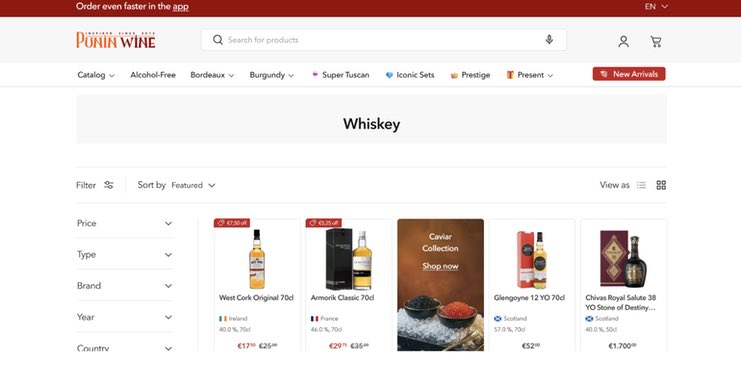
Punin Wine gives home cooks in Cyprus a practical way to compare different whisky styles before choosing a bottle for a particular meal. Its whisky catalogue brings Scotch, Irish, American and Asian bottles together and allows users to narrow the selection by origin, age, cask and alcohol strength. This is useful when the main question is not which bottle has the highest price or oldest age statement, but which one suits the food.
Best For: Home cooks in Cyprus who want to compare several whisky styles online or in person before buying bottles for different meals.
Company Snapshot: Founded in 2012, Punin Wine operates two boutiques with tasting areas in central Limassol. It also has an online shop and mobile app. The wider selection covers wine, Champagne, spirits, food, cigars and accessories.
Main Services: The catalogue filters translate into practical pairing choices. Citrus and vanilla usually suit lighter poultry or fish. Sherry-cask whisky brings dried fruit and spice to braised dishes, while bourbon works with caramelised surfaces. Peated whisky needs food with enough flavour to stand beside the smoke. Buyers can compare these categories online or ask for advice in one of the Limassol boutiques.
Advantages: The variety matters more than the number of bottles alone. A light Highland malt, Irish pot still whiskey, bourbon, sherry-cask Scotch and smoky island whisky all serve different purposes at the table. Comparing them in one catalogue makes it easier to see whether two bottles genuinely cover different meals. Cask type, strength and origin are also more useful for pairing than a simple division between cheaper and more expensive whisky.
Limitations: A retailer cannot know how sweet, salty or heavily seasoned a particular recipe will be. Product descriptions and filters provide a shortlist, but the final decision still depends on the food. Stock, bottle formats and prices may also change, so availability should be checked before planning a dinner around one product.
2. Glenmorangie The Original 12 Years Old
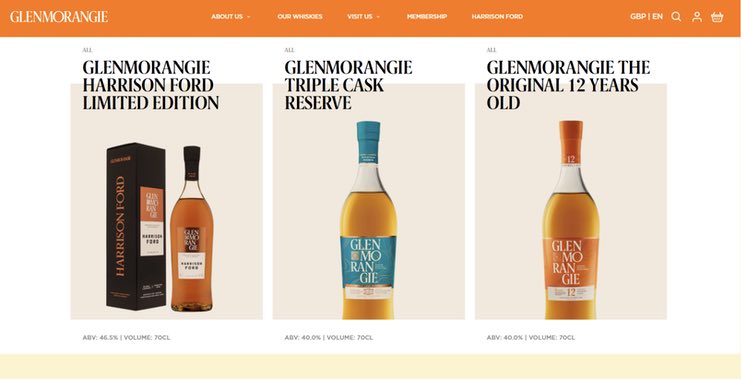
Glenmorangie The Original 12 takes the lightest role in this group. Citrus, peach and vanilla allow it to sit beside fish, poultry and vegetables without taking over the meal. It makes most sense when the cooking is fairly restrained and obvious peat smoke would be a distraction. Read more about it on Reddit.
Best For: Roast chicken, grilled white fish, shellfish, pork tenderloin and dishes built around citrus, herbs or a light cream sauce.
Bottle Snapshot: Glenmorangie The Original is a Highland single malt aged for 12 years. Citrus and ripe peach sit at the centre of the profile, followed by soft vanilla and oak. It is light enough for the beginning of a meal but has more sweetness than a very delicate aperitif-style whisky.
Pairing Range: Lemon roast chicken is an easy place to start. The citrus in the glass follows the seasoning, while vanilla fits the browned skin. The same bottle can work with trout, scallops, pork loin, squash risotto or mild soft cheese. A little water can help if the alcohol begins to crowd the food.
Advantages: The flavour is clear and approachable without becoming bland. One bottle can cover poultry, fish, vegetables and lighter desserts, which makes it the broadest option in the group.
Limitations: Strong chilli, blue cheese and heavy barbecue smoke can bury the fruit. A very sweet glaze may also make the finish seem drier than expected.
3. Redbreast 12 Year Old
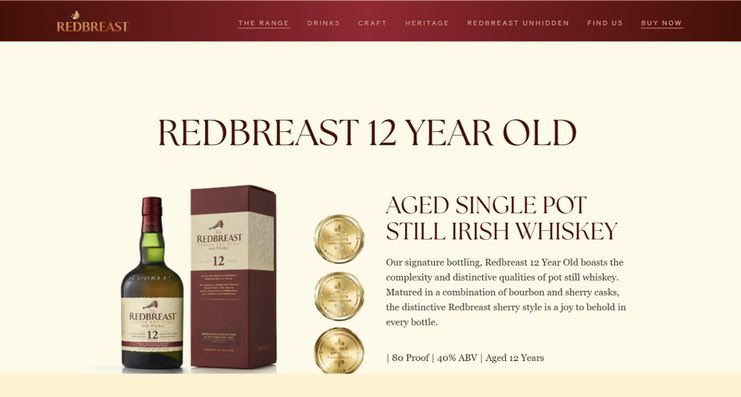
Redbreast 12 suits meals that need more body than a light malt can provide but would be distracted by peat smoke. Its fruit, spice and sherry influence work particularly well with roast meat, mushrooms and mature cheese. It can also stay on the table when dinner moves towards a fruit-based dessert.
Best For: Roast pork, duck, chicken thighs, mushroom dishes, mature cheddar and desserts based on apples, nuts or dried fruit.
Bottle Snapshot: Redbreast 12 is an Irish single pot still whiskey made from malted and unmalted barley and triple distilled in copper pot stills. Its profile combines ripe fruit, warming spice, sherry influence and toasted wood. The texture is fuller than that of Glenmorangie The Original.
Pairing Range: That extra weight suits roast pork with apples, duck with fruit sauce and chicken cooked with butter or mushrooms. After the main course, it can accompany mature cheddar, fruit cake or bread pudding. The spice is noticeable, but there is no peat smoke to divide the table.
Advantages: The fruit and spice work with savoury dishes as well as dessert. Its rounded texture also holds up beside roast meat and richer sauces without needing heavily charred food.
Limitations: Delicate shellfish, salads and simply steamed fish can disappear beside it. Fresh chilli may make the alcohol and pot still spice feel sharper.
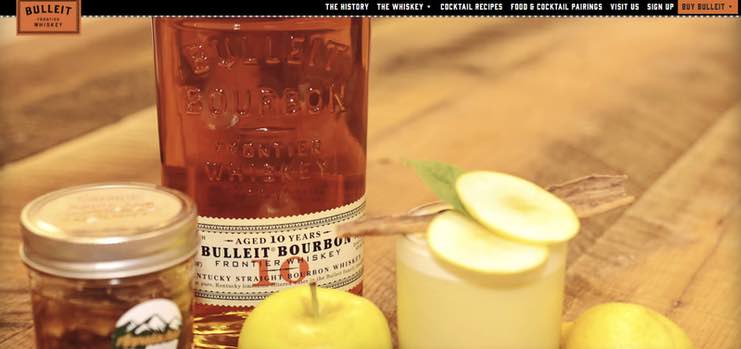
4. Bulleit Bourbon 10 Year Old
Bulleit Bourbon 10 is most comfortable with browned, roasted and caramelised flavours. Vanilla and oak connect naturally with glazed meat and barbecue, while the rye-led spice prevents the whiskey from tasting simply sweet. It also works with roasted vegetables, which makes it useful beyond meat-focused meals.
Best For: Glazed ham, burgers, barbecue, roast carrots, sweet potatoes, cornbread and desserts based on apples, pecans or caramel.
Bottle Snapshot: Bulleit Bourbon 10 Year Old is a Kentucky straight bourbon with mature oak, vanilla, dried fruit, spice and a smoky finish. Its noticeable rye character brings dryness and spice to the profile.
Pairing Range: Glazed pork, grilled beef, sticky ribs and roasted root vegetables all provide the browned flavours this bourbon needs. At dessert, apple pie and pecan tart make more sense than something very light or sharply acidic. A small highball can make the whiskey easier to serve with a large barbecue plate.
Advantages: It can handle sweet and savoury flavours on the same plate. Oak and rye spice give grilled meat enough contrast, while vanilla works with glazes and roasted vegetables.
Limitations: Burnt edges and an already bitter sauce can make the oak seem severe. Very sweet glazes may leave the finish feeling unexpectedly dry.
5. The GlenDronach 12 Year Old
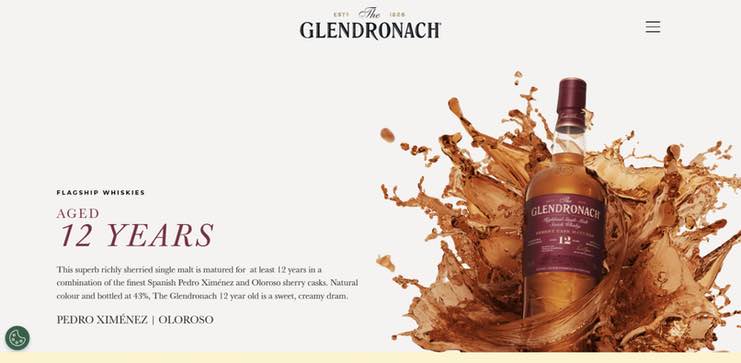
The GlenDronach 12 belongs with stews, braises, mushrooms and mature cheese rather than fresh or lightly seasoned food. Sherry-cask maturation brings dried fruit, chocolate, orange and baking spice, giving the whisky enough weight for slow-cooked dishes. The absence of peat keeps the focus on richness rather than smoke.
Best For: Beef stew, braised short ribs, duck, mushroom pie, hard cheese and desserts with dark chocolate, orange or dried fruit.
Bottle Snapshot: The GlenDronach 12 is a Highland single malt matured in Pedro Ximénez and Oloroso sherry casks. Its profile leans towards raisins, autumn fruit, chocolate praline, gingerbread, orange and warming spice. It is the richest unpeated Scotch in this comparison.
Pairing Range: Beef stew, braised ribs and mushroom pie can handle the dried fruit and spice. Roast duck also works when the sauce is not too sweet. Hard cheeses are a safer finish than delicate fresh cheese. Dark chocolate can be included, although a modestly sweet dessert is less likely to flatten the whisky.
Advantages: Sherry-cask richness suits braised meat, mushrooms and mature cheese. Without peat, there is still room for herbs, fruit sauces and baking spices.
Limitations: Fresh fish, green salads and lightly seasoned chicken will usually feel too quiet. A sugary dessert can hide the fruit and make the oak more obvious.
6. Talisker 10 Year Old
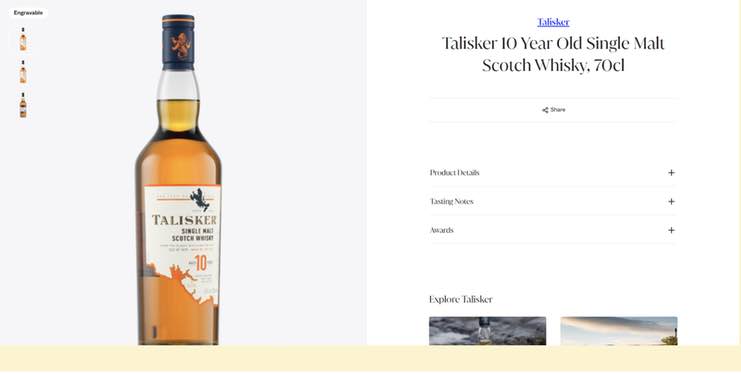
Talisker 10 is the least universal bottle here, but it covers a role the others cannot. Peat smoke, maritime salt and pepper make sense with oily fish, lamb and food cooked over a flame. With mild dishes, the same qualities quickly become too dominant.
Best For: Grilled salmon, mackerel, smoked fish, roast lamb, charred aubergine and food with pepper, salt or a clear flame-grilled edge.
Bottle Snapshot: Talisker 10 is an Isle of Skye single malt built around peat smoke, maritime salt, citrus sweetness, dried fruit and pepper. It is fuller and more assertive than the other bottles in the comparison.
Pairing Range: Oily fish is the obvious starting point. Salmon and mackerel can handle the smoke, while salt and citrus connect with flavours already present in the dish. Roast lamb, charred aubergine and peppered steak also work. With milder food, a small measure or light highball is safer than a large neat pour.
Advantages: The smoke fits naturally with grilled, oily and lightly charred food. Pepper and maritime notes provide a clear contrast to rich fish or lamb.
Limitations: White fish, plain chicken and subtle cream sauces are easily overwhelmed. Peat is also divisive, so this is a poor bottle to open without knowing whether the rest of the table enjoys smoky whisky.
How We Selected the Five Whiskeys
We compared the bottles using six criteria: versatility with everyday meals, balance between the whisky and food, serving flexibility, a distinct role in the group, current catalogue presence and practical limitations. Product information was checked against the retailer catalogue and official producer pages. Each bottle had to cover a different part of the menu rather than repeat the same flavour profile.
The order reflects usefulness with food rather than prestige, price or collectability. Glenmorangie takes the widest range of lighter dishes, while Redbreast and Bulleit move towards richer meat and stronger seasoning. The GlenDronach covers sherry-cask depth, and Talisker is reserved for food that can stand beside peat smoke.
How to Choose
Before opening a bottle, check a few basics:
- Match lighter whiskies with fish, poultry and restrained sauces.
- Use bourbon with browned, glazed or roasted flavours.
- Keep sherry-cask whisky for braises, mushrooms, cheese and dried fruit.
- Reserve peat for oily fish, smoke, char and strongly seasoned meat.
- Add water gradually when alcohol begins to cover the dish.
- Pour 15–20 ml first rather than committing to a full glass.
You don’t need one whisky that works from the starter through to dessert. Think about what you cook most often and choose a bottle that suits it.
Conclusion
A useful home whisky selection is built around contrast, not five bottles that taste almost the same. Glenmorangie The Original 12 covers lighter poultry, fish and citrus-led dishes. Redbreast 12 adds body for roast pork, mushrooms and cheese. Bulleit Bourbon 10 handles glazed meat and caramelised vegetables, while The GlenDronach 12 belongs with braises, dried fruit and richer sauces. Talisker 10 takes care of smoke, pepper and oily fish.
That does not mean every kitchen needs all five. Start with the style closest to the food you cook most often, then add a bottle only when it fills a genuine gap. Check current availability before buying, pour modestly and judge the combination at the table.
FAQ
Which whisky is the most versatile with food?
A light, unpeated single malt is usually the easiest place to begin. Glenmorangie The Original 12 can cover chicken, pork, white fish, shellfish and mild cheese without forcing the whole menu towards smoke or heavy sweetness. Redbreast 12 is a better all-round choice when roast meat, mushrooms and richer sauces appear more often in your cooking.
Can bourbon work with savoury meals?
Yes. Bourbon is useful with food that has browned edges, roasted sweetness or a glaze. Pork, burgers, barbecue, roast carrots and sweet potatoes all provide flavours that can meet vanilla, oak and spice. The main risk is excess sugar. A very sweet sauce may make the bourbon seem drier and more bitter than it does on its own.
Does smoky whisky work with fish?
It works best with fish that has enough fat or smoke of its own. Salmon, mackerel and smoked fish can handle a peated bottle such as Talisker 10, especially when lemon, pepper or a grilled surface is involved. Delicate white fish is different. Strong peat will usually cover it before the pairing has a chance to settle.
Should whisky match the food or provide contrast?
Both approaches can work. Vanilla beside a browned chicken skin is a match, while citrus in the glass can cut across a rich butter sauce. Problems begin when every element points in the same heavy direction. Sweet glaze, strong oak and a high-alcohol bourbon may become tiring together. Look for one shared flavour and one useful contrast.
Should whisky be served neat with a meal?
Neat is only one option. A small neat pour suits a short pairing, but water can lower the alcohol strength when the food is delicate. A highball often works better across a full plate of grilled or spicy food because it is cooler and less concentrated. Change the serving format before deciding that the bottle itself is wrong.
How much whisky should be poured for a food pairing?
Start with 15-20 ml. That is enough to compare the drink with several bites and leaves room to add water. If more than one whisky is being served, make every measure smaller and keep drinking water on the table. Food may slow alcohol absorption, but it does not prevent impairment. Do not drive afterwards.
Does a home cook really need five bottles?
No. The five bottles represent different jobs rather than a required shopping list. Someone who mainly cooks fish and chicken may need only a light malt. A barbecue enthusiast may get more use from bourbon and one smoky bottle. If the same dishes keep proving awkward with the whisky you already have, that is a good reason to try another style.