
Precision tools like digital scales, high-speed immersion circulators (sous vide), and hyper-accurate instant-read thermometers are fundamentally changing the kitchen game by replacing human approximation with measurable, repeatable data. This shift dramatically enhances food quality consistency, significantly reduces costly ingredient waste, and frees up a cook’s mental bandwidth to focus on complex flavors and plating artistry, effectively democratizing professional-level cooking accuracy for both commercial and home kitchens. In this post, as part of our kitchen tips and food business advice sections, we’ll explore how precision tools are changing the kitchen game for cooks.
1. The Old Way vs. The New Accuracy: Why Consistency Was the Chef’s Secret Weapon
The old kitchen story is one of talented guesswork. You know the drill: “Cook the steak until it feels right.” “Add a pinch of salt.” “Bake for 30 minutes, or until golden brown.” We’ve all been there, pulling a seemingly perfect roast chicken out of the oven only to carve into it and discover the breast is dry while the thigh is still pink. That one dish, that one moment of inconsistency, could ruin a holiday dinner or, worse, cost a restaurant its reputation. In the world of high-volume cooking—whether you’re running a Michelin-starred spot or a popular NYC food truck—the gap between a good dish and a great dish isn’t skill; it’s consistency. It’s the difference between a one-hit-wonder and a reliable favorite.
Watch this video to learn more:
For decades, the only way to achieve consistent perfection was through brute-force experience—an apprenticeship of thousands of hours, learning exactly how a pan heats, how an oven varies, and how to judge doneness by feel. But that old, analog paradigm is dissolving, replaced by a digital, data-driven approach. The new wave of affordable, hyper-accurate precision tools, like the trusty INKBIRD Meat Thermometer, has become the great equalizer, allowing any cook to access the level of control once reserved for highly paid executive chefs. We’re not just talking about gadgets; we’re talking about instruments that eliminate the most frustrating variable in cooking: human error. This shift means that the average home cook, equipped with the right tools, can now nail a technically difficult recipe on the very first try, every single time. The focus shifts entirely from can I cook this? to how creative can I be?
My Experience
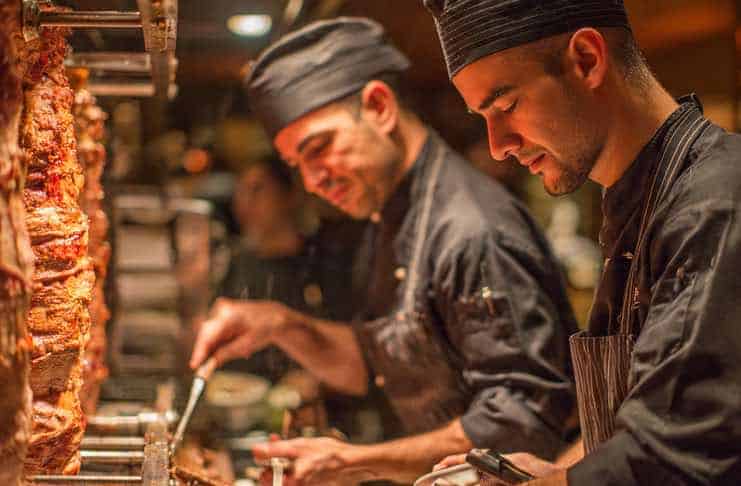
When I was first covering a veteran gyro cart operator in Midtown, I noticed he used an oversized, beat-up instant-read thermometer not just for the meat on the spit, but also for the oil in which he fried his pita bread. He told me, “The customer remembers the crispiness more than the meat.” He was obsessed with that 365°F oil temperature. It wasn’t guesswork; it was a simple, perfectly-timed, perfectly-measured action repeated hundreds of times a day. That level of focus on a simple number showed me that even at the most humble level of New York street food, precision isn’t a luxury—it’s the core of the business.
2. Beyond The Spoon: What Are the Three Must-Have Precision Tools That Guarantee Repeatable Results?
Precision tools are not merely gadgets; they are the required lab equipment for the modern culinary scientist, designed to remove variables. While great knives and pans are essential, the real game-changers are the instruments that measure the physical world: weight and temperature. Precision tools are not gadgets; they are the required lab equipment for the modern culinary scientist.
The Digital Scale is the foundation. In the old way, a cup of flour could vary in weight by 20% depending on how tightly it was packed. This spells disaster for baking and complex sauces. Professionals measure by weight (grams/ounces) because it is immutable. A simple, sub-30 digital scale ensures that a recipe’s ratios are always correct, which is the secret to a reproducible masterpiece.
Next is the Instant-Read Thermometer. This simple tool, particularly the lightning-fast, highly accurate models, is the ultimate quality gatekeeper. Doneness is not a color; it’s a temperature. A study found that 64.4% of professional kitchens have adopted Modernist Equipment and Techniques (MTE), with temperature control being central to that shift. Using a thermometer eliminates food safety risks and ensures that, for instance, a roast is pulled at 130°F for medium-rare, not 140°F for medium.
Finally, the Immersion Circulator (Sous Vide) is the epitome of consistency. It turns a pot of water into a perfectly stable, temperature-controlled oven. There is no guesswork, no overshooting, and no dry edges. It cooks the entire piece of food to the exact, predetermined internal temperature.
Watch this video to learn the importance of maintaining the right temperature:
My Experience
I once spent an afternoon interviewing a veteran baker who was skeptical about new tech. For years, her famous rye bread had a good-day/bad-day inconsistency. After a friend convinced her to switch from measuring by volume (cups) to a digital gram-scale for flour, water, and salt, her monthly “bad batch” waste dropped to virtually zero. She told me the consistency in the crust and crumb was finally 100%. It was a powerful reminder that precision is not just for fancy cooking; it’s for fundamental quality.
3. The Consistency Equation: How Precise Temperature Control Erases Human Error
How has sous vide cooking democratized fine-dining quality in the home kitchen?
The magic of tools like the immersion circulator and smart ovens is that they eliminate the number one killer of a great dish: the temperature gradient. When you cook a chicken breast in a 400°F oven, the outside quickly overcooks to reach the desired internal temperature. You get a dry, tough perimeter and a single, small sweet spot of moisture in the center. Sous vide (cooking in a precisely-controlled water bath) eliminates this physics problem entirely.
It works because the water temperature is the target internal temperature. If you want a steak to be 130∘F (perfect medium-rare) from edge to edge, you set the water bath to 130∘F. You can leave it for 30 minutes or three hours; it simply won’t overcook. A cook can be skillful, but only a precise tool can be unfailingly consistent. This method has democratized what was once a highly technical skill, allowing a home cook to achieve the uniformity and tenderness expected in a top-tier restaurant. The initial sear is the only variable remaining, and that takes mere minutes.
| Old Way: Stovetop/Oven | New Way: Immersion Circulator |
| Method | Guesswork & Monitoring |
| Result | Dry edges, unevenly cooked center, high risk of overcooking. |
| Consistency | Low. Depends entirely on pan heat, oil temp, and timing. |
| Required Skill | High. Requires feel, sight, and timing experience. |
My Experience
I’ll never forget the first time a chef friend in TriBeCa served me an egg cooked sous vide. It was a 62.5∘C egg, meaning the yolk was exactly the consistency of a warm, creamy pudding. When I later saw that same flawless result topping a 5 breakfast sandwich from a small stall in Astoria, it clicked. It wasn’t about the expense; it was about the relentless, effortless consistency that the machine provided. It elevated a simple street dish to an art form simply by controlling a single degree of temperature.
4. From Wasteful Guessing to Lean Operations: The Economic Impact of Precision
Can precision kitchen technology actually save you money and reduce food waste?
Absolutely. The initial cost of a high-end thermometer or scale is paid back multiple times over in ingredient savings. The most expensive dish is the one you have to throw away. Precision is the ultimate cost-saver.
The two main causes of ingredient waste are over-portioning and overcooking.
- Eliminating Over-Portioning: When measuring spices, sugar, or expensive ingredients like truffle oil by volume (spoons/cups), it’s easy to overshoot. Measuring by a digital scale eliminates this entirely. If a recipe calls for 15g of dried yeast, you use exactly 15g. For a small food business, this micro-saving on every single dish translates to thousands of dollars annually.
- Eliminating Overcooking Waste: When a 50 ribeye is overcooked by just 10 degrees, it’s often scrapped in a commercial kitchen or results in a highly dissatisfied customer. The use of instant-read thermometers and sous vide means that expensive proteins are cooked to the desired internal temperature every single time, drastically reducing this costly loss. The market for smart kitchen appliances is growing at an 18.3% CAGR (Eastern Peak), largely because this technology translates directly into operational efficiency and waste reduction. For more data on this, check out the studies on digital management tools and waste reduction.
My Experience
I once interviewed the owner of a boutique bakery in the West Village who was tracking her cost of goods. She calculated that before switching to a digital scale for her base ingredients (flour, butter, sugar), she was effectively wasting $50−$70 of ingredients every month due to inconsistent volumes and batch failures. After the switch, her consistency improved, and that waste vanished. It was a powerful lesson: the tool that guarantees the highest accuracy is the one that gives you the highest return on investment.
5. Beyond the Basics: Advanced Tools for the Next-Level Cook
What professional kitchen tools should an ambitious home cook invest in next?
Once you’ve mastered the foundational trio of digital scale, instant-read thermometer, and circulator, you can turn your attention to tools that speed up prep and enhance plating consistency. A kitchen’s efficiency isn’t measured by speed alone, but by the speed of perfect execution.
Here are a few tools that bridge the gap between an enthusiastic home cook and a seasoned pro:
| Precision Tool | Initial Cost (Typical) | Monetary Return on Investment (ROI) | Culinary ROI (The ‘Game Change’) |
| Digital Scale | $20–$40 | Eliminates daily over-portioning of ingredients; ensures successful, repeatable recipes. | Perfect baking/sauce consistency. |
| Instant-Read Thermometer | $50–$100 | Eliminates costly overcooked meat/fish; prevents food safety risks. | Perfect doneness, every time. |
| Immersion Circulator | $80–$200 | Eliminates batch failures from overheating; allows for tenderizing tough, cheaper cuts of meat. | Edge-to-edge cooking uniformity. |
These are the items that make a chef’s work look effortless. A perfect julienne cut on a mandoline cooks faster, seasons better, and looks professional. An emulsifying blender ensures a hollandaise sauce holds all evening. If you want to dive deeper into the basics of prep, check out our guide on The Best Chef’s Knives for Street Food Prep on our site.
My Experience
I always scoffed at the bench scraper until I saw a line cook use it. He cleaned and transported a giant mound of diced onions from his cutting board to a simmering pot in under three seconds flat. It’s the ultimate unglamorous precision tool—not for cooking, but for the precision of movement and time management. It taught me that in a fast-paced kitchen, a tool that saves a second on prep is just as valuable as one that saves a minute on cooking.
6. The Psychological Shift: Cooking with Data, Not Doubt
What is the real change precision tools bring to a cook’s mindset and confidence?
The most profound shift these tools bring isn’t to the food; it’s to the cook. When you stop relying on gut instinct and start relying on verifiable data—a reading of 145∘F for fish, or 100g of butter for the frosting—you replace anxiety and guesswork with confidence.
For the new cook, this confidence is everything. It transforms a recipe from a daunting, high-stakes experiment into a manageable, predictable procedure. For the professional, it frees up critical mental bandwidth. When you know the temperature is stable and the ingredients are measured, your mind can pivot to the truly creative work: balancing flavor, experimenting with presentation, and improvising within the structure of a perfect foundation. When the mechanics of cooking become reliable, the art of flavor can truly take flight.
The Commercial Cooking Equipment Market, which includes many of these high-tech tools, was valued at $36.04 billion in 2023 and is projected for continued growth (Fortune Business Insights), signaling that the entire industry is doubling down on this efficiency. It’s about making a choice: Will you remain tethered to the old, stressful guessing game, or will you embrace the accuracy that allows you to consistently hit the mark? Your kitchen is your lab—start your own precision experiment today. You can learn more about the industry investment trends here.
My Experience
I once watched a home cook try a pork loin sous vide for the first time. She was terrified of raw pork, and every previous attempt resulted in a bone-dry roast. When she cut into the 145∘F loin and saw the impossible juiciness and perfect pink hue, she literally gasped. The fear was gone, replaced by a grin of genuine accomplishment. That’s the real revolution: precision tools allow every cook to execute with the confidence of a seasoned pro.
FAQ: Quick Answers for the Modern Cook
Q: Is a ThermaPen or other high-end instant-read thermometer really worth the price?
A: Yes, for critical cooking tasks like meat and candy, they are worth it. Cheaper thermometers can take 15-20 seconds to give a reading, allowing the internal temperature to change while you wait. A Thermapen or equivalent provides an accurate reading in 1-3 seconds, which is crucial for pulling a protein at the exact moment of perfection. It’s an investment in accuracy, speed, and eliminating expensive overcooking.
Q: What is the most underrated precision tool that most home cooks are missing?
A: The simple, inexpensive Bench Scraper. It’s the single best tool for portioning dough, cleaning a cutting board quickly, and gathering finely chopped ingredients with maximum efficiency. It brings a pro-level rhythm to your prep work. You can also argue for a reliable portioning scale (beyond the digital kitchen scale) if you regularly work with precise batter or dough amounts.
Q: Do I need a smart kitchen scale that connects to an app?
A: For most home cooks, no. The core function of a digital scale is to provide a precise, static weight reading. Connectivity features often add cost without a corresponding boost in essential accuracy. Focus your budget on a reliable scale with a simple tare function and 1g or 0.1oz increments. The best precision tool is the one that reliably does its one job.

Jennifer Bell is a freelance writer, blogger, dog-enthusiast, and avid beachgoer operating out of Southern New Jersey.