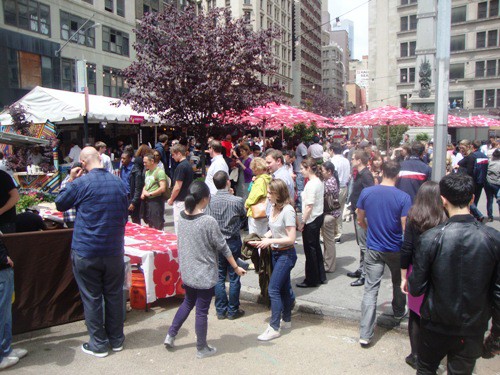
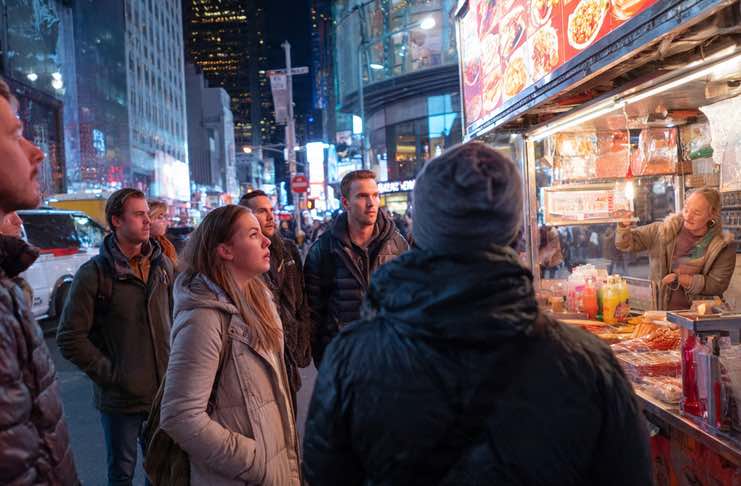
It’s just past noon on a Tuesday. You’ve emerged from the chaos of the N/R/W subway at 53rd and Lexington, still buzzing from your morning at the MoMA, the hot dog cart steam already mixing with exhaust fumes and perfume from a hundred passing strangers. You have no plan. You have $12. And you’re about to eat one of the best meals of your entire trip — standing up, on a sidewalk, next to a guy in a hard hat.
That is New York City. No reservation required. No dress code. No gatekeeping. Whether you’re fresh off a flight or a lifelong local dragging your out-of-town cousins around, NYC’s street food scene is the fastest, cheapest, and most honest way to experience the city’s soul. And it happens to be right next to every major landmark you already want to see.
This is your no-BS, neighborhood-by-neighborhood guide to eating like a New Yorker while you do the tourist thing — because in this city, the two are not mutually exclusive.
⚡ Golden Answer — The Quick Version
If you’re visiting NYC and want to eat great food near every major attraction, here’s the blueprint: halal cart at 53rd & 6th for Midtown sightseeing, dumplings in Chinatown before or after the Brooklyn Bridge, hot dogs at Central Park, and the 7 Train for the full global food tour through Queens. NYC has over 20,000 licensed street vendors as of 2025 (NYC Dept. of Health) — and the best ones are parked right where you already want to be.
Getting Around NYC’s Food Attractions (Without Losing Your Mind)
The subway is the move — until it isn’t. For solo travelers or couples, the NYC subway gets you everywhere that matters for under $3 a ride. The 7 Train alone is nicknamed “The International Express” for a reason — it cuts through Jackson Heights and Flushing, serving as a literal food tour on rails. The A/C/E drops you at the edge of Chinatown. The 2/3 puts you steps from Central Park. These trains are not just transport — they’re part of the experience.
That said, NYC is a big city spread across five boroughs, and when you’re trying to cover serious ground — say, starting your day at the Brooklyn Bridge, hitting the Whitney in Chelsea, and ending with a late-night food crawl in Flushing — the math stops working in the subway’s favor. Families with strollers, groups, or travelers simply done with platform chaos often book a private transportation service to move between food and tourist districts efficiently. It’s especially practical for multi-neighborhood food itineraries where timing actually matters.
However you roll, the playbook is the same: organize your sightseeing around the neighborhoods, not the other way around. Every major NYC attraction sits inside a food universe. Here’s how to eat your way through all of it.
🗺️ Pro-Tips: Getting Around to Eat
- The 7 Train (Queens) and A/C/E (Chinatown/Brooklyn Bridge) are your two most food-productive subway lines.
- Google Maps walking directions are surprisingly reliable for food cart navigation — carts show up as pins.
- For multi-borough days with kids or luggage, a private ride saves 45–90 minutes of transfer time.
- Late-night food (after 10 PM) is best accessed by car or rideshare — not all night trains are food-friendly.
Midtown Manhattan: The Halal Cart Capital of the World
The single most iconic street food stop in New York City is a cart on 53rd Street and 6th Avenue in Midtown Manhattan. And it is absolutely worth the line. Seasoned chicken or lamb over turmeric-yellow rice, a pile of iceberg and tomato, flooded with that legendary tangy white sauce, and a stripe of atomic-orange hot sauce. The whole thing costs $8. You eat it standing up on the sidewalk with a plastic fork, in the shadow of Rockefeller Center, while taxis honk and pigeons judge you. Perfect.
This is also the smartest food stop on your Midtown sightseeing day. The halal cart corridor sits within walking distance of Rockefeller Center, the Museum of Modern Art (MoMA), St. Patrick’s Cathedral, and Times Square. The New York Times has consistently named the 53rd & 6th cart as the most iconic food vendor in the city — a title it’s held for over two decades. The vendor story is a classic NYC immigrant success story: Egyptian-born operators who turned a simple cart into a cultural institution, inspiring hundreds of copycat carts across the five boroughs.
🗽 Our Experience
Born and raised in Astoria, Queens, I’ve been going to the 53rd & 6th cart since college — it was my go-to between classes and chaos. This past February 2026, I took my cousin visiting from out of town for his first NYC experience. He wanted to see Times Square. I said yes, but only if we stopped at the cart first. He ordered the lamb combo, took one bite, and immediately said we needed to come back tomorrow. We did. No regrets.
Watch this video to get a glimpse:
Midtown Sightseeing + Street Food Pairings
| Attraction | Nearest Street Food | Price |
|---|---|---|
| Rockefeller Center / Top of the Rock | Halal cart, 53rd & 6th Ave | $8–10 |
| MoMA | Halal cart + nearby pretzel cart | $3–10 |
| Times Square | Multiple halal carts, hot dog stands | $4–10 |
| Empire State Building | Hot dog carts on 34th St, food trucks | $3–8 |
Central Park: The Classic NYC Hot Dog Experience
The New York City hot dog is not just a snack — it’s a 100-year-old institution. And there is no better place to eat one than at the perimeter of Central Park. The snap of a Sabrett natural-casing frank, the yellow mustard, the optional pile of onions cooked down in a sweet-tangy tomato sauce — that is an entire culinary tradition in one $4 bite. The New York Times specifically calls the Central Park hot dog cart experience one of the most quintessentially New York food moments a visitor can have.
The best cart positioning: outside the 72nd Street entrance on Central Park West (closest to Strawberry Fields and Bethesda Fountain), the Fifth Avenue entrance at 76th Street near the Met, and at the Columbus Circle entrance at the southwest corner. These vendors have been holding their spots for years, and the foot traffic means those dogs are never sitting long.
Watch this video to get a glimpse:
Pair your hot dog walk with a lap through the park’s most iconic sights: Bethesda Terrace, the Bow Bridge, the Great Lawn, and the Conservatory Garden. This is the most cinematically New York afternoon you can have, and it costs you under $10.
“The Central Park hot dog isn’t about the hot dog. It’s about the whole scene — the skyline over the trees, the rollerbladers, the vendor who’s been on that corner since before your parents visited this city. That’s the one you tell people about when you get home.”
🗽 Our Experience
Growing up in Queens, Sunday mornings meant my abuela dragging me through Central Park on the way to visit family on the Upper West Side. She’d always stop at the 72nd Street cart, negotiate a second dog by complimenting the vendor’s setup, and somehow it worked every single time. I tested that same move this past January 2026. It still works. The hot dog tastes exactly the same as it did in 2003 — and deadass, that’s the whole point.
🌭 Hot Dog Ordering Rules (No Shame Zone)
- Always say yes to the onion sauce. It’s cooked in a tomato-pepper base and it completely transforms the bite.
- Skip the ketchup. You’re in New York. This is a mustard city.
- Carts right at park entrances charge tourist-adjacent prices ($4–5). Walk one block and save a dollar.
- Cash is still faster, but most carts now take tap-to-pay in 2026.
Chinatown & the Brooklyn Bridge: Dumplings Before the Walk
If you’re doing the Brooklyn Bridge walk — and you absolutely should — start in Chinatown first. The Manhattan-side bridge entrance drops you right at the edge of the most concentrated street food zone below 14th Street. Prosperity Dumpling on Eldridge Street is the move: five pan-fried pork and chive dumplings for $3. That is $0.60 per dumpling. They are crispy on the bottom, juicy inside, and the line moves fast. A 2026 Eater NY report on NYC’s best cheap eats calls the Chinatown dumpling corridor one of the last truly affordable food experiences in lower Manhattan.
Beyond dumplings, Canal Street and the surrounding blocks offer roast pork buns from Mei Lai Wah Bakery on Bayard Street, egg tarts, scallion pancakes, and bubble tea at prices that feel like 2005. This neighborhood rewards walking and wandering — follow your nose, look for the steamy windows, and go where the locals are going.
Watch this video to learn more:
After eating, it’s a 10-minute walk to the Brooklyn Bridge pedestrian entrance. The walk itself takes about 30 minutes end-to-end, and on the Brooklyn side, you’ll land in DUMBO — where, incidentally, there are excellent pizza slices and more street vendors along the waterfront.
📈 2026 Trend Check
As of February 2026, NYC’s eco-packaging mandate is rolling out — all mobile food vendors must eliminate single-use styrofoam by July 2026. Most Chinatown vendors and Midtown halal carts have already switched to compostable fiber containers. Many carts now also offer QR-code menus and digital tipping. The food is unchanged. The packaging is quietly getting a glow-up, and honestly, it’s about time.
🗽 Our Experience
I’ve done the Chinatown-to-Brooklyn-Bridge run more times than I can count — it’s genuinely the best free half-day itinerary in NYC. Last October, I brought a group of six friends visiting from LA. We hit Prosperity Dumpling at 10 AM (short line, pre-lunch crowd), walked the bridge, grabbed pizza slices in DUMBO, and watched the Manhattan skyline from the waterfront. Total food spend for six people: under $40. The city did the rest for free.
Queens & the 7 Train: NYC’s Most Delicious Subway Ride
No neighborhood in New York City delivers more global flavor per square block than Queens — and the 7 Train is your free ticket to all of it. Ride it west from Flushing-Main Street toward Manhattan and you pass through some of the most culinarily dense immigrant neighborhoods on the planet. Jackson Heights alone has Colombian arepas, Ecuadorian ceviche, Tibetan momos, Bangladeshi street snacks, and Indian chaat — all within a four-block walk from the 74th Street stop.
Further down the line, Flushing, Queens is the city’s most serious Chinatown — bigger, more authentic, and far less touristy than the Manhattan original. The New World Mall Food Court on Main Street is a full underground food hall with 30+ vendors serving everything from hand-pulled noodles to Taiwanese scallion pancakes to skewered street meats. A Thrillist NYC guide (updated January 2026) named Flushing the single best destination in New York for value-driven, authentic ethnic food.
Watch this video to learn more:
Queens isn’t a stop on most tourist itineraries — and that is exactly why you should go. It’s the real NYC: loud, crowded, spectacular, and deadass delicious.
NYC Street Food by Neighborhood: The Full Cheat Sheet
| Neighborhood | Nearby Attraction | Must-Eat | Price |
|---|---|---|---|
| Midtown Manhattan | Rockefeller Center, MoMA, Times Sq | Halal chicken over rice | $8–10 |
| Central Park perimeter | Bethesda Fountain, The Met, Bow Bridge | NYC hot dog + soft pretzel | $3–6 |
| Chinatown / Lower Manhattan | Brooklyn Bridge, DUMBO, Financial District | Pan-fried dumplings, roast pork buns | $1–5 |
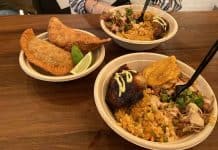
| Jackson Heights, Queens | The International Express (7 Train) | Arepas, momos, chaat, empanadas | $3–8 |
| Flushing, Queens | New World Mall, Main Street food corridor | Scallion pancakes, BBQ skewers, noodles | $2–7 |
| Sunset Park / Bushwick, Brooklyn | Industry City, street art, warehouses | Churros, elotes, empanadas | $3–6 |
| Chelsea / High Line | The High Line, Whitney Museum | Waffles, churros, artisan food trucks | $5–10 |
🗽 Our Experience
Growing up in Astoria, the 7 Train was my personal food passport — I’d ride it out to Flushing for scallion pancakes on Saturday mornings and back through Jackson Heights for a mango lassi on the way home. Did the same run this past January 2026, and the only real difference is that more vendors take Apple Pay. The food? Completely unchanged. Pure, uncut Queens energy — and the most delicious $2.90 subway ride in America.
Street Desserts: NYC’s Sweetest Sidewalk Secrets
Don’t sleep on NYC’s street dessert game. It is serious, it is everywhere, and it is severely underrated. Hot pretzels salted by hand, sold on corners across Manhattan, are the city’s original snack food. But the dessert carts near the High Line in Chelsea are doing things with Nutella-covered waffles and fresh strawberries that feel genuinely luxurious for $6. In Corona, Queens, mango chamoy paletas from street vendors near Flushing Meadows-Corona Park are one of the most refreshing things you can eat in this city on a warm day — and Flushing Meadows is the park that hosted two World’s Fairs, so yes, the history and the food are both slapping.
Late-night dessert carts near Union Square and the East Village run until 2–3 AM on weekends. The churro vendors around 14th Street in particular are doing limited-run flavor variations — brown butter sea salt, Nutella, dulce de leche — that you won’t see on any menu. According to a Food & Wine feature on America’s best food cities, NYC’s street dessert culture is one of the most underrated in the entire country. We agree, and we’re not surprised the rest of the world is just catching on.
Watch this video to learn more:
🗽 Our Experience
After a night out in the East Village last December, we stumbled onto a churro cart on 14th Street doing a brown butter and sea salt version. It was 1 AM, it was 28 degrees, the cart was lit up like a lighthouse in the dark, and those churros were one of the best things I ate all month. The vendor told me he’s been there six winters. You’d never know unless you were out there past midnight — which is exactly the NYC street food lesson: show up at unexpected hours and the city rewards you every time.
What You Need to Know Before You Eat (Practical NYC Tips)
The golden rule of NYC street food: follow the line. In a city of 8.3 million people, a long line at a cart is a consensus five-star review. No algorithm beats 15 New Yorkers voluntarily waiting in 40-degree weather for a $8 plate of food. Beyond that, here’s the full practical playbook.
📋 NYC Street Food Survival Guide
- Go where locals go. If the crowd is all tourists with selfie sticks, keep walking. Real carts have delivery workers and office people in line.
- Carry some cash. Most carts accept tap-to-pay in 2026, but cash still speeds up the line and some of the best outer-borough vendors are cash-only.
- Ask what’s fresh. “What’s selling fastest right now?” is your power question. Vendors are proud of their food and will tell you.
- Eat off the main tourist corridors. One block off Times Square or the High Line and prices drop by 20–40%.
- Check the permit. Licensed vendors display their permit on the cart. It’s a quick quality signal. Verify at NYC.gov.
- Eat standing up. You’re part of the city now. Lean into it.
Frequently Asked Questions About NYC Street Food
Is NYC street food safe to eat?
Yes. The NYC Department of Health regulates all mobile food vendors through mandatory permits and surprise health inspections. Busy carts with high turnover serve the freshest food. Look for the vendor’s permit displayed on the cart as your baseline quality check.
What is the most iconic street food in New York City?
Halal chicken over rice (53rd & 6th, Midtown) and the classic NYC hot dog (Central Park perimeter) are the two most iconic items — both recognized by the New York Times as defining the city’s street food identity.
Which neighborhood has the best street food for tourists?
For sheer variety and the classic NYC experience: Midtown Manhattan for halal carts, Central Park for hot dogs, Chinatown for dumplings, and Queens for everything else. Each pair naturally pairs with major sightseeing stops.
Is street food cheaper than restaurants in NYC?
Dramatically cheaper. The average NYC restaurant meal runs $18–30+ per person in 2026. Street food delivers the same or better quality at $4–12. For any traveler on a budget, street food isn’t just an option — it’s the strategy.
Do NYC street vendors accept credit cards?
Most do in 2026. Tap-to-pay and mobile wallets are now standard on the majority of carts, especially in Manhattan. That said, carrying a $20 in cash is still the smartest move for speed and outer-borough flexibility.

Anthony is a passionate food enthusiast living in the bustling food scene of New York City. With an insatiable curiosity for culinary exploration, he loves exploring the city’s diverse eateries, seeking out unique flavors and sharing his gastronomic adventures with fellow food lovers.