
Last Updated: October 2026
The first thing you notice is the vinegar. A pan of Cornell chicken sauce hits the coals, the steam rolls sideways across the lawn, and somewhere behind you a kid cannonballs into the pool hard enough to soak the cooler. On the stove inside, a pot of Syracuse salt potatoes is boiling down to that frosty, crackly crust, and nobody has touched the burger patties yet.
That is a New York backyard BBQ done right: Cornell chicken instead of dry breasts, Binghamton spiedies on skewers, Zweigle’s white hots from Wegmans, and a yard set up so the host actually gets to swim. In our years covering New York street food, we have learned that the best cookouts are planned like a good food truck service: a tight menu, a smart line, and zero bottlenecks.
Key Takeaway
A great New York backyard BBQ comes down to four decisions made in the right order: the yard layout first, a make-ahead menu built on New York classics like Cornell chicken and salt potatoes second, a weather and bug plan third, and decor last. If you have a pool, run it with a designated water watcher, a no-glass rule, and a stash of spare swimsuits so no guest sits out.
Here is our contrarian take, and we will defend it all the way down the page: most backyard parties fail on layout and timing, not on food or decor. The Pinterest bunting does not matter if forty people are jammed between the grill and the drink cooler while the host sweats alone over a single kettle.
What Makes a New York Backyard BBQ Different From Any Other Cookout?
A New York backyard BBQ is defined by its regional menu and its weather: vinegar-basted Cornell chicken, Syracuse salt potatoes, Binghamton spiedies and Rochester white hots, cooked through humid afternoons and sudden summer thunderstorms. Most national BBQ guides default to Texas brisket or Kansas City ribs. New York has its own cookout canon, and almost nobody outside upstate plans around it.
What Is a New York-Style Backyard BBQ?
A home cookout built around dishes that grew out of New York State itself: Cornell chicken (a vinegar, oil and egg basting sauce created by Cornell professor Robert C. Baker), Syracuse salt potatoes (small whole potatoes boiled in heavily salted water), Binghamton spiedies (marinated meat cubes grilled on skewers) and Rochester white hots (uncured, unsmoked pork-and-veal hot dogs). The format is half-chickens, a starch, corn and a cooler, served family style.
The Cornell chicken story is the backbone. As Atlas Obscura’s history of the upstate chicken barbecue explains, Baker published Cornell Cooperative Extension Bulletin 862 in 1950, and the sauce became the default way upstate families cook chicken outdoors. Here at New York Street Food, we think it is the single most underrated cookout recipe in the state.
The classic upstate chicken dinner format is still the smartest template for a crowd: a half chicken, a roll, an ear of corn and a side. Baker’s own family has run Baker’s Chicken Coop at the New York State Fair in Syracuse for decades, which tells you how well the format scales.
| New York Classic | Region | Replaces This Generic Pick | Make-Ahead Step |
|---|---|---|---|
| Cornell chicken | Finger Lakes / Central NY | BBQ-sauce chicken breasts | Mix sauce the day before, refrigerate |
| Syracuse salt potatoes | Syracuse / Onondaga County | Mayo potato salad | Scrub potatoes the night before |
| Binghamton spiedies | Southern Tier / Broome County | Plain kebabs | Marinate the night before |
| Zweigle’s white hots | Rochester / Western NY | Supermarket hot dogs | None, grill to order |
New York already invented a better cookout menu than burgers and dogs. Most hosts just never look past the supermarket meat case.
How Far Ahead Should You Plan a Backyard BBQ in New York?
Start planning three weeks out for a party of 20 or more, because invitations, rentals and a rain plan all need lead time during peak summer weekends. Memorial Day, July Fourth and Labor Day weekends compete with every other party on your street, so lock your date early and tell people what to bring.
- Three weeks out: Set the date and headcount, decide grill-it-yourself versus hiring a truck, and book any tent or table rentals.
- Two weeks out: Send invitations. If you have a pool, write “bring a swimsuit and towel” on the invite itself, not in a follow-up text that gets buried.
- One week out: Order meat, check propane or buy charcoal, and test-run your grill so you know how many half-chickens fit at once.
- Two days out: Check the forecast. New York summer thunderstorms build fast in humid afternoons, so confirm your covered fallback space.
- The day before: Mix the Cornell sauce, marinate the spiedies, scrub the potatoes, freeze extra ice and set up the yard zones.
- Party morning: Light coals about an hour before the first guests arrive, fill coolers and walk the yard one last time from a guest’s point of view.
REAL Experience
On r/Cooking, u/BRNZ42 fed 18 people Father’s Day dinner on a single 22-inch kettle with no kitchen access. Coals went in two hours out, pork chops and corn worked in batches, potatoes stayed on the cool side. The timing held. The one step they said they would never skip: the chimney starter and a written order of operations so the host is not guessing once guests arrive.
How Should You Lay Out Your Yard So the Party Actually Flows?
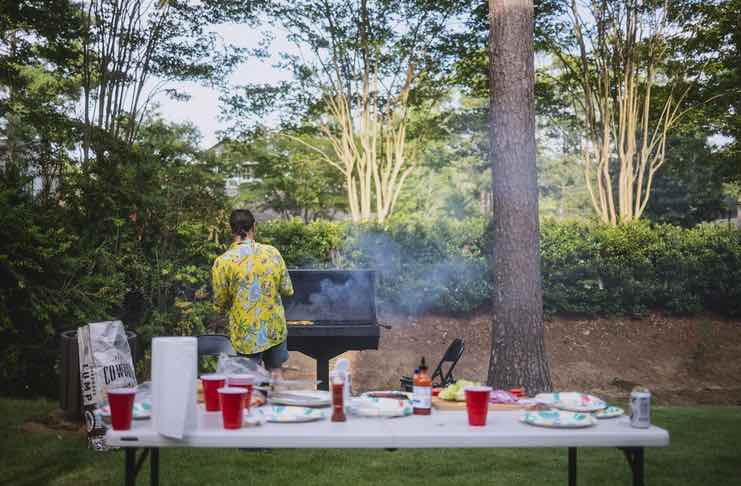
Split the yard into five zones (grill, food, drinks, shade seating and play or pool) and keep the drink station on the opposite side from the grill so the two biggest crowds never collide. This is the single change that separates a relaxed party from a traffic jam.
Safety sets the first rule. Food Network’s charcoal grill setup guide recommends placing the grill on a flat, solid surface at least 10 feet from structures, and the NFPA advises keeping children and pets at least three feet from the grilling area. As of May 2026, NFPA data shows U.S. fire departments responded to an average of 12,141 home fires a year involving grills between 2020 and 2024, with July the peak month. Watch this video for some inspiration:
| Zone | Placement Rule | Why It Matters |
|---|---|---|
| Grill | 10+ feet from the house, deck railings and overhanging branches; downwind of seating | Fire safety, and smoke stays off your guests |
| Food table | In the shade, close to the kitchen door | Short trips for refills, slower food warming in the sun |
| Drinks | Opposite side of the yard from the grill | Splits the crowd and keeps people out of the cook’s way |
| Shade seating | Under trees, a pop-up canopy or the house’s afternoon shadow | Older guests and babies stay longer and happier |
| Play or pool | Furthest from the grill, in clear view of the seating | Running kids and wet feet never cross the hot zone |
If the grill and the cooler share a corner, your party has a bottleneck before the first guest arrives.
Our Experience
In a r/thesims thread on outdoor grill-and-bar layouts, u/FireOpalCO pointed out the obvious problem: put the grill and the drink station facing each other and the cook and the bartender are constantly in each other’s way, heat blasting the person making drinks. Moving the cooler to the far side of the yard is the one change that keeps the line from forming before anyone has a plate.
What Should You Put on the Menu? Real Talk on Skipping the Burger-Only Spread
Build the menu around two make-ahead New York proteins (Cornell chicken and spiedies), one fast grill item (white hots) and one boiled side (salt potatoes), so the grill is never the only thing feeding the party. Burgers are fine as a backup for picky kids, but they are a terrible main for a crowd because every patty needs the host standing at the grate.
Set up a two-zone fire: coals banked on one side for searing, nothing on the other for gentle cooking. Food Network’s test kitchen puts the direct side around 500°F and the indirect side around 225 to 375°F, which is exactly where Cornell chicken halves want to sit while you baste them every few minutes.
Top 5 New York Cookout Classics Ranked by Make-Ahead Value
1. Syracuse Salt Potatoes. Metric: Saveur’s version boils 5 pounds of new potatoes with 12 ounces of kosher salt for 20 to 25 minutes and serves 8 to 10. Why it wins: it cooks on the stove, not the grill, and the salty crust holds up on a buffet table. Keep the potatoes whole or they turn inedibly salty.
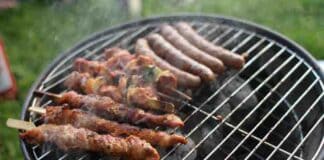
2. Binghamton Spiedies. Metric: one overnight marinade does all the work. Why it wins: skewers grill fast and guests eat them on Italian bread, so you need no plates. Broome County celebrates them every first weekend of August at the Spiedie Fest & Balloon Rally in Otsiningo Park.
3. Cornell Chicken. Metric: Baker’s original sauce batch covers 10 chicken halves. Why it wins: half-chickens feed adults generously and hold well on the cool side of the grill. Use pasteurized eggs in the sauce, which Cornell’s own published version suggests for large batches.
4. Zweigle’s White Hots. Metric: Zweigle’s has made white hots in Rochester since 1925. Why it wins: they are uncured and unsmoked, so they get a proper char and snap on the grill, and kids treat them like regular hot dogs.
5. Farm-Stand Sweet Corn. Metric: grills in the husk while the chicken rests. Why it wins: it rounds out the classic half-chicken plate for almost no effort and costs little in peak season.
If you want the salt potato method in full, Saveur’s Syracuse salt potatoes recipe is the cleanest version we have found, and it suggests a Finger Lakes sparkling wine alongside. That matches what we see across New York Street Food coverage: the dishes that last are almost always the simple ones that feed a lot of people cheaply. For more ideas and inspo – watch this video:
Food Safety Numbers to Tape Inside the Grill Lid
- Poultry (including Cornell chicken): 165°F internal
- Ground beef and burgers: 160°F internal
- Perishable food out of the cooler: 2 hours maximum, or 1 hour when it is above 90°F outside (USDA FSIS)
Should You Grill It Yourself or Hire a Food Truck?
Grill it yourself for under 20 guests; seriously consider a food truck above 40, because one home grill cannot feed that many people at once without the host disappearing for the whole party. Between 20 and 40 guests, the deciding factor is whether you want to cook or host.
Truck operators and hosting threads keep returning to the same three misses: the driveway or side gate is not cleared for the truck, the arrival window is tighter than the setup actually needs, and one truck is expected to feed 40-plus people without a second option or a staggered start. Lines stretch, the host ends up managing logistics instead of guests, and the food that was supposed to free them up becomes the bottleneck. Our food truck catering directory for private events is where to start if you go that route, and a halal cart is one of the easiest crowd-feeders there is. Our NYC halal cart guide explains the combo-over-rice format that scales so well, and the NYC street taco guide covers the taco trucks whose menus translate naturally to a backyard.
| Host Type | Grill It Yourself? | Why |
|---|---|---|
| First-time host | Depends | Yes under 15 guests; above that, make-ahead dishes or help |
| Big group (40+) | No | One grill becomes the bottleneck; a truck serves to order |
| Budget host | Yes | Half-chickens and salt potatoes are among the cheapest crowd foods |
| Family with young kids | Depends | Only if another adult covers pool and play supervision |
| Pool party host | Depends | You cannot watch the grill and the water at the same time |
| Solo host | Yes | Keep it under 12 guests and lean on make-ahead food |
How Do You Decorate a Backyard BBQ Without Wasting Money?
Spend on light, shade and bug control, and skip themed tableware and balloons, because the decor that matters is the decor that keeps guests comfortable after sunset. Around the late-June solstice, the sun sets after 8:30 PM in New York City and even later in western New York, so a good party will run well into the dark.
- String lights over the seating zone do more than any centerpiece and they mark where people should gather.
- Tablecloth clips are non-negotiable on breezy lake-country afternoons.
- Farm-stand flowers in mason jars cost a fraction of florist arrangements and look right on a New York summer table.
- A chalkboard menu doubles as decor and stops forty people asking which chicken is which.
- A bug station with repellent near the seating, plus emptied standing water around the yard the day before.
That last point is not optional. The New York State Department of Health reminds residents every Memorial Day that blacklegged deer ticks carry Lyme disease, the most commonly reported tick-borne disease in the state, and that mosquitoes here can carry West Nile virus. Mow the lawn two days before, keep play areas away from tall grass and woodland edges, and tell guests to do a tick check before bed.
| Spend On This | Skip This | Reason |
|---|---|---|
| Pop-up canopy | Themed banners | Shade and rain cover beat photos |
| String lights | Balloon arches | Lights extend the party past sunset; balloons pop in the heat |
| Extra coolers and ice | Printed napkins | Warm drinks ruin a hot afternoon faster than plain napkins |
| Spare towels and swimsuits | Pool floaties for decor | Guests who forget gear can still swim |
Sponsored party-supply ads will sell you a themed backdrop for every holiday. What your guests actually remember is the shade, the cold drinks and whether the chicken was juicy.
How Do You Run a Safe, Fun Pool Day During a BBQ?
Assign a sober adult “water watcher” in short shifts, ban glass from the pool deck, keep the grill well away from wet feet, and clear the water at the first sound of thunder. A pool turns a good cookout into the party everyone talks about, and it is also the part of the day with the least margin for error.
New York already takes this seriously. Under the state’s Uniform Fire Prevention and Building Code, residential pools built after December 14, 2006 must have an approved pool alarm, and outdoor residential pools need a barrier at least 48 inches high around them. Check that your gate latches and alarm work the week before the party, not the morning of.
- Water watcher rotation: One adult at a time watches the water and only the water, with no phone and no drink, then hands off a visible tag or lanyard to the next adult.
- No glass on the deck: Plastic cups and cans only within the pool fence.
- Thunder rule: Everyone out at the first rumble, and wait 30 minutes after the last thunder before swimming again, per National Weather Service lightning guidance.
- Towel and changing station: A bin of towels by the gate and a clearly marked changing room keep wet guests off the kitchen floor.
- Sunscreen basket: Put it next to the towels so nobody has to ask.
What About Swimsuits for Guests?
Put “bring your swimsuit” on the invitation in bold, because someone always assumes the pool is just for the kids. Even then, at least one guest will forget, so smart hosts buy a few affordable spares in common sizes beforehand and leave them, tags on, in the changing area.
Separates are the easiest backup to stock, since guests can mix a top in one size with a bottom in another. Affordable women’s tankini swimsuits work especially well here: they give more coverage than a bikini, which matters to guests who did not plan to swim in front of the whole party. Add a couple of pairs of men’s board shorts and some kids’ suits, and nobody has to sit on the edge watching.
Real Experience
On r/Lifeguards, u/chadwickbateman and others who have worked private pool parties stress the same handoff: one adult watches only the water, phone down, then passes a visible tag to the next person. When thunder rolls in, the pool clears immediately—no debate. Spare towels and a couple of extra suits by the gate keep the people who forgot gear from sitting on the edge the rest of the afternoon.
The most important person at a pool party is not the one at the grill. It is the adult who is watching the water and nothing else.
Is a Big Backyard BBQ Worth It for a Group of 20 or More?
Yes, if you plan food by the half-chicken and split the work; no, if one person is cooking, refilling, lifeguarding and hosting at once. The budget math works in your favor at scale, because a half chicken, salt potatoes and corn is one of the cheapest generous plates you can serve.
For the Budget Group Lead coordinating 20 people, plan one half chicken per adult, about half a pound of salt potatoes per person (Saveur’s 5-pound batch serves 8 to 10), an ear of corn each and white hots for the kids. Ask guests to bring drinks or desserts, not sides, so the menu stays coherent. For a visiting family with dietary limits, grill vegetables and spiedie-marinated tofu or mushrooms on a separate clean section of the grate. You can also invite a professional to make the BBQ like this:
| Reader Type | Worth Hosting? | The Deciding Factor |
|---|---|---|
| Visiting from out of state | Yes | A New York menu is the easiest way to show off the state |
| Local regular host | Yes | Swap burgers for Cornell chicken and the same party feels new |
| Foodie | Yes | Regional dishes give you a story for every plate |
| Budget eater | Yes | Chicken halves and potatoes stretch further than steak |
| Group lead (20+) | Depends | Only with a second cook or a hired truck |
| Solo host | Depends | Keep the guest list small or skip the pool |
Where Can You Find New York Cookout Staples Near You?
Shop Wegmans for Zweigle’s white hots, upstate supermarkets for bagged salt potato kits, and roadside farm stands for corn, then order chicken halves from a butcher a week ahead. Availability drops sharply the further you get from the dish’s home region, so plan substitutes if you are hosting on Long Island or in the Hudson Valley.
- White hots: Zweigle’s are carried at Wegmans; outside western and central New York, call your store first and confirm before you go.
- Salt potatoes: Central New York grocery stores sell bags of small potatoes with salt packed inside. Anywhere else, buy small new potatoes of even size and follow Saveur’s 12-ounce salt ratio.
- Spiedie marinade: Bottled spiedie sauce is sold in Southern Tier stores; confirm before you go, or make your own vinegar, oil, garlic and herb marinade.
- Chicken halves: Ask a butcher to split whole broilers for you. Order a week ahead for summer holiday weekends.
- Sweet corn: Roadside farm stands from mid-July onward; buy it the morning of the party.
Our Verdict: What Most Backyard BBQ Guides Get Wrong
Most guides spend three paragraphs on centerpieces and one line on where the grill goes. They have it backwards: layout, a make-ahead menu and a pool plan decide whether the host enjoys the day, and decor is the last 10 percent.
They also ignore where they are. A New York backyard has Cornell chicken, salt potatoes, spiedies and white hots in its back pocket, plus ticks, humidity and pop-up storms to plan around. Cook what the state is famous for, plan for its weather, and your party will beat any generic listicle version.
Like every guide on our BBQ coverage, this one leans on a simple belief: the best food in New York is rarely the fanciest, it is the food built to feed a crowd well. Spiedie Fest in Binghamton is proof, as Visit Binghamton’s history of the festival shows, growing from a family cook-off argument into one of the region’s biggest summer weekends.
Free Download
Planning your cookout menu around great food? Track the street food spots and regional dishes you want to try next with the NYSF Master Street Food Tracker Checklist, a printable list for every food lover who plans to eat their way through New York eventually.
🔥 Don’t Waste a Single NYC Meal
Tired of corporate listicles and tourist traps? Add New York Street Food as a Preferred Source on Google. It forces Gemini and Google’s AI Overviews to prioritize our boots-on-the-ground cart reviews and sensory tasting notes whenever you search for food.
Frequently Asked Questions About Planning a New York Backyard BBQ
How far should a grill be from the house?
At least 10 feet from the house, deck railings and anything that can burn, on a flat, solid surface and out from under eaves and branches. Keep children and pets at least three feet from the grilling area.
What is Cornell chicken?
Cornell chicken is chicken basted with a sauce of oil, cider vinegar, egg, poultry seasoning, salt and pepper, created by Cornell professor Robert C. Baker and published in Cornell Extension Bulletin 862 in 1950. It is the default backyard and fundraiser chicken across upstate New York.
How long can food sit out at a summer BBQ?
No more than two hours, or one hour when it is above 90°F outside, according to the USDA. Keep cold food on ice and hot food on the cool side of the grill.
What are the pool rules for a backyard party in New York?
New York requires a barrier at least 48 inches high around outdoor residential pools and an approved pool alarm on pools built after December 14, 2006. For the party itself, assign a dedicated water watcher, ban glass from the deck and clear the pool at the first thunder.
What if a guest forgets their swimsuit?
Keep a few affordable spare swimsuits in common sizes, plus towels, in the changing area. Separates like tankinis and board shorts are the easiest to stock because guests can mix sizes.
How much chicken do I need for 20 people?
Plan one half chicken per adult, the classic upstate chicken dinner portion, which means about 10 whole chickens for 20 adults. Add white hots for kids and anyone who wants seconds.
Expert Take
“New York has one of the most underrated cookout traditions in the country, and it was hiding in plain sight at fire department fundraisers. Cornell chicken, salt potatoes and spiedies were all designed to feed a crowd cheaply and well. That is exactly what a backyard host needs. Cook the state’s own classics and the party plans itself.”
“The biggest backyard BBQ mistake is not the food, it is the floor plan. Put the grill and the drinks on opposite sides of the yard, give the pool a dedicated watcher, and keep spare towels and swimsuits by the gate. Hosts who solve flow and safety first are the ones who actually get to enjoy their own party.”