
There’s a certain magic in the way New York City eats—quickly, boldly, and always on the go. From the sizzling scent of halal at midnight to the morning rush for a bacon egg and cheese, the city’s sidewalk cuisine tells a story as rich as any fine dining menu. It’s in these fast, flavourful moments that you get a real taste of New York life. Whether you’re a local grabbing a bite between subway stops or a tourist chasing your first authentic pretzel, food carts are often your first delicious encounter with the city. As part of our New York Street Food blog, we’ll explore the culture behind the food carts.
New York City is a living, breathing fusion of movement, people, and stories—and at the heart of its sidewalk rhythm lies the humble food cart. These mobile kitchens are more than just convenient meal stops. They’re cultural landmarks, entrepreneurial lifelines, and testaments to the resilience of a city that never stops moving. Today, innovation is expanding what food vending looks like, from classic metal carts to environmentally conscious solutions like mobile food bikes—check out an example here: https://ferlabikes.com/food-bike.
A Legacy on Wheels
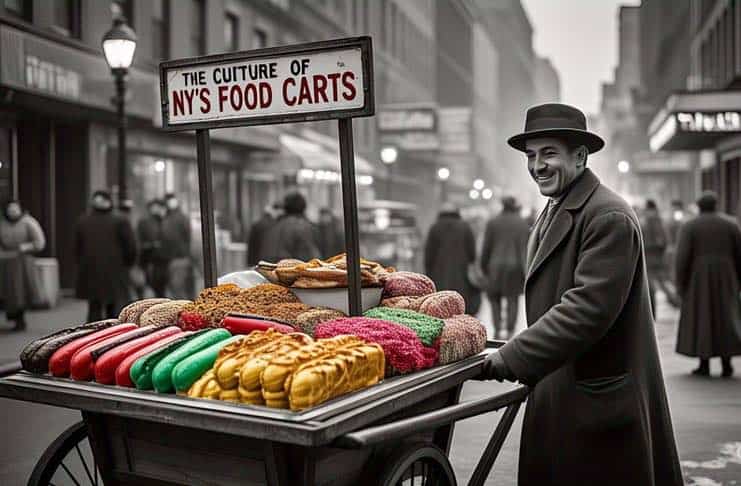
The story of NYC’s food carts stretches back to the 1800s, when immigrant vendors first rolled their wooden pushcarts through the Lower East Side. They sold fruits, breads, peanuts, and pickles—anything they could prepare cheaply and sell quickly. These carts provided sustenance to the working class and a starting point for thousands of entrepreneurial dreams. Read more about the history of NYC’s food carts here.
By the early 20th century, as the city grew more industrial and structured, food carts multiplied. Vendors became part of the street architecture, offering low-cost meals to construction workers, cab drivers, and hurried pedestrians. With only a small investment, immigrants could run their own business, earn a living, and build roots in a new land. Street vending became a gateway to the American dream. For one of the deepest examples of this immigrant food community in action, see how Tibetan refugees built the Himalayan food corridor in Jackson Heights.
Curious about the history of NYC’s famous hot dog? Watch this video to learn more:
The Global Menu
Walk ten blocks in any New York borough and you’re likely to pass food carts offering everything from Dominican chimi burgers to Egyptian koshari, from Bangladeshi biryani to Korean bulgogi wraps. The food cart scene is an edible map of immigration.
Each wave of newcomers brought their spices, techniques, and food rituals. Halal carts rose to prominence in the 1990s, offering halal chicken and lamb over rice to a diverse clientele. Latin American vendors introduced tamales and tacos wrapped in foil. Southeast Asian carts brought noodle dishes and sweet iced teas. For many of these vendors, food is both livelihood and cultural expression.
It’s not just about nourishment. These meals tell stories—of migration, struggle, celebration, and adaptation. A cart’s menu often reflects generations of knowledge, family recipes, and the desire to share one’s culture through flavor.
The Business Behind the Scenes
A complicated business landscape lies behind the comforting smell of sizzling meat or fried dough. Operating a food cart in New York is not simple. Vendors must navigate a web of city permits, inspections, fees, and stiff competition. For decades, the city capped the number of available vending permits, creating a black market where legal permits could sell for tens of thousands of dollars.
Add to that the physical demands: long hours, harsh weather, storage logistics, and the need to stay mobile and quick. Most food cart vendors work six or seven days a week, starting before dawn and ending late into the night. The dedication is immense. Many vendors are also family-run—spouses, children, and cousins helping with prep, service, or supply runs.
Still, the upside is powerful. For those without access to large capital or formal business networks, food carts offer independence. They are one of the few remaining entry points into NYC’s hyper-competitive food industry.
Watch this video to learn more about how much it costs to start a food cart in NYC:
From Pushcarts to Food Bikes
As the city evolves, so too does its approach to vending. Real estate prices, traffic congestion, and environmental awareness are pushing vendors to adapt. One exciting shift is the emergence of food bikes—pedal-powered carts designed for mobility, sustainability, and modern design. They’re smaller, cleaner, and better suited to dense pedestrian zones or parks.
Food bikes are not just trendy—they’re practical. They reduce the reliance on fuel, require less parking space, and can be moved easily in case of crowd flow, weather, or enforcement. In a city focused on eco-conscious solutions and efficient urban planning, these innovations represent a natural evolution.
A Community Staple
Food carts don’t just serve food—they build community. A familiar vendor might know your name, your order, and your job. Over time, these micro-interactions build trust and connection. For many New Yorkers, “their” cart is part of their routine, their neighborhood identity, their daily rhythm.
Carts often become small landmarks—meeting points, late-night saviors, or the one place that knows how to make your coffee just right. This intimacy is rare in the world of chain restaurants and fast-food joints. Street vendors remind us that food is personal, even on the go.
Challenges and the Road Ahead
Despite their cultural and economic value, food cart vendors face ongoing challenges. City regulations remain complex. Many operate in legal gray areas, risking fines or confiscation. The permit system, while slowly reforming, is still restrictive. Health inspections and public space limitations are often inconsistently enforced.
And yet, the food cart community endures—resilient, adaptive, and proud. Grassroots organizations and advocacy groups are working to secure rights for vendors, provide training, and push for modern policies that recognize the essential role carts play in the city’s food ecosystem.
The future of food carts may include mobile payment systems, solar-powered carts, digital ordering, and co-op models. But at its core, the spirit will remain: serve good food, keep moving, and be part of the city’s pulse.
Conclusion
New York City’s food carts are more than portable kitchens. They are storytellers on wheels, ambassadors of tradition, and engines of urban entrepreneurship. From the first immigrant pushcart to the rise of the modern food bike, they reflect a city constantly in motion yet deeply rooted in its people.
Whether you’re grabbing a quick breakfast or exploring new flavors on your lunch break, the next time you approach a food cart, remember—you’re not just buying food. You’re supporting a legacy.