
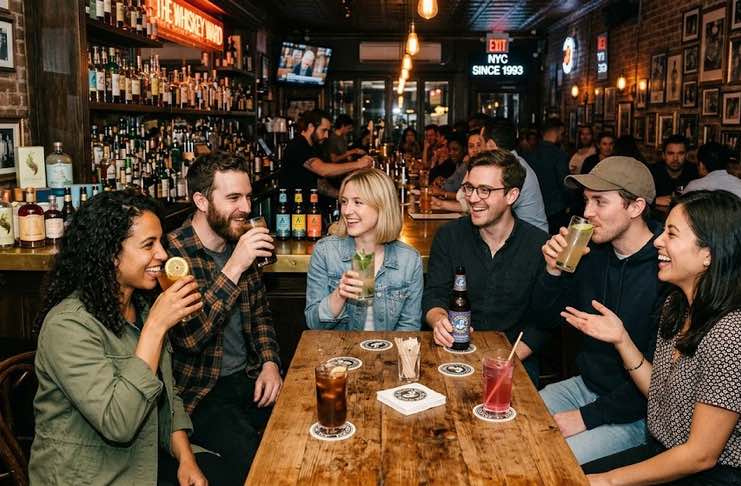
New York, the city that never sleeps, with its late nights, cocktail culture, and indulgence. However, in recent years, there has been a bit of a shift, with the rise of sobriety movements across the city.
While addiction has been an issue across NYC and many other parts of the States, with a huge rise in people suffering from alcohol dependence, there are also changing social norms, with younger generations especially reshaping both the nightlife and the city’s entire food scene.
In 2026, alcohol is no longer the default centrepiece of dining and socialising; instead, a more inclusive, mindful approach is emerging.
The Rise of the Sober-Curious Generation
At the heart of this transformation is the so-called “sober-curious” movement. Led largely by Gen Z, many consumers are choosing to drink less, or not at all, while still seeking rich social experiences. This is not necessarily about abstinence, but about intentionality. As one industry insight notes, younger drinkers are more conscious of alcohol’s impact and therefore consume it less frequently.
For restaurants, this shift represents both a challenge and an opportunity. Traditional business models have relied heavily on alcohol sales for profit margins. However, declining consumption is forcing operators to rethink how they attract and retain customers.
The Evolution of the Drinks Menu
One of the most visible changes is the transformation of drink menus. Gone are the days when non-drinkers were limited to sugary soft drinks or basic juices. Today, restaurants across NYC are investing in sophisticated “zero-proof” offerings, carefully crafted beverages designed to complement food just as wine or cocktails would.
If you want a front-row seat to this shift, head straight to Superbueno in the East Village — it landed on the 2025 World’s 50 Best Bars list, and its zero-proof menu is anything but an afterthought. The Mole Negroni brings that familiar bittersweet depth with a kick of spice, while the La Shamami layers pomegranate fig tonic with sour apple agua fresca. Over in Brooklyn, Golden Ratio in Clinton Hill has taken a zero-waste, fiercely seasonal approach — every single cocktail on the menu has a thoughtfully matched non-alcoholic counterpart, not just a “de-boozed” version. Meanwhile, Bangkok Supper Club earned a Michelin Guide Exceptional Cocktails Award, and their non-alcoholic options are just as bold — think Seedlip-infused beet drinks balanced with mango, honey, and a cream cheese float.
Watch this CBS video to get a glimpse:
These drinks often feature botanical spirits, house-made syrups, and complex flavour profiles. In many venues, non-alcoholic options are given equal prominence on menus, reflecting a broader shift towards inclusivity. Some establishments even offer alcohol-free versions of every signature cocktail, ensuring that no guest feels like an afterthought.
The Emergence of Alcohol-Free Venues
Perhaps the most striking development is the rise of entirely alcohol-free spaces. What once seemed like a contradiction, bars without alcohol, is now one of the city’s most dynamic trends. Venues such as sober bars and alcohol-free members’ clubs are redefining what a night out can look like.
NYC now has a proper constellation of these spaces, and they are nothing like what you’d expect. No More Cafe in the East Village describes itself as a space built for long afternoons and late arrivals — coffee at noon or cocktails at eight, with a menu that ranges from focus-oriented to “vibey.” It’s the kind of place where you can work with headphones in or talk until midnight. Over in Park Slope, Mockingbird holds the title of South Brooklyn’s first-ever sober bar, offering clever zero-proof cocktails, a selection of NA beers and wines, and small bites. And then there’s Hekate Café & Elixir Lounge — an intimate sober bar and bottle shop serving 0% ABV beers, wines, and a vast array of alcohol-free elixirs.
Watch this video to get a glimpse of No More Cafe in the East Village:
These spaces prioritise atmosphere, design, and social connection over intoxication. For example, new concepts in NYC offer everything from curated music and intimate lounges to co-working areas and dining spaces, all without alcohol.
Importantly, these venues are not niche. They attract a diverse clientele, including those in recovery, health-conscious consumers, and individuals simply looking for a different kind of experience. The appeal lies in offering the energy of nightlife without its downsides.
Dining as a Holistic Experience
Sobriety movements are also influencing how restaurants think about the overall dining experience. Increasingly, food and drink are being viewed through a wellness lens. Ingredients associated with health benefits, such as adaptogens, herbs, and functional mushrooms, are appearing in both dishes and drinks.
Nowhere is this more literal than at Third Kingdom in the East Village — an all-mushroom restaurant from Overthrow Hospitality where Lion’s Mane Dumplings and Black Pearl Oyster Mole Enchiladas are the stars of the show, celebrating fungi not as a meat substitute but as a culinary art form in their own right. According to PlanetFood News on the drinks side, Public Records in Gowanus has built its entire NA program around drinkable vinegars and housemade shrubs — their Sobril “Tequila” riff uses a tart grapefruit shrub balanced with lime and agave, and you can pair it with live music. According to Time Out, abcV on Bond Street also leans hard into this wellness-meets-dining ethos, with locally sourced tonics and elixirs that pair directly with their organic food menu.
Check out this reel about Public Records:
At the same time, the focus is shifting towards connection and presence. Without alcohol as a social lubricant, restaurants are reimagining how guests interact with one another and their surroundings. The result is often a more intentional, immersive experience, one that prioritises conversation, flavour, and atmosphere over excess.
A More Inclusive Hospitality Model
One of the most significant impacts of the sobriety movement is increased inclusivity. Traditional dining culture can be alienating for those who do not drink, whether for health, religious, or personal reasons. By expanding non-alcoholic options and normalising alcohol-free spaces, NYC’s food scene is becoming more accessible to a wider audience.
The proof is in how mainstream this has become. The inaugural NYC Best Bars for NA Awards in January 2025 named standouts, including Sugar Monk, Dante, Lobby Bar at Hotel Chelsea, and Pearl’s Social & Billy Club in Bushwick — showing that the best NA programming is now spread across every borough and every kind of venue, from low-key neighbourhood dives to maximalist hotel bars. According to Time Out, retail spaces like Spirited Away — considered one of the first non-alcoholic bottle shops in NYC — and Minus Moonshine in their curated shop have also made alcohol-free drinking something you can explore at home, hosting community events and tastings that bring people together around the category.
Watch this video to get a glimpse of Spirited Away:
This inclusivity extends beyond customers to staff as well. As attitudes towards alcohol evolve, many hospitality professionals are reassessing their own relationship with drinking, contributing to broader cultural change within the industry.
Challenges and Opportunities for Restaurants
Despite its benefits, the shift is not without challenges. Alcohol has historically been a high-margin product, and replacing that revenue is not straightforward. Restaurants must invest in new ingredients, training, and creativity to develop compelling alternatives.
However, the potential rewards are significant. The growing demand for alcohol-free options represents a new market segment, one that is engaged, loyal, and often willing to spend on high-quality experiences. Moreover, embracing sobriety trends can enhance a restaurant’s brand, signalling innovation and social awareness.
The Future of NYC’s Food Scene
As sobriety movements continue to gain momentum, their influence on NYC’s food scene is likely to deepen. Alcohol will not disappear, but its dominance is clearly diminishing. In its place, a more balanced and inclusive model of hospitality is emerging, one that values choice, creativity, and wellbeing.
In a city known for reinvention, this shift feels both inevitable and exciting. By embracing sobriety movements, New York’s restaurants are not losing their edge; they are redefining it.
- About the Author
- Latest Posts

Anthony McGovern is an NYC-based food writer and culinary explorer dedicated to mapping the city’s rich, diverse street food landscape. From tracing the deep immigration histories behind Chinatown’s dumpling shops to hunting down the best late-night taco trucks on Roosevelt Avenue, Anthony focuses on the stories, people, and generations-old traditions that define New York’s food scene