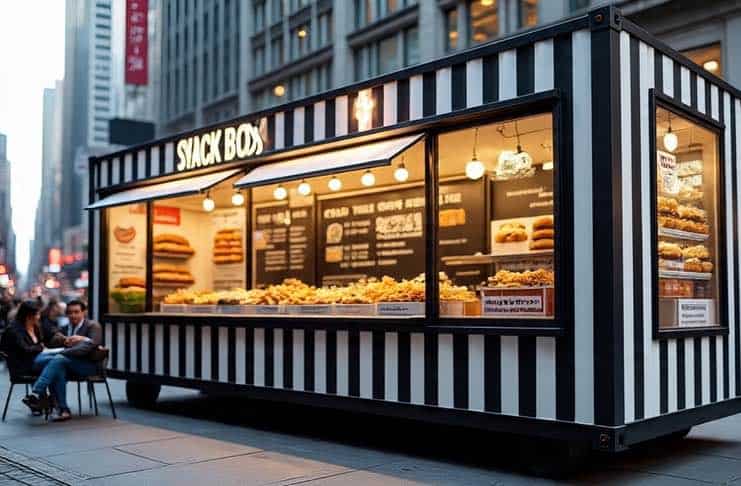
In the heart of Times Square, where neon lights buzz, taxis honk, and tourists flow like a river, something small made a big statement.
It wasn’t a flashy billboard or celebrity pop-up. It was a 20-foot gourmet food kiosk called SnackBox, and it quietly redefined what New Yorkers and the millions who visit expect from street food.
Housed in a compact shipping container in New York, SnackBox wasn’t just about aesthetics or novelty. It was a bold culinary concept designed to bring chef-quality food to the city’s busiest street corner with speed, sustainability, and style.
Watch this video to get a glimpse:
A Box With a Bigger Vision
At first glance, SnackBox looked like a minimalist art installation tucked between the chaos of Times Square. But open its sleek black-and-white panels, and the scent of sizzling sliders, truffle fries, and gourmet hot dogs told you this was no ordinary snack shack.
The idea? Take a compact footprint, originally just a shipping container, and reimagine it as a destination for food lovers, not just a pit stop for hungry pedestrians.
Restaurateur Jonathan Morr, known for upscale spots like BondST, tapped Montreal-based designers Aedifica and MuvBox to transform the structure. The result was a fold-out, energy-efficient kiosk with solar panels, water tanks, and a high-end food prep setup packed into less than 200 square feet.
It wasn’t just smart. It was stylish. And more importantly, it delivered real flavor.
What Was on the Menu?
SnackBox wasn’t just a design marvel; it was also a culinary hit, offering a tightly curated menu that packed big flavor into every bite. The goal was clear: to serve up quick, grab-and-go dishes that didn’t sacrifice quality or creativity, perfect for the busy New Yorkers and tourists rushing through Times Square but still craving something memorable and satisfying.
- The menu focused on simple, familiar foods but elevated them to a gourmet level with high-quality ingredients and inventive twists. Here’s a taste of what made SnackBox stand out:
- Mini sliders crafted from premium, locally sourced beef, juicy and perfectly seasoned, served on freshly baked buns that balanced the richness of the meat. These sliders quickly became a lunchtime favorite, offering a satisfying bite that could be eaten in a hurry without losing any of their gourmet charm.
- Truffle mac and cheese, a comforting classic transformed into a decadent indulgence with the addition of rich truffle oil and a blend of artisanal cheeses. This dish was so popular it often drew long lines during peak lunch hours, proving that a humble comfort food could shine in the fast-paced street food scene.
- Gourmet hot dogs that went far beyond the traditional NYC frank. SnackBox topped theirs with creative and unexpected ingredients like tangy kimchi and sweet mango salsa, introducing bold, fusion flavors that keep customers coming back for more.
- Hand-cut fries, crispy on the outside and fluffy inside, seasoned with either fragrant parmesan or a smoky Cajun spice blend. These fries were the perfect sidekick, adding a satisfying crunch and flavor punch to every order.
- And of course, no New York street food experience would be complete without classic soft drinks and desserts. SnackBox offered these favorites to round out the meal, delivering a full, well-rounded dining experience in a compact space.
What set SnackBox apart was its laser focus on doing a few things extraordinarily well. By keeping the menu tight and honing in on quality and flavor, it avoided the pitfalls of overly complicated street food menus that try to do too much and end up doing little well.
This winning formula didn’t go unnoticed. Major food publications like Food & Wine, Eater, and even The New York Times gave nods to SnackBox’s innovation, praising its ability to blend culinary creativity with practical street food service. The positive buzz helped solidify SnackBox’s reputation as not just another food kiosk, but a pioneer in reimagining what street food could be in New York City.
Why It Mattered (Especially in Times Square)
Times Square is a notoriously tough neighborhood for food. Rents are outrageous, foot traffic is unpredictable, and trends change faster than Broadway marquees.
SnackBox tackled these challenges with:
- Mobility – A structure that could be placed (and potentially moved) based on seasonal demand
- Sustainability – Eco-conscious features like reclaimed materials, solar power, and water efficiency
- Speed – Quick setup, quick service, quick wins
SnackBox wasn’t just serving customers. It was testing a business model that others quickly noticed.
The same logic has now been embraced by shipping container coffee shops, mobile eateries, and even retail kiosks around the city.
SnackBox’s Influence on Today’s Food Scene
While SnackBox itself may no longer occupy Times Square, its influence lives on in other compact, creative food experiences across the city.
Pop-ups like Smorgasburg, container-based bars in Brooklyn, and gourmet food trucks across Manhattan now follow a similar model:
- Small footprint
- Big flavors
- Flexible design
- Lower startup costs
Even major brands like Blue Bottle Coffee and Shake Shack have tested modular café concepts proof that SnackBox was early to a very smart trend.
This shift in how New Yorkers consume food mirrors the shift in how they live: more mobile, more mindful, more design-conscious.
For more stories like this one, check out NewYorkStreetFood.com.
The Broader Movement Toward Modular Food Experiences
SnackBox wasn’t operating in a vacuum. Cities across the U.S., from Austin to Portland, have seen the rise of small-footprint food models.
But in a place like New York, where real estate is religion, the SnackBox concept was particularly radical.
According to NYC.gov, the city is home to over 20,000 food businesses. The costs of opening a traditional restaurant here can easily top $1 million when you factor in lease agreements, build-outs, and permits.
SnackBox’s success showed that you don’t need a million bucks to start feeding people, you just need a good idea, a small space, and great food.
Challenges? Of Course.
SnackBox wasn’t without hurdles.
Navigating permits and zoning laws in Times Square is notoriously tricky. In fact, setting up any container-based operation in NYC requires compliance with specific guidelines outlined by the NYC Department of Transportation’s container permit regulations.
Plus, working in a small container-style space meant every square inch had to be maximized for efficiency, from staff workflow to storage.
And let’s be real: NYC winters aren’t kind to outdoor food vendors, container or not.
But none of these challenges outweighed the impact.
SnackBox sparked conversations about how food can fit into cities, not just in terms of flavor, but also footprint.
Final Bites
In a city known for hustle, heat, and high-rises, SnackBox reminded us that great food doesn’t need a fancy address or a sprawling kitchen. It just needs intention, smart design, and heart.
Whether you’re a foodie hunting for the next big thing or an entrepreneur dreaming of your first concept, SnackBox’s story offers inspiration:
Small ideas can have huge ripple effects, especially when served hot in the middle of Midtown madness.
- About the Author
- Latest Posts

Anthony McGovern is an NYC-based food writer and culinary explorer dedicated to mapping the city’s rich, diverse street food landscape. From tracing the deep immigration histories behind Chinatown’s dumpling shops to hunting down the best late-night taco trucks on Roosevelt Avenue, Anthony focuses on the stories, people, and generations-old traditions that define New York’s food scene