
A sharp, well-designed knife can transform any cooking experience. Many chefs prefer Japanese-style blades for their balance and precision. These tools help in chopping, slicing, and dicing ingredients quickly and evenly. In today’s kitchens, the use of nakiri knives has become common because they combine traditional design with modern performance that fits perfectly in both home and restaurant cooking setups. The flat, thin edge makes each cut smooth and consistent.
My Experience
I was recently chatting with a sous chef at a downtown Japanese fusion spot, and they swore by the Nakiri for their meat trim. They told me that seeing the knife’s consistent, clean slicing capability—not just on cucumbers, but on a tender sirloin—is what sold them on Japanese steel.
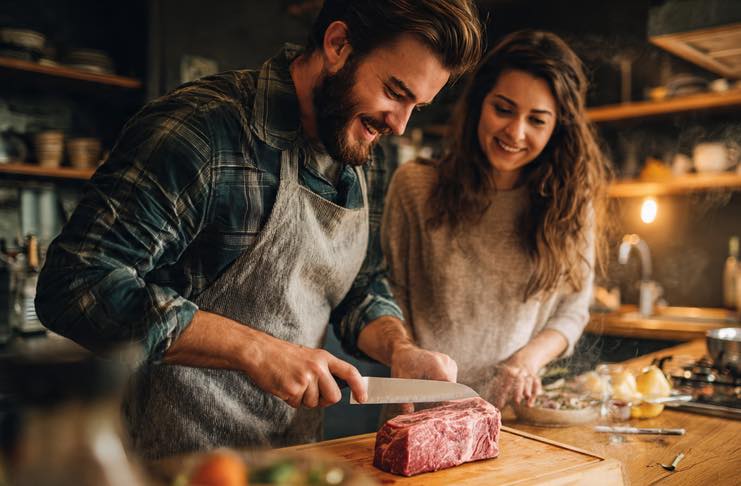
Professional cooks and home chefs alike rely on quality craftsmanship to make meal prep easier. The art of clean cutting also keeps food textures intact for better presentation. In this post, as part of our kitchen tips, we’ll discuss how to use a Nakiri knife in preparing your beef dishes at home. But let’s start with the basics of how to keep your meat fresh and safe before you start cutting it with your Nakiri knife…
Keeping Meat Fresh and Safe in Storage
Proper food storage is a major pillar of kitchen safety. When dealing with meat, it’s important to handle it correctly from the start to prevent bacterial growth and maintain quality. Always store ground beef in the refrigerator under controlled temperature, ideally below 40°F (4°C), for consistent safety and flavor. To maintain freshness and prevent oxidation, keep the meat tightly wrapped in sealed containers to avoid air exposure and odor. Crucially, always separate raw meat from other cooked and ready-to-eat products; store uncooked items on the lower shelves of the fridge to stop any potential drips from causing cross-contamination. Ensure proper airflow inside the fridge, and use labeling to accurately track freshness dates. This careful handling not only extends freshness but also ensures optimal food safety.
My Experience
I spoke with a butcher down in the Meatpacking District who handles hundreds of pounds of beef daily. He told me the number one rule is “cold, cold, cold,” stressing that the moment you lose control of the temperature, you’re compromising flavor and safety, especially in high-volume settings.
Watch this reel for more tips:
Why the Nakiri’s Precision Blade Ensures Accuracy and Efficiency
Every great chef values the importance of precision. Balanced knives create uniform cuts that improve both cooking and presentation. The straight-edged design allows for smooth downward slicing instead of rocking motions, which is key to maintaining consistent cuts and the integrity of your ingredients. Sharp, high-quality knives, especially those made from durable, high-carbon steel like the Nakiri, reduce preparation time and help you prepare meals faster and more safely. The straight blade is ideal for slicing vegetables, trimming fat, or portioning soft meats like beef. Whether preparing fine herbs or larger items, the Nakiri’s combination of elegance, sharpness, and perfect weight distribution results in superior accuracy with less effort.
My Experience
Over at a tiny, high-end tasting menu spot in Brooklyn, a young chef explained to me that the straight blade is a total game-changer for consistency. He said that a rocking motion tends to compress the meat fibers, but the Nakiri’s straight chop slices through without bruising, making the final cook and presentation perfect every single time.
Safe Handling: Hygiene During Preparation
Safe meat handling and proper storage are the foundation of kitchen hygiene, essential for preventing foodborne illness and preserving flavor. Always begin by washing your hands before and after touching raw meat. When preparing beef, be sure to use the flat, thin blade of your Nakiri knife exclusively on a dedicated cutting board for meat. Never use that same board (or knife) immediately after on vegetables or cooked foods without thorough cleaning; this is key to avoiding cross-contamination. By maintaining impeccable hygiene and using different boards and knives for different ingredients, you ensure a safe and efficient cooking process.
Watch this reel for some more tips:
My Experience
Talking to a catering prep chef about the chaos of large events, he emphasized the “one-board, one-job” rule. He recounted how one tiny slip-up with a cross-contaminated knife or board can ruin a whole batch of food, making strict separation the absolute foundation of his kitchen workflow.
Post-Prep Cleanup and Knife Care
After cutting beef, immediate and proper cleanup is vital. Because your Nakiri knife often uses high-carbon steel for superior sharpness, it requires special attention. Wash your Nakiri immediately in warm, soapy water after use; acids and moisture from meat juices can cause corrosion or rust if left on the blade. Never place your fine Nakiri knife in the dishwasher. Use separate, clearly labeled containers for storage, checking expiration dates religiously. If meat exhibits any off-odors or a slimy texture, discard it immediately. By maintaining impeccable hygiene, separating ingredients using different boards and knives, and ensuring your high-quality tools like the Nakiri are cleaned right away, you lock in freshness and maintain a safe, efficient kitchen.
My Experience
An older, very experienced Japanese chef in Manhattan practically shuddered when I asked about putting high-carbon steel in the sink. He said, very simply, “You buy beautiful steel, you treat it like gold. A dishwasher is not gold. Hand wash immediately, or it dies.”
Frequently Asked Questions (FAQ)
Nakiri Knives and Cutting
Q: Can I use a nakiri knife to prepare beef, even though it’s traditionally a vegetable knife? A: Yes. While the nakiri is designed for precise, straight vegetable cuts, its thin, flat blade is excellent for trimming fat, slicing thin pieces of soft meat (like tenderloin or sirloin), and portioning boneless cuts of beef. Its straight edge promotes clean, consistent slices without the tearing caused by rocking motions.
Q: What is the main difference between a nakiri and a Western chef’s knife? A: The main difference is the blade profile. A Western chef’s knife has a curved belly designed for a rocking motion. The nakiri has a completely straight, flat edge designed for a precise, straight up-and-down (tap-chop) motion, which is ideal for uniform slices and dicing.
Q: Can I use my nakiri knife on bones or very hard joints? A: No, absolutely not. Nakiri blades are typically thinner and made of harder steel than cleavers. Using a nakiri on bone or frozen meat will likely chip or damage the fine edge of the blade. Always use a dedicated bone cleaver for such tasks.
Meat Storage and Safety
Q: What is the absolute safest temperature for storing ground beef in the refrigerator? A: Raw ground beef (and all raw meat) should be stored in a refrigerator that maintains a temperature of 40°F (4°C) or below. Use a refrigerator thermometer to confirm this temperature, as consistency is key to safety.
Q: How long is ground beef safe to keep in the refrigerator? A: Raw ground beef is generally safe to keep in the refrigerator for 1 to 2 days after purchase. If you don’t plan to use it within that timeframe, it should be frozen immediately.
Q: How can I prevent cross-contamination in my refrigerator? A: To prevent cross-contamination, always:
- Store raw meat (like ground beef) on the lowest shelves of your refrigerator to ensure that any potential juices or drips do not fall onto ready-to-eat foods or produce below.
- Keep raw meat in tightly sealed containers or plastic bags.
- Use separate cutting boards for raw meat and other ingredients.
Q: Why do chefs recommend high-carbon steel for knives? A: High-carbon steel is recommended because it allows the knife to hold a sharper edge for longer compared to softer stainless steel, leading to more efficient and precise cuts during preparation.