
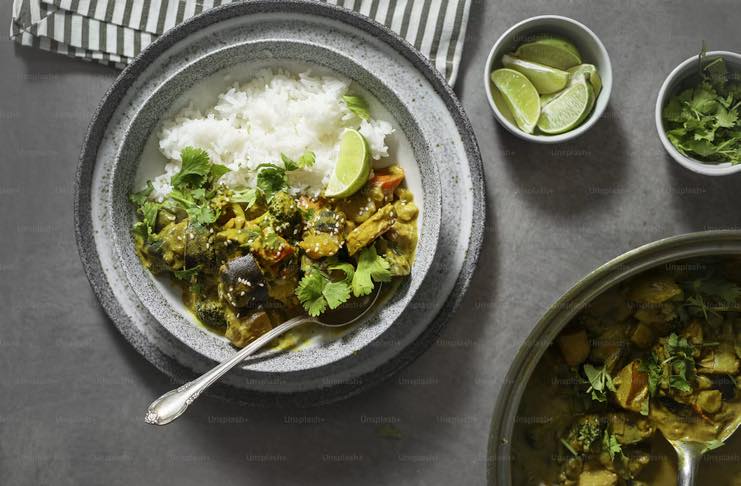
Dal bhat is Nepal’s everyday meal: spiced lentil soup (dal) ladled over steamed rice (bhat), with a vegetable curry and a spoon of pickle on the side. A home version takes about 45 minutes, needs two pots and two pans, and costs about $2 a serving with supermarket ingredients. Trekkers in the Himalaya eat it for lunch and dinner for weeks at a stretch, which says a lot about how well the dish holds up to repetition.
What is Dal Bhat?
Dal bhat is a complete plate, not a single dish. Rice sits in the center, a thin lentil soup goes over or beside it, and small portions of curry and pickle add texture and heat. The pairing of lentils and rice grew out of South Asian farming traditions, where both crops were staples.
Nepali dal is thinner than the dals ladled out at New York’s Indian food carts. It is meant to be poured and mixed into the rice by hand, so the texture is closer to soup than stew. Watch this video to get a glimpse:
Why Do Trekkers in Nepal Eat Dal Bhat Twice a Day?
Trekkers eat dal bhat because it delivers slow-burning carbohydrate, plant protein and salt in one hot meal, and because seconds are free. The habit has its own slogan, printed on T-shirts across Kathmandu: “Dal bhat power, 24 hour.”
On the Manaslu Circuit trek, a two-week walk around the world’s eighth-highest mountain, teahouse kitchens refill rice and dal until the plate is pushed away. Guides and porters eat the same meal, which also makes it the fastest order in a kitchen that cooks one pot for everyone.
What Ingredients Are Needed for Dal Bhat?
The recipe below serves four and uses ingredients stocked by any large supermarket or South Asian grocery. Every part of the plate is meat-free, which puts it in the same family as the city’s vegetarian street food.
For the rice (bhat)
- 2 cups basmati or other long-grain white rice
- 3 cups water
- 1/2 teaspoon salt
For the lentils (dal)
- 1 cup (200 g) split red lentils
- 4 cups water
- 1 medium tomato, chopped
- 1-inch piece of ginger, grated
- 1/2 teaspoon ground turmeric
- 1 teaspoon salt
For the tempering (jhaneko)
- 2 tablespoons ghee
- 1 teaspoon cumin seeds
- 3 garlic cloves, thinly sliced
- 1 dried red chili
For the vegetable curry (tarkari)
- 2 tablespoons neutral oil
- 1/2 teaspoon cumin seeds
- 1 small onion, sliced
- 2 medium potatoes, cut into 3/4-inch cubes
- 1/2 small cauliflower, cut into florets
- 1/2 teaspoon ground turmeric
- 1 teaspoon ground cumin
- 1 teaspoon ground coriander
- 1/2 teaspoon chili powder
- 3/4 teaspoon salt
- 1/2 cup water
For the tomato pickle (achar)
- 2 ripe tomatoes
- 1 garlic clove
- 1 green chili
- 1 tablespoon toasted sesame seeds
- 1/4 teaspoon salt
- Juice of half a lemon
Watch this video for another easy Dal Bhat recipe for beginners:
How is Dal Bhat Made Step by Step?
All four parts cook at the same time, so the full plate is ready in about 45 minutes.
- Start the rice. Rinse the rice until the water runs clear. Bring it to a boil with the water and salt, cover, and cook on the lowest heat for 15 minutes. Leave it covered off the heat for 10 minutes.
- Simmer the dal. Rinse the lentils and place them in a second pot with the water, tomato, ginger and turmeric. Bring to a boil, skim the foam, and simmer partly covered for 20 minutes until the lentils collapse. Stir in the salt and whisk for 10 seconds to make a smooth, pourable soup.
- Cook the tarkari. Heat the oil in a wide pan over medium heat. Add the cumin seeds for 10 seconds, then the onion for 3 minutes. Stir in the potatoes and ground spices for 2 minutes, add the cauliflower and water, cover, and cook for 12 to 15 minutes until the potatoes are tender and the pan is nearly dry.
- Make the achar. Char the tomatoes in a dry pan or under the broiler for 6 to 8 minutes until the skins blacken. Blend or pound them with the garlic, green chili, sesame seeds, salt and lemon juice.
- Temper the dal. Heat the ghee in a small pan until it shimmers. Add the cumin seeds and dried chili, then the garlic 10 seconds later, and fry for 30 to 40 seconds until golden. Pour the sizzling ghee over the dal and cover the pot for one minute to trap the aroma.
- Plate it. Mound the rice in the center of the plate, pour the dal over one side, and set the tarkari and achar beside it.
Three details decide the result. The garlic in step 5 must come off the heat while golden, because browned garlic turns the whole pot bitter, and the dal needs a splash of hot water if it thickens while waiting.
The third is the potato. Cubes cut to 3/4 inch need the full 12 to 15 minutes, and a knife tip that slides in without resistance means the tarkari is done.
The achar gets its smoky depth from blackened tomato skins. It is a close cousin of the sauce spooned over momo at the Tibetan and Himalayan food carts of Jackson Heights, and leaving the charred bits in the blend is what separates it from a plain salsa.
How Many Calories Are in a Plate of Dal Bhat?
One serving of this recipe provides roughly 700 calories, 21 g of protein and 10 g of fiber. The figures below are estimates built from USDA FoodData Central values for each ingredient and will shift with portion size.
| Part of the Plate | Calories | Protein (g) | Fiber (g) |
| Rice, 1 1/2 cups cooked | 310 | 6 | 1 |
| Dal with tempering | 230 | 12 | 5 |
| Potato and cauliflower tarkari | 150 | 3 | 4 |
| Tomato achar | 15 | 0 | 0 |
| Total | 705 | 21 | 10 |
Ten grams of fiber is 40 percent of the 25 g a day that Mayo Clinic sets as the target for women under 50. Most of it comes from the dal and the vegetables.
Lentils and rice complement each other. Grains are low in the amino acid lysine and lentils are low in methionine, so the two together supply a fuller protein profile than either one alone.
The lentils carry more than protein. Harvard’s Nutrition Source lists lentils as a source of folate, iron and potassium, and the USDA’s MyPlate guidance counts beans, peas and lentils toward both the vegetable and protein food groups. They belong to the same legume family as the chickpeas behind New York’s falafel styles, with a much shorter cooking time.
What Can Be Swapped if an Ingredient is Missing?
Dal bhat is a template, and Nepali cooks change it with the season. These swaps keep the plate close to the original.
| Ingredient | Swap | What Changes |
| Red lentils | Yellow split mung or split pigeon peas | Cooking time rises to 30 to 40 minutes |
| Ghee | Mustard oil or any neutral oil | The plate becomes vegan |
| Cauliflower | Green beans, spinach or pumpkin | Leafy greens need only 3 to 4 minutes |
| Basmati rice | Brown rice | Add 1/2 cup water and 25 minutes |
| Sesame seeds in the achar | Roasted peanuts | A thicker, richer pickle |
Traditional kitchens in the hills finish the tempering with jimbu, a dried wild herb from the onion family. A pinch of dried chives added with the garlic gives a similar note.
How Should Leftover Dal Bhat Be Stored and Reheated?
Store each part in its own container. Dal and tarkari keep three to four days in the fridge, the window that Michigan State University Extension gives for cooked leftovers, and dal freezes well for three months.
Rice needs more care. Cool it within an hour, refrigerate it, eat it within three days, and reheat until steaming hot all the way through. Dal thickens overnight, so loosen it with a few tablespoons of water while reheating.
Conclusion
Dal bhat proves that a filling, balanced dinner can come from a bag of lentils, a pot of rice and a handful of spices. The work is simple: simmer, temper, and serve everything together. A double batch of dal on Sunday covers lunches through Wednesday, and changing the vegetable in the tarkari keeps the plate from feeling like a repeat.