
A crowded festival or street fair in New York City is a great problem to have—until the drinks line curls around vendor stalls. In a city where time is money, the longer guests wait, the more impulse orders evaporate, and the more your staff feels squeezed. A tap trailer flips the script. It turns throughput from a guessing game into a repeatable system, so service stays fast and quality stays consistent even when demand spikes. In this post, as part of our food business tips, we’ll explore how a tap trailer speeds things up.
How a Tap Trailer Speeds Things Up
Let’s start with what causes delays. Hand-mixed cocktails or single-pour bottles require several micro-steps—fetching ice, measuring, shaking, garnishing, processing payment, then resetting for the next guest. Each adds seconds and cognitive load. A tap trailer removes most of that friction. Kegs are pre-batched or connected to dedicated lines, CO₂ drives consistent pours, and integrated drip trays and rinsers keep the workspace “ready” between orders. The result is fewer decisions per drink and a shorter cycle time.
Treat the line like a small assembly line. If one poured pint takes 10–12 seconds and the POS runs in parallel, a single bartender can move 25–30 drinks per 10 minutes. Add a second staffer for payment and ID checks, and you’ve created two synchronous lanes. That separation eliminates the start-stop rhythm that usually kills speed.
Designing Your NYC Pop-up for Performance
The tap trailer is the engine, but your layout is the aerodynamics. Place the order point before the trailer, not at the spigot. Use clear menu boards and a short “decision zone” so guests choose before they reach the pour. Position the exit away from the entrance to reduce cross-traffic. Keep kegs at working height and route lines to minimize bends; fewer turns equal fewer foam headaches—a critical concern on a hot Brooklyn summer day.
Staffing also matters. One person should quarterback flow: greeting, carding, and steering guests to the pickup window. The second handles pours. A third floats—swapping kegs and resetting the station. With roles defined, nobody breaks rhythm to hunt for cups or sleeves.
Quality on Tap: Consistency, Temperature, and Foam Control
Speed is worthless if the drink isn’t good. Tap trailers help by standardizing the variables that drift during rushes. Kegged cocktails or beer live in a controlled temperature zone, so the first pour at 10 a.m. at a Queens Night Market tastes like the last pour at dusk. CO₂ and nitrogen blends keep carbonation steady. Flow control faucets tame turbulence and protect aroma for fruited sours, cold brew, or spritzes.
Foam management is where most booths lose quality. Over-chilled lines, sharp bends, and dirty hardware introduce over-foam and waste. Calibrate PSI for each product, keep your run length appropriate, and sanitize lines daily. When dialed in, you’ll get a tight head on beer, a polished pour on wine and cocktails, and minimal overpour.
Mid-day, run a quick taste check. Pull an ounce, verify temperature and carbonation, and adjust pressure or line resistance if needed. Changes propagate instantly; you’re not chasing shakers or syrup ratios across stations.
Real-World Math: What a Line-Busting Setup Earns
Compare a hand-mix booth to a tap-forward booth during a Saturday peak. Assume average ticket value at $15—typical for a craft cocktail at an NYC festival. With hand-mixing, a bartender might average 45–55 seconds per drink, or roughly 65–80 drinks per hour. With a tuned trailer, 12–15 seconds per pour is normal, which supports 180–240 drinks per hour for the same person, especially when transactions run in parallel. Even landing in the middle yields a big jump: an extra 80–100 tickets in a single peak hour.
Margins improve as well. Waste from overpours and remakes typically sits between three and six percent for hand-mixed service. A calibrated tap system can cut that in half. Over a market day, the saved product plus the extra tickets usually covers your rental or haul costs—and then some.
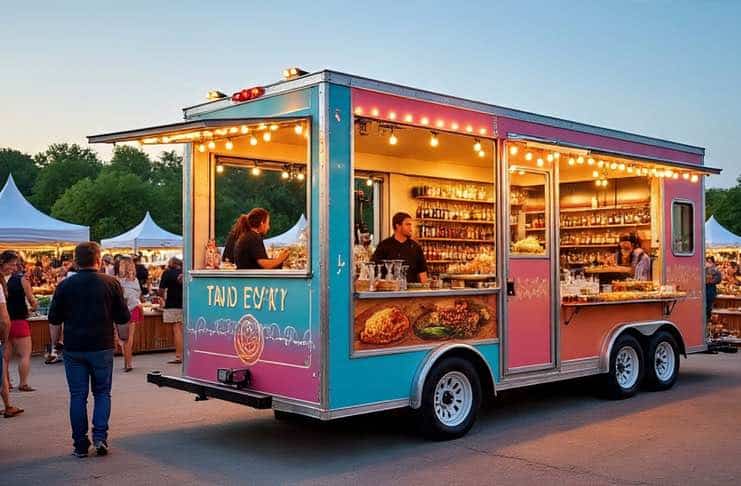
As your calendar fills, look at mobile solutions built for this use case. Modern bar trailers are engineered for quick setup, stable temps, and easy cleaning, which means your team spends time serving instead of fiddling with hoses and clamps. You’ll also look more professional to organizers who track line length and guest feedback.
Menu Strategy that Keeps Lines Moving in NYC
A line-busting menu isn’t boring; it’s focused. Offer a compact core of keg-ready sellers—think of a ready-to-pour Espresso Martini or a classic Moscow Mule—plus one seasonal flex tap. Pre-batch cocktails by weight and use product sheets to lock specs. For beer and cider, avoid styles that foam unpredictably in heat, or set those on flow control with higher resistance. When you want a “craft moment,” make it a garnish station at pickup so it never slows the pour.
Price to match the pace. Tier by pour size or ABV, and keep add-ons simple. Clear, distinct choices speed decisions and reduce order revisions.
Compliance, Service, and the Organizer’s Scorecard
In NYC, markets and fairs care about compliance as much as speed. A tap trailer helps here, too. Locked keg storage, tidy hose runs, and self-contained hand-wash setups make inspectors happy. Your ID checkpoint stays visible, your spill zones are controlled, and your waste is minimal. That’s fewer warnings and smoother re-booking.
Organizers also watch how vendors affect the overall guest experience. Short lines next to your booth reduce congestion for neighbors, which earns goodwill. Keep your area clean, post ABV and allergen info, and maintain a friendly cadence with security. You’ll be the vendor they move to anchor positions at the next Food Network New York City Wine & Food Festival, which translates to bigger hours and higher sales.
Bringing It All Together
The fastest lines aren’t chaotic; they’re calm. A tap trailer turns New York City festival service into a rhythm you can teach, schedule, and scale. It strips away wasteful steps, safeguards drink quality under pressure, and makes compliance easy to show and prove. If your goal is to sell more without burning out staff or disappointing guests, line-busting with a tap-forward setup is the practical path. Build with intention, dial the pours, and let the system work—your bottom line and your regulars will thank you. That’s the promise of line-bust service done right. Faster lines, happier guests.