

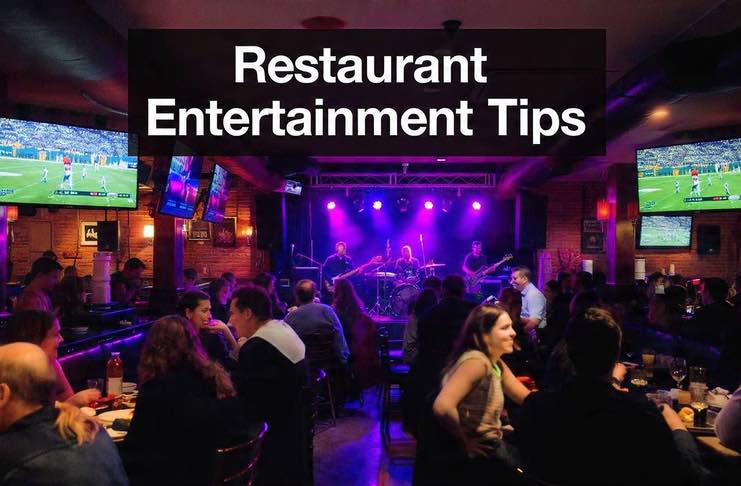
If you’ve ever sat in a restaurant wondering why you’re suddenly okay paying $19 for wings, it’s usually because something around you feels like part of a bigger night out. Maybe it’s the Knicks game on a crisp 4K screen. Maybe it’s a jazz trio tucked into the corner, playing like they’re holding the room’s heartbeat. Or maybe it’s that themed bingo night where half the bar is screaming answers like it’s the peak of the stock market. In this post, as part of our food business ideas, we’ll explore all you need to know about restaurant entertainment.
The best restaurant entertainment is the kind that makes guests stay longer and spend more — 4K live sports, themed events, curated music, and anything that turns a meal into an experience. Upgrade the entertainment, and you upgrade dwell time, check averages, and what people are willing to pay. The trick is choosing entertainment that fits your crowd, your concept, and your neighborhood’s vibe — because what works in Hell’s Kitchen doesn’t always work in Park Slope.
People spend more when they feel like they’re part of something, not just eating something. Entertainment becomes profitable when it turns a meal into an experience.
What Kind of Restaurant Entertainment Actually Lets You Charge Higher Prices?
Entertainment that creates emotional engagement — sports, live music, themed events, DJs — almost always justifies higher pricing. It’s not about flashy distractions. The new way is intentional, tech-forward entertainment that elevates everything on the table.
When guests stay an extra 40 minutes because they’re watching the fourth quarter or vibing to a good playlist, they’re ordering another round of drinks. Maybe an extra plate of fries. Sometimes dessert. That’s the real ROI of restaurant entertainment.
Why 4K Screens & Live Sports Are the Most Profitable Restaurant Entertainment
A good 4K screen isn’t just a TV — it’s a magnet. It pulls people in and keeps them there, especially when you’re streaming movies, playoffs, UFC cards, or Sunday football.
If you’ve ever walked into a Midtown sports bar during a big Knicks game, you know the drill. Half the crowd didn’t even plan to stay long. But once the room starts buzzing and the screen looks sharper than what they’ve got at home, they settle in. They order another beer. Then another. Then the wings. And maybe the pretzel they didn’t need, but somehow absolutely needed.
A crisp 4K game makes a $16 burger feel like part of a bigger night out.
Customers buy another beer when the screen looks better than their TV at home.
For restaurants upgrading their visual setup, the 4KPlayer Store is where a lot of NYC operators source high-quality hardware without the Broadway-price markup. Better screens = better atmosphere = better checks.
Why streaming boosts spend
-
Event viewing triggers group behavior — people order more when everyone else is ordering.
-
Sports games extend dwell time by default.
-
Streaming movies during themed nights (action films for burger bars, rom-coms for brunch cafés) adds a subtle “hang out a little longer” cue.
And yes, there’s data behind this: the National Restaurant Association reports that restaurants offering sports entertainment see up to 30% higher beverage sales on game nights.
Watch this video to get a glimpse of the best sports bars in NYC that stream sports events every day:
| Old Way | New Way |
| Random TVs in random corners | Intentional 4K setup with strategic sightlines |
| Occasional events “when we remember.” | Consistent entertainment calendar |
| Basic playlist on shuffle | Curated soundscape tailored to audience |
| One-size-fits-all entertainment | Audience-based entertainment strategy |
My Experience
Back when I was covering a bar near Penn Station — the kind of place that smells like hope, sweat, and $7 drafts — the owner upgraded to three massive 4K screens. Overnight, the vibe changed. People stayed for entire games instead of just the first half. One of the bartenders joked that the TVs paid for themselves in beer foam alone.
How do different demographics respond to different entertainment styles?
If you want entertainment that lets you charge higher prices, you need to know who you’re actually trying to impress.
Here’s the cheat sheet — straight from years of wandering across boroughs with a notebook and a questionable caffeine habit:
Persona Profiles
-
The Sports Crowd (Hell’s Kitchen, FiDi after work):
Wants big screens, loud energy, beer towers, and something fried. -
Families (Park Slope, Upper West Side):
Wants calm chaos — coloring sheets, kids’ games, maybe light music. -
Brunch Girls (SoHo, Greenpoint):
Wants playlists that feel like sunshine and bottomless mimosa refills. -
Late-Night Crowd (LES, East Village):
Wants DJs, neon, and cocktails that come with their own light shows.
Your ideal customer determines your ideal entertainment.
You can’t attract date-night couples with the same setup that works for Knicks fans.
My Experience
I once covered a Park Slope brunch spot that introduced a “Quiet Kid Corner” with mini-games on tablets. Parents stayed longer. Like, much longer. One dad told me he ordered a second latte “just because my kid hasn’t screamed for 20 minutes.” That’s how entertainment boosts check averages.
Is Live Music Worth It for Restaurants?
Live music isn’t automatically profitable — but the right music in the right room is absolute gold.
What works well
-
Dinner jazz: Best for date-night restaurants. Adds elegance, increases wine sales.
-
Brunch acoustic sets: Soft, warm, doesn’t hijack conversations.
-
Weekend bands: Drives bar sales, boosts energy, anchors the room.
Cost vs. return
Musicians aren’t cheap, and licensing matters. But when a performer fits the vibe, customers order slower — and therefore order more.
The right musician can lift your menu price by 10% without anyone blinking.
Music sets the pace — slow songs create slow meals, which create higher checks.
My Experience
There’s a tiny LES restaurant I’ve covered for years. They started doing Wednesday acoustic nights — nothing flashy, just a guy with a guitar and a $100 amp. It became their busiest weekday. One couple told me, “We come for the pasta, but we stay for him.” That’s the secret.
Are Trivia Nights, Games & Themed Events Still Effective?
Short answer? Yes. If anything, they’re more popular than they were five years ago.
High performers
-
Trivia
-
Bingo
-
Karaoke
-
Themed nights (“’90s Brunch” or “Taco Tuesday + DJ Set”)
There’s a thread on Reddit where restaurant owners ask, “Do trivia nights still work?” The top answer basically says: They work if they’re consistent. People build their routine around them.
Trivia creates built-in regulars — and regulars keep restaurants alive.
Events work when customers can plan their week around them.
Watch this video for some tips:
My Experience
I covered a taco bar in East Village that did “Salsa + Salsa Night” — dance class at 7, tacos at 8. It was chaos. It was loud. It was packed every Tuesday for 18 months straight.
Should Restaurants Offer Digital Table Entertainment for Families?
Parents don’t want flashing nonsense; they want peace. The right tech can make that happen:
-
Tablets with coloring apps
-
AR-enhanced menus
-
Simple kids’ games
-
QR scavenger hunts
Happy kids equal relaxed parents — and relaxed parents order more.
Digital entertainment works when it solves a real problem, not just adds noise.
Watch this cool technology thats’ already out there:
My Experience
At a family spot in the Upper West Side, I watched a mom order dessert “because the kids were quiet for once.” I wrote that quote down like it was poetry.
Do DJs and Curated Playlists Help Restaurants Charge More?
Some spaces need a DJ — rooftops, lounges, cocktail bars, anywhere with $17 drinks and velvet seating. But a curated playlist can do just as much heavy lifting in the right room.
-
DJs: Best for high-energy nightlife and late nights.
-
Playlists: Best for daytime dining, brunch, date nights, and small rooms.
A good playlist is invisible — you feel it before you notice it.
Music shapes the price you can charge for a drink.
Check out this Pizza place that hired a DJ:
My Experience
I once interviewed a Lower East Side bartender who said, “Our playlist is our secret weapon.” He wasn’t kidding. People stayed for rounds because the vibe never dipped.
How to Measure ROI on Restaurant Entertainment
To know if your entertainment is working, track:
-
Dwell time
-
Spend per head
-
Repeat visits
-
Event-night vs. normal-night revenue
-
Alcohol-to-food ratio
If you don’t measure it, entertainment becomes an expense. Measure it, and it becomes profit.
Your guests vote with their time — track that first.
Checklist — How to Choose Restaurant Entertainment That Justifies Higher Prices
-
Do your screens look better than what customers have at home?
-
Is your entertainment matched to your demographic?
-
Are your events consistent?
-
Do you have a curated playlist, not a random shuffle?
-
Do guests stay longer than 90 minutes?
-
Does the vibe match your neighborhood?
-
Are families visibly more relaxed?
-
Are sports nights packed?
-
Do musicians fit, not fight, your space?
-
Is your ROI measurable weekly?
FAQ — Real Questions People Ask Online
Is upgrading to 4K TVs actually worth the cost?
Yes — better visuals = longer visits = higher spend.
What entertainment brings in the biggest crowds?
Sports, trivia nights, and live bands top the list.
Do people really spend more when watching sports or movies while dining?
Absolutely. Group psychology + event viewing = more rounds ordered.
What’s the best weekly event schedule?
Trivia Tuesday, Acoustic Wednesday, DJ Friday — consistency wins.
Should restaurants charge a minimum spend on event nights?
Some do. Just make sure the experience feels worth it.
- About the Author
- Latest Posts

Jeremy Hood is a Florida-born entrepreneur and digital media veteran who has spent the last decade building, growing, and scaling niche content sites across the web. With a background in accounting and hands-on experience running a retail franchise as COO, Jeremy brings a sharp, analytical eye to everything he covers — including his other great passion: food. A graduate of the University of Florida and a proud Gainesville local, Jeremy grew up on Florida’s lakes and the kind of casual, community-driven food culture that makes the South a quietly underrated culinary destination. Now writing for New York Street Food, he brings that same curiosity and systems-minded thinking to exploring NYC’s endlessly diverse street food scene — one cart, truck, and mom-and-pop storefront at a time.