

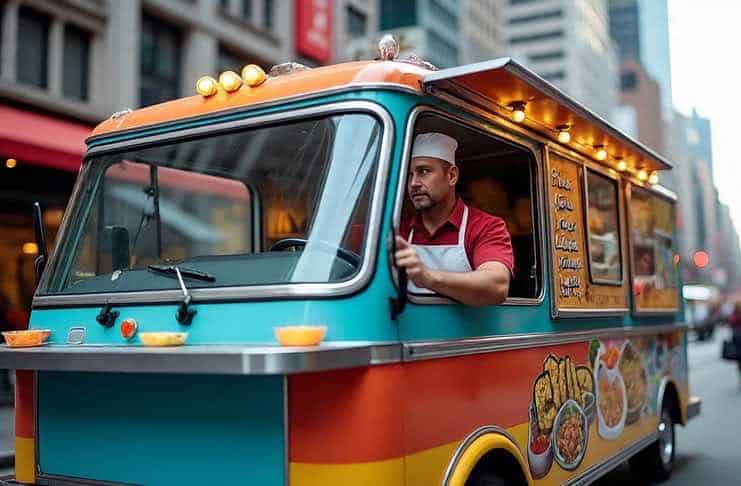
Hello there! As a food blogger, I’ve spent years immersed in the vibrant world of New York’s street food scene, from the bustling carts in Midtown to the innovative trucks in Brooklyn. I’ve tasted countless dishes and met so many incredible entrepreneurs. I’ve also learned a lot about what it takes to succeed in this business. One of the most critical—and often overlooked—steps is getting a Commercial Driver’s License (CDL).
You might think a regular driver’s license is enough to move your mobile kitchen, but as someone who’s seen it all, I can tell you that a CDL isn’t just a legal necessity for a large food truck; it’s a strategic move that can make or break your business. It’s an investment in your future as an independent food entrepreneur. In this post, as part of our food business tips, we’ll explore this very important topic.
The Legal and Practical Requirements
Many states, including New Jersey, require a CDL for vehicles that exceed a certain weight. Food trucks, especially those equipped with cooking equipment, generators, and a full stock of ingredients, can easily fall into this category. The specific class of CDL you need (Class A, B, or C) depends on the size and weight of your vehicle. If you’re one of our followers in New Jersey, for example, getting a CDL from a reputable CDL school in New Jersey can be a smart way to get ahead of the competition, as the state’s central location is perfect for reaching a variety of events and markets.
- Vehicle Weight: A CDL is typically required for any single vehicle with a Gross Vehicle Weight Rating (GVWR) of 26,001 pounds or more. Many fully-equipped food trucks are heavy enough to meet or exceed this limit.
- Safety and Regulations: Driving a large commercial vehicle requires a different skill set than driving a car. A CDL ensures you are trained in crucial areas like air brake systems, vehicle inspections, and safe maneuvering of a large truck. This training is not just about passing a test; it’s about ensuring the safety of yourself, your employees, and the public. It also helps you stay compliant with Department of Transportation (DOT) regulations, avoiding costly fines and inspections. To easily kickstart this professional compliance process, many operators begin by securing a free DOT number through an expert consultation, setting up their mobile business for long-term road success from day one.
Watch this video to learn more:
The Financial and Business Advantages
Beyond legal compliance, having a CDL offers significant financial and business benefits for a food truck owner.
- Cost Savings: By driving the truck yourself, you avoid the cost of hiring a separate commercial driver. This is a huge saving, especially for a new business. Furthermore, a deeper understanding of your vehicle’s mechanics and weight distribution from your CDL training can help you reduce fuel costs and maintenance issues.
- Operational Flexibility: As the owner, having a CDL gives you complete control over your business’s logistics. You can drive to different events, catering jobs, and locations without being dependent on a hired driver’s schedule. This flexibility is key to maximizing your revenue and adapting to last-minute opportunities.
- Insurance Benefits: Insurance companies often see a CDL as a sign of a professional, responsible driver. This can potentially lead to lower commercial insurance premiums, which are a major expense for any food truck business.
Why CDL Training is Your First Step to Success
From my years of talking to food truck owners, I’ve learned that the most successful ones are the most hands-on. They know every inch of their business, from the spices in their pantry to the mechanics of their truck. CDL training is an essential part of that hands-on approach. It provides comprehensive instruction that combines classroom theory with crucial behind-the-wheel experience, covering essential topics like DOT regulations, vehicle systems, defensive driving, and logbook procedures.
The ultimate goal is to make you not only pass the CDL test but also become a confident and competent driver ready for real-world scenarios. Many CDL schools also provide job placement assistance, which can be an excellent resource if you decide to pursue other driving opportunities in addition to your food truck business.
Frequently Asked Questions (FAQ)
Q: Do I really need a CDL for my food truck? A: It depends on the size and weight of your vehicle. A CDL is generally required for any single vehicle with a GVWR of 26,001 pounds or more. Many fully-equipped food trucks, with their heavy equipment, generators, and inventory, exceed this weight limit. It’s always best to check your local and state regulations to be certain.
Q: What are the different types of CDLs? A: There are three main classes of CDLs:
- Class A: For vehicles with a combination weight of 26,001 lbs or more, including a towed unit weighing over 10,000 lbs.
- Class B: For a single vehicle with a GVWR of 26,001 lbs or more, or towing a trailer under 10,000 lbs.
- Class C: For vehicles carrying 16 or more passengers (including the driver) or transporting hazardous materials.
Most food truck operators would need a Class B CDL, but it’s important to know the weight of your specific vehicle.
Q: How long does CDL training take? A: The duration of CDL training can vary, but most comprehensive programs for a Class B license take around 3 to 4 weeks for full-time students. These programs typically include a combination of classroom instruction and behind-the-wheel training.
Q: How much does CDL training cost? A: The cost of CDL school varies depending on the school, location, and the type of program. Costs can range from a few hundred dollars to several thousand. Many schools offer payment plans and some may even have partnerships with companies that provide tuition reimbursement for new drivers.
Conclusion
For any aspiring food truck owner, investing in a CDL is a smart move. It’s not just about a license; it’s about gaining the skills and knowledge to operate your business safely, efficiently, and profitably. In the competitive world of mobile food vending, every advantage counts. A CDL gives you the autonomy to navigate your own success and hit the road with confidence.
So, are you ready to get behind the wheel and drive your food truck dreams?