
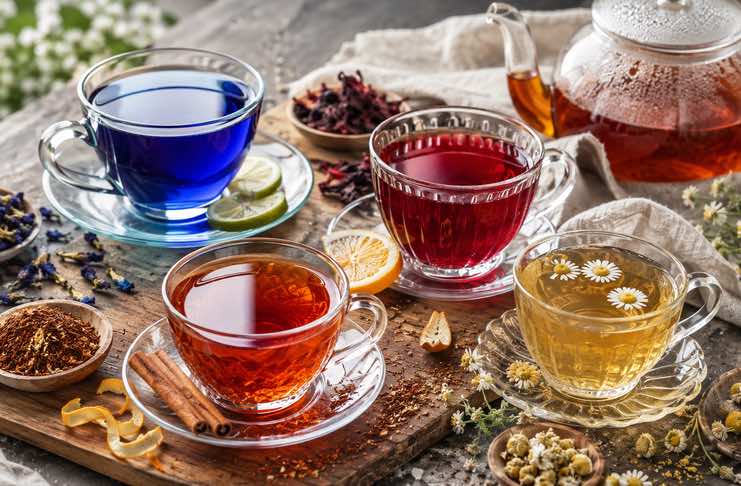
Pour hot water over dried hibiscus calyxes, and the liquid can turn deep ruby-red within moments. Add whole butterfly pea flowers to a glass pitcher, and the water blooms into vivid cobalt blue. Botanical teas bring color, aroma, flavor, and texture to one of the simplest kitchen rituals: steeping plants in water.
For food lovers, that makes caffeine-free teas especially interesting. Many herbal teas are made from flowers, leaves, roots, fruits, and spices, creating a broad range of naturally colorful herbal infusions. They can be enjoyed hot or as iced tea, paired with citrus and fruit, mixed into mocktails and lattes, or used in rice, desserts, syrups, and other recipes.
What Caffeine-Free Botanical “Herbal Tea” Really Means
Most drinks described as herbal tea are technically tisanes or botanical infusions rather than true tea. Traditional black, green, white, and oolong teas come from the Camellia sinensis plant and naturally contain caffeine.
Black tea, for example, is a true tea. Earl Grey is usually black tea flavored with bergamot, so despite its citrus aroma, it normally contains caffeine unless specifically decaffeinated.
Botanical infusions are made from other plant ingredients: flowers, leaves, roots, fruits, bark, seeds, and spices. Chamomile flowers, peppermint leaves, hibiscus calyxes, rooibos, ginger root, butterfly pea flowers, and soursop leaves all belong to this broader category.
For anyone looking for a naturally caffeine-free tea, that opens the door to far more than one flavor profile. Some botanicals are floral, others tart or earthy, while herbal blends can combine fruit, spices, flowers, and leaves in the same cup.
Decaffeinated tea is different. It begins with Camellia sinensis and undergoes processing to remove most of its caffeine. A naturally caffeine-free botanical infusion, by contrast, starts with an ingredient that is not a traditional caffeinated tea leaf in the first place.
That distinction is useful when choosing a drink for its flavor, format, or time of day. Instead of asking only whether a tea contains caffeine, consider what plant is being steeped, which part of the plant is used, and what kind of drink it produces.
Caffeine-free teas can be enjoyed any time of day, whether that means a bright iced infusion with breakfast or a warm botanical infusion in the evening.
A Colorful Tour of Botanical Infusions
Botanical infusions span colors ranging from pale gold to deep crimson and electric blue, with flavor profiles that can be just as varied.
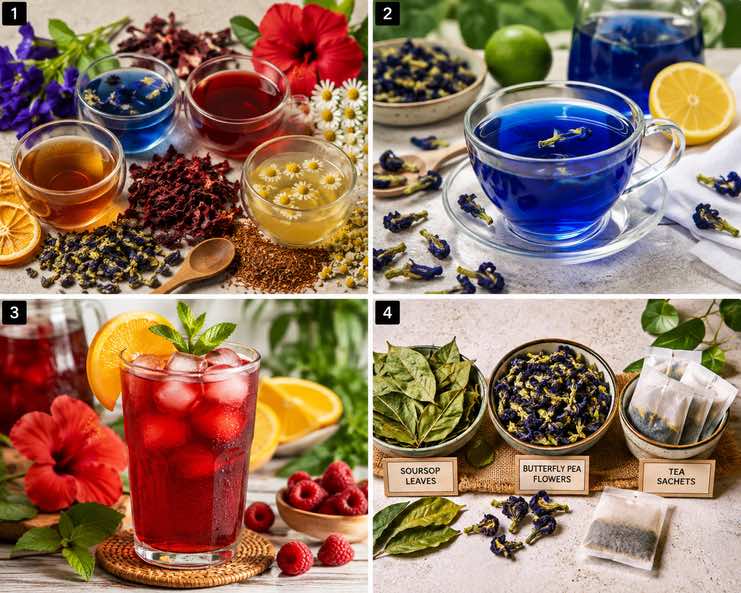
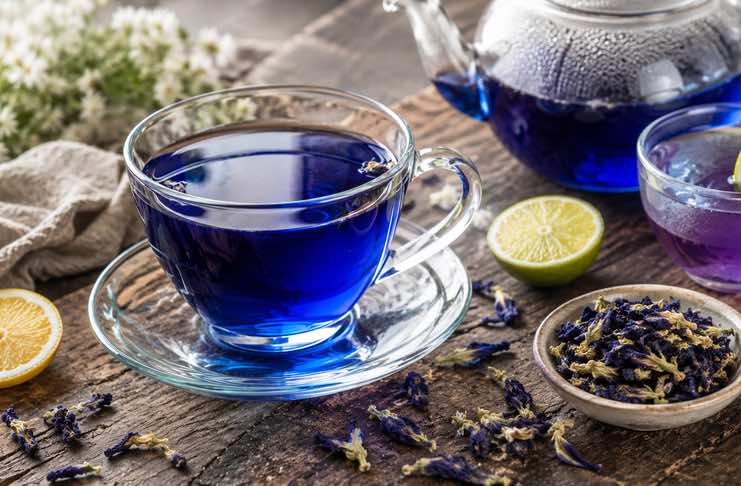
Butterfly pea flower brews a striking blue cup from the dried flowers of Clitoria ternatea, a plant associated with Southeast Asia. Its flavor is mild, earthy, and gently vegetal, so its appearance often takes center stage. Add lemon or lime and the acidity can shift the blue toward violet or pink. That makes butterfly pea especially appealing in iced tea, layered lemonade, mocktails, lattes, rice, and baking.
Hibiscus has a sharper personality. Its infusion ranges from ruby red to deep crimson, with a tart, fruit-forward flavor found in drinks around the world, including karkadeh, agua de Jamaica, and Caribbean sorrel-style beverages.
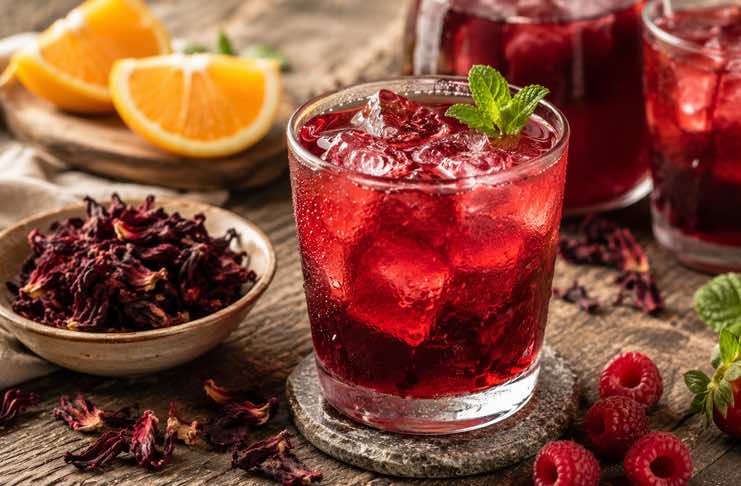
Orange, cinnamon, fresh mint, berries, and a little sweetness pair easily with hibiscus. Depending on the combination, the drink can become more fruity, warmly spicy, or lightly sweet. Raspberry, strawberry, mango, peach, and orange are especially natural partners in chilled drinks and botanical blends.
Soursop leaf tea is made from dried Annona muricata leaves and is naturally caffeine-free. It is available as whole leaves or pre-portioned tea sachets, giving drinkers a choice between loose-leaf preparation and convenience. Its mild herbal character offers a quieter contrast to the acidity of hibiscus or the visual intensity of butterfly pea.
Rooibos comes from South Africa‘s Cederberg region and brews a warm amber-red cup. It is smooth, gently sweet, and often described as nutty or lightly woody. Vanilla, cinnamon, orange peel, apple, cocoa, and warming spices all work well with rooibos, which is why it appears frequently in caffeine-free chai-style herbal blends and milk-based drinks.
Chamomile produces a pale straw-yellow infusion with soft floral notes and an apple-like sweetness. Peppermint brings a cooling menthol character that can stand on its own or sharpen a blend. Lemongrass adds citrus notes, rose petals add perfume, lavender brings floral depth, and ginger contributes warm spice.
Even a small botanical tea shelf can cover a surprising range of flavors: tart, cooling, floral, earthy, mellow, and spicy, all without relying on black or green tea.
Why Herbal Tea Colors and Flavors Differ
The part of the plant being steeped has a major influence on the finished drink. Flowers such as butterfly pea and hibiscus can be highly expressive in color, while leafy botanicals such as peppermint and soursop tend toward more restrained green, gold, or amber tones. Roots and bark often produce deeper copper or brown shades along with more spice-driven flavors.
Plant pigments matter too. Butterfly pea and hibiscus contain anthocyanin pigments that contribute to their blue, purple, and red colors. Acidity changes how some of these pigments appear, which is why adding lemon or lime can transform butterfly pea tea so dramatically.
Processing also changes the result. Whole flowers and leaves retain their recognizable shape, while cut material exposes more surface area to water and may infuse more quickly. Rooibos develops its familiar deeper color and flavor through oxidation, while green rooibos skips that step and remains lighter and grassier.
Brewing technique adds another variable. A shorter steep may emphasize delicacy and aroma, while a longer one usually produces more color and intensity. When a drink will be served over ice, a slightly stronger starting infusion can help compensate for dilution.
How to Choose a Good Caffeine-Free Herbal Tea
A crowded tea aisle can make botanical teas look more complicated than they are. A few practical details make comparison easier:
- Ingredient clarity: Look for recognizable ingredients, especially when you want a simple botanical infusion rather than a blend.
- Botanical names: For less familiar ingredients such as soursop leaf or butterfly pea flower, the botanical name adds useful identification.
- Visible pieces: Whole leaves and flowers allow you to see the botanical material and control how much you use.
- Origin information: When provided, sourcing details add context about where the botanical was grown or produced.
- Packaging: Opaque, well-sealed packaging helps protect dried botanicals from light, moisture, and surrounding kitchen aromas.
- Preparation instructions: Clear guidance on water temperature, quantity, and steep time makes a consistent cup easier to reproduce.
One way to explore the category is to choose botanicals with contrasting personalities: chamomile for soft floral notes, hibiscus for tart fruitiness, rooibos for mellow warmth, and butterfly pea for visual drama.
Curated collections such as PUREXA organic herbal teas, for example, can also make it easier to compare whole leaves, whole flowers, herbal blends, and tea sachets in one place.
Brewing for Color, Aroma, and Flavor
There is no single brewing formula for every botanical. Hibiscus handles stronger extraction well, while delicate flowers such as butterfly pea may call for gentler preparation. Rooibos, chamomile, peppermint, soursop leaf, and ginger also release flavor at different rates.
The best starting point is the preparation guidance for the specific botanical. From there, adjust according to taste. If the cup seems too light, use a little more material or extend the steep. If it becomes harsh or overly intense, reduce the quantity or shorten the brewing time.
For iced tea, a slightly stronger infusion can be useful because melting ice will dilute the drink. Some botanicals also work well as a cold brew: combine the plant material with cold water, refrigerate, and strain when the flavor and color reach the level you want. Hibiscus becomes richly jewel-toned, while butterfly pea creates a clear blue base that is especially striking in layered drinks.
Water quality matters as well. Fresh water with a neutral taste lets delicate floral and herbal notes come through more clearly than water with pronounced chlorine or mineral flavors.
Serving Ideas and Culinary Uses for Food Lovers
Botanical teas move easily from the teacup into the kitchen.
Iced tea and mocktails: Hibiscus works beautifully over ice with orange, mint, raspberry, strawberry, or honey. Butterfly pea can be layered with lemonade for a color-changing drink that shifts as the liquids mix. Rooibos concentrate with sparkling water and grapefruit peel makes a simple caffeine-free spritzer, while mango or peach can bring a softer fruit note to chilled infusions.
Lattes and cozy drinks: Rooibos and chamomile both pair well with dairy or plant-based milk. Vanilla, cinnamon, honey, cocoa, or a little sugar can turn them toward dessert while leaving the botanical character recognizable.
Desserts and baking: Strong hibiscus infusion can become the base for a syrup used on citrus cake or poached fruit. Butterfly pea infusion can tint coconut rice, rice pudding, frosting, or other pale foods blue. Peppermint tea can lend a subtle mint note to chocolate sauces or glazes.
Savory experiments: Rooibos can be incorporated into a brine or cooking liquid, while chamomile can bring a soft floral note to vinaigrettes or poaching liquids. Ginger infusions fit naturally into glazes, marinades, and fruit-based sauces.
Presentation: Citrus slices, berries, edible flowers, cinnamon sticks, and clear glassware can make the drink itself part of the table setting. With hibiscus and butterfly pea especially, color is part of the sensory experience.
Formats: Whole Leaves, Whole Flowers, and Tea Sachets
Caffeine-free herbal teas come in several formats, each suited to a slightly different style of preparation.
Image 4. Botanical tea formats can range from whole leaves and whole flowers to convenient tea sachets.
Whole leaves and flowers are visually distinctive and easy to inspect. Whole soursop leaves, butterfly pea flowers, chamomile blossoms, and similar botanicals usually require a teapot, strainer, or reusable infuser, but they give the brewer direct control over quantity and steeping.
Loose-leaf blends combine cut herbs, flowers, roots, fruit pieces, and spices. Rooibos with orange peel, cinnamon, dried apple, or cocoa, for example, creates a layered caffeine-free blend that can be brewed by the cup or in a larger batch.
Tea sachets and bags put convenience first. They work well for travel, work, or quick preparation when measuring and cleanup are less appealing. Larger sachets can also give cut botanical material more room to expand during steeping.
No single format suits every occasion. Whole botanicals appeal to people who enjoy seeing and measuring the ingredient themselves, while sachets are useful when consistency and convenience matter most.
The real pleasure of caffeine-free botanical teas is their range. Flowers, leaves, roots, fruits, and spices can each bring a distinct color, aroma, body, and flavor to the cup. The difference between them is what makes the category interesting: hibiscus can be tart and vivid, chamomile soft and floral, rooibos smooth and warming, and soursop leaf quietly herbal.
Explore them hot, over ice, with citrus, or in food, and they begin to feel less like substitutes for traditional tea and more like a pantry category of their own. Color, aroma, texture, and taste engage the senses in different ways, giving food lovers plenty to experiment with from morning through evening.