

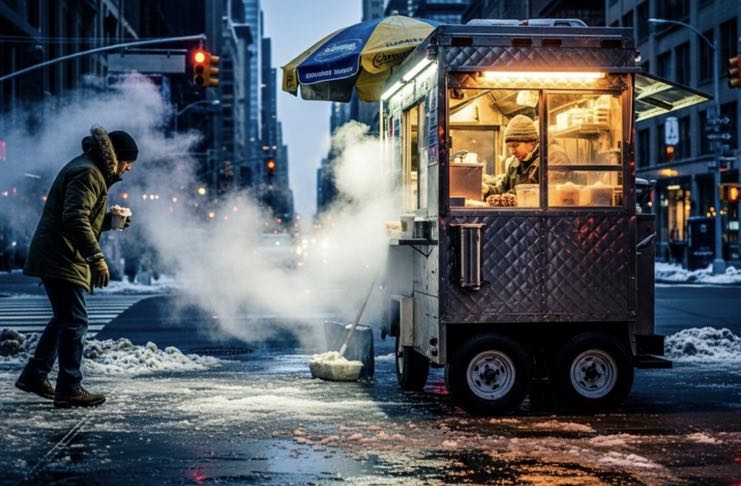
The recent flurry of winter storm warnings hitting NYC has brought snow, sleet, and biting winds to our streets. As the National Weather Service issues advisories for hazardous travel conditions, many New Yorkers might be tempted to stay indoors. But then it hits you: the unmistakable, delicious aroma of grilled halal chicken or a perfectly steamed hot dog cutting through the cold air. Despite the weather, NYC’s vibrant street food scene doesn’t hibernate. It adapts. This is a testament to the hardworking vendors and the loyal community that shows up for them, no matter the temperature.
The city’s ability to keep moving is a shared effort, and the soul of our New York Street Food culture is one of its most resilient heartbeats. Vendors are out there, braving the elements to keep serving the city they love. This guide will explore how they manage it and, most importantly, how you can navigate the winter landscape to safely get your favorite street food fix while showing your support.
The Winter Hustle: How NYC’s Street Food Vendors Brave the Elements
Ever wonder how the person serving your late-night chicken over rice stays warm when the temperature drops below freezing? It’s a combination of ingenuity, grit, and a deep commitment to their craft. These entrepreneurs are a core part of the city’s street food culture, and their ability to operate in harsh conditions is nothing short of remarkable. They don’t just endure the winter; they prepare for it meticulously, ensuring they can serve you safely and comfortably.
Check out this video reel to see a cold winter day on a Food truck:
Winterizing the Cart
A street food cart becomes a fortress against the cold. Vendors make numerous practical changes to their mobile kitchens to battle the winter weather. You’ll often see heavy-duty tarps strapped to the sides, creating a crucial barrier against whipping winds and driving snow. Inside their small space, many rely on small, powerful space heaters to maintain a workable temperature. To ensure your meal is piping hot, they switch to insulated containers and thermal bags, keeping everything from soups to rice platters at the perfect temperature from their grill to your hands. Some even adapt their menus, leaning into warmer, heartier options like chili and stews that are perfect for a cold day.
Watch this reel of street food in NYC during winter:
Keeping Customers Safe and Warm
A vendor’s responsibility extends beyond the cart itself; they create a safe zone for their customers on the sidewalk. Long before a customer arrives, many vendors are out there shoveling and salting their immediate area. This effort often goes above and beyond, as the New York City Department of Sanitation (DSNY) officially states that property owners are responsible for clearing sidewalks. By taking on this task, vendors are actively helping to prevent dangerous falls. This is a significant community service, especially when you consider that fall-related injuries are the leading cause of injury hospitalizations for adults in New York State. Some vendors even position their carts to offer a temporary hand-warming spot near the grill, a small gesture of community engagement that makes all the difference on a frigid day.
Watch this news reel to learn more:
Your Guide to Safely Getting Your Street Food Fix This Winter
The vendors are doing their part, but getting to them safely requires some preparation from you, too. Icy sidewalks and slushy streets can be treacherous, but with a little planning and awareness, you can confidently make the trek for that much-needed warm meal. It’s about being a smart and safe pedestrian so you can continue to enjoy one of the city’s best culinary experiences all year round.
Be Prepared for the Trek
Navigating the city post-snowfall is a unique skill. Here are some essential tips to keep you on your feet and out of harm’s way on your journey to the best NYC winter street food.
- Wear the Right Footwear: This is non-negotiable. Opt for insulated, waterproof boots with deep treads and good traction. As health officials from the Clinton County Health Department recently advised, proper footwear is one of the most effective ways to avoid ‘slip and fall’ injuries.
- Watch for Black Ice: The most dangerous ice is the ice you can’t see. Be especially cautious on bridges, overpasses, and in shady spots between buildings where ice can be nearly invisible. Recent weather alerts from the National Weather Service specifically highlight this danger, warning that these surfaces freeze first and stay frozen longer.
- Keep Your Hands Free: It’s nearly impossible to break a fall if you’re fumbling with your phone or carrying too many bags. Keep your phone pocketed and your hands out of your pockets to maintain balance and be ready to catch yourself if you slip.
- Slow Down and Be Patient: Rushing on icy pavement is a recipe for disaster. Allow extra time to get to your destination and take shorter, more deliberate steps. Think like a penguin—a wider stance and shuffling feet can greatly increase your stability.
- Be Visible: Winter days are short, and visibility can be poor during a snowstorm. Wear bright or reflective clothing so that drivers, cyclists, and other pedestrians can see you clearly, especially in the evening.
Knowing Your Rights on Icy Sidewalks
Unfortunately, winter weather increases the risk of accidents. In New York City alone, falls, slips, and trips accounted for a staggering 28% of all fatal work injuries in a recent year, demonstrating just how serious these incidents can be. While vendors do their part, navigating a block of untreated sidewalks can be treacherous. Everyone needs to know that property owners have a legal duty to keep their sidewalks clear, and understanding the slip and fall laws in New York can clarify who is responsible when accidents happen. For those who fall on city-owned property, it’s also crucial to know that a Notice of Claim must typically be filed within 90 days of the incident.
More Than a Meal: Why Your Winter Support Matters
That hot, steaming plate of food is more than just lunch—it’s a lifeline for the small business owners who are the backbone of the city’s food scene. Showing up for them in the colder months is a powerful act of community support that has a real, tangible impact.
The Economics of a Slow Season
Winter is undeniably the toughest time financially for winter food vendors. With fewer tourists and less casual foot traffic from office workers, every single sale counts. The cold weather often means shorter operating hours and higher operating costs for fuel and heat. When you decide to bundle up and buy from a food truck, you are making a direct investment in a local entrepreneur and their family. You’re helping ensure that the rich diversity of our city’s culinary landscape—from Dominican chimi trucks to Korean BBQ carts—survives to thrive another summer.
| Winter Street Food Staple | Best For… | Warmth Factor (1-5 🔥) | Ease of Eating with Gloves On |
|---|---|---|---|
| Chicken Over Rice | A hearty, filling meal | 🔥🔥🔥🔥 | Challenging but worth it |
| Hot Dog with Onions | A quick, classic NYC bite | 🔥🔥 | Very Easy |
| Cup of Soup/Chili | Maximum warmth and comfort | 🔥🔥🔥🔥🔥 | Easy (just need one hand) |
| Roasted Chestnuts | A festive, hand-warming snack | 🔥🔥🔥 | Very Easy |
Stay Warm, Eat Well, and Support Your Local Vendor
The winter storm warnings and safety advisories are important, but they don’t mean you have to miss out on the incredible NYC food trucks that winter has to offer. With the right precautions—like proper shoes and a keen awareness of your surroundings—and a deep appreciation for the vendors’ hard work, street food can remain a joyful and essential part of your winter routine. After all, what’s more comforting than a hot, delicious meal on a cold day?
The soul of NYC street food isn’t just in the delicious food—it’s in the shared experience and the resilient spirit of the people on both sides of the cart. It’s in the friendly nod from a vendor you see every day and the collective huddle of New Yorkers enjoying a meal together against the cold. So bundle up, walk safely, and go show some love to your favorite neighborhood food truck. They’ll be happy to see you.