
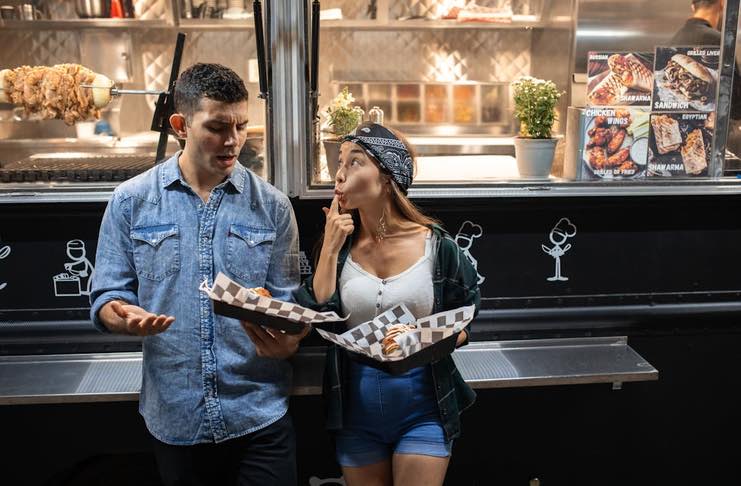
At a good New York food truck stop, the line moves fast, and nobody looks confused. Guests can see the menu, smell the food, and place orders without stress. Small details like signage and queue flow shape the whole mood. Those details matter even more at private events with limited time.
When street food comes to a wedding, office party, or film set, the same rules still apply. The difference is that hosts carry the risk when timing slips or portions run short. In this post, as part of our food business hacks, we break down five strategic ways to elevate street food service from a chaotic sidewalk rush to a seamless guest experience. We’ll explore how to design intuitive guest flows, utilize regulatory resources like the NYC Health vending guidelines for compliance, and apply Cornell’s food safety research to mobile packaging. We also highlight how digital coordination tools like Gastrosync can replace scattered group chats with centralized fact sheets and packing lists, ensuring that every vendor and staff member stays perfectly in sync.
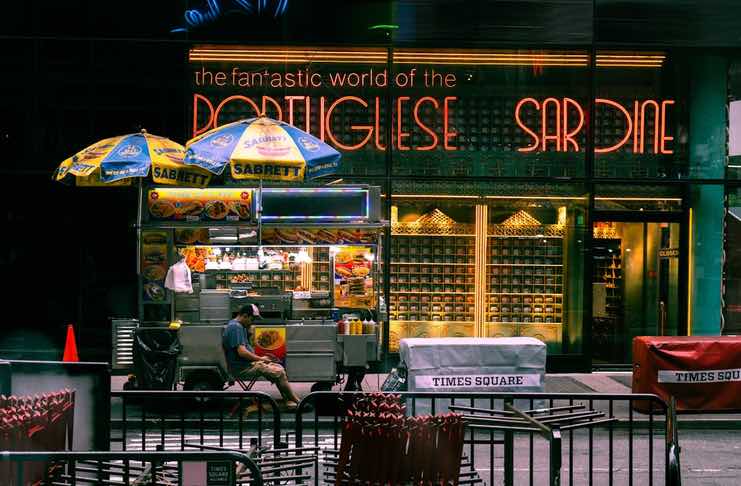
Keep Lines Moving With Clear Flow And Smart Touchpoints
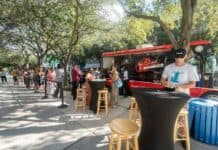
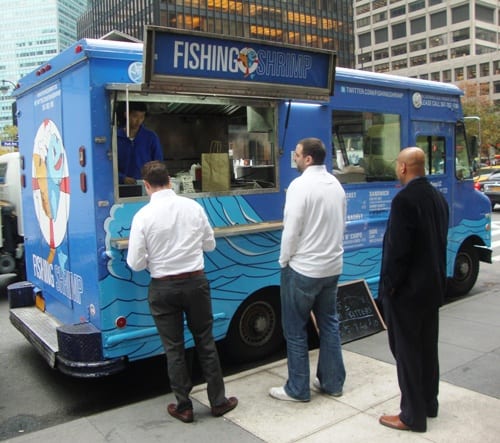
Way 1 is to design the line before guests arrive, not after the first rush forms. Use stanchions, cones, or chalk marks that guide people toward one clear ordering point. Put menus where guests can read them while waiting, not only at the window. A steady flow cuts complaints and helps vendors stay friendly.
Way 2 is to match your setup to city rules and site limits, especially on sidewalks. New York has clear guidance for mobile food vendors, including placement and operating rules in public spaces. The NYC Health page on food vending is a practical reference for organizers and vendors alike. Use it early so the plan works with the site, not against it.
A small service station near the line keeps the window moving during peak moments. Napkins, water, hot sauce, and extra forks belong away from the pickup point. Guests can step aside to dress their food and free the counter quickly. That simple change also reduces crowding around the truck.
Watch this awesome video to see how an efficient food truck operates in NYC:
Protect Food Safety While Keeping Quality High
Way 3 is to lock in food safety steps that protect guests and protect vendors. Street food feels casual, but the safety work is serious and should be visible. Hand wash access, glove changes, and clean prep surfaces should be planned into the footprint. When guests see care, they trust the food more.
Temperature control needs a plan for holding, transport, and service windows. Hot foods should stay hot, and cold items should stay cold, even with long waits. Bring insulated carriers, backup ice, and a thermometer for checks during service. Clear labels for allergens and common ingredients also prevent avoidable issues.
Staffing should match the menu, not the headcount on a proposal sheet. A two-item menu can move fast with a small crew, but ten options cannot. Assign roles for taking orders, cooking, packing, and running restocks from storage. When roles stay steady, errors drop and guests get food sooner.
Choose Menus That Travel Well And Fit Real Guest Behavior
Way 4 is to build a menu that withstands real-world conditions, such as wind, heat, and cramped standing space. Foods that drip, crumble, or need two hands create a mess and slow pickup. Think about what guests can eat while holding a drink and chatting. Smaller portions also let guests sample more stalls without waste.
A short menu can still feel generous when it offers smart options for different diets. Include one hearty meat choice, one vegetarian choice, and one lower spice option for broad comfort. Add one flexible side that pairs with everything, like roasted corn or seasoned fries. This approach keeps prep simple while serving mixed groups well.
Watch this video for more useful tips:
Packaging matters as much as recipes when guests are walking and taking photos. Lids should seal well, and boxes should not sag from steam. Cornell’s food safety resources include practical guidance that supports safe handling across settings. Use those ideas to inform prep and holding plans for mobile service.
Set Vendors Up For Fast Service On Site
Even great trucks struggle when the site plan is fuzzy. A tight setup gives vendors what they need before the first guest orders. That means power access, safe parking, and enough space to open service windows. When those basics are handled, the crew can focus on speed and food quality.
Start with a simple vendor map that shows where each truck parks and where guests should queue. Mark entry points, pickup points, and any pinch spots near doors or narrow paths. Add a small buffer zone behind each truck for restocks and staff movement. This keeps prep work out of guest lanes and reduces accidental crowding.
Support needs should be confirmed in writing, not assumed from past events. List amperage, plug types, water access, waste disposal, and lighting if the event runs after dark. If generators are involved, place them where noise and exhaust will not ruin the eating area. A quiet, clean service zone makes the whole experience feel more polished.
Small comfort details help guests stay patient during peaks. Add a visible pickup call system, even if it is just numbered tickets. Place a bin for trash near the exit of each line, plus a second one near seating. When guests know where to stand, where to wait, and where to toss packaging, the space stays calm.
Run The Event Like A System, Not A Group Chat
Way 5 is to treat the event as a repeatable set of steps, from inquiry to service. When plans live in scattered messages, details drift, and mistakes stack up. Arrival times, power needs, and serving counts get missed in the noise. Guests feel that as slow lines and awkward pauses.
A good system starts with one shared reference for the whole team. That includes the offer, the factsheet, and the final event overview. It also names who owns each task, so nothing sits in limbo. When the plan is clear, vendors cook, staff guide, and guests relax.
This is where tools like Gastrosync, for example, fit into the workflow without adding drama. It helps teams organize offers, generate fact sheets, and build packing lists from the same details. It also makes responsibilities clear across staff and vendors. The result is fewer last-minute calls and fewer rushed fixes on site.
A simple checklist keeps the moving parts steady when service hits its peak. Use it for a two-truck party or a full street food row. Keep it visible, then update it when changes come in. Make the checklist match vendor documents so details stay aligned.
- Confirm arrival windows, parking access, and power needs in one shared written plan.
- Set serving counts by time block, then size prep and holding gear for the busiest slot.
- Assign one onsite lead for decisions, plus one backup lead for quick handoffs.
- Map guest flow for entry, line, pickup, and seating, then place signs early.
- Schedule restocks for ice, fuel, napkins, and water, with checks every twenty minutes.
Wrap Up
After service, grab feedback while details are still fresh in everyone’s mind. Ask vendors what slowed the line, and ask guests what felt easiest. Track waste, sellouts, and peak queue times, then note one change for next time. That small review turns a fun street food moment into an event you can run smoothly again.
Frequently Asked Questions
How much space does a standard food truck need for a safe setup?
Most food trucks require a footprint of at least 10×30 feet. However, you should also factor in a “buffer zone” of 5–10 feet behind the truck for generator placement and restock access, plus 15–20 feet in front for guest queuing. Always confirm the location of the service window (usually the passenger side) to ensure guests aren’t forced into traffic or landscaping.
What is the best way to handle power without noisy generators?
If the venue provides “shore power,” you will typically need a 220V/50Amp or 30Amp connection. Always clarify the plug type (e.g., NEMA 14-50) in your Gastrosync factsheet. If you must use a generator, opt for an “inverter” model, which is significantly quieter and won’t disrupt guest conversation.
How many guests can one food truck serve per hour?
For a simplified event menu (2–3 items), a seasoned crew can serve 60–100 guests per hour. If the menu is complex or made-to-order, that number drops to 40–50. To avoid long waits, consider “pre-baging” sides or using a service station for drinks and utensils as mentioned in Way 2.
How do we manage dietary restrictions in a mobile kitchen?
Because space is tight, cross-contamination is a higher risk in a truck than in a full kitchen.
- Signage: Clearly label “Vegan,” “Gluten-Free,” and “Contains Nuts” on the external menu.
- Menu Design: Choose a menu where the vegetarian option uses the same base as the meat option (e.g., tacos) to keep prep organized and minimize the number of unique ingredients on board.
Why is a centralized system better than a group chat for event planning?
Group chats are great for quick “I’ve arrived” updates, but they are terrible for record-keeping. Details like final guest counts, load-in times, and insurance certificates get buried in the scroll. Using a system like Gastrosync ensures that the “source of truth” is a single document that doesn’t change, reducing the risk of a vendor showing up with the wrong equipment or insufficient food.
What happens if the weather turns?
Street food is vulnerable to wind and rain. Always have a “Plan B” layout that moves the queue under a nearby awning or tent. If using a tent, ensure it is high enough that the truck’s exhaust doesn’t blow heat or fumes toward the guests.

Allie has over a decade of experience as a personal chef, pastry chef and cake decorator. As a first generation Thai-American, she is deeply passionate about exploring cultural cuisines and sharing her own with others. She is a New Jersey native but she has called Brooklyn home for the last 13 years. You can follow her food photography and latest finds on Instagram @thainybites. Check out her delicious recipes and video tutorials on the Thainybites channel on YouTube. You can read more of her food writing on thainybites.com as she finds every possible way to inspire you to be curious about food!