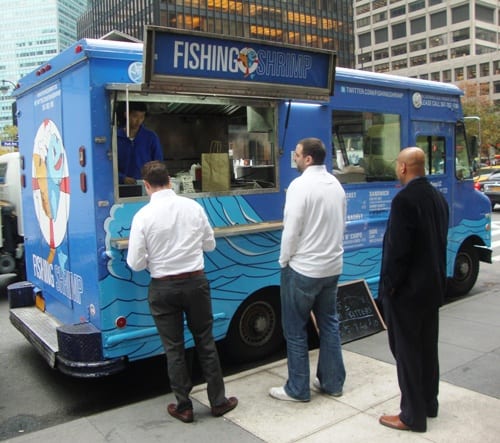


I’ve spent years writing about New York’s street food scene for NewYorkStreetFood.com, and in that time I’ve had the privilege of sitting across from hundreds of food cart operators, halal truck owners, and taco vendors, learning their stories over paper plates and plastic forks. Most of them are hardworking immigrants and lifelong New Yorkers who wake up before dawn, prep their ingredients, park their carts on busy Bronx corners, and grind through 12-hour days to make ends meet. What I didn’t expect, when I started this work, was how often those conversations would turn to legal trouble — not because these vendors were doing anything wrong, but because of where they work and who happens to be around them.
For decades, the state operated under what defense attorneys called the “blindfold law,” a system that kept defendants in the dark about the evidence against them until just before trial. That changed dramatically in 2019 when the legislature passed Criminal Procedure Law (CPL) Article 245, a sweeping overhaul of criminal discovery rules that took effect on January 1, 2020. The reform replaced the old Article 240 and fundamentally shifted how evidence is shared in criminal cases statewide, including in Bronx criminal courts.
In the Bronx, where street food vendors and small business owners — from the rice-and-beans cart outside the 161st Street subway station to the elote trucks parked along Fordham Road — can face drug-related charges stemming from misidentification, proximity to illegal activity, or disputed circumstances, these reforms carry particular weight. Understanding how the discovery rules work is essential for anyone facing criminal charges, and working with a knowledgeable Bronx criminal defense attorney can make a significant difference in how quickly a case moves toward resolution.
Watch this News reel to learn more:
What Did the State’s Discovery Rules Look Like Before 2019?
Before CPL Article 245 took effect, the state had some of the most restrictive discovery rules in the country. Under the old law, prosecutors had very little obligation to share evidence with the defense before trial. Witness statements, police reports, and even surveillance footage could be withheld until the last possible moment. This meant that defendants often had to decide whether to accept a plea deal without ever seeing the evidence against them.
I remember interviewing a Bronx food cart operator — he ran a beloved Dominican lunch cart near the Grand Concourse for over a decade — who told me about a cousin of his who had been swept up in a drug arrest near his own food truck a few years before the reform. The cousin had been parked in the same spot for years, knew everyone on the block, and had nothing to do with what was going on nearby. But under the old rules, his defense attorney couldn’t get the police report or the surveillance footage until the case was practically at trial. By then, the pressure to just take a deal and move on — to get back to his truck and his livelihood — was immense.
The Bronx County District Attorney’s Office, like other prosecution offices across the city, routinely offered plea bargains to defendants who had no real way to evaluate the strength of the case. For food vendors and other working people in the Bronx — for the guy running a jerk chicken cart who can’t afford to lose even two days of income, let alone two months — the pressure to plead guilty was enormous. The old system essentially forced Bronx defendants to gamble on their futures without adequate information.
How Does CPL Article 245 Change Discovery in Criminal Cases?
The 2019 reform requires prosecutors to turn over nearly all evidence to the defense automatically, without the defense needing to file a special request. Under CPL § 245.20, the prosecution must disclose all written and recorded statements, grand jury transcripts, witness contact information, police reports, surveillance footage, and any evidence that tends to support the defendant’s innocence. CPL § 245.20(1) sets out 21 categories of automatic discovery that the prosecution must disclose.
For a food cart or food truck operator, that surveillance footage disclosure can be decisive. The Bronx is blanketed with cameras — on storefronts, on MTA poles, mounted above intersections — and those cameras often capture the full context of what was happening around a vendor’s cart at the time of an alleged offense. Under the old rules, that footage might never surface before a plea decision had to be made. Under the new law, it has to come out early.
Timing is a critical component of the new law. Under CPL § 245.10, prosecutors must complete their initial automatic discovery within 20 calendar days of arraignment when the defendant is in custody, or within 35 calendar days when the defendant is not in custody.
Why Does This Matter for Bronx Food Vendors Facing Drug Charges?
The Bronx remains one of the most heavily policed boroughs in New York City, and drug enforcement operations frequently sweep up individuals who work in close proximity to areas where illegal activity occurs. Street food vendors, bodega workers, and other small business owners in Bronx neighborhoods sometimes find themselves charged with drug offenses based on circumstantial evidence such as physical proximity to controlled substances or testimony from cooperating witnesses.
Over the years covering the street food beat, I’ve spoken with a number of vendors who described the experience of watching a drug arrest unfold just feet from their carts and then finding themselves questioned or, in a few cases, caught up in the resulting charges. One food truck owner I interviewed — she operated a Caribbean-style truck near Yankee Stadium for years — told me that the hardest part wasn’t the initial arrest. It was the months of not knowing what evidence the police actually had, not being able to make informed decisions, and watching her business suffer in the meantime. “I couldn’t even tell my customers what was happening,” she said. “I just had to keep showing up and hope.”
Under the old discovery rules, a person arrested on drug charges — whether a food cart vendor, a mobile food truck operator, or anyone else working the streets of the Bronx — might wait months before learning what evidence the prosecution actually had. The new law changes that equation significantly. Because prosecutors in the Bronx must now disclose police reports, body camera footage, surveillance video, and witness statements early in the case, defense attorneys can quickly identify weaknesses in the prosecution’s evidence. In cases built on flimsy or circumstantial evidence, early access to discovery can lead to faster dismissals or more favorable outcomes.
For a food truck owner who pays monthly fees for their permit, insurance, commissary, and a prime parking spot, every week they can’t operate is money they may never recover. The faster a weak case gets dismissed, the sooner they can get back to work.
What Is a Certificate of Compliance and Why Does It Matter?
One of the most important mechanisms in the new discovery law is the certificate of compliance, or COC. Under CPL § 245.50, prosecutors must file a COC with the court certifying that they have turned over all required discovery materials. Until a valid COC is filed, the prosecution cannot declare readiness for trial, and the speedy trial clock under CPL § 30.30 continues to run.
The New York Court of Appeals addressed this requirement in People v. Bay (Dec. 14, 2023), holding that where the prosecution fails to show due diligence and reasonable efforts before filing the COC, the COC may be improper and the declaration of readiness can be illusory for CPL § 30.30 purposes.
For a food cart vendor whose case hinges on surveillance footage from a nearby building or body camera video from the arresting officer, the COC requirement means the prosecution can’t simply claim to be ready while still sitting on key evidence. An experienced defense attorney who spots a prematurely filed COC can use that as a powerful tool to challenge the prosecution’s readiness and push for dismissal.
How Does the Speedy Trial Connection Help Defendants?
The link between discovery compliance and speedy trial rights represents one of the most significant aspects of the 2019 reform. Under CPL § 30.30, prosecutors must be ready for trial within specific time periods depending on the severity of the charges. For felony drug cases in the Bronx, the prosecution generally has six months. For felonies, CPL § 30.30 generally requires readiness within six months. For class A misdemeanors, the limit is generally 90 days, while for class B misdemeanors it’s generally 60 days (and violations are 30 days).
Because prosecutors cannot declare readiness until they have filed a valid COC, any delay in turning over discovery materials directly reduces the time available to prosecute the case. For a food truck or food cart operator charged with a misdemeanor drug offense, this is not an abstract legal point — it’s the difference between a 60- or 90-day clock that, if the prosecution fumbles its discovery obligations, could run out before the case ever goes to trial.
The New York courts publish a Discovery Reform Dashboard and annual reporting that tracks trends such as case outcomes and speedy-trial dismissals following the discovery reforms. However, year-to-year comparisons can be affected by other factors (including pandemic-era disruptions).
What Should Bronx Residents and Food Vendors Know About Their Discovery Rights?
Anyone arrested on drug charges in the Bronx or elsewhere in the city has the right to receive comprehensive discovery early in their case. Defendants should understand that they generally do not have to accept a plea without seeing key evidence. Under CPL § 245.25, when the prosecution makes certain guilty plea offers (including pre-indictment offers on a felony complaint), it must disclose the items and information that would be discoverable under CPL § 245.20(1) that are in the prosecution’s possession, custody, or control.
For Bronx food vendors — the halal cart operators, the tamale vendors, the food truck owners who saved for years to buy their rigs — the pre-plea disclosure requirement is particularly meaningful. These are people who made serious financial investments in their livelihoods and who face catastrophic consequences if they take a guilty plea they didn’t need to take. Knowing that a pre-plea offer triggers a disclosure obligation gives a vendor’s attorney the ability to actually assess the case before advising their client to accept or reject a deal.
For Bronx food vendors and other Bronx community members who may feel pressure to resolve a case quickly to get back to work — back to the morning prep, the lunch rush, the daily grind of running a mobile food business — knowing these rights can prevent rushed decisions. A qualified Bronx defense attorney can review the discovery materials, assess whether the prosecution’s evidence actually supports the charges, and advise on the best course of action. In many cases, the evidence revealed through early discovery may point toward reduced charges, alternative dispositions, or outright dismissal.
Facing drug charges in the Bronx is a serious matter that requires experienced legal representation. The 2019 discovery reforms have given defendants important new tools, but taking full advantage of those protections requires a defense attorney who understands how to use them effectively. Anyone charged with a drug offense in the Bronx — including the street food vendors, food cart operators, and food truck owners who are such an essential part of this borough’s daily life — should consult with a criminal defense lawyer as soon as possible to ensure that their discovery rights are protected and that the prosecution is held to its legal obligations.