

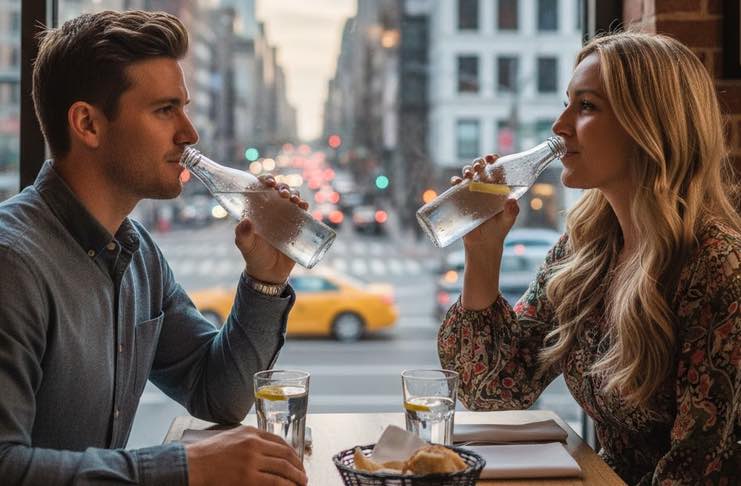
Looking for a premium Italian mineral water that actually enhances your meals? You’re in the right place! Look, I know how this sounds. A food blogger writing 1,500 words about water? Trust me, I rolled my eyes at myself too. But here’s the thing: New Yorkers are obsessed with food. We’ll stand in line for 45 minutes for a dollar slice from that one spot in the Village, debate halal cart rankings like it’s the World Cup, and book flights to Italy just to argue about pasta. But ask what we’re actually drinking with all that incredible food? Usually, whatever’s on tap, or worse, whatever plastic bottle was on sale at the bodega.
That changed for me about two months ago, and I’m still kind of surprised about it.
The Dinner Party That Started It All
My friend Sofia showed up at my Williamsburg apartment with a glass bottle tucked under her arm. “I brought the water,” she announced, like she was presenting a nice Barolo. I laughed. She didn’t.
The bottle was Chiarella, an Italian mineral water I’d never heard of. Sofia had just gotten back from Lake Como and insisted this was the only water worth drinking. Classic Sofia. But then we actually tried it.
View this post on Instagram
Here’s what I wasn’t expecting: it tasted clean. Not in that “I filtered my tap water” way, but genuinely refreshing without any weird aftertaste. No mineral heaviness, no chalky finish, none of that slightly salty thing you get with some European waters. It was just… really, really good water.
I bought my own six-pack the next day. That was seven weeks and probably twenty bottles ago.
Why I Actually Started Paying Attention
Chiarella isn’t some corporate water brand that slapped a mountain photo on the label and called it premium. It’s been family-owned since 1964—third generation now—and the water comes from a single source in the Italian Alps near Lake Como. That’s the same region Sofia had just visited, which explains her evangelical energy about it.
The water filters through Alpine rock formations before it’s collected, picking up minerals along the way—nothing manufactured, nothing engineered. What you taste is what the earth made, and honestly? That distinction hit different once I started noticing it.
Check out this Instagram reel to get a glimpse:
View this post on Instagram
Martin Riese, the guy who literally became a certified water sommelier (yes, that exists), talks about mineral water having terroir like wine. The geology of the source determines everything about the water’s character (Lott-Schwartz, 2020). Chiarella’s Alpine origins give it this noticeably light, clean profile that I started craving with meals.
The Real Test: NYC Restaurants
I started bringing Chiarella with me to dinner. Not in an obnoxious “I brought my own water” way—I’d order it if the restaurant had it, or just have a bottle at home after. But I wanted to see if this premium mineral water thing was actually making a difference or if I’d just fallen for good marketing.
First test: Xi’an Famous Foods in Chinatown. I grabbed their spicy cumin lamb noodles (the hand-ripped ones, obviously) and had my Chiarella bottle with it. The low mineral content and neutral pH meant it actually worked as a palate cleanser between bites. No competition with the Sichuan peppercorns, no weird flavor clash. Just reset your mouth and go back in for more.
Second test: L’Artusi in the West Village. I ordered their cacio e pepe (still thinking about it, tbh) and noticed they actually had premium mineral water options on their menu. Not Chiarella specifically, but seeing a dedicated water menu at a place like that made me realize this isn’t as niche as I thought. The sommelier told me they take water pairings as seriously as wine now. Wild.
Third test: The halal cart on 53rd and 6th. If Chiarella could hang with a lamb over rice plate at 1 AM, I’d know it was legit. Reader, it hung. That clean finish cut through the white sauce situation perfectly.
What Makes This Italian Mineral Water Different
I’m not a water scientist, but here’s what I’ve learned: Chiarella has one of the lowest sodium levels of any mineral water in Europe. It also sits at a neutral pH of 7.5 and has relatively low total dissolved solids (TDS)—that’s the measurement of mineral content.
For context, if you’ve ever had Gerolsteiner and found it almost savory, that’s high TDS. Chiarella is the opposite end of that spectrum. Mineralized enough to have character, but light enough to actually enjoy drinking.
This makes it incredibly food-friendly. High-sodium waters can shift how you perceive flavors, especially with delicate dishes. I noticed this at Cote Korean Steakhouse in Flatiron—they served premium mineral water, and their raw beef bibimbap was perfect because it didn’t mess with the subtle flavors. It stayed out of the way while still tasting like actual premium mineral water, not just filtered tap.
The Glass Bottle Thing (It Matters More Than You Think)
Chiarella only comes in glass. No plastic option, period. That’s a choice, not a limitation.
I used to think this was pretentious until I learned about the research on plastic leaching. A 2021 study in Environmental Research documented how BPA and phthalates migrate from plastic bottles into drinks, especially when stored in warm conditions (Rouse da Silva Costa et al., 2021). Dr. Mark Hyman calls these endocrine disruptors one of the hidden health risks of everyday plastic use (Hyman, 2016).
Beyond health stuff, glass just preserves taste better. I did a side-by-side with a plastic-bottled water, and there was a noticeable difference. Restaurants serve their best wines in a glass for a reason—the same logic applies here.
Where NYC’s Best Spots Already Serve It
Here’s what sold me completely: some of Europe’s most exclusive hotels already figured this out. Passalacqua, Villa d’Este, and Grand Hotel Tremezzo on Lake Como all serve Chiarella. When hotels that obsess over every tiny detail choose a specific Italian mineral water, that tells you something.
I called a few high-end NYC spots to see if they carried it. The NoMad Hotel bar stocks it. Ci Siamo has it on their water menu. Le Pavillon in Midtown serves it at dinner. These aren’t places that make careless decisions about their offerings.
My Kitchen Staple Now
I keep a six-pack in my fridge at all times now. It’s become my default water for everything—morning coffee setup, cooking pasta (yes, I’m that person now), and especially with meals.
Last week I made pasta alla gricia at home and cracked open a bottle of Chiarella. The low mineral content didn’t interfere with the pecorino and guanciale situation. It just enhanced the whole experience. I felt very Italian about it.
The subscription option makes it easy. A six-pack shows up every couple of weeks, I never think about it, and I’m not buying garbage plastic bottles out of habit anymore.
Who Should Actually Try This
Real talk: Chiarella isn’t for everyone. If you want heavily carbonated water with a strong mineral punch, look elsewhere. But if you:
- Actually care about what goes in your body
- Appreciate quality sourcing (you probably already do this with coffee)
- Want water that pairs with food instead of fighting it
- Are you trying to quit the plastic bottle habit
Then yeah, this premium mineral water is worth trying.
For a city that happily pays $18 for a cocktail or $12 for oat milk matcha, spending a bit more on the water you drink every day isn’t crazy. Especially when it genuinely tastes better and comes from a family-run Alpine source that’s been doing this since 1964.
Frequently Asked Questions About Chiarella and Premium Italian Mineral Water
Where can I buy Chiarella Italian mineral water in NYC?
Chiarella is available online with delivery throughout NYC. You can order individual bottles or subscribe to a six-pack delivery service. Some high-end restaurants and hotels like The NoMad, Le Pavillon, and Ci Siamo also serve it, so you can try it there first before committing to a home supply.
What makes Chiarella different from other premium mineral water brands?
Chiarella has one of the lowest sodium levels of any European mineral water, a neutral pH of 7.5, and low total dissolved solids (TDS). This gives it a clean, light taste without the heavy mineral or salty finish you get with other brands. It’s also family-owned since 1964 and comes exclusively in glass bottles—never plastic.
Does Italian mineral water really taste different from regular bottled water?
Absolutely. The mineral composition comes from the Alpine rock formations the water filters through naturally. Chiarella has its own terroir, similar to wine, which gives it a distinct clean profile. It’s noticeably smoother and more refreshing than filtered tap water or standard bottled water.
Why does Chiarella only come in glass bottles?
Glass preserves the water’s taste better than plastic and avoids the chemical leaching issues associated with plastic bottles. Research shows that BPA and phthalates can migrate from plastic into beverages, especially under warm storage. Glass keeps the water tasting exactly as it did at the Alpine source.
Is premium mineral water worth the price?
If you already invest in quality coffee, organic produce, or craft cocktails, then yes. You drink water every day—probably more than anything else. Chiarella costs about the same as a fancy latte but delivers better hydration, cleaner taste, and none of the plastic waste. For something you consume daily, the upgrade is worth it.
What foods pair best with Chiarella?
Pretty much everything, honestly. The low mineral content makes it incredibly food-friendly. I’ve had it with spicy Sichuan noodles, delicate Italian pasta, Middle Eastern halal cart plates, and Korean BBQ. It works as a palate cleanser without competing with your food’s flavors. That’s the whole point of premium Italian mineral water—it enhances your meal rather than overpowering it.
How is Premium Italian Mineral Water sourced?
The water comes from a single source in the Italian Alps near Lake Como. It’s been naturally filtered through Alpine rock formations for centuries before being collected. Nothing is added or manufactured—what you’re drinking is pure Alpine spring water with its natural mineral composition intact.
Can I recycle the glass bottles?
Yes! Glass is infinitely recyclable, unlike plastic, which degrades with each recycling cycle. The bottles can go straight into your glass recycling bin in NYC. Many people also reuse them for homemade cold brew, infused water, or other beverages.
The Shift Is Real
Water conversations are happening now in food circles, and brands like Chiarella are leading that shift. It’s not about being bougie for the sake of it. It’s recognizing that the most basic thing we consume every day deserves the same attention we give everything else we eat.
For NYC food people who already obsess over sourcing and ingredients, Italian mineral water like Chiarella feels like the natural next step. Three generations of one Italian family, one Alpine source, glass bottles only, and a clean profile that lets your food shine.
I never thought I’d become a water person. But here we are. Sofia was right, and I’ll never hear the end of it.
References
Hyman, M. (2016). Eat fat, get thin: Why the fat we eat is the key to sustained weight loss and vibrant health. Little, Brown Spark.
Lott-Schwartz, T. (2020). Martin Riese wants you to think about water more carefully. National Geographic.
Rouse da Silva Costa, V., Gomes Araujo, C. F., & de Oliveira, P. F. (2021). Migration of BPA and phthalates from plastic packaging: A review. Environmental Research, 193, 110561.