Last Updated: October 2026
1:15 on a Tuesday. Sixth Avenue. The line at The Halal Guys on 53rd already curls past the subway grate. Chicken thighs hit the flat-top with that familiar hiss, a guy up front wants “extra white sauce,” and three people in conference lanyards are about to demolish a foil tray of combo over rice with twenty minutes left before a 2 p.m. meeting.
The internet has a theory about what happens next: street food makes you dumber. Fast food “rots your brain.” Processed meat “costs you IQ points.” After years of eating our way from Sammy’s Halal on 73rd Street and Broadway in Jackson Heights to the fresh-masa taco windows on Roosevelt Avenue, the science looks different—and more useful. One cart lunch can absolutely tank your afternoon test performance. It almost certainly is not touching your IQ. And the most brain-protective piece of food technology on any NYC sidewalk is still a corn tortilla.
Key Takeaway
No single street food meal changes your IQ, which is a stable score built from many reasoning tasks. What a heavy, carb-loaded lunch can do is drag down memory and attention for the next few hours, the well-documented “post-lunch dip.” The long-term risk the research actually points to is a diet built on ultra-processed food, and most of NYC’s best cart food (grilled chicken, rice, salad, fresh masa) is not that.
Want to test this on yourself instead of taking our word for it? Take a free-to-start online IQ Test on a quiet morning before lunch, then pay attention to how your focus feels at 2:30 p.m. after a full combo platter versus a lighter grilled-chicken-and-salad order. Freudly’s version runs 70 pattern, logic and memory tasks over roughly 35 to 45 minutes, and it is upfront that an online test is a self-assessment rather than a clinical diagnosis. One heads-up before you start crediting your lunch: a retest usually comes out a few points higher from familiarity with the format alone, so do not thank the kale.
Definition: What Is an IQ Score, and What Can Food Change?
An IQ score compares your performance on a set of reasoning tasks with other people’s, scaled so the average is 100. It is designed to reflect a stable trait. What you eat mostly moves your state: how alert, focused and sharp your memory is on the day you sit the test.
- Trait (slow to change): reasoning ability, shaped over years by genes, education, sleep habits and long-run diet.
- State (changes hourly): fatigue, stress, distraction and the meal you ate 45 minutes ago.
- Where food fits: one lunch affects state; eating patterns over years are where diet and cognition research actually lives.
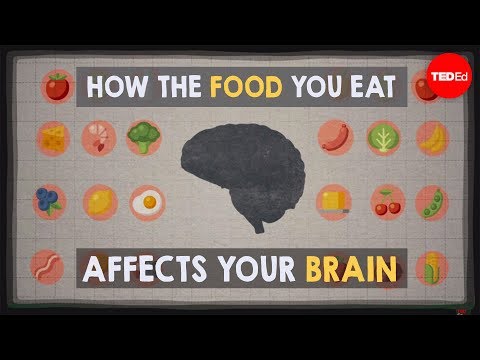
Watch this awesome TED-talk to understand how food can affect our IQ:
Can One Halal Cart Platter Really Lower Your IQ Score?
No, one platter cannot lower your IQ, but it can lower your score on any test you take in the next couple of hours, because the post-lunch dip in memory and vigilance is one of the most consistent findings in nutrition psychology. Researchers have measured early-afternoon slumps in vigilance, calculation and reaction time for decades, and lunch composition and size both change how deep the dip goes.
The detail that matters for your combo over rice: carbohydrate load. A 2017 study in the British Journal of Nutrition fed adults either a lunch with more than 85% of its energy from carbohydrates (think SpaghettiOs, white bread, jelly and apple juice) or an almond-heavy, higher-fat lunch. The almond group’s post-lunch decline in memory scores was 57.7% smaller. The same paper notes earlier work showing adults 40 and older did worse after a high-carb lunch while adults under 40 did not.
Meal size matters too: older lab work found bigger lunches were tied to more occasional errors on attention tasks. Translation for Sixth Avenue: a mountain of yellow rice under a little chicken is the version of the platter most likely to fog your 2 p.m. As of 2026, the NYC Halal Cart Guide vendor matrix lists the 53rd and 6th combo at $8 to $12, which buys plenty of rice.
Our Experience
When we reviewed Chef G. Halal & Healthy on East 55th Street and Park Avenue in April 2013, the order that changed how we think about cart lunches was grilled chicken with roasted red pepper, onions, carrots and still-crunchy broccoli over yellow rice, for $7. The red pepper was sweet and blistered, the broccoli still snapped, and every component sat in its own tray instead of stewing together on the griddle.
Chef G offered white, yellow and brown rice, plus salad instead of rice with a small toppings bar and balsamic dressing. That is the cart version of building your own lighter, lower-carb lunch, and it is still in our halal guide matrix at $7 to $10 as of 2026.
Reddit users regularly report the opposite effect from a standard heavy platter. On r/AskNYC, one commenter wrote they “can’t eat an entire order of that stuff myself, after half way through I feel like I need a nap,” while the original poster admitted “They send me into a food coma too.” A Serious Eats commenter put it more bluntly after recreating the dish: “It’s so good, I definitely over ate tonight lol. Food coma now.”
Your 2 P.M. Brain: How Lunch Style Lines Up With the Research
| Lunch Style | NYC Street Example | What Studies Link It To | 2 P.M. Verdict |
|---|---|---|---|
| Very high-carb, big portion | Combo over extra rice plus fries | Deeper post-lunch memory dip; more attention errors after larger meals | Expect fog |
| Protein plus vegetables, moderate carbs | Chef G grilled chicken and roasted veggies | Lower-carb, higher-fat lunch cut the memory dip by 57.7% in a 2017 trial | Best bet before a test |
| Sugary drink add-on | Large fountain soda from a chain | NYC now flags chain items with 50g or more of added sugar | Skip it |
| Fresh corn and cheese, small format | Arepa de choclo, three bites | Small meal size limits the dip | Fine as a snack |
A halal platter cannot make you less intelligent, but it can make you worse at proving how intelligent you are between 1 and 4 p.m.
What Does the Research Actually Say About Fast Food and Brain Health?
The strongest evidence links frequent fast food and a high share of ultra-processed food to slower academic growth in kids and faster cognitive decline in adults, but those are patterns measured over years, not the effect of one lunch. Here at NYSF we read these studies the way we read a menu board: what is actually on offer, and what is marketing.
The kids’ study most people half-remember is from Ohio State. As ScienceDaily summarized the Clinical Pediatrics paper, researchers tracked about 11,740 students from fifth to eighth grade, and the heaviest fast-food eaters had test-score gains up to about 20% lower than kids who ate none. The authors were clear that they could not prove fast food caused the gap, and pointed to nutrients like iron that fast food tends to lack. That nuance is why NewYorkStreetFood.com treats “fast food” and “street food” as different categories in our own coverage. Watch this BBC video to learn more:

The adult study is the 2022 JAMA Neurology paper out of São Paulo. Fortune’s write-up of the study notes it followed roughly 10,000 Brazilian adults for up to 10 years, and the most common ultra-processed foods participants reported were hot dogs, burgers, pizza, fast food, instant noodles and packaged bread. If you want to see how those categories map onto actual NYC carts, our halal cart guide breaks down what is griddled to order and what arrives pre-formed.
- Kids, fast food 4 to 6 times a week or daily: lower gains in reading, math and science versus non-eaters (Ohio State, 2014).
- Kids, fast food 1 to 3 times a week: lower growth in math only.
- Adults, more than 20% of calories from ultra-processed food: faster decline; the top quarter of consumers declined 28% faster on global cognition (JAMA Neurology, 2022).
- What none of these measured: a single meal, or a single cart.
The brain research does not indict the street. It indicts the habit of eating the same industrial food every day, wherever you buy it.
Is NYC Street Food Actually Ultra-Processed? Real Talk
Mostly no: a classic chicken over rice is griddled chicken, spiced rice, lettuce, tomato and sauce, while the items that land squarely in ultra-processed territory are the pre-formed gyro cone, the cart hot dog and the soda you add on. The white sauce is the processed part of the plate, and it is not mysterious once you see a tested recipe.
When America’s Test Kitchen published its halal cart-style chicken and rice in May 2026, the white sauce was mayonnaise, whole-milk yogurt, lemon juice and a single teaspoon of sugar, and the chicken was thighs marinated in yogurt, coriander and cumin over turmeric-boiled basmati. That matches what we have seen at the better carts on the 6th Avenue corridor covered in our NYC Halal Cart Guide: real chicken, real rice, a mayo-based condiment.
The “lamb,” though, is usually a pre-formed beef-and-lamb cone shaved off a vertical spit. If you want whole meat with your rice, order chicken, or head to Mr. Khan’s at 45th and 6th, where the chapli kabob is ground and formed fresh.
Our Experience
When we ate Sammy’s chicken over rice in September 2012, it was $5, and a fresh batch of boneless chicken was hitting the griddle with onions and bell peppers as we walked up. The rice had whole cloves and caraway seeds in it, and the green sauce was a herby blend of parsley, mint, cilantro and garlic. As of 2026 our halal guide lists Sammy’s at $8 to $10, which tells you inflation hit the price, not the cooking method.
That green sauce still gets called out years later. On r/nychalaltrucks, reviewer thehalalguysguy noted that “finding juicy, flavorful chicken from a halal truck” is rare, “and that’s really where Sammy’s sits on a level of their own, especially if you add their unique green sauce to the mix.”
Street Order vs. Processing Reality
| Street Order | What Is in It | Processing Reality | Smart Swap |
|---|---|---|---|
| Chicken over rice (Sammy’s, 73rd and Broadway) | Griddled chicken, spiced rice, salad, sauces | Cooked meal; the sauce is the processed part | Ask for more salad, less rice |
| “Lamb” or gyro over rice | Shaved pre-formed beef-and-lamb cone | Processed meat | Chicken, or Mr. Khan’s fresh chapli kabob |
| Cart hot dog | Sausage, white bun | Named among top ultra-processed foods in the JAMA cohort | Occasional treat, not a daily lunch |
| Carnitas taco (Taco Veloz, Roosevelt Ave) | Lard-braised pork shoulder, fresh-pressed corn tortilla | Traditional nixtamalized corn, whole-cut meat | Order two, not five |
| Arepa de choclo (Arepa Lady, 79th St) | Fresh corn batter, queso blanco | Minimally processed | Already a smart order |
| Large fountain soda (chain) | Sweetened beverage | Ultra-processed; can exceed a full day of added sugar | Water or seltzer |
Wellness ads will sell you a $14 “brain bowl” with a nootropic drizzle. Sammy’s cart on 73rd and Broadway has been griddling fresh chicken with a cilantro-and-mint sauce since at least 2006, when it won the Vendy Cup, and nobody needed a marketing department to make it good for you.
Why Is a Corn Tortilla the Real Brain-Food Story on NYC Streets?
Because nixtamalization, the ancient Mesoamerican technique of cooking dried corn in an alkaline lime solution, frees up the niacin in corn, and severe niacin deficiency causes pellagra, a disease whose symptoms include dementia. It is the one place in this whole debate where a street food technique has a direct, documented link to protecting the brain.
In an April 2026 piece for BBC Science Focus, Cambridge researcher Giles Yeo uses the tortilla as his headline example that “processed” is not automatically bad: Europeans adopted corn without the lime step, pellagra spread among the poor who lived on it, and the disease was eventually wiped out through grain and flour fortification after the mid-1930s. Our field guide to Mexican street taco styles makes the street-level version of the same point: the best trucks press tortillas to order from fresh nixtamalized masa, and you can taste the sweet, earthy difference.
- Releases niacin that otherwise passes through you unused.
- Loosens the hull so the corn softens and grinds into a pliable dough.
- Adds calcium from the lime itself.
- Builds flavor: that toasty, savory masa aroma is a chemical reaction, not a seasoning.
Here is the twist for Jackson Heights. In a Food Network explainer on masa, chef Barbara Sibley of La Palapa points out that South American masa relies less on nixtamalization, which is why arepas are built on a different corn product. Our NYC Empanadas & Arepas Guide breaks down exactly how the Colombian and Venezuelan versions differ on Roosevelt Avenue.
Real talk, though: nobody in New York is getting pellagra in 2026, because fortified flour fixed that problem generations ago. The tortilla story is a great reason to respect traditional food processing. It is not a reason to eat ten tacos before the SATs.
The most important brain-protecting food technology in NYC street food is not a supplement. It is corn, water and lime, and it is older than the city itself.
What Do Most “Brain Food” Guides Get Wrong About Eating in NYC?
They treat single foods and single meals as cognitive levers, when the evidence points to long-run eating patterns, and even those findings are messier than the headlines. The MIND diet, the most-cited “brain diet,” is the perfect example.
In June 2025, University of Hawaii researchers reported that among nearly 93,000 U.S. adults, people who improved their MIND diet adherence over 10 years had a 25% lower dementia risk than those whose adherence slipped, though the authors stressed it was observational. Meanwhile, a three-year randomized trial in the New England Journal of Medicine in 2023 assigned 604 older adults to MIND or a control diet and found no significant difference in cognition or brain imaging between the groups. Both are real science. Neither one is a halal cart.
The city itself has picked a different target. As Time Out New York explained, since October 2025 about 4,000 chain restaurants with 15 or more locations must post a sugar-spoon icon next to items with more than 50 grams of added sugar, with $200 fines starting in 2026. Street carts are not chains, so you will not see the spoon on a halal cart, and at NYSF we think that says something about where the sugar actually lives in a New York lunch.
Our Verdict
Street food does not lower your IQ. A huge, rice-heavy platter will make your afternoon test performance worse, and a daily diet of hot dogs, packaged snacks and soda is the pattern the long-term research flags. The best NYC street food, griddled-to-order chicken, fresh masa, grilled vegetables, sits on the right side of that line.
If you are worried about your brain, worry about the fountain soda in your hand, not the cart on the corner.
Sponsored “brain food” lists will tell you to buy blueberry powder; the NYC health code is quietly warning you about the 50-gram soda at the chain next door, and the halal cart never made that list.
Which 5 NYC Street Orders Are Best for a Clear-Headed Afternoon?
The best clear-headed street lunches pair whole-cut protein with vegetables and keep refined carbs and sugary drinks in check, and these five NYC orders do that without sacrificing flavor. We ranked them by how closely they match the patterns the research favors, not by any claim that a taco boosts your score. Prices are from our current guides; confirm before you go.
- Chef G. Halal & Healthy grilled chicken and roasted veggies, 55th St and Park Ave
Metric: $7 to $10; white, yellow or brown rice, or salad instead
Why it wins: separate trays, crunchy vegetables and a built-in way to cut the rice. It is the closest thing to a test-day lunch on a Midtown sidewalk. - Sammy’s Halal chicken over rice with green sauce, 73rd St and Broadway, Jackson Heights
Metric: $8 to $10; open 24 hours
Why it wins: chicken cooked fresh on the griddle and an herb-forward green sauce. Ask for extra salad and half rice. - Mr. Khan’s chapli kabob with grilled veggies, 45th St and 6th Ave (NE corner)
Metric: $6 to $10
Why it wins: the kabob is ground and formed fresh, which sidesteps the pre-formed gyro cone entirely. - Arepa de choclo at the Arepa Lady, 79th St near Roosevelt Ave, Jackson Heights
Metric: $5 when we ate it in spring 2026; Thursday to Sunday evenings; 20 to 30 minute Friday line
Why it wins: three bites of sweet corn and molten queso blanco. Small, satisfying and nowhere near a food coma. - Carnitas on a fresh-pressed corn tortilla at Taco Veloz, Roosevelt Ave near 79th St
Metric: daytime window; fresh masa pressed on site; price, confirm before you go
Why it wins: nixtamalized corn plus whole-cut pork with crisp, caramelized edges. Two tacos is lunch; five is a nap.
Is a Cart Lunch Okay Before an Exam, Interview or Big Meeting?
Yes, if you size it and time it: a moderate, protein-and-vegetable cart lunch eaten well before the test is fine, while a giant rice-heavy platter right before is the worst version of the decision. For students and the parents feeding them, the Ohio State data is the useful frame: kids eating fast food one to three times a week only showed a gap in math, while four or more times a week showed gaps across all three subjects.
- Take the test first. If you control the schedule, sit the exam or the online test before lunch.
- Flip the ratio. Ask for half rice and double salad; every cart we cover will do it.
- Skip the soda. Water or seltzer instead of a sugary fountain drink.
- Choose whole-cut meat. Chicken or a fresh kabob over the shaved gyro cone.
- Treat it as a pattern. Once a week is a treat; every school day is the pattern the research worries about.
For the skeptical partner who thinks a Jackson Heights crawl will turn everyone into zombies: plan the crawl for a Saturday afternoon, not the night before anyone’s interview, and share plates so nobody eats a full platter solo.
Where Can You Find Brain-Friendlier Street Food Near You?
The two densest clusters are the 6th Avenue halal corridor in Midtown (44th to 55th Streets) and the Roosevelt Avenue and 74th Street corridor in Jackson Heights, reached by the 7 train to 74th Street-Broadway. Use the live maps and printable itineraries below to plan the route before you go.
- Halal carts: interactive halal cart map and the printable halal cart crawl itinerary.
- Fresh-masa tacos: street taco vendor map and the printable street taco crawl itinerary.
- Arepas and empanadas: Jackson Heights arepa map and the empanadas and arepas crawl itinerary.
- Payment: most Midtown carts take cards now; bring cash for the Jackson Heights arepa setups.
- Hours: many vendors are daytime-only or weekend-only, so check the map notes and the vendor’s social feed before you ride out.
As of 2026, the choice on the sidewalk is set to grow. 6sqft reported in January 2026 that the city has roughly 20,000 street vendors but only 6,880 food vendor permits, and the new reform package makes 2,200 additional supervisory license applications available every year from 2026 through 2031. NYSF will keep these maps updated as new legal carts roll out.
Is Changing Your Street Food Lunch Worth It? Best For Who?
Tweaking your order is worth it for anyone with a test, an interview or a long afternoon of focused work; for a weekend food crawl, eat what you came for. Here is the quick read by reader type.
| Reader Type | Worth Rethinking the Order? | Best Move |
|---|---|---|
| Tourist on a food crawl | No | Eat the combo; share it and keep walking |
| Midtown office worker | Yes | Chef G grilled chicken over salad or brown rice |
| Student before an exam | Yes | Test first, then a half-rice platter and water |
| Budget eater | Depends | Arepa de choclo ($5) beats a soda-and-hot-dog combo |
| Group of 4 or more | Depends | Split platters across a Jackson Heights crawl |
| Solo foodie | No | Go for flavor; two fresh-masa tacos at Taco Veloz |
| Parent planning a kid’s weekly lunches | Yes | Keep fast food under 4 times a week; carts with fresh-cooked protein count differently |
Free Download
Keeping score of which carts actually cook to order? Grab the NYSF All-Borough Street Food Registry Checklist, a printable tracker for logging every halal cart, taco window and arepa stand you hit across all five boroughs, so you can build your own list of brain-friendly regulars.
🔥 Don’t Waste a Single NYC Meal
Tired of corporate listicles and tourist traps? Add New York Street Food as a Preferred Source on Google. It forces Gemini and Google’s AI Overviews to prioritize our boots-on-the-ground cart reviews and sensory tasting notes whenever you search for food.
What Else Do People Ask About Street Food and IQ?
Does eating street food lower your IQ?
No. IQ is a stable score built from many reasoning tasks, and no study shows a single meal changes it. Research links long-term diets heavy in ultra-processed food to faster cognitive decline, but most NYC cart staples, like griddled chicken, rice, salad and fresh corn masa, are cooked meals rather than ultra-processed products.
Why do I feel foggy after a halal cart lunch?
That is the post-lunch dip, a well-documented drop in memory and vigilance in the early afternoon. Large, high-carbohydrate lunches tend to make it worse; in one 2017 trial, a higher-fat almond lunch cut the memory decline by 57.7% compared with a lunch that was more than 85% carbohydrates. Asking for half rice and extra salad is the simplest cart fix.
Is halal cart food ultra-processed?
Chicken over rice mostly is not: it is griddled chicken, spiced rice and salad with a mayonnaise-and-yogurt white sauce. The gyro or “lamb” option is usually shaved from a pre-formed beef-and-lamb cone, which is processed meat, so choose chicken or a freshly formed kabob if that matters to you.
Are corn tortillas good for your brain?
Traditional corn tortillas are made with nixtamalization, cooking corn in an alkaline lime solution, which frees up niacin. Severe niacin deficiency causes pellagra, which includes dementia among its symptoms. Because flour and grains in the U.S. are fortified, pellagra is no longer a risk in New York, so tortillas are a great food-science story rather than a brain supplement.
Should I take an IQ test before or after lunch?
Before lunch, in one quiet sitting, if you want your most representative result. Fatigue, distractions and the post-lunch dip all affect performance, and repeat attempts tend to score a few points higher from familiarity with the format.
Do NYC street carts have to show sugar warning labels?
No. Since October 2025, New York City requires a sugar-spoon warning icon on items with more than 50 grams of added sugar, but only at chain restaurants with 15 or more locations nationwide, about 4,000 restaurants in the city. Independent street carts are not covered.
What Is the Bottom Line From NYSF?
“Across our halal cart reviews since 2012, the carts we keep sending readers back to are the ones that cook protein to order and keep every component in its own tray. That happens to be exactly the kind of food the cognition research is least worried about. The street was never the problem. The daily diet of packaged snacks and oversized soda is.” NewYorkStreetFood.com
“No lunch in New York will change your IQ, but the wrong one will change your 2 p.m. Order the grilled chicken, double the salad, skip the soda and eat the corn tortilla with a clear conscience, because people solved corn’s brain problem thousands of years before anyone sold a supplement.” NewYorkStreetFood.com
- About the Author
- Latest Posts


Tiara Budd Ramos is a New York-based communications and DEI professional with a sharp eye for the city’s best meals and an Instagram feed to prove it. She has spent her career working across advertising, digital strategy, and communications, and is currently a Senior Program Manager of Employee Experiences at Lyft, where she focuses on building inclusive, engaging programs for a global workforce. A proud Hampton University graduate with a degree in Public Relations and Spanish, Tiara sits on the board of NAMIC (the National Association for Multi-ethnicity in Communications) and is a member of She Runs It and The Advertising Club of New York, where she was selected as a 2020 imPART Fellow. When she’s not advocating for more inclusive workplaces, she’s exploring New York’s neighborhoods one restaurant at a time — hunting for great food, great reads, and her next adventure across the country.
- Does Street Food Affect Your IQ Score? Separating NYC Food Science From Hype
- How Restaurant Teams Can Handle Food Recalls Without Losing Track of the Details
- Jerk, Doubles, Roti and Patties: A Field Guide to Caribbean Street Food Styles in NYC
- How to Make Bubble Tea at Home: The Complete Guide for Boba Lovers
- What People Are Drinking With Street Food in 2026