Last Updated: June 2026
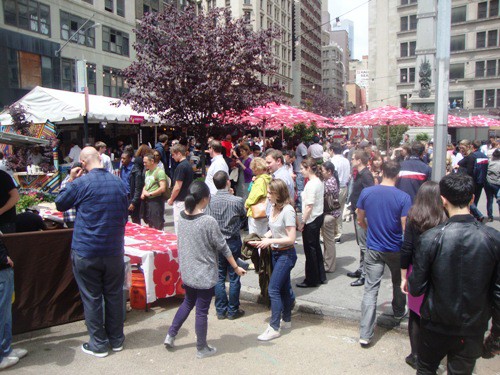
The smell hits you before you see her. Hot oil, charred corn dough, and something sweet and smoky all at once. You’re at the corner of 79th Street and Roosevelt Avenue in Jackson Heights, Queens, and it’s close to midnight. Maria Piedad Cano — the Arepa Lady — has been working this corner since the early 1980s, and the line of Colombian and Ecuadorian workers stretching back toward the elevated 7 train tells you everything you need to know about who this food actually belongs to.
NYC has arepas, and NYC has empanadas. But “NYC arepas” is actually two separate immigrant food traditions operating simultaneously on the same streets — one Colombian, one Venezuelan — that most visitors and most food writers have never learned to tell apart. And the empanada situation is even more layered: Colombian cornmeal, Argentine wheat pastry, and Puerto Rican pastelillo arrived through completely separate immigration waves and have never merged into a single tradition. This is the story of how all of it got here.
Key Takeaway
NYC’s arepa scene is not one tradition but two: Colombian arepas (flat, griddled, masa de maíz) and Venezuelan arepas (thick, puffed, masarepa) arrived through separate immigration waves decades apart. Most food guides flatten them into a single category, which makes every recommendation they give you useless. The history explains exactly why they’re different — and how to read both at street level.
Where Did NYC’s Empanada and Arepa Street Scene Come From?
The arepas and empanadas on Roosevelt Avenue today trace back to pre-Colombian corn culture that’s over 3,000 years old — but the New York chapter of that story began in the mid-20th century, when Andean and Caribbean immigration reshaped the demographics of Queens and Brooklyn one block at a time.
The foundational split is in the grain itself. Colombian arepas use masa de maíz — ground corn that retains raw starch, yielding a dense, flat cake with a slightly gritty, earthy bite. Venezuelan arepas use masarepa, a precooked cornmeal (the P.A.N. brand dominates the market) in which the starch has already been gelatinized through a cooking-and-drying process before it ever reaches the kitchen. That pre-gelatinization is why the Venezuelan arepa puffs, develops a crackling exterior crust, and can be split open and filled without crumbling. The Colombian arepa does none of those things. Same ingredient category, completely different food science.
Watch this to learn more:

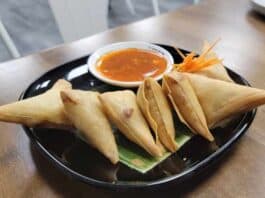
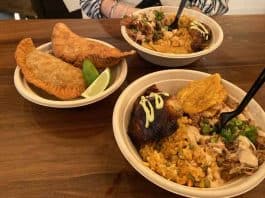
Empanadas add a third variable: the shell material. Colombian empanadas use a cornmeal shell (masa de maíz again, fried). Argentine empanadas use a wheat flour pastry. Puerto Rican pastelillos use a thin wheat wrapper closer to a dumpling skin. Three different textures, three different communities, three separate supply chains — all operating in the same city, often on the same block.
NYC Latin Street Food Traditions at a Glance
| Tradition | Origin | Shell/Base | NYC Foothold |
|---|---|---|---|
| Colombian Arepa | Andean Colombia | Masa de maíz (raw starch) | Jackson Heights, 1970s– |
| Venezuelan Arepa | Venezuela (Caracas region) | Masarepa / P.A.N. (pre-gelatinized) | Astoria/Midtown, 2000s– |
| Colombian Empanada | Colombia | Cornmeal, fried | Jackson Heights, Corona |
| Argentine Empanada | Argentina | Wheat pastry, baked/fried | Midtown, UWS (Nuchas) |
| Puerto Rican Pastelillo | Puerto Rico | Thin wheat wrapper, fried | Bronx, East Harlem |
How Did Colombian Arepas Arrive in Jackson Heights?
The Colombian arepa tradition took root in Jackson Heights during the 1970s and 1980s immigration wave, when Queens absorbed tens of thousands of Colombian, Ecuadorian, and Peruvian arrivals who transformed Roosevelt Avenue into the economic and cultural spine of the New York Latin American community. By 1980, Jackson Heights was already home to more Colombian immigrants than any other U.S. neighborhood, and the sidewalk food economy arrived with them.
The Arepa Lady’s story is the defining one. Maria Piedad Cano emigrated from Colombia and began selling arepas de choclo from a street cart on Roosevelt Avenue sometime in the early 1980s. She worked late nights and early mornings to serve the nightclub workers, taxi drivers, and shift workers who made up her first customer base. Her arepa de choclo — fresh sweet corn, white cheese melted into the center, griddled until char spots develop on both faces — became the street-level default for Colombian arepas in New York. As Eater NY documented in their profile, her cart outlasted entire generations of brick-and-mortar restaurants in the neighborhood. As of 2026, the operation has expanded to include a brick-and-mortar location, but the sidewalk cart at 79th and Roosevelt is still the most authentic version of the experience.
Watch this video to get a glimpse of one of NYC’s empanada experts:

Our Experience
We were on Roosevelt Avenue on a Friday night in April 2026, arriving around 11 PM. The Arepa Lady’s operation was at full pace — three women working the griddle, a line of roughly 20 people stretching back toward the subway entrance. The arepa de choclo arrived in about eight minutes: slightly crispy at the edges, steaming sweet corn interior, a slab of white cheese that had gone fully molten. Price: $6. The Colombian empanadas came two for $5 — small, hot, and dense, with aji amarillo sauce in a paper cup on the side. We’ve eaten at a lot of places in Jackson Heights over the years. This is still the baseline everything gets measured against.
Palenque, operating out of a food truck that works the Jackson Heights and Woodside corridor, extends this tradition further into Queens. Their chicken arepa and ajiaco soup combo (as of 2026, around $14 for both) represents the restaurant-grade expression of the same Colombian street food culture the Arepa Lady pioneered on the sidewalk.
“The Arepa Lady didn’t just start a business — she established the taxonomy for how Colombian street food would be understood in New York for the next four decades.”
When Did Venezuelan Arepas Change the NYC Scene?
The Venezuelan arepa arrived in New York as a distinct, parallel tradition starting in the late 1990s and accelerating through the 2000s as Venezuelan political and economic instability drove a significant diaspora. The Colombian and Venezuelan arepa traditions didn’t merge — they coexist, serve different communities, and remain structurally distinct.
Arepas Cafe in Astoria (established 2000) is the historical bridgehead. It introduced the filled Venezuelan arepa — thick, oven-finished, split along the equator and loaded with reina pepiada (chicken and avocado), pabellon (shredded beef, black beans, sweet plantain, white cheese), or carne mechada — to a Queens audience that mostly knew only the flat Colombian version. As Serious Eats has noted in their arepa deep-dive, the masarepa-based Venezuelan format is nearly impossible to replicate without P.A.N. or its equivalents — the pre-gelatinization step produces a texture that masa de maíz simply cannot achieve.

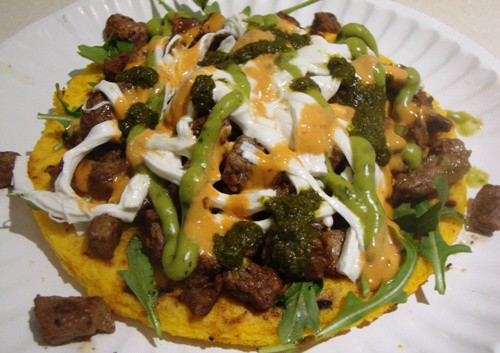
Shachi’s brought the Venezuelan model into Midtown Manhattan, making it accessible to the lunch crowd that previously had no street-level exposure to the format. Guacuco in Bushwick became the Brooklyn anchor in the late 2010s, establishing Venezuelan street food in the borough’s food-dense neighborhoods. As of 2026, the Venezuelan arepa has a foothold in Astoria, Midtown, and Bushwick — three geographically separated outposts that serve almost entirely different customer bases and almost never compete with the Colombian sidewalk tradition in Jackson Heights.
“Anti-ad reality check: while food influencers and sponsored travel content will send you to a branded Venezuelan arepa restaurant in Midtown, the most historically significant arepa experience in New York is still a Colombian street cart in Jackson Heights that most of those same influencers have never visited.”
Colombian vs. Venezuelan Immigration Timeline and NYC Footprint
| Factor | Colombian Wave | Venezuelan Wave |
|---|---|---|
| Primary NYC arrival period | 1970s–1980s | 2000s–2010s (ongoing) |
| Primary settlement area | Jackson Heights, Queens | Astoria, Midtown, Bushwick |
| Street food anchor vendor | The Arepa Lady (1980s–) | Arepas Cafe, Astoria (est. 2000) |
| Arepa format | Flat, griddled, open-faced | Thick, puffed, split and filled |
| Current NYC presence (2026) | Jackson Heights, Corona sidewalk carts | Astoria, Midtown, Bushwick restaurants |
Where Do NYC Street Empanadas Actually Come From?
The empanada situation in New York is a three-way overlap, and the three traditions have barely acknowledged each other’s existence for 50 years. The Colombian cornmeal empanada arrived in Jackson Heights with the same 1970s–80s immigration wave that brought the Colombian arepa. The Argentine wheat-pastry empanada entered through the restaurant sector — Nuchas, which won a Vendy Award and established multiple locations, is the highest-profile example — and occupies a slightly more upmarket lane. The Puerto Rican pastelillo has roots in the Bronx and East Harlem going back to the 1950s Puerto Rican migration wave.
The Colombian cornmeal empanada is a small, dense, fried object — roughly fist-sized, with a pale gold cornmeal shell that has a slightly gritty, crunch-exterior texture from frying. Standard filling is beef and potato with cumin seasoning. Always served with aji amarillo dipping sauce. Price at Jackson Heights sidewalk carts as of 2026: $2–$3 each. At El Pequeño Colombia on 84th Street, two empanadas and a cold drink runs under $8.
The Argentine empanada is visibly different: larger, with a wheat-pastry shell, deeper brown from frying or baking, and a repulgue — a crimped-rope edge pattern that traditionally signals the filling type in Argentine kitchens. The pastry is richer, more buttery, and the filling more complex (beef, olives, hard-boiled egg in the classic version). As Bon Appétit has covered, Nuchas standardized the Argentine format for a mainstream New York audience. As of 2026, Nuchas operates in several Midtown and Lower Manhattan locations with prices ranging from $5–$7 per empanada.
The connection to the broader NYC street food ecosystem runs through geography: the same Roosevelt Avenue corridor that hosts the Colombian arepa and empanada tradition overlaps with the NYC street taco scene in Jackson Heights and Corona, and all three food cultures draw from the same Latin American immigrant street economy that NYC Halal Cart Guide documents on the parallel immigrant food economy in Midtown and Queens. The Red Hook Food Vendors Guide captures the Brooklyn expression of the same masa-based tradition.
What Does the NYC Empanada and Arepa Scene Look Like in 2026?
As of 2026, the NYC empanada and arepa landscape has more than 15 confirmed active vendors operating across Queens, Manhattan, and Brooklyn, with Jackson Heights remaining the undisputed epicenter of the Colombian tradition. The Venezuelan operations in Astoria and Bushwick have stabilized and grown. Price-wise, the Colombian street cart tradition has remained more stable than most NYC street food categories — a $3 arepa de choclo from a sidewalk cart is still a $3 arepa de choclo in 2026, though higher-end Venezuelan restaurant formats run $12–$18 for a filled arepa plate.
Generational continuity is the story worth noting. The Arepa Lady’s operation has survived and expanded. Palenque continues operating their food truck route through Queens. El Pequeño Colombia on 84th Street is still serving the same Colombian working-class customer base it has served for decades. The vendors who established these traditions in the 1970s–90s built durable operations that have outlasted most of the food media coverage that has occasionally noticed them. As Grub Street’s Jackson Heights guide has noted, the neighborhood’s sidewalk food economy operates largely independent of the restaurant media cycle.
For a full cross-borough vendor inventory, the NYC Empanadas & Arepas Guide has the complete vendor map and crawl itinerary. The companion field guide to arepa and empanada styles in NYC covers the ingredient-level differences so you can read any menu in the city cold.
Free Download
Tracking Latin American street food across all five boroughs? Download the NYSF All-Borough Street Food Registry Checklist — every major vendor category, neighborhood by neighborhood, with a format designed for real field use.
What Most Food Guides Get Wrong
The flattening problem: most guides list “arepas” without distinguishing Colombian from Venezuelan, which makes every recommendation they give you useless. You end up at a Venezuelan restaurant in Astoria expecting the Jackson Heights street experience, or you look for a filled reina pepiada at a sidewalk cart that only makes flat griddled choclo arepas. The history is the cheat code: once you understand that these are two separate immigrant traditions that arrived decades apart and never merged, every vendor in the city becomes legible. Colombian: flat, griddled, open-faced, Jackson Heights. Venezuelan: thick, puffed, filled, Astoria/Bushwick/Midtown. Read the food. Know the history.
Worth the Trip? — Best For Who
| Reader Type | Verdict | Best Entry Point |
|---|---|---|
| First-time visitor | Yes — essential NYC experience | Arepa Lady, 79th & Roosevelt Ave |
| Locals who haven’t been to JH | Yes — you’ve been sleeping | Roosevelt Ave corridor, late night |
| Venezuelan arepa seekers | Yes — but go to Astoria/Bushwick | Arepas Cafe (Astoria) or Guacuco (Bushwick) |
| Budget eaters | Absolutely — $3–$6 per item | El Pequeño Colombia, Arepa Lady cart |
| Argentine empanada seekers | Yes — but different experience | Nuchas, Midtown/Lower Manhattan |
For vendor-level detail on what to order at each cart and counter — including the exact dough science that separates Colombian from Venezuelan at ingredient level — the field guide to arepa and empanada styles in NYC is the companion read. And if you’re building out a full Jackson Heights food crawl, the Jackson Heights Himalayan Street Food Guide documents the Tibetan and Nepalese vendors operating on the same Roosevelt Avenue corridor — the full immigrant street food ecosystem in one neighborhood.
We’ve also visited Palenque for their Colombian truck operation and Shachi’s for their Venezuelan arepas and empanadas — both worth the trip for different reasons.
“In over a decade of covering NYC street food, we’ve found no other category where the immigration history is more directly legible in the food itself — two separate corn traditions, two separate communities, two separate supply chains, operating simultaneously on the same streets and still not fully visible to mainstream food media.”
“The Arepa Lady is not a heritage story or a nostalgia project — she’s an active vendor who has been operating continuously longer than most NYC restaurants have existed. If your food guide doesn’t mention her by name, it doesn’t know what it’s talking about.”
Frequently Asked Questions
What is the history of arepas in NYC?
NYC’s arepa scene has two distinct histories. Colombian arepas arrived in Jackson Heights during the 1970s–80s immigration wave, with the Arepa Lady (Maria Piedad Cano) establishing the sidewalk tradition from the early 1980s onward. Venezuelan arepas arrived later, through the 2000s–2010s diaspora, with Arepas Cafe in Astoria serving as the bridgehead. Both traditions operate simultaneously in the city today and are structurally and culinarily distinct.
When did Venezuelan arepas come to NYC?
Venezuelan arepas began arriving in NYC in the late 1990s and accelerated through the 2000s–2010s as Venezuelan political and economic instability drove significant diaspora migration. Arepas Cafe in Astoria, established in 2000, is the historically earliest anchor of the Venezuelan arepa format in New York.
Who is the Arepa Lady?
The Arepa Lady is Maria Piedad Cano, a Colombian immigrant who has been selling arepas on Roosevelt Avenue in Jackson Heights since the early 1980s. She is most associated with the arepa de choclo (sweet fresh corn arepa with white cheese) and is widely considered the foundational figure in NYC’s Colombian street food scene. Her operation has since expanded to include a brick-and-mortar location while maintaining the original sidewalk cart.
What is the history of empanadas in New York?
NYC’s empanada scene reflects three separate immigration waves: Colombian cornmeal empanadas arrived in Jackson Heights with the 1970s–80s Colombian wave; Argentine wheat-pastry empanadas entered primarily through the restaurant sector (Nuchas being the highest-profile example); and Puerto Rican pastelillos have been part of the Bronx and East Harlem food economy since the 1950s migration. These three traditions have never merged and continue to operate independently with different customer bases and supply chains.
What is the difference between Colombian and Venezuelan arepas?
Colombian arepas use masa de maíz (ground corn with raw starch), producing a flat, dense cake griddled open-faced. Venezuelan arepas use masarepa (precooked, pre-gelatinized cornmeal, with P.A.N. as the dominant brand), producing a thick, puffed arepa with a crackling crust that can be split and filled. The gelatinization difference is the technical reason the Venezuelan arepa puffs while the Colombian one stays flat. They are not interchangeable.


Maddison Dwyer is the Senior Gambling Writer & Industry Analyst at Sun Vegas Casino, where she combines a journalism background with hands-on casino expertise. A graduate of the University of Queensland, Maddison discovered her passion for gambling strategy during a live poker event in her final year, which led her to a career focused on demystifying casino games for players of all skill levels.