Last Updated: June 2026
It hits you before you even reach the 74th Street-Broadway subway exit. The cumin-laced fog of a samosa fryer. The sizzle of a tawa loaded with chaat. Someone is shouting an order in Urdu, and the smell of cardamom chai floats from a cart that’s been parked on the same corner since before you were legally allowed to drink. Welcome to Jackson Heights, Queens — the most delicious square mile in New York City, and the living, breathing headquarters of South Asian street food in America.
Here’s what no food tour company will tell you: the street food story of South Asia in New York didn’t start on Roosevelt Avenue. It started with a law. The Hart-Celler Immigration Act of 1965 cracked open a door that had been sealed shut for decades, and the people who walked through it didn’t just bring their credentials — they brought their recipes, their spice boxes, and eventually, their carts. What followed is one of the greatest culinary migration stories in American history, and most of the chapter headings have a Roosevelt Avenue address.
Key Takeaway
South Asian street food in NYC didn’t arrive fully formed. It evolved over six decades through immigration waves, neighborhood territorial shifts, and the genius adaptation of subcontinent street traditions to a sidewalk-permit city. Jackson Heights is the epicenter, Curry Hill is the gateway, and the samosa cart on your corner is the product of a story that stretches from Lahore to Long Island City.
How Did South Asian Street Food First Arrive in New York City?
The 1965 Immigration and Nationality Act didn’t just change who could come to America — it rewired the entire ethnic geography of New York City. Before 1965, immigration quotas from South Asia were effectively zero. After it, doctors, engineers, and pharmacists from India, Pakistan, and Bangladesh began arriving in numbers that no city planner had anticipated. By the early 1970s, a modest but growing South Asian professional class had established a foothold in Queens, specifically in Jackson Heights, drawn by its subway access, affordable housing stock, and a pre-existing comfort with density and multiculturalism.
“The first wave didn’t come to open restaurants. They came to be engineers and doctors. The food came second — and it came through community.”
The food story of that first wave was largely domestic — spice runs to Kalustyan’s on Lexington Avenue, weekend biryanis made in apartments, samosas fried at home for Diwali. The commercial street food scene we know today didn’t emerge until the second wave: the 1980s family reunification influx that brought brothers, sisters, and cousins who hadn’t necessarily come with degrees, but who came with hustle and with the service economy instincts of people who grew up in bazaar cultures. This is the wave that built the tawa carts, the chaat stalls, and the pani puri vendors of 74th Street.
Our Experience
We’ve been making the 7 train run to Jackson Heights since the early 2010s, and the neighborhood that greets you in 2026 is fundamentally different from what it was even a decade ago. In March 2026 we spent a full Saturday working the 74th Street corridor from noon to midnight, eating our way through three generations of South Asian street food culture. The chaat cart outside the Diversity Plaza entrance still charges $4 for a plate of dahi puri that would run you $14 at a sit-down spot in the West Village. That gap — street cart versus restaurant, $4 versus $14 for the same fermented yogurt and tamarind — tells you everything you need to know about what Jackson Heights still offers.
The geographic split that defined early South Asian New York remains instructive. Manhattan got Curry Hill — the stretch of Lexington Avenue between 26th and 29th Streets, where Kalustyan’s had been a spice anchor since 1944 and where Indian and Pakistani restaurants gradually colonized the block. Queens got Little India. The two zones served different functions: Curry Hill was aspirational, accessible to non-South Asian New Yorkers, a bridge neighborhood. Jackson Heights was the real thing — dense, loud, commercially chaotic in the best possible way, and built for the community, not the tourist.
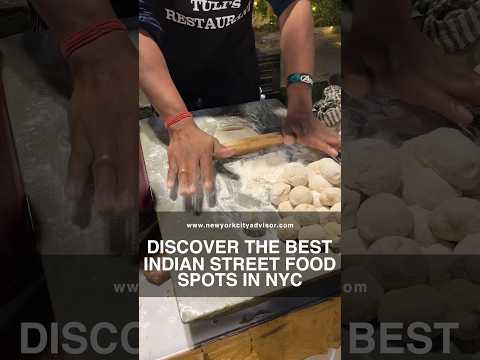
Watch this video:

What Made Jackson Heights the Capital of South Asian Street Food?
Three blocks of 74th Street between Roosevelt Avenue and 37th Avenue constitute one of the highest concentrations of South Asian food commerce anywhere outside the subcontinent. But the specific reason Jackson Heights became this — rather than Flushing, or Elmhurst, or some other Queens neighborhood — comes down to a perfect collision of transit infrastructure, housing stock, and demographic momentum.
Watch this video to get a glimpse:

The 7 train’s Jackson Heights-Roosevelt Avenue/74th Street station connects directly to Times Square in under 20 minutes. When South Asian immigrants began arriving in force in the late 1970s and early 1980s, Jackson Heights offered rent that was a fraction of Manhattan, transit access that rivaled it, and a pre-existing commercial strip on 74th Street that was already accustomed to immigrant retail. By the mid-1980s, a three-block stretch had acquired the name “Little India” — not for the ethnic makeup of the residential population, but for the commercial concentration of grocery stores, sari shops, sweet houses, and food vendors serving the South Asian diaspora across Queens and beyond.
The street food specifically arrived through a commercial logic familiar to anyone who’s spent time in Mumbai or Lahore: the gap between what a restaurant charges and what a cart can produce at one-quarter the overhead is a gap that a skilled vendor can profitably occupy. The samosa cart, the chaat tray, the pani puri stand — these are all street formats that translate directly from subcontinent sidewalks to New York sidewalks, requiring minimal equipment, scalable ingredient lists, and the kind of spice knowledge that takes decades to acquire.
Jackson Heights vs. Curry Hill: Two South Asian Food Zones
| Factor | Jackson Heights (Queens) | Curry Hill (Manhattan) |
|---|---|---|
| Primary identity | Residential + commercial hub | Restaurant + grocery corridor |
| Street food density | Very high — carts, vendors, market stalls | Low — primarily sit-down restaurants |
| Price range (chaat) | $3-$6 per serving | $10-$16 per dish |
| South Asian sub-cuisines | Indian, Pakistani, Bangladeshi, Nepali, Tibetan | Primarily North Indian, Pakistani |
| Tourist accessibility | 25 min from Midtown via 7 train | Walking distance from Flatiron/Gramercy |
| Best for | Serious eaters, multi-hour food crawls | Quick biryani or grocery run |
The chaat tradition deserves particular attention here, because it represents the clearest through-line between the food culture of the Indian subcontinent and what eventually hit New York sidewalks. Chaat — the category of savory-sour-spicy snack foods that includes pani puri, bhel puri, dahi puri, and sev puri — is inherently street food. It cannot be properly replicated inside a restaurant without losing something essential. The textures depend on immediate assembly: the crunch of sev before it softens, the cold burst of imli chutney hitting fried puri, the controlled chaos of yogurt, spice, and crunch assembled in thirty seconds and eaten in sixty. As food writers at Serious Eats have noted, chaat’s genius is in its simultaneity — it shouldn’t wait.

How Did the Bangladeshi Community Reshape NYC’s South Asian Street Food Scene?
By the 2000s, a significant demographic shift was underway in Jackson Heights that would fundamentally alter its food geography. The Bangladeshi community, which had been growing steadily since the family reunification provisions of the 1965 act began bearing fruit in the 1980s and 1990s, became the dominant commercial force on stretches of 74th Street and the surrounding blocks. According to NYC official data cited by Gulf News, approximately 62,000 people in the five boroughs identify as Bangladeshi — a community that had, by 2010, reshaped significant stretches of the Little India corridor.
With the Bangladeshi community came fuchka — the Bangladeshi cousin of pani puri, and in many ways its superior. Where Indian pani puri uses a spiced tamarind water, fuchka employs a mashed spiced potato filling and a sharpened, more complex water flavored with black pepper, green chili, and tamarind in proportions that hit differently on the palate. Fuchka carts first appeared in Jackson Heights around 2010-2012; today they’re a fixed feature of the sidewalk food landscape around Diversity Plaza. Eater NY has documented the rise of this format as one of the most distinctive street food additions to Queens in the past decade.
Jhal NYC, a mission-based collective founded in 2015, was among the first organized efforts to bring Bangladeshi street food to the Queens Night Market in a self-consciously street format. “At that time, the Queens Night Market had no South Asian vendors,” co-founder Raunaq Zamal noted in interviews. “Even though what you’re eating here is street food, you would have to get it inside of a restaurant before. So we thought, why don’t we just present it the way it’s historically been presented, as street food?” What followed, by their own description, was a domino effect: more fuchka carts, more Bangladeshi street vendors, more sidewalk commerce that had previously been confined to restaurant interiors.
“The fuchka cart is the best argument for why you should always go to the sidewalk vendor before the restaurant. The version you get outside, assembled to order in thirty seconds, makes the restaurant version look like a museum exhibit.”
Free Download
Eating your way through multiple South Asian neighborhoods across the five boroughs? Don’t wing it. Grab the NYSF All-Borough Street Food Registry Checklist — your cross-borough master tracker for South Asian vendors, carts, and market stalls across Jackson Heights, Curry Hill, Astoria, and beyond.
What Is the Role of the South Asian Taxi Driver Network in NYC Food Culture?
You cannot tell the history of South Asian street food in New York without talking about taxi drivers. Of the roughly 148,000 TLC-licensed drivers in New York City in 2015, nearly 20,000 came from Bangladesh and over 12,500 from Pakistan. This demographic reality created an invisible restaurant network that has been running parallel to the official food media universe for decades — the late-night halal shops, the 24/7 biryani spots, the daal and nihari places in Jackson Heights and along Hillside Avenue in Jamaica that run on a schedule calibrated to shift drivers, not brunch crowds.
The beef Bihari kebab at Dera and Kababish on 74th Street — charcoal-grilled, spice-marinated, served with naan at midnight to a dining room full of drivers coming off their 3pm-to-midnight shift — is one of the most authentic restaurant experiences you can have in New York City. It exists because of the taxi driver community. The food wasn’t built for tourists; it was built for people who needed to eat at 1am after a 10-hour shift, who wanted to sit with people who speak their language, and who knew exactly what a properly marinated Bihari kebab was supposed to taste like. The New York Times Food section has occasionally surfaced this world, but it’s been largely invisible to mainstream food media, which tends to run on daytime hours and restaurant PR cycles.

As of 2025-2026, this nocturnal South Asian food network has expanded beyond Queens. Halal shops serving South Asian-inflected menus — seekh kebabs, chicken tikka wraps, daal with roti — operate across all five boroughs, often in neighborhoods where South Asian residents are sparse but South Asian drivers are common. This is how immigrant food cultures colonize geography: not through restaurants in trendy neighborhoods, but through the invisible infrastructure of people who need to eat where they work.
How Has South Asian Street Food Evolved in NYC in the 2020s?
The Queens Night Market — which launched in 2015 at Flushing Meadows-Corona Park and now regularly draws 5,000-plus visitors per session — has functioned as a pressure-release valve for a generation of South Asian vendors who couldn’t afford brick-and-mortar but had something genuinely exceptional to serve. The market’s model specifically targets first-generation immigrant vendors, and the South Asian presence has grown dramatically since Jhal NYC broke the barrier in 2015. As of 2026, vendors selling dosas, kati rolls, malai cha, and chaat are fixtures of the market’s weekend roster.
The kati roll deserves its own paragraph in this history. The Kolkata kati roll — egg-fried paratha wrapped around spiced chicken, mutton, or paneer, sealed with raw onion and green chutney — arrived in New York through restaurant kitchens (Kati Roll Company on MacDougal Street, opened 2002, was the first dedicated US kati roll spot) but has since migrated to cart and street formats. The genius of the kati roll as street food is its structural integrity: the paratha wrapper holds. You can eat it walking. You can eat it on the 7 train. For $8-$10 in 2026, it remains one of the best handheld value propositions in New York street food.
The dosa economy in NYC is a separate and equally fascinating story. The fermented rice-and-lentil crepe — a South Indian staple that undergoes a 24-to-48-hour fermentation process before hitting the griddle — found its first real NYC street format through Samudra in Jackson Heights (famously the subject of multiple glowing features in the 2000s before neighborhood demographics shifted its customer base). Today, dosa vendors at events and markets represent one of the fastest-growing South Asian street food formats in the city, as Grub Street has documented in recent coverage of the expanding Indian food truck scene.
South Asian Street Food Formats: NYC Price & Portability Guide (2026)
| Format | Origin | NYC Price (2026) | Eat While Walking? |
|---|---|---|---|
| Samosa (fried) | North India / Pakistan | $2-$3 each | Yes |
| Pani Puri / Fuchka | India / Bangladesh | $4-$6 for 6 pieces | No — eat on the spot |
| Kati Roll | Kolkata, West Bengal | $8-$11 | Yes — ideal |
| Dosa | South India (Tamil Nadu, Karnataka) | $10-$14 | Difficult — use a plate |
| Seekh Kebab (grilled) | Pakistan / Afghanistan | $5-$8 per skewer | Yes |
| Biryani (plate) | India / Pakistan / Bangladesh | $10-$16 | No — sit down |
| Malai Cha (chai) | Bangladesh | $1-$2 | Yes |
What Most NYC Food Guides Get Wrong About South Asian Street Food?
Most food guides treat South Asian food in New York as a restaurant story. They’ll point you to Junoon, or Baar Baar, or the latest Indian-American tasting menu concept in the West Village, and call it a comprehensive picture. It isn’t. The restaurant story is the polished version. The street food story is the real version, and it is happening on sidewalks in Queens that most food media does not cover because there are no PR agencies, no press nights, and no Instagram-optimized plating to photograph.
Our Verdict
After years of eating from carts across all five boroughs, we’ve concluded that the best South Asian food in New York City is not in a restaurant. It’s on a cart, at a market, on a sidewalk at 11pm outside a 74th Street sweet shop. The restaurant version is a translation. The street version is the original text.
The second major error most guides make is flattening “South Asian” into “Indian.” The food culture of Jackson Heights in 2026 spans cuisines from India, Pakistan, Bangladesh, Nepal, Sri Lanka, and the Himalayan regions — each with distinct street food traditions, spice profiles, and preparation methods. A Bangladeshi fuchka and an Indian pani puri look similar from a distance and taste like different planets up close. A Pakistani seekh kebab and an Indian reshmi kebab share a format and diverge dramatically in spice logic and char application. The conflation of these traditions into a single “South Asian food” category is the lazy shorthand of guides that haven’t done the eating. We have. For a deeper breakdown of what makes each tradition distinct in its NYC form, read our field guide to South Asian street food styles in NYC.
What Timeout NY and Eater occasionally get right: the Jackson Heights crawl format — spending an afternoon moving between vendors rather than sitting in a single restaurant — is genuinely the best way to eat South Asian food in New York. You can do a chaat cart, a fuchka stand, a biryani lunch counter, and a malai cha vendor in the space of four city blocks and come away having tasted six distinct culinary traditions for under $25. That is an experience that no restaurant in Manhattan can replicate at any price point.
If you’re doing this seriously, you should also be cross-referencing with the broader Jackson Heights food ecosystem. The Himalayan vendors we cover in the Jackson Heights Himalayan Street Food Guide share blocks with South Asian chaat carts — and the Tibetan and Nepali food culture has direct historical connections to South Asian culinary migration patterns. Similarly, the halal cart ecosystem documented in our NYC Halal Cart Guide overlaps significantly with the Pakistani and Bangladeshi street food story told in this post.
Worth the Trip to Jackson Heights for South Asian Street Food?
| Reader Type | Verdict | Why |
|---|---|---|
| Serious food tourist | Yes — mandatory | Nothing like it anywhere in the US |
| NYC local (Queens) | You should already be here | You have no excuse not to be |
| Manhattan local | Yes — plan 3 hours | 25 min on the 7, worth every minute |
| Budget eater | Extremely yes | $25 feeds you all afternoon |
| Group (4+) | Yes — ideal format | Order everything, share everything |
| Picky eater | Depends | Heat levels can be high; ask for mild |
Where Is South Asian Street Food Heading in NYC by 2026?
The 2025-2026 NYC food scene has seen a measurable acceleration in South Asian street food visibility, driven by three forces: the Queens Night Market’s growth as a platform, the broader cultural moment around Indian and Pakistani cuisine in American food media, and a generation of second-generation South Asian New Yorkers who are reclaiming their food heritage through street formats rather than fine dining.
The new Indian food truck and pop-up scene — dosa operations, kati roll carts, malai cha vendors — is increasingly operating citywide rather than just in South Asian enclaves. As Bon Appétit has covered extensively in their recent features on New American street food, the velocity of South Asian food culture’s crossover moment is accelerating in ways that Indian restaurant culture in Manhattan barely anticipated. The food is moving outward from Jackson Heights and Curry Hill into neighborhoods where South Asian residents are scarce but South Asian food has found a hungry audience.
What won’t change: the 74th Street corridor in Jackson Heights remains irreplaceable. The chaat cart that charges $4 for dahi puri that would cost you $14 at a West Village restaurant is not an anomaly. It’s the original. Everything else is derivative. For the full picture of what’s actually being served across South Asian NYC right now — the specific vendors, dishes, and neighborhood zones — check out our comprehensive NYC South Asian Street Food Guide.
“While food media celebrates the latest upscale Indian tasting menu in the West Village, the actual living archive of South Asian culinary culture in New York is unfolding on a cart, under a canopy, on the sidewalk outside the 74th Street subway station. That’s where the real story is — and it costs $4.”
Pinterest Graphic Ideas
- Graphic 1: Chaat cart on 74th Street with overlay text: “The $4 Dish That Beat Every $14 West Village Chaat We’ve Tried”
- Graphic 2: Map of Queens with Jackson Heights highlighted and overlay: “NYC’s Most Important Food Neighborhood: Jackson Heights, Queens”
- Graphic 3: Fuchka on a tray with overlay: “India vs. Bangladesh: The NYC Pani Puri Showdown No Food Guide Will Tell You About”
Frequently Asked Questions
When did South Asian street food first appear in New York City?
The commercial South Asian street food scene in New York began emerging in the late 1970s and 1980s, following the second wave of immigration enabled by the 1965 Hart-Celler Act’s family reunification provisions. Before that, South Asian food was primarily home-cooked or found in a handful of restaurants in Manhattan’s Curry Hill area.
What is the difference between Jackson Heights and Curry Hill for South Asian food?
Jackson Heights is the more authentic, dense, and affordable South Asian food destination — a residential and commercial hub where street food vendors thrive and prices are dramatically lower. Curry Hill is Manhattan’s South Asian food corridor, dominated by sit-down restaurants rather than carts, more accessible to non-South Asian audiences but significantly pricier and narrower in scope.
What is fuchka and how is it different from pani puri?
Fuchka is the Bangladeshi version of the South Asian fried puri street snack. Where Indian pani puri typically uses a tamarind-spiced water and potato-chickpea filling, Bangladeshi fuchka uses a sharper spiced water with more black pepper and green chili, and a distinctive mashed potato filling. Fuchka vendors have been a fixture of Jackson Heights since the early 2010s.
What is the best time to visit Jackson Heights for South Asian street food?
Saturday and Sunday afternoons from noon to 6pm are peak street food hours on 74th Street. Vendors are at full capacity, the Diversity Plaza area is bustling, and the full range of chaat, fuchka, and sweets carts are operational. Weekday evenings are also excellent for the kebab and biryani scene, particularly around 7-10pm.
How much does South Asian street food cost in NYC in 2026?
Expect to spend $2-$6 for chaat, samosas, and pani puri/fuchka from cart vendors in Jackson Heights. Kati rolls run $8-$11. A full afternoon of street food eating across multiple vendors typically costs $20-$30 per person. These prices represent a significant gap from Manhattan restaurant equivalents, which typically run 2-3x higher for comparable dishes.
Expert Perspective
“The street food history of South Asian New York is inseparable from the immigration policy history of the United States. The Hart-Celler Act of 1965 didn’t just change who could come to America — it changed what Americans eat on sidewalks sixty years later.”
“Jackson Heights is the greatest argument in America for what a truly diverse urban food ecosystem looks like. No chef-driven restaurant, no food hall concept, no curated market can replicate what happens on 74th Street on a Saturday afternoon.”