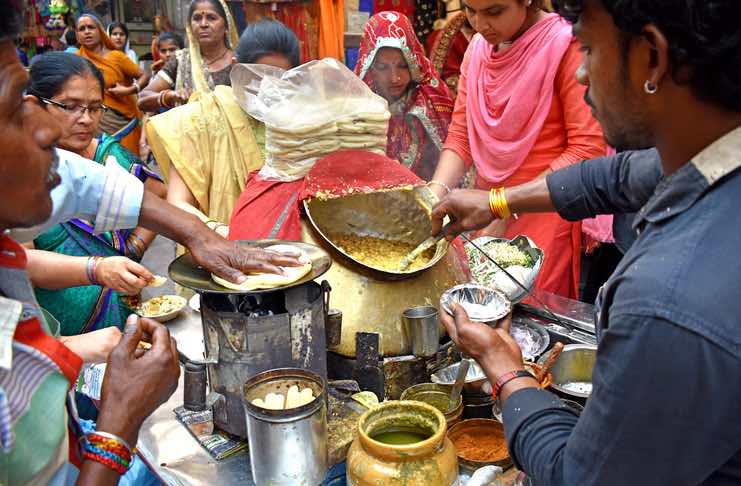
Oil is already spitting in the kadhai on a Malad side street when the first bombil hits. Rava-crusted. Flattened thin. Jump more than a thousand kilometres north and a vendor off Chandni Chowk is spooning milk foam that will collapse before noon. In Bhopal’s Chatori Gali the crowd outside the bun kabab stall tells you exactly where to stand.
India’s street food is never just a quick snack on the go. It’s local heritage that pulls locals and travelers into the same line, talking, eating and hanging around long after the plate is empty. Every region, every state and often every city has a specialty you need to try, from bombil fry in Mumbai to daulat ki chaat in Old Delhi and nakham bitchi in Meghalaya’s Garo Hills.
Honest take, though: most “only in one city” lists are only half right. Several of these dishes cross borders. What you can’t get anywhere else is the version, cooked by the people who grew up on it, in the season it was built for.
Key Takeaway
India’s most place-bound street foods are bombil fry (Mumbai), Goan fish curry rice (Goa), kothu parotta (Tamil Nadu), rasgulla (Bengal), daulat ki chaat (Old Delhi, winter only), bun kabab (Bhopal) and nakham bitchi (Garo Hills, Meghalaya). Kothu, rasgulla and bun kabab all have close cousins elsewhere, so the real reason to travel is the local version, and for daulat ki chaat, the November to February window.
Why Is Indian Street Food So Different From State to State?
Indian street food varies so sharply because centuries of trade, colonial rule and migration layered new ingredients onto very different local landscapes. Traders swapped spices, techniques, dishes and ingredients. Over time those influences fused into what we now call Indian food.
Geography does the rest. More wheat and dairy up north. Far more seafood along the coasts. Goa’s table carries Portuguese fingerprints. Bhopal’s carries Nawabi ones. Meghalaya’s Garo Hills cook around smoke, dried fish and the forest. To get the true taste of the country, you have to move around it. Watch this video to get a glimpse:

What Is a “Regional” Street Food?
A regional street food is a dish whose ingredients, technique or season tie it to one place. That tie can be geographic (bombil swims off the Mumbai coast), cultural (bade ka kabab belongs to Old Bhopal’s Muslim food lanes) or climatic (daulat ki chaat only sets properly in cold weather). Copies exist elsewhere, but the local version is the benchmark.
Some of the regions below are hard to navigate without GPS. Reliable internet and digital maps make a real difference, so consider an eSIM for India to stay connected and find great street food spots even in rural areas.
🗣️ Real People Talking
Even inside one city, locals map food by neighborhood. One long-running Tripadvisor Kolkata forum post walks readers south to north through the city’s sweet shops, sending them to Ballygunge Phari for baked rasogolla, Shyambazar for Cittaranjan’s rosogolla and Bagbazar for Nabin Chandra Das, whom the poster calls the “Columbus of Rasogolla.” That is regional food at street level. Read the post on Tripadvisor
What Is Bombay Duck in Mumbai, and Why Is There No Duck in It?
Bombay duck is bombil, a lizardfish (Harpadon nehereus) caught off Mumbai and coastal Maharashtra, and it is best eaten as bombil fry. There’s no bird involved at all. As Culture Trip’s history of the name explains, the fish was shipped by rail as “Bombay daak” (mail), and the British pronunciation eventually turned daak into duck.
The classic preparation flattens the fish, coats it in rava (semolina) and spices, then fries it. You get a crackling, crispy shell outside and flesh so soft it nearly melts. Mumbai’s coastal communities also cook bombil in curries, stuff it with prawns or dry it for chutney, but the fry is the one to order first. Watch this video to learn more about it:

- Order this: bombil rava fry, ideally with a fish thali and sol kadhi
- Price signal: Bombil Premi in Malad lists green chutney stuffed bombil at ₹380 on its current Swiggy menu
- Watch for: sogginess; bombil is a watery fish and a bad fry goes limp fast
🗣️ Real People Talking
Diners reviewing Ferry Wharf in Malad West keep coming back to texture. One reviewer praised three to four big rava-wrapped pieces and said the fry was not soggy “like how a bombil usually is,” which tells you exactly what locals judge it on. Another called it a crispy, thin sheet that stays soft inside. Read the post on Tripadvisor
A good bombil fry is judged by one thing: whether the crust survives the walk from the kadhai to your plate.
Is Goan Fish Curry Worth Ordering Over Everything Else in Goa?
Yes: fish curry rice is Goa’s everyday staple, and a lunchtime fish thali is the best-value way to eat it. Goa’s food was shaped by Portuguese rule, so it reads a little different from other Indian cooking: tangier, sometimes even sweet. As a coastal state, seafood dominates.
The curry itself sounds simple. Fish simmered with coconut, tamarind or kokum and Goan spices, ladled over rice. In a thali it arrives with rava-fried fish, a vegetable, pickle and sol kadhi. Time Out India’s November 2025 roundup of Goa’s best fish thalis puts most of them between ₹400 and ₹1,000 for two, from Sanil in Porvorim to Café Ritz in Panjim. Watch this video to get a glimpse:

🗣️ Real People Talking
A traveler who ate at Anand Sea Food in Anjuna called its Goan fish curry and rice “the best over here” and noticed that every table was also ordering the fried kingfish. The catch: the place is so busy you have to chase staff and place your whole order at once, and it closes at 4. Read the post on Tripadvisor
Beach-shack menus sell Goa to tourists; the lunch-only thali joints full of office workers sell it to Goans.
Is Kothu Parotta Tamil Nadu’s or Sri Lanka’s?
Both: Sri Lanka makes kottu roti, and Tamil Nadu makes kothu parotta with flaky parotta instead of roti. If you’ve traveled in Sri Lanka, you’ve heard the clang of two metal blades chopping bread on a griddle. In Chennai and Madurai, the same rhythm produces a different plate. “Kothu” means chopped or shredded in Tamil.
The method: flaky parotta is torn up and fried with onions, tomatoes, egg, spices and often salna or chicken curry until every piece is coated. The bread itself has cross-border roots too. The Michelin Guide’s May 2026 feature on parotta notes that the veechu style is still called “Ceylon parotta” in Tamil Nadu, a nod to its Jaffna origins. Watch this video to get a glimpse:

In Chennai, try it at Muthulakshmi Hotel in Kamaraj Nagar, Thiruvanmiyur. In Tamil Nadu, “hotel” usually means a restaurant, not a place to sleep. Chennai menus put kothu at roughly ₹130 to ₹295 depending on veg, egg, chicken or mutton, judging by Mani Chettinadu Hotel’s current Swiggy listing.
If you don’t speak Tamil, a translator app on your phone makes ordering painless. Just remember that free Wi-Fi in cafés and transit hubs can be risky, so it’s best to use a VPN to encrypt your connection. If you’re looking for a reliable one, NordVPN is worth checking out. It’s one of the most trusted options on the market, with strong encryption and fast speeds at a competitive price.
🗣️ Real People Talking
On Team-BHP, a road-tripper driving into Madurai from Theni described a night search for jigarthanda that fell through. The fix, according to his travel companion: come back tomorrow for both kothu porotta and jigarthanda. In Madurai, people plan the next day’s itinerary around this dish. Read the post on Team-BHP
Where Should You Eat Rasgulla in Bengal?
Eat rasgulla (rosogolla) in Kolkata’s old sweet shops, starting with the Bagbazar and Shyambazar names tied to its 19th-century history. Bengal is famous for sweets, and rosogolla is the one everyone knows: soft balls of chhena (fresh cheese curd) poached in sugar syrup, so spongy they squeak a little and then melt.
Real talk: Bengal doesn’t own it outright. Odisha has long claimed the sweet’s origin in Puri. The Statesman explains that Bengal’s 2017 GI tag covers “Banglar Rosogolla” specifically, because the two states’ versions differ in texture and taste. Odisha received its own GI tag in 2019.
Bengal’s love for sweets runs deep. Locals don’t just eat dessert after a meal; they treat it as a ritual. Sweet shops, known as mishti’r dokan, line the streets of Kolkata and smaller towns alike, and the smell of warm syrup and fresh chhena makes it nearly impossible to walk past. For more variety, try sandesh and mishti doi. Watch this:

🗣️ Real People Talking
A visitor from Bihar who posted a Kolkata food guide on Tripadvisor sent rosogolla seekers to K.C. Das at Esplanade (skip the smaller New Market kiosk), but said the best rosogolla of the whole trip came from Chitranjan Misthan Bhandar, a small shop in Sova Bazar. Big brand for the story, small shop for the sweet. Read the post on Tripadvisor
When Can You Actually Get Daulat Ki Chaat in Delhi?
Only in winter, roughly late November to February, and only in the mornings in Old Delhi’s Chandni Chowk lanes. Outlook Traveller’s December 2025 winter guide says vendors such as Khemchand often sell out by late morning, because warm air ruins the foam.
Daulat ki chaat is sweetened milk and cream whisked into a cloud, then topped with khoya, sugar, pistachio and saffron. Legend says it must be left out overnight to catch the winter dew, and some even say under a full moon. Whatever the truth, the cold is what makes it work. Delhi isn’t the only home for this foam: Lucknow and Varanasi make winter cousins under other names. But the Chandni Chowk thela is the one food lovers travel for. Watch this reel to get a glimpse:

- When: early morning, winter only; plan for before 11 a.m.
- Where: Kinari Bazaar, Dariba Kalan, Nai Sadak and Maliwara in Chandni Chowk
- Price signal: So City listed Khemchand Adesh Kumar at ₹50 onwards in its last roundup
🗣️ Real People Talking
One Tripadvisor forum regular mapped a December vegetarian food walk through Old Delhi: kheer near Chawri Bazar, shahi tukda in Matia Mahal, then daulat ki chaat grabbed from a vendor during the cycle rickshaw ride to the metro, before parathas and rabri falooda in Chandni Chowk. That’s how it’s eaten: on the move, between stops. Read the post on Tripadvisor
Daulat ki chaat is the rare street food you can’t fake with money: show up in May or at 2 p.m. and it simply doesn’t exist.
Is Bhopal’s Bun Kabab Just an Indian Burger?
No: Bhopal’s bun kabab is a small buttered bun around bade ka kabab, minced buffalo meat pounded with spices and fried, served with chutney and onions. It looks like a slider, but the patty is soft, spiced and closer to a galouti than a hamburger.
The place to eat it is Chatori Gali in Ibrahimpura, near Old Bhopal’s Jama Masjid, which comes alive after sunset. Outlook Traveller’s Bhopal food guide ranks its bade ka kabab second only to Tunde Miyan’s in Lucknow, and the state’s Incredible India street food page calls Chatori Gali the top place for kebabs. Bun kababs are also popular in Lucknow, Hyderabad and Karachi, but Bhopal’s buffalo-meat version is its own thing. Watch this video:

Bhopal’s kabab culture is part of a South Asian Muslim street food lineage that also explains a lot about New York, where South Asian operators shaped the cart scene covered in our NYC Halal Cart Guide.
🗣️ Real People Talking
A Bhopali blogger wrote that the entrance to Chatori Gali is marked by the crowd around Jhilli Miyan’s bade ke bun kabab stall, and that once you’ve eaten one, the world divides into those who have and those who haven’t. A reader commented later that they couldn’t find Jhilli Miyan by name but still loved the bun kababs nearby. Ask around; the crowd will point you. Read the post on the blog
What Is Nakham Bitchi, and Where in Meghalaya Can You Try It?
Nakham bitchi is a fiery Garo broth made from nakham (dried fish) boiled with green chillies, ginger and a pinch of edible soda, and you’ll find it in the Garo Hills around Tura. We’ve covered curries, kababs, seafood and sweets. But soup-style dishes aren’t what most visitors associate with Indian street food, which is why this one surprises people.
The dried fish gives it body and a deep, smoky savoriness, while the chillies keep it sharp. It’s often eaten with rice or sipped before a heavy meal. Meghalaya Tourism describes dry fish as integral to Garo cuisine and nakham bitchi as a much sought-after delicacy.
Historically, Garo cooks worked with whatever the land gave them: herbs, ferns, bamboo shoots and mushrooms, plus fish dried and smoked to last through the year. The recipe most people make today is simpler, but still true to the local style. Honest warning: this is home and canteen food, not cart food. Tweak India reported in April 2026 that Garo food appears in Shillong only in fragments, and a full Garo meal still means going to the Garo Hills or into someone’s home.

Northeast India’s better-known dumpling culture has a strong New York outpost, too. Our Jackson Heights Himalayan Street Food Guide maps the momo and laphing vendors along Roosevelt Avenue.
🗣️ Real People Talking
A Garo home cook who runs a recipe blog calls na’kam bitchi “quite a delicacy in any Garo household” and shares the version she grew up on: about 250 g of dry fish with the heads removed, slit green chillies, crushed ginger, edible soda and water, boiled until it foams, then simmered about 15 minutes and served hot with plain rice. Read the post on the blog
Which Indian Regional Street Foods Are Hardest to Find Outside Home? (Ranked)
Nakham bitchi and daulat ki chaat are the hardest to find anywhere else; kothu parotta and rasgulla are the easiest. Here’s how the seven rank, from “you must go there” to “you can get a decent version elsewhere.”
- Nakham Bitchi, Garo Hills (Tura), Meghalaya. Metric: rarely on menus even in Shillong. Why it wins: the dried fish, smoke and soda define it, and those live in Garo kitchens.
- Daulat Ki Chaat, Chandni Chowk, Old Delhi. Metric: about three winter months, mornings only. Why it wins: heat destroys the foam, so it can’t travel or keep.
- Bombil Fry, Mumbai. Metric: needs fresh bombil from Mumbai waters. Why it wins: the fish is fragile and watery, so the fresh-caught fry is very hard to copy.
- Bun Kabab, Chatori Gali, Bhopal. Metric: buffalo-meat bade ka kabab, evenings. Why it wins: Lucknow and Hyderabad have bun kababs, but not this patty.
- Goan Fish Curry Rice, Goa. Metric: thalis at ₹400 to ₹1,000 for two (Time Out, Nov 2025). Why it wins: kokum, coconut and that day’s catch are the point.
- Rasgulla, Kolkata. Metric: GI-tagged “Banglar Rosogolla” since 2017. Why it wins: it’s everywhere, but the fresh, squeaky Kolkata version beats tinned.
- Kothu Parotta, Chennai and Madurai. Metric: about ₹130 to ₹295 on Chennai menus. Why it wins: it travels well, but Madurai still sets the standard.
Dish by Dish: What, Where, When and Is It Really Unique?
| Dish | Home Base | What It Is | Best Timing | Only Here?
|
|---|---|---|---|---|
| Bombil fry | Mumbai | Rava-fried lizardfish | Lunch or dinner, with a thali | Mostly yes |
| Fish curry rice | Goa | Coconut, kokum or tamarind fish curry | Lunch thali | The Goan style, yes |
| Kothu parotta | Chennai, Madurai | Chopped parotta stir-fried with egg and curry | Late evening | No (Sri Lanka’s kottu) |
| Rasgulla | Kolkata | Chhena balls in syrup | Any time, fresh from the shop | No (Odisha’s rasagola) |
| Daulat ki chaat | Old Delhi | Whipped milk foam with khoya and nuts | Winter mornings only | Mostly (winter cousins in Lucknow, Varanasi) |
| Bun kabab | Bhopal | Bade ka kabab in a buttered bun | After sunset | No (Lucknow, Hyderabad, Karachi) |
| Nakham bitchi | Garo Hills, Meghalaya | Dried fish and chilli broth | With a rice meal | Yes |
What Do Most Food Guides Get Wrong About “One City” Street Foods?
They confuse “famous in one city” with “exists in one city.” Kothu has a Sri Lankan twin, rasgulla has an Odia twin with its own GI tag, and bun kababs are sold from Lucknow to Karachi. Selling these as one-of-a-kind sets up travelers to feel cheated the first time they spot one at home.
The better question is what you lose by eating it anywhere else. For daulat ki chaat, the answer is everything: no cold, no foam. For bombil, it’s freshness. For kothu, honestly, not much, which is why it’s the easiest one to scratch off your list closer to home.
Our Verdict
If you only have time to chase two of these, make them daulat ki chaat in a Delhi winter and bombil fry in Mumbai. Both depend on conditions you can’t ship: cold mornings and a fragile local fish. Treat kothu parotta and rasgulla as “eat the best version when you’re passing through,” not as trip anchors.
Glossy travel ads sell India’s food as a checklist of famous names; the street sells it as a calendar and a coastline.
Where Can You Find These Flavors Near You in New York?
Most of these seven don’t travel to New York, but the city’s South Asian street food scene gets you close on chaat, kati rolls, dosa and momos. Use NYC to train your palate, then save the trip for the dishes that can’t leave home.
- Chaat and dosa: our field guide to South Asian street food styles in NYC maps Jackson Heights’ 74th Street chaat counters and Flushing’s dosa spots.
- Kati rolls (Kolkata’s other street classic): The Infatuation’s kathi roll guide and NewYorkStreetFood.com’s field guide both point to Thelewala and The Kati Roll Company.
- Momos and Northeast-adjacent flavors: Roosevelt Avenue in Jackson Heights, mapped stop by stop in our Himalayan guide.
- Before you go: menus and closures change often in Queens, so check a vendor’s latest Google Maps photos and hours before you ride the 7 train out.
Which of These Dishes Is Worth the Trip for You?
Daulat ki chaat and bombil fry are worth planning around for almost everyone; nakham bitchi is only worth it if you’re already heading to the Garo Hills. Here’s the breakdown by traveler type.
| Reader Type | Worth the Trip? | Why
|
|---|---|---|
| First-time tourist | Yes | Delhi, Mumbai and Kolkata are on most routes; add daulat ki chaat if you’re there in winter |
| Serious foodie | Yes | Bhopal’s Chatori Gali and a Tura detour for Garo food reward the effort |
| Budget eater | Yes | Most plates cost a few US dollars; Goan thalis run ₹400 to ₹1,000 for two |
| Group of 4+ | Depends | Thali joints and Chatori Gali handle groups; Old Delhi carts and Kolkata sweet counters are standing room |
| Family with kids | Depends | Rasgulla and daulat ki chaat are easy wins; nakham bitchi and bombil can be too sharp or fishy |
| Solo traveler | Yes | Single portions and counter service make grazing easy; an eSIM keeps maps working |
| Vegetarian | Depends | Rasgulla, daulat ki chaat and veg kothu work; the rest are fish or meat dishes |
Is This Food Trip Worth It for a Group or a Family?
For a group, build the trip around sit-down formats: Goan thali houses, Mumbai seafood canteens and Chatori Gali’s restaurants. Save the carts for one person to run ahead and order for everyone. For families, schedule Old Delhi before 11 a.m., when both the crowds and the daulat ki chaat are at their best, and treat a Kolkata sweet shop as the reward stop.
Ready to Explore the Flavors of India?
Yes, and the smartest way is to plan by season and coastline, not by a list of famous names. India’s cuisine was shaped historically by traders from across the world, and geographically by what each region can grow and catch. That’s why coastal states like Goa cook mostly seafood.
Bhopal and Tamil Nadu offer kabab and kothu parotta, while Bengal and Delhi draw crowds with sweets most visitors have never heard of. Whatever you like, India has street foods and dishes to leave you full and happy. Travel here, and eat each one where it was meant to be eaten.
Expert Takeaways
“The most useful question about any ‘only in one city’ street food isn’t whether it exists elsewhere. It’s what breaks when it leaves home. For daulat ki chaat it’s the cold, for bombil it’s the freshness, and for kothu parotta almost nothing. That one question will tell you which trips are worth taking.”
“After years of conversations with South Asian cart and counter operators in Queens, one pattern keeps coming up: the dishes that make it to New York are the ones built to travel, like rolls, dosas and momos. The dishes tied to one fish, one season or one community’s pantry stay home. That’s exactly why they’re worth the flight.”
Frequently Asked Questions
Is Bombay duck actually duck?
No. Bombay duck is bombil, a lizardfish (Harpadon nehereus) found off Mumbai and coastal Maharashtra. The most popular way to eat it is bombil fry, coated in rava and fried crisp.
When is daulat ki chaat available in Delhi?
Only in winter, roughly late November to February, and mainly in the mornings around Chandni Chowk. Vendors often sell out by late morning because warmth collapses the foam.
What is the difference between kothu parotta and kottu roti?
Kottu roti is Sri Lanka’s version, made with chopped roti. Kothu parotta is the Tamil Nadu and Kerala version, made with flaky layered parotta. Both are chopped and stir-fried on a griddle with egg, onion, spices and curry.
Did rasgulla come from Bengal or Odisha?
Both states claim it. West Bengal received a GI tag for “Banglar Rosogolla” in 2017 and Odisha received its own GI tag in 2019. The tags recognize each state’s distinct version rather than settling the origin.
Where is the best place to eat bun kabab in Bhopal?
Chatori Gali in Ibrahimpura, Old Bhopal, near the Jama Masjid. It’s busiest after sunset, and the bun kabab there is made with bade ka kabab, a soft, spiced buffalo-meat patty.
Can you find nakham bitchi in Shillong?
Only occasionally. Garo food shows up in Shillong in fragments, such as at some stalls or on mixed menus. For a proper Garo meal with nakham bitchi, head to Tura and the Garo Hills.